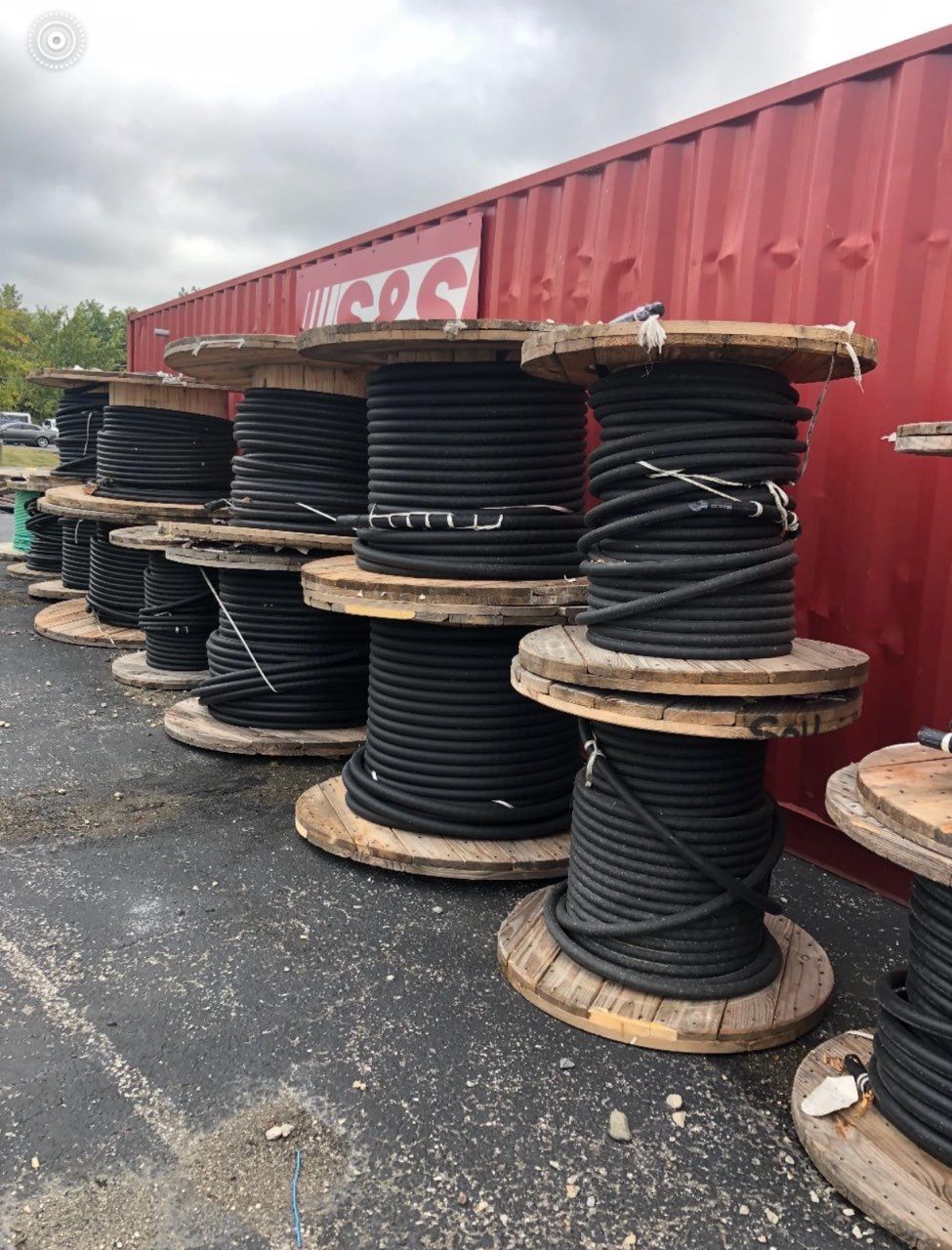
Northeastern Pennsylvania Electrical Wire Buyers
Surplus cable from the Wyoming Valley, the Schuylkill coal field and the Poconos, reviewed with an eye on older installations.
Northeastern Pennsylvania mined anthracite for a century and built a rail network to move it, and both left a deep imprint on the region's buildings. Scranton, Wilkes-Barre, Hazleton and Pottsville grew around collieries, breakers and shops, and the mills that followed used the same rail lines and the same workforce. When the deep mines closed, the buildings stayed, and so did the electrical distribution inside them. Much of that distribution is original, which is why so much of the surplus here is old.
The surplus here tends to be older and more varied than in the southeast. Mill renovations produce armored cable and legacy rubber-insulated conductor alongside modern THHN. Pocono development produces underground residential cable and well pump circuits. Water and sewer authorities hold control cable from plants built in the 1970s and upgraded in stages, and hospitals hold shielded cable from distribution work. The common thread is that most of it has been stored indoors for a long time, which preserves the jacket but not always the paperwork.
| Counties covered | Lackawanna, Luzerne, Schuylkill, Carbon, Wayne, Pike, Wyoming and Susquehanna |
|---|---|
| Coal history | Anthracite from the Wyoming and Schuylkill fields |
| Main corridors | I-81, I-84, I-380 and the Northeast Extension |
| Typical wire | THHN, armored cable, URD and 5 kV to 15 kV shielded cable |
| Rail lines | Norfolk Southern, Reading & Northern and Delaware-Lackawanna |
Anthracite, rail and the mills that followed
Scranton began with iron furnaces in the 1840s and grew into a rail and mining city. The Lackawanna Iron & Coal Company rolled rails, Dickson Manufacturing built locomotives, and the Delaware, Lackawanna and Western ran shops and a yard that shaped the valley floor. Wilkes-Barre and Pittston sat on the Wyoming field, where breakers sorted coal by size and collieries sank shafts under the streets.
The Knox Mine disaster in 1959 effectively ended deep mining in the Wyoming Valley, and the Schuylkill field around Pottsville and Tamaqua wound down over the following decades. Silk and garment mills took up some of the labor, then left too. What remains is a mix of warehouse parks on reclaimed land, a military depot at Tobyhanna, paper products in Wyoming County, hospitals and Pocono hospitality. That mix left the region with more small plants than large ones, and each of them kept its own spare stock.
Wire and cable types that show up most
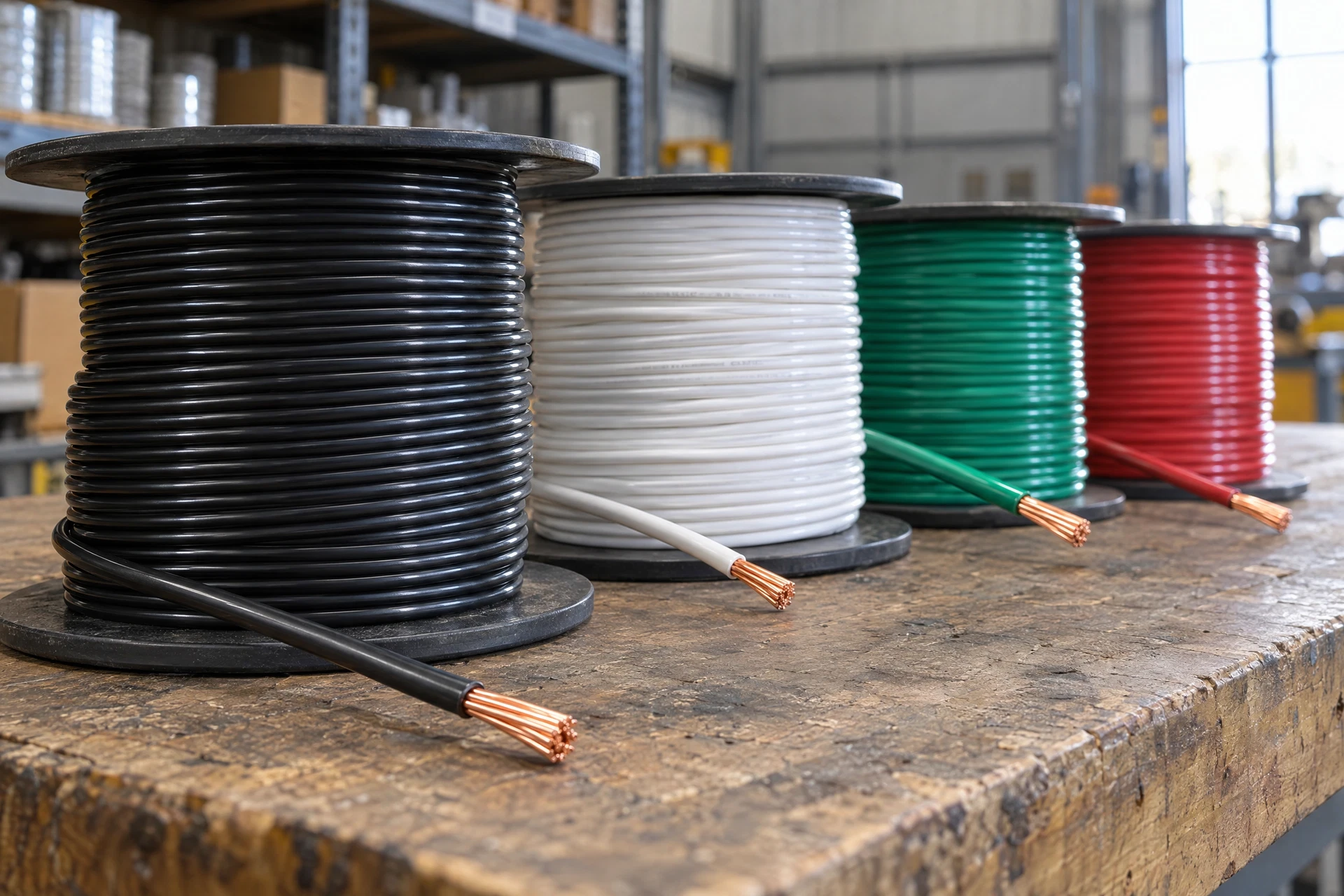
Modern building wire dominates by volume: THHN and THWN-2 in branch circuit and feeder sizes, with MC and armored cable from interior work in older commercial buildings. Renovations of mill buildings often produce legacy 600 volt cable with rubber or neoprene insulation, which is reviewed on condition and conductor content rather than on resale as wire, because the insulation has usually aged past use.
Underground residential cable is common in the Poconos and the lake communities, where services run long distances to wells and outbuildings. USE-2 and URD in aluminum appear often, sometimes with a partial reel left from a single service. Water and wastewater plants hold control cable and instrumentation cable, hospitals hold 5 kV and 15 kV shielded cable, and rail and machine shops hold welding cable.
- THHN, THWN-2, MC and armored cable from building work
- Legacy rubber and neoprene 600 V cable from mill renovations
- URD and USE-2 for Pocono services and well pumps
- Control cable from water and sewer authorities
Counties and cities in the region
The region covers Lackawanna, Luzerne, Schuylkill, Carbon, Wayne, Pike, Wyoming and Susquehanna counties, a long band from the Wyoming Valley east to the Delaware River and north to the New York line. It includes the anthracite cities, the slate and garment towns, the Poconos and the rural northern tier where a single plant may be the largest electrical load for miles.
Reels come from Scranton, Carbondale, Dunmore, Wilkes-Barre, Hazleton, Pittston, Nanticoke, Kingston, Pottsville, Tamaqua, Jim Thorpe, Lehighton, Palmerton, Honesdale, Milford, Tunkhannock and Montrose. Some of these are small boroughs where the storage building is a former garage with a low door, and that detail decides whether a reel leaves on a flatbed or in a van. A borough address is not a problem, but a low door is, and the two often come together.
Logistics that affect a reel pickup
I-81 is the spine, running from the Maryland line through Harrisburg and up past Hazleton and Wilkes-Barre to Scranton. I-84 heads east toward Milford and New England, I-380 links the Poconos to Scranton, and the Northeast Extension runs south through the Lehigh Tunnel toward Allentown and Philadelphia. US 11 and PA 309 serve the valley floors, and US 6 crosses the northern tier.
The Susquehanna crossings at Pittston, Nanticoke and Forty Fort carry local traffic, and the river itself separates some of the region's industrial sites from the main roads. Norfolk Southern's Sunbury Line, Reading & Northern's Schuylkill branches and the Delaware-Lackawanna all move freight here. Winter matters: the climb on I-81 near Clarks Summit and the two-lane roads in Wayne and Pike counties can slow a pickup by a day.
Who sells, and what they hold
Contractors working on mill and school renovations are the most common sellers, and their lots mix modern wire with material pulled from a building that was rewired. Municipal authorities hold control cable, buried feeder and pump station cable from decades of incremental upgrades. Hospitals and health systems hold medium voltage cable from emergency power and distribution projects.
Pocono hospitality properties hold underground service cable, pool and outbuilding circuits, and portable cord from maintenance shops. Rail and depot maintenance operations hold welding cable and heavy portable cable. Distributors in Scranton and Wilkes-Barre hold slow-moving stock that never sold, which often arrives as full reels with intact tags and a date that explains why. Distributor stock is usually the easiest to review, because the reels never left a dry building.
Wire and cable we buy in Northeastern Pennsylvania
Cities and municipalities in Northeastern Pennsylvania
These are the Pennsylvania municipalities covered on this site within the region. County pages add local industrial context.
Carbon County
Jim Thorpe, Lehighton, Palmerton
Lackawanna County
Carbondale, Dunmore, Scranton
Luzerne County
Hazleton, Kingston, Nanticoke, Pittston, Wilkes-Barre
Pike County
Milford
Schuylkill County
Pottsville, Tamaqua
Susquehanna County
Montrose
Wayne County
Honesdale
Wyoming County
Tunkhannock
Counties in this region
Northeastern Pennsylvania questions
Do you buy old rubber-insulated cable from mill buildings?
It is reviewed, though aged rubber and neoprene insulation usually limits it to conductor content. Photograph the jacket print and a cut end so the construction is clear. If the insulation is brittle or cracked, say so, since that is the first thing a buyer will look for.
Can you pick up in the Poconos?
Yes. Lake communities and rural properties often have long driveways, seasonal roads and no loading dock, so the access description matters. Access is the usual question here, not distance. A photograph of the driveway and the storage building tells us more than a distance from the highway.
What sizes of URD are common here?
Aluminum URD in 2 AWG through 4/0 is typical for residential and small commercial services, often with a reduced neutral. Partial reels from a single service upgrade are common, and the jacket print usually states the size, the conductor count and the neutral configuration.
Have surplus wire on the floor right now?
Send photographs of the reels, tags and jacket print. We will tell you what the material is worth as wire, not just as metal.