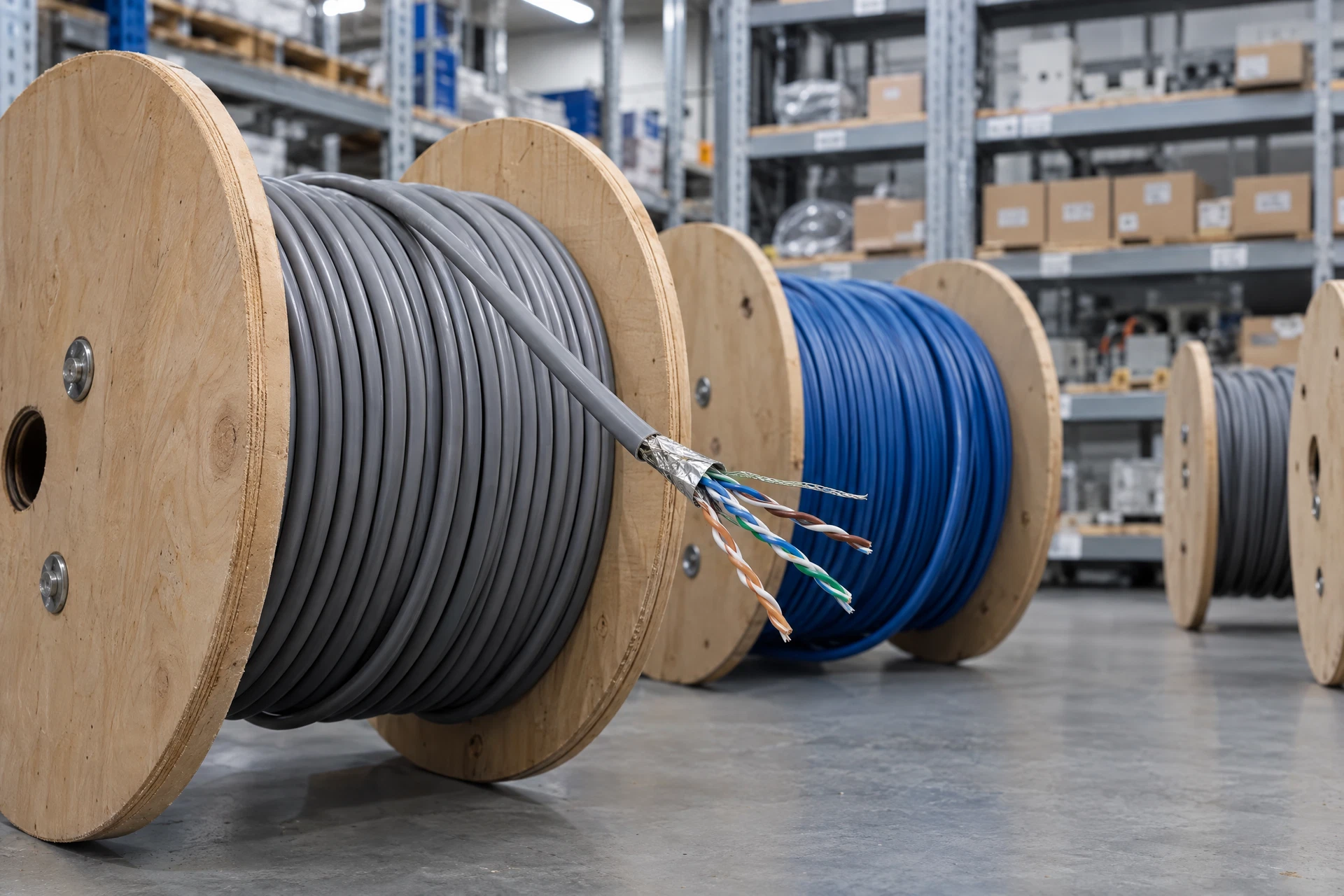
Control Cable Buyers in Pennsylvania
Multiconductor control cable from Pennsylvania plants and panel shops, bought on conductor count, shielding and footage.
Control cable carries the switching and status signals that tell equipment what to do, rather than the power that makes it run. A typical construction has several 14 or 12 AWG copper conductors cabled under a jacket, sometimes with an overall shield, rated 600 V and listed for tray use. It runs from a pushbutton station to a motor starter, from a programmable controller to a relay panel, or from one end of a conveyor to the other.
Pennsylvania plants, panel shops and industrial contractors hold most of the surplus. Control cable is bought in reels for a specific machine lineup, and when the lineup changes, the leftover reel stays on the shelf because it is obviously reusable. Sizes of 7, 9, 12 and 19 conductors are common, and a partial reel with a few hundred feet is a realistic item to sell. Contractors also keep it for temporary control during a shutdown, which is another source of clean partial reels.
| Construction | Multiconductor assembly, unshielded or with an overall foil shield and drain wire, under a PVC jacket |
|---|---|
| Conductors | Stranded copper, usually 18 AWG through 10 AWG, with 14 and 12 AWG the most common |
| Insulation | PVC/nylon or XLPE, 600 V rated, with numbered or color coded conductors |
| Temperature | 90 C dry and 75 C wet in typical constructions |
| Standards | UL 1277 for tray rated versions, ICEA S-73-532, and NEC Article 725 for Class 1 control circuits |
What control cable is
The product is defined by its job. Conductors are sized for current carrying capacity of relays, contactors and pilot devices rather than for motor loads, so 14 AWG is typical and 10 AWG is large. The assembly is jacketed to keep the conductors together through a panel and along a tray, and each conductor is numbered or color coded so a technician can trace a circuit without ringing it out.
Control cable and instrumentation cable are often confused because both are multiconductor and both appear in plant trays. The difference is purpose and shielding. Control cable switches discrete devices and is usually unshielded or lightly shielded. Instrumentation cable carries analog signals in twisted pairs with individual and overall shields, and it is rated 300 V in many constructions.
- Discrete switching and status circuits
- Usually unshielded, sometimes with an overall foil
- Numbered or color coded conductors
- 600 V tray rated versions are common
Where Pennsylvania sellers use control cable
Motor control centers are the classic application. Every starter needs a control circuit back to a pushbutton station or a controller, and a lineup of twenty starters consumes a good deal of multiconductor cable. Water and wastewater plants use it for pump control and float switches. Conveyor systems in distribution centers use it for interlocks and emergency stops along the run.
Panel shops buy control cable by the reel and build the same panel repeatedly, so a change in a customer's specification can strand a whole reel. Food plants, mills and machine builders also keep partial reels for maintenance. Because the cable is inexpensive per foot compared with power cable, the leftovers are often overlooked until a shop cleanout.
What makes control cable resellable
Conductor count is the first thing a buyer checks. A 12 conductor 14 AWG reel covers more applications than a 4 conductor reel, so it holds value better. Seven and nine conductor constructions in 14 AWG are the everyday sizes. Nineteen and 25 conductor cables are specialty items but sell well when sealed, because a panel shop may need exactly that count.
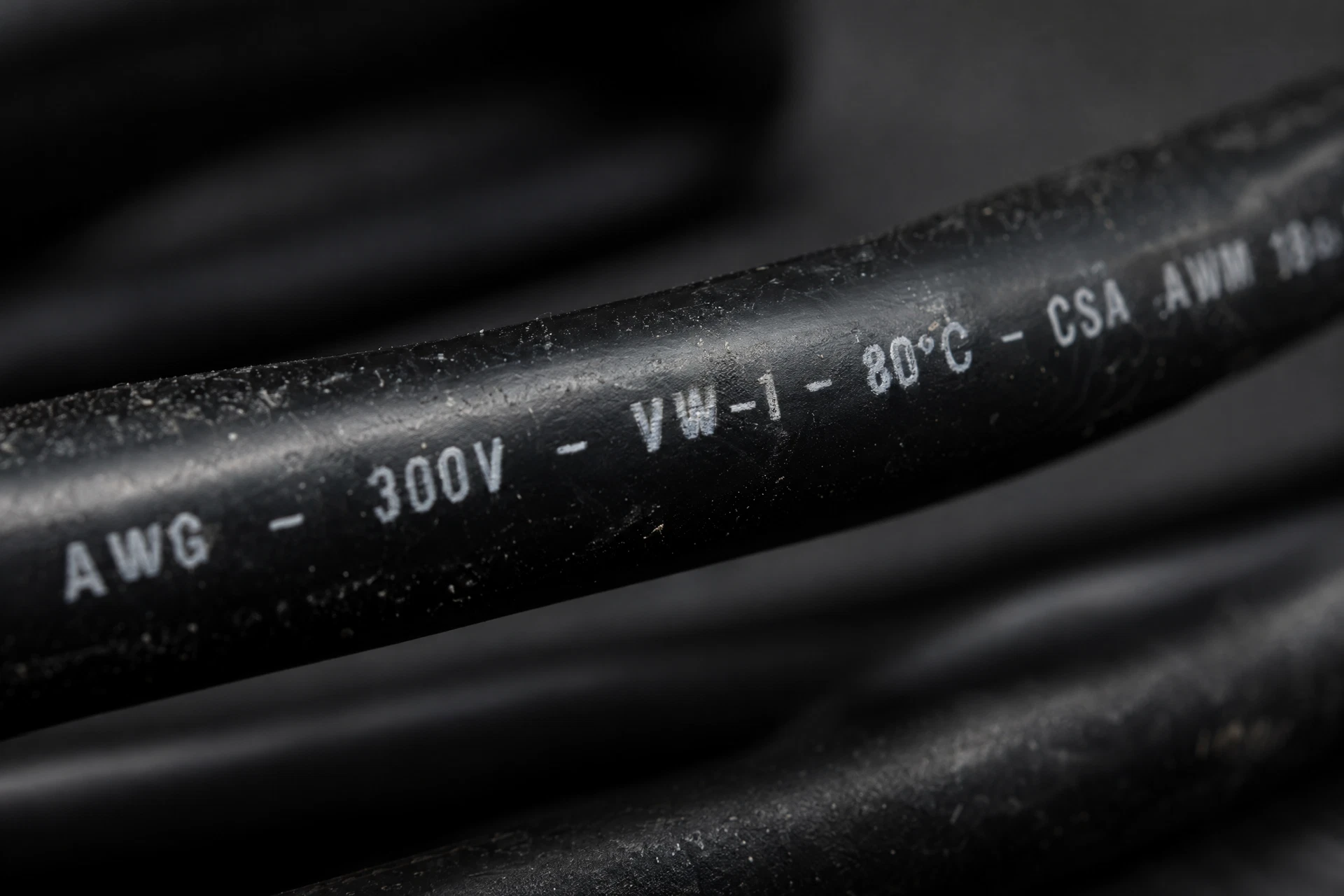
Shielding adds value when it is documented. A reel printed as shielded with a drain wire can serve analog or variable frequency applications, while an unshielded reel is limited to discrete control. Numbered conductors and a legible print showing the temperature and voltage rating make the difference between a quick sale and a reel that sits.
- 7, 9 and 12 conductor 14 AWG reels
- Shielded constructions with drain wire
- Sealed factory reels with footage tags
- Tray rated print for industrial use
Condition, storage and identification
Control cable is light and easy to handle, which is both good and bad. It gets stacked in corners, crushed under other reels and coiled too tightly, and tight coiling puts a set in the jacket that makes it pull badly. Water in an open end is the other common problem, since a small conductor will corrode through in a season.
Identification is usually easy. The print carries the conductor count, gauge, voltage and temperature, and the conductors themselves are numbered. Reel tags add footage. If the tag is missing, count the conductors at the cut end and measure one conductor to confirm the gauge, then compare the jacket diameter with a catalog listing.
What to send for a quote
Send the reel tag, a photo of the jacket print and a photo of the cut end showing the conductor count. List each reel by conductor count, gauge and length, and note whether it is shielded. If the cable came from a panel shop, the carton label often answers every question at once.
A quote follows the inventory review, and we schedule pickup once it is accepted. These reels are manageable by hand in most sizes, so access is rarely an issue. Tell us if the material is boxed, on a shelf or in a pile, and whether any reels are too heavy to lift.
- Carton label or reel tag
- Jacket print with conductor count
- Cut end photo
- Shield present or absent
- Length per reel and storage condition

What we buy in this category
- 7, 9 and 12 conductor 14 AWG control cable
- Shielded control cable with drain wire
- 19 and 25 conductor reels from panel shops
- 600 V tray rated control cable
- Partial reels from motor control center work
- Water and wastewater plant control cable
- Conveyor and packaging line control cable
- Assorted conductor counts from plant stores
Selling control cable in Pennsylvania
We review control cable from every Pennsylvania region: the southeastern industrial corridor, the Lehigh Valley, southwestern Pennsylvania, the Susquehanna Valley, the northeast and the northern tier. Location decides the pickup plan, so include the municipality in your message.
Control Cable questions
How is control cable different from instrumentation cable?
Control cable switches discrete devices and is usually unshielded, while instrumentation cable carries analog signals in twisted pairs with individual and overall shields. Many instrument cables are also rated 300 V rather than 600 V. That difference in voltage and shielding decides which product a plant can use.
Do you buy control cable with only four conductors?
Yes, though the market is thinner than for 7 and 12 conductor constructions. Small counts still suit simple starter circuits, and sealed reels are easier to place than partial ones. A sealed reel is easier to place than a partial one, and the print settles the count.
Is shielded control cable worth more?
Usually. A shield with a drain wire lets the cable serve analog and drive applications, which widens the buyer pool. The print has to document the shield for a buyer to rely on it. Shielded reels are also easier to document, since the print states the construction.
What if the conductors are not numbered?
Some constructions use color coding instead of numbers, which is equally usable. A photo of the cut end shows us which method was used, and the print usually states it. Numbered and color coded cables are both accepted by buyers.
Other wire and cable we buy
Instrumentation Cable
Sell surplus instrumentation cable in Pennsylvania.
Buying detailsTray Cable
Sell surplus tray cable in Pennsylvania.
Buying detailsTC Cable
Sell surplus tc cable in Pennsylvania.
Buying detailsVFD Cable
Sell surplus vfd cable in Pennsylvania.
Buying detailsIndustrial Feeder Cable
Sell surplus industrial feeder cable in Pennsylvania.
Buying detailsHave surplus wire on the floor right now?
Send photographs of the reels, tags and jacket print. We will tell you what the material is worth as wire, not just as metal.