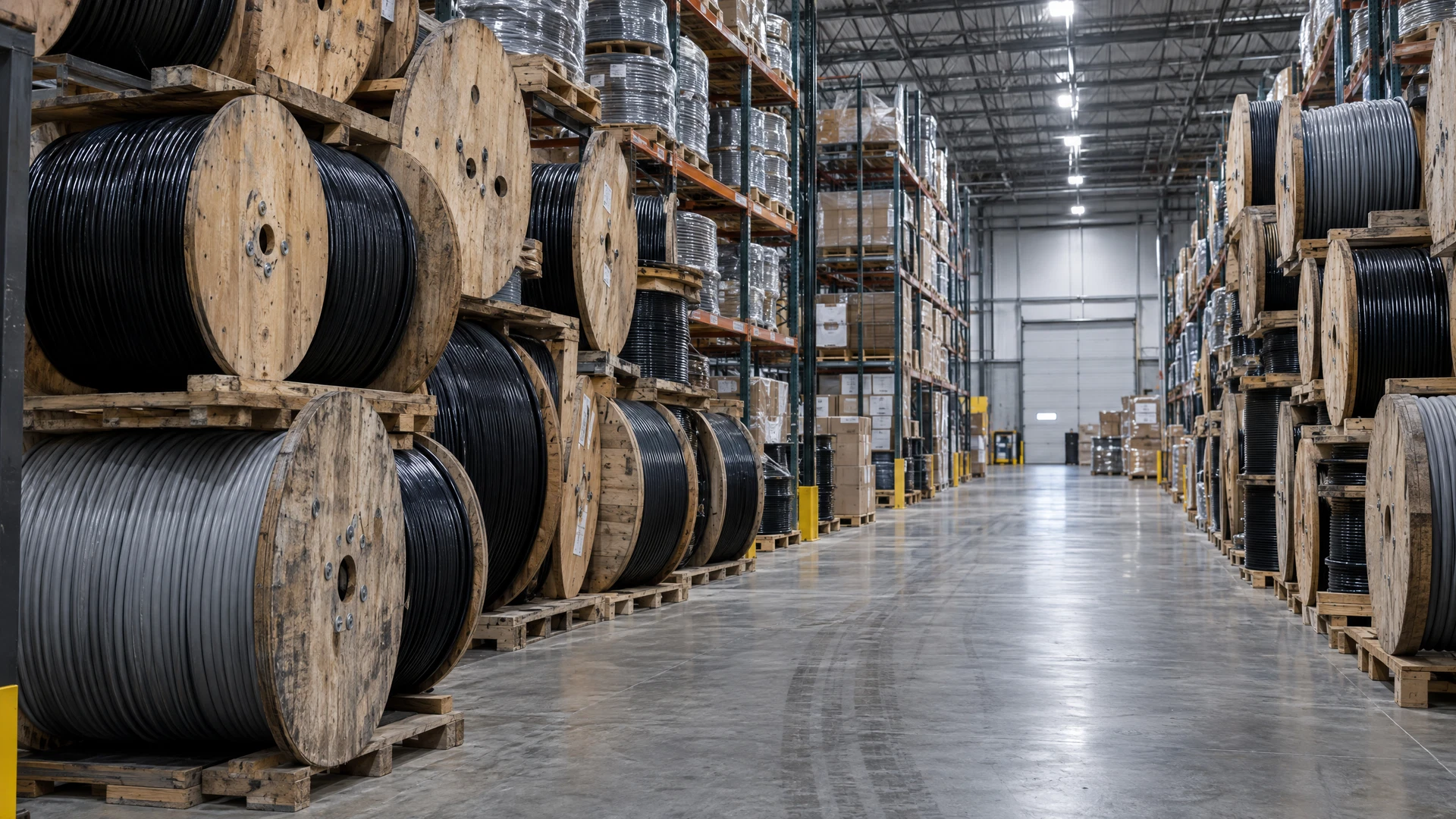
Lackawanna County Pennsylvania Electrical Wire Buyers
Surplus wire from Scranton contractors, Dunmore shops and I-81 warehouses, reviewed by buyers who know the Lackawanna Valley.
Lackawanna County mined the anthracite that heated eastern cities and built the rails that carried it. The Delaware, Lackawanna and Western Railroad ran shops and offices in Scranton, the Lackawanna Iron and Coal Company poured iron at the furnaces below the hill, and Carbondale sent coal down the Delaware and Hudson Canal to New York. The valley floor was crowded with breakers, rail yards and washeries, and the hills above it were covered with company housing. Much of that housing is still standing.
The mines closed, the railroad consolidated, and the county spent the 1980s finding a new base. What it found was warehousing along I-81, health care, education and a steady flow of small manufacturing. Scranton's building stock is old and its renovation work is continuous, which makes for a wire supply that is heavy on service cable, knob and tube copper and leftover building wire. That history is visible in the housing stock and in the electrical service that feeds it.
| County seat | Scranton |
|---|---|
| Main employment sectors | Health care and education, warehousing and distribution, light manufacturing, logistics |
| Key corridors | I-81, I-84, I-380 and I-476 |
| Typical wire | 600 V THHN and THWN-2, MC cable, SEU and SER, 480 V feeder |
| Municipalities covered | Scranton, Carbondale, Dunmore and the surrounding boroughs |
Anthracite, iron and the DL&W
Scranton grew because coal, iron and rail arrived in the same place at the same time. The DL&W built locomotives and cars in its own shops, and the iron furnaces ran on local ore and anthracite before the industry moved west.
The shops and furnaces are gone, but the buildings that housed them are not. They hold overhead crane rails, old bus ducts and cable that was installed when 240 V was a standard industrial voltage rather than a legacy one. The shops employed machinists, boilermakers and electricians, and the trades they trained are still in the valley.
- Old 240 V and 480 V feeder from shop buildings
- Crane and trolley cable from former rail shops
- Cloth covered copper from prewar industrial space
- Crane rail and trolley cable from shop buildings
Scranton's building stock
Scranton has three and four story commercial blocks, frame houses on steep streets and churches that have become event spaces. Nearly all of it is being renovated by someone, often with a small crew and a pickup truck.
That work produces service cable, MC cable, partial spools of THHN and a great deal of removed copper. The copper is the reliable part of the equation, and it is worth separating from the rest before a lot is photographed. A contractor working there may handle a church conversion in the morning and a service change in the afternoon.
- SEU and SER from service replacements
- Knob and tube copper from gut renovations
- MC cable and 12 AWG THHN from commercial work
- Panel and meter cable from small commercial jobs
Warehousing and I-81
The I-81 corridor north of Scranton filled with distribution centers that serve New York and New England. Buildings there are large and new, with clean electrical rooms and well-labeled equipment.
Surplus from that construction is the easiest material to sell. Full reels, intact tags, dry storage. The only complication is volume, since a large job can leave pallets of partial spools that take time to sort. A large job can leave several pallets of partial spools that take a day to sort.
- Full reels of THHN and XHHW-2
- MC cable from lighting packages
- Tray and control cable from conveyor work
- Dock equipment feeder from warehouse expansions
Carbondale, Dunmore and the upvalley towns
Carbondale was the first underground anthracite mine in the country, and Dunmore sits at the edge of the city with its own industrial strip. Both have older housing and small shops that are steadily being repaired.
Wire from those towns tends to arrive in small lots. A service change, a kitchen renovation and a garage rewire may all come from the same contractor in the same month, and combining them makes a pickup worth scheduling. Both towns have housing from the coal era, much of it on hillsides with narrow access.
- Small residential lots can be combined
- Aluminum branch circuit wire appears in 1960s and 1970s housing
- Old service entrance cable carries heavy copper
- Aluminum branch wire from 1960s and 1970s homes
What a Lackawanna lot usually contains
Most lots here are mixed. A contractor's shop will hold partial spools, cut lengths, service cable and a barrel of stripped copper, and a plant will hold feeder, tray cable and control cable with a few obsolete reels in the back.
We review the whole lot rather than cherry picking the best reel. That gives a seller one number to consider instead of three, and it avoids the situation where the valuable material leaves and the rest stays on the floor. It also means the seller gets one number instead of a negotiation over each item.
- Mixed lots are normal and welcome
- Separate aluminum from copper to speed the review
- Reel tags decide whether a reel is priced as wire
- Weigh reels rather than estimating footage where possible
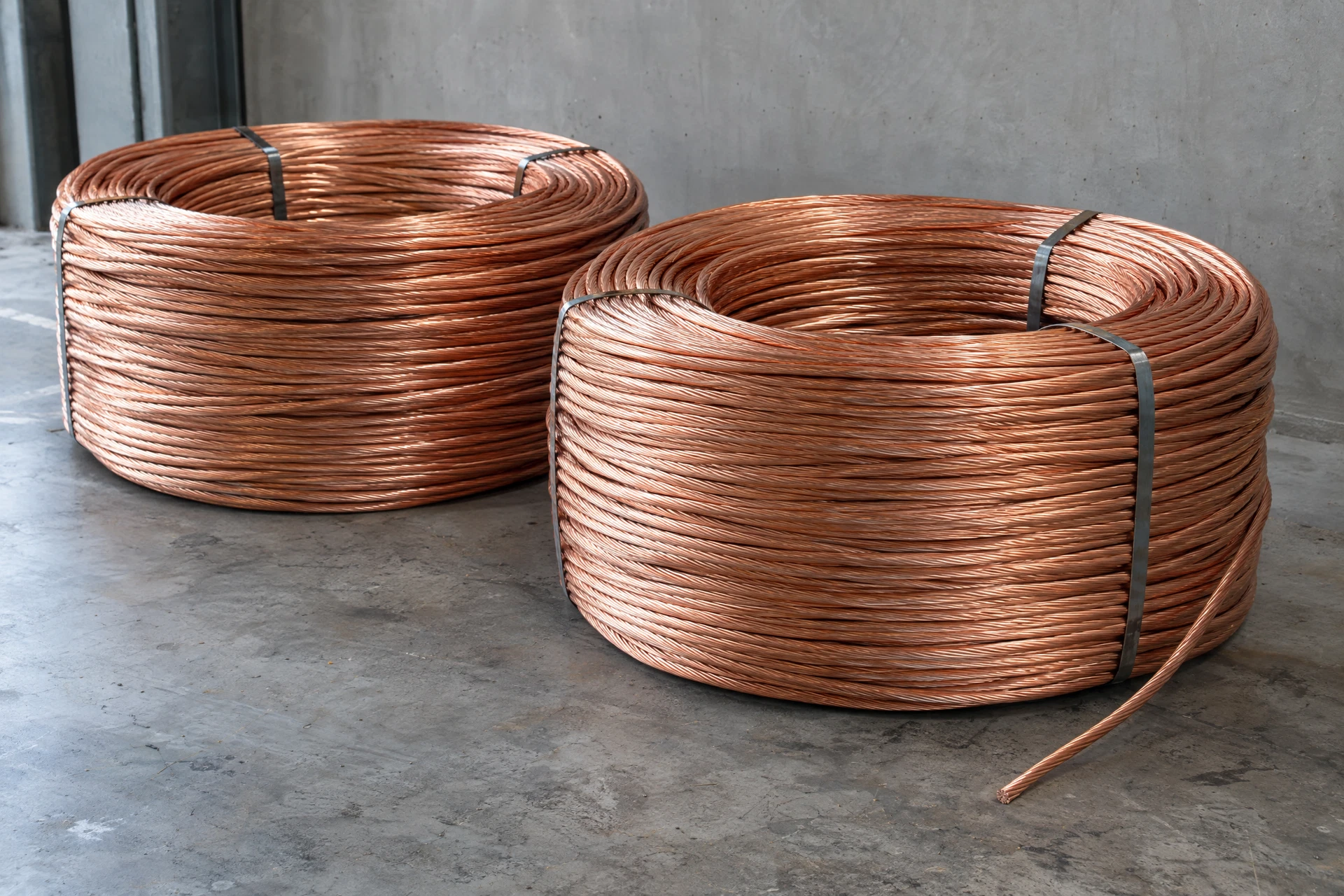
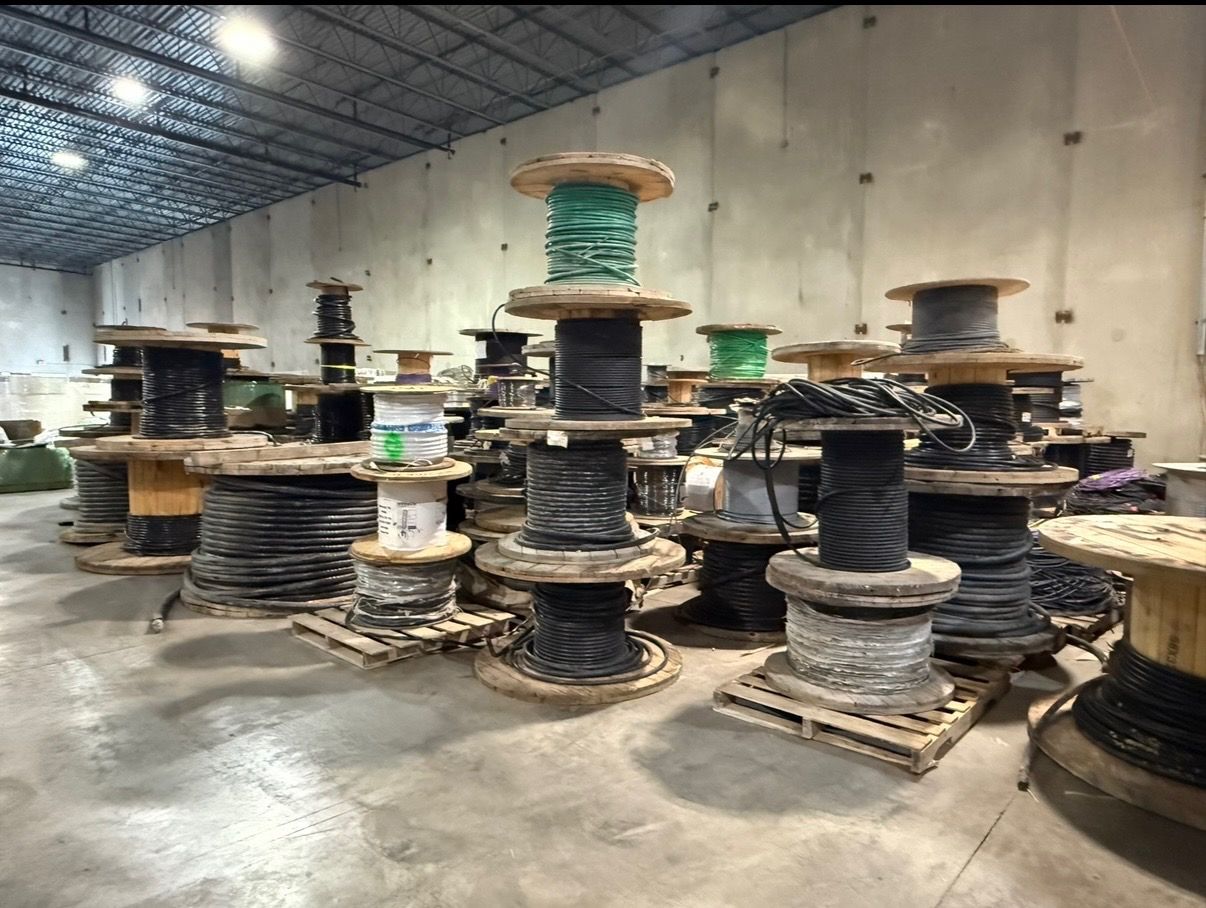
Wire and cable we buy in Lackawanna County
Municipalities we cover in Lackawanna County
Lackawanna County questions
Do you buy wire from Scranton renovation job sites?
Yes. Service changes and gut renovations are the most common source, and they usually produce SEU, partial THHN spools and removed copper. Small lots from several jobs can be combined into one pickup. Combining jobs is common here.
What comes out of an I-81 distribution center?
Full and partial reels of THHN or XHHW-2, MC cable from lighting, and tray or control cable from conveyor systems. Buildings in that corridor are new, so tags are usually legible and storage has been dry.
Is cloth covered wire from an old Scranton building worth anything?
It is worth copper value, not building wire value. The insulation has no modern rating and cannot be reused, but the conductor is still copper, and heavy service cable from that era can carry a meaningful amount.
Have surplus wire on the floor right now?
Send photographs of the reels, tags and jacket print. We will tell you what the material is worth as wire, not just as metal.