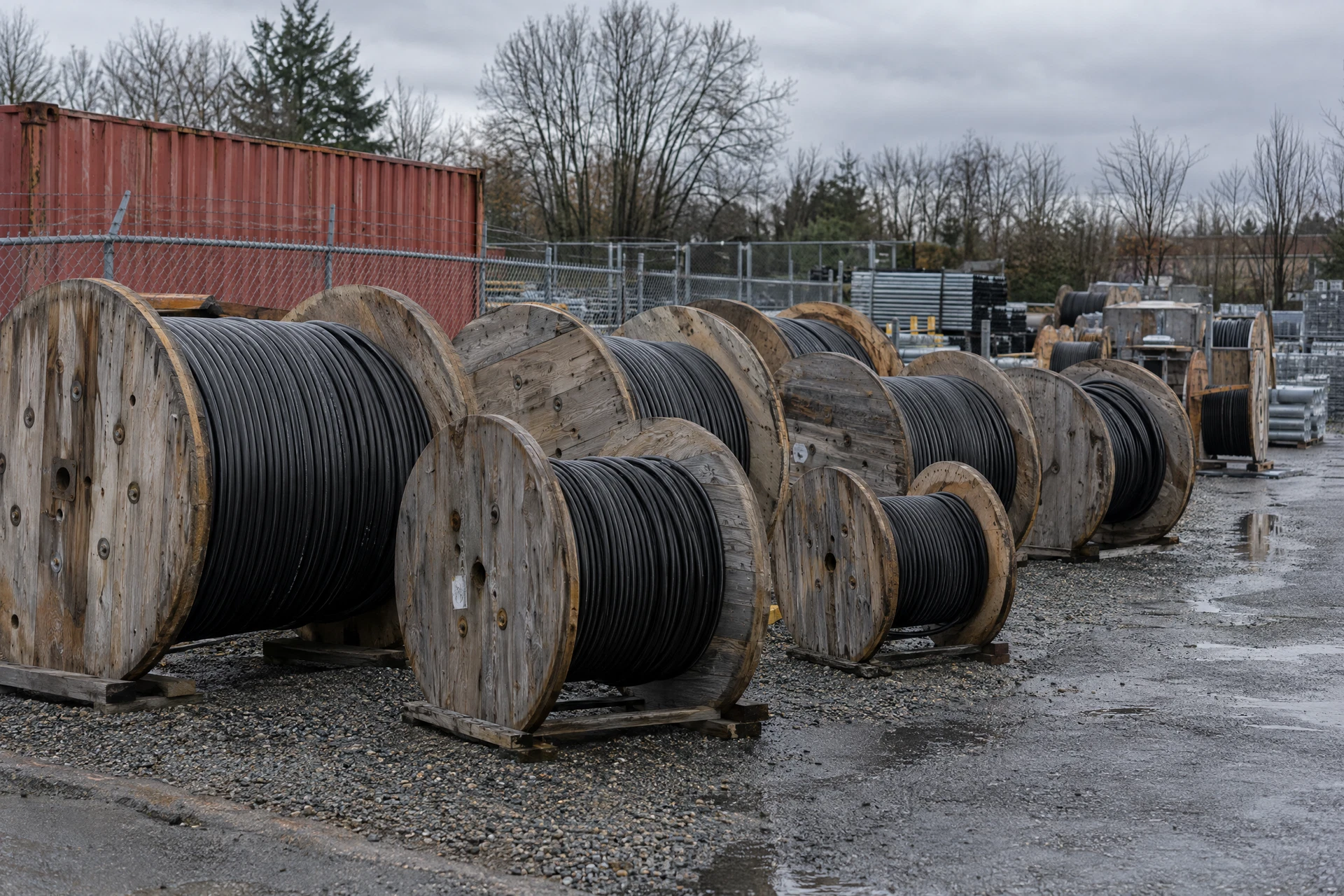
Tray Cable Buyers in Pennsylvania
Surplus tray cable from Pennsylvania plants and industrial contractors, priced on conductor, jacket and footage.
Tray cable is a multiconductor assembly built to be supported in open cable tray rather than pulled through conduit. A sunlight resistant jacket covers two or more insulated conductors, often with a ground, and the assembly is listed to UL 1277. The exposed run version, TC-ER, can leave the tray and travel to equipment without a raceway. Because the jacket keeps several circuits together, one reel can replace a dozen separate conduit pulls. The jacket print also carries the temperature rating, which decides whether a reel suits a wet location.
Pennsylvania inventories tend to come from two directions. Industrial contractors buy reels for a tray run between a motor control center and a line of equipment, then return the balance to the shop. Plants that rewire a process area pull out usable lengths of tray cable that are still good cable, just no longer needed for that machine. Both kinds of material are worth reviewing on footage and conductor count. Removed cable is quoted on what can be reused, not on what the tag once said.
| Construction | Two or more insulated conductors cabled together under a sunlight resistant PVC, CPE or Hypalon jacket |
|---|---|
| Conductors | Stranded copper or aluminum, generally 14 AWG through 1000 kcmil |
| Insulation | XHHW-2, THHN/THWN-2 or RHW-2 singles, with or without a grounding conductor |
| Voltage and temperature | 600 V for power constructions; 90 C dry and 75 C wet are typical |
| Standards | UL 1277 and NEC Article 336; the TC-ER suffix adds the exposed run rating |
What tray cable is
Type TC is defined by UL 1277 and Article 336. Conductors are cabled with fillers and wrapped, then jacketed in a material rated for sunlight and moisture. The result is a cable that can be installed in tray, in raceway, in wet locations and, in many constructions, direct buried. A ground conductor is common but not universal, and the count on the print tells you which version you have.
The suffixes carry real meaning. TC alone is for tray and raceway. TC-ER may be run exposed between the tray and the equipment it serves, subject to support and protection rules. PLTC looks similar but is a 300 V power-limited product under a different article, and it should not be sold as general purpose tray cable.
- TC for tray and raceway only
- TC-ER for exposed runs to equipment
- PLTC is 300 V power-limited and separately listed
- Some constructions carry a direct burial rating
Where Pennsylvania sellers use tray cable
Food processing plants, water and wastewater treatment works, paper mills and machine shops all run tray. A typical installation carries power from a control room out to a row of motors, pumps or conveyors, and the cable is ordered in long lengths to avoid splices. When a line is decommissioned or a plant changes product, the leftover reels surface in the maintenance store.
Contractors who specialize in industrial work also hold surplus. A job that specifies 3/C 4 AWG with ground will leave a partial reel if the routing changed, and a reel of 8 AWG control and power cable is too expensive to discard. Data center and hospital mechanical rooms contribute smaller quantities of TC-ER for rooftop and chiller connections.
What makes tray cable resellable
Conductor count and size drive the market. Three and four conductor assemblies in 12 AWG through 2 AWG are the workhorses of plant power, and a sealed reel of 3/C 4 AWG copper is straightforward to place with another industrial contractor. Larger feeders up to 500 kcmil are worth more per foot but take longer to match to a buyer.
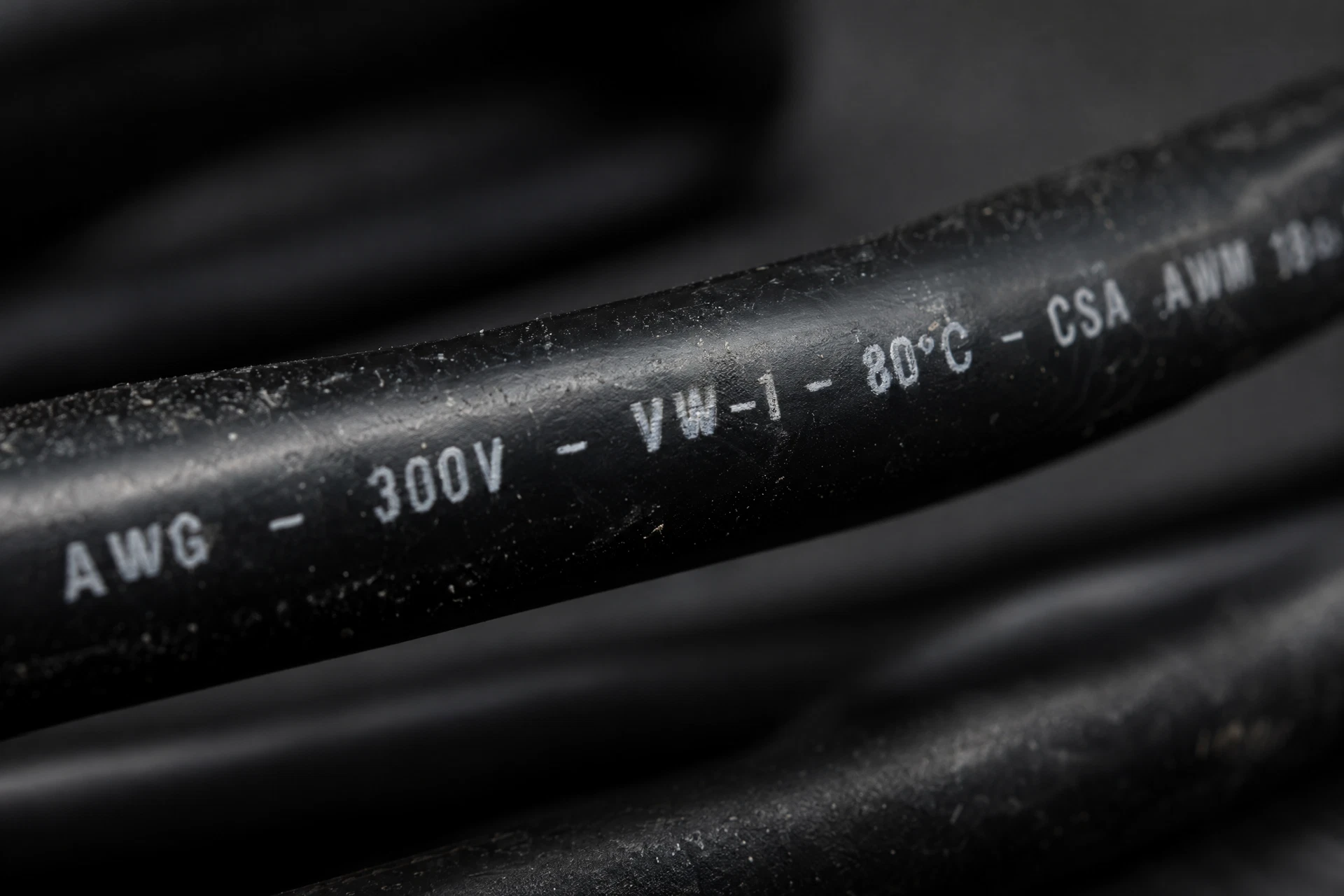
Aluminum tray cable is a smaller market than copper and priced accordingly, though large aluminum feeders still carry meaningful metal value. Grounded assemblies outsell ungrounded ones. A jacket print that shows the UL listing, the voltage and the conductor size is the single most useful thing a seller can preserve.
- 3/C and 4/C copper assemblies with ground
- Sealed reels with factory footage
- TC-ER print for exposed run work
- Constructions listed for direct burial
Condition, storage and identification
The jacket takes the abuse. Sunlight breaks down PVC over years outdoors, and a reel stored in a yard will chalk and crack at the outer wraps before the conductor insulation is affected. Water can wick into an open end and travel under the jacket, so a cable that sat end up in a puddle deserves a close look at the exposed conductors.
Reel tags carry the size, conductor count, voltage and footage, and a photograph of the tag saves a great deal of guesswork. Where the tag is missing, the jacket print usually identifies the product, and the diameter of the cable plus the conductor count narrows the size. Cut samples are welcome when a lot is large.
What to send for a quote
Send the reel tag, a photo of the jacket print and a shot of the cut end. Tell us the conductor count, size and approximate footage for each reel, and whether the cable is copper or aluminum. If a plant has a cable schedule or a bill of materials from the original installation, that document is worth more than any photograph.
After review we return a quote and schedule pickup. Tray cable reels can be heavy and awkward, so let us know the reel diameter, the weight if it is marked, and whether a forklift or crane is available at the loading point.
- Reel tags or the original cable schedule
- Jacket print showing listing and voltage
- Cut end photo with conductor count visible
- Copper or aluminum, size and footage
- Reel weight and loading equipment on site

What we buy in this category
- 3/C and 4/C copper tray cable with ground, 12 AWG through 2 AWG
- TC-ER reels from industrial and mechanical projects
- Larger copper feeders from 1/0 through 500 kcmil
- Aluminum tray cable in long lengths
- Direct burial rated TC constructions
- Partial reels with legible jacket print
- Decommissioned tray cable removed from service
- Mixed lots of TC and PLTC for sorting
Selling tray cable in Pennsylvania
Reels of tray cable turn up from Philadelphia and the southeastern counties through the Lehigh Valley, and from Pittsburgh and the Mon Valley across to Harrisburg, Lancaster and York. Send the city or township with the photographs so pickup can be planned realistically.
Tray Cable questions
What is the difference between TC and TC-ER?
Both are UL 1277 tray cables. TC-ER carries an exposed run rating that allows it to leave the tray and run to equipment without conduit, within the support and protection limits of the listing. Standard TC is limited to tray and raceway.
Do you buy tray cable that was already installed?
Yes, provided it was removed without jacket damage and the ends are clean. We look at jacket abrasion, water wicking and how the cable was coiled, then quote on the usable footage rather than the length on the tag.
Is PLTC the same as tray cable?
PLTC is a power-limited tray cable rated 300 V under NEC Article 725, usually in 18 and 16 AWG. It shares the tray environment but serves control and signal circuits, so it is quoted separately.
Can you identify cable with no reel tag?
Usually. The jacket print gives the listing, voltage and size, and the conductor count and diameter confirm it. A short cut sample helps when the print has faded, and a photo of the reel is enough for a first review.
Other wire and cable we buy
TC Cable
Sell surplus tc cable in Pennsylvania.
Buying detailsPLTC Cable
Sell surplus pltc cable in Pennsylvania.
Buying detailsInstrumentation Cable
Sell surplus instrumentation cable in Pennsylvania.
Buying detailsControl Cable
Sell surplus control cable in Pennsylvania.
Buying detailsVFD Cable
Sell surplus vfd cable in Pennsylvania.
Buying detailsHave surplus wire on the floor right now?
Send photographs of the reels, tags and jacket print. We will tell you what the material is worth as wire, not just as metal.