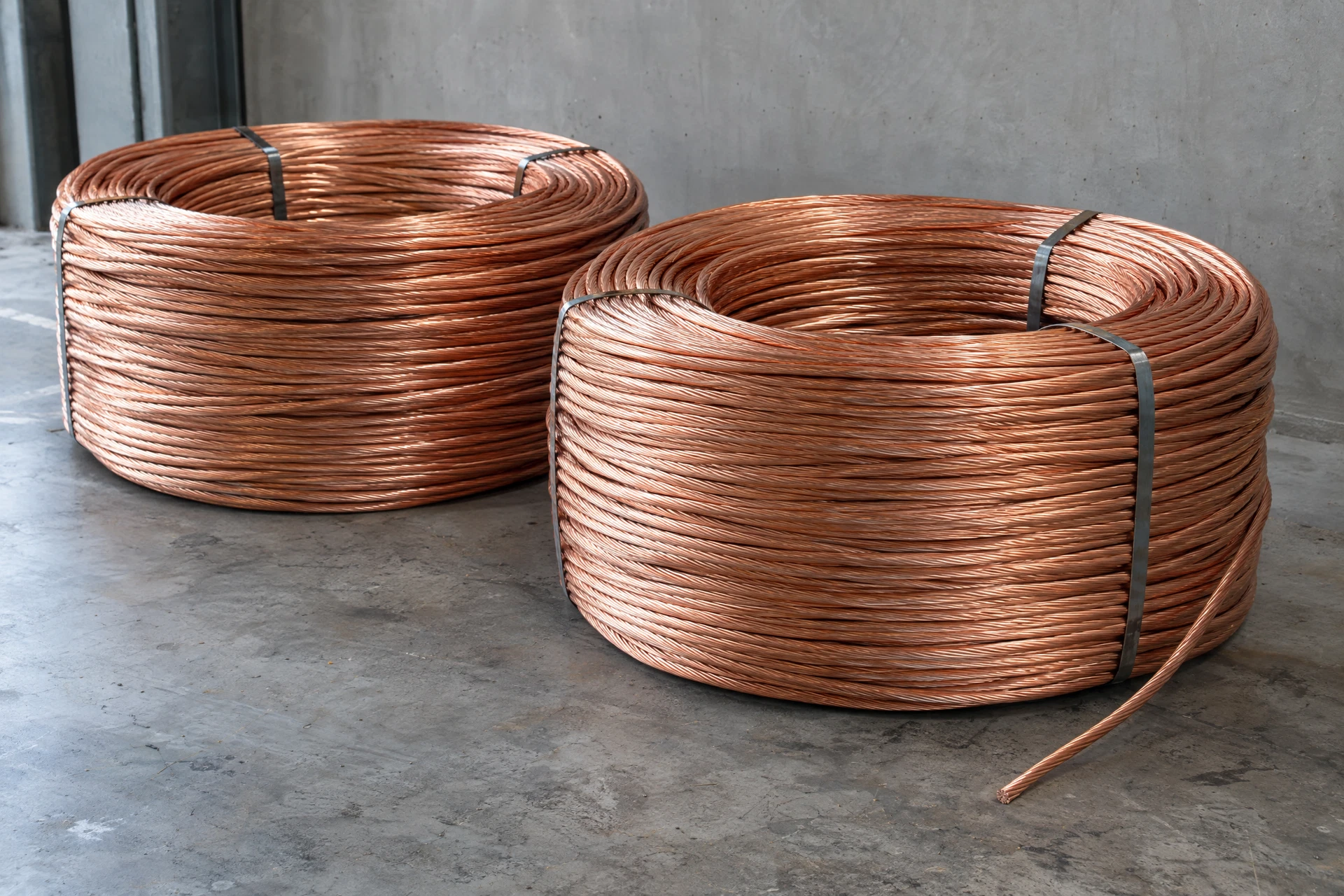
Schuylkill County Pennsylvania Electrical Wire Buyers
Surplus wire from Schuylkill County colliery shops, Pottsville contractors and I-81 warehouses, reviewed with the print in hand.
Schuylkill County was built on anthracite, the hard coal that burned hot and clean and made the region one of the most industrialized places in the country. Breakers, collieries and patch towns spread through the valleys between Pottsville and Tamaqua, and the Reading Railroad carried the coal to Philadelphia and New York. The county's towns grew up around those breakers, with company stores, churches and rows of housing on the hillsides. The coal was hard, the work was dangerous, and the county's population peaked in the 1930s before the industry began to shrink.
The deep mines closed gradually through the twentieth century, and the county rebuilt on light manufacturing, warehousing and distribution. The I-81 corridor through Frackville and Pine Grove now carries more freight than the railroads ever did, and the old colliery sites have been reclaimed or reused as industrial land. What remains is a county where mining cable and warehouse building wire sit in the same storage room. Driving Route 61 today, culm banks and patch towns are still visible above the strip malls and warehouses.
| County seat | Pottsville |
|---|---|
| Main employment sectors | Warehousing and distribution, light manufacturing, healthcare, anthracite heritage industries, logistics |
| Key highway and rail corridors | I-81 through Frackville and Pine Grove, Route 61, Route 309, Route 209; Reading and Northern Railroad through Pottsville and Tamaqua |
| Typical wire families | Mining cable, THHN and XHHW-2, URD, tray cable, control cable, 5 kV to 15 kV cable |
| Municipalities covered | Pottsville, Tamaqua, Schuylkill Haven, Minersville, Frackville, Mahanoy City, Shenandoah, Orwigsburg |
Anthracite left a specific electrical legacy
Underground mining required cable that could survive being dragged, crushed and spliced in wet ground. That is why mining cable from this county has heavy jackets and a grounding conductor built into the assembly, and why it is still found in surface shops and preparation plants long after the deep mines closed.
The breakers and collieries also used large motor drives for crushers, conveyors and pumps, fed by cable that was often installed in open trenches or on insulators rather than in conduit. When those sites were reclaimed, some of that cable went to scrap and some went onto a shelf, where it has been waiting ever since.
- Trailing and feeder cable from colliery and breaker sites
- Crusher and conveyor motor cable
- Surface shop stock from mine maintenance
Where surplus wire accumulates now
The I-81 corridor is the newest source. Warehouses at Frackville, Pine Grove and Tremont generate cut lengths and returned spools from tenant fit-outs, and the contractors who build those interiors keep leftover MC cable and THHN in vans and storage units.
Pottsville, Minersville and Shenandoah hold the older stock, much of it in buildings that were built for mining or garment work and now hold small businesses. Material there is often unidentified, stored in basements, and inherited rather than bought. Tamaqua adds a mix of both, since it sits on the rail line with older industry and close to the interstate.
- Warehouse fit-out leftovers along I-81
- Inherited stock in Pottsville and Shenandoah basements
- Contractor storage in Tamaqua and Orwigsburg
Wire types that come out of the coal region
Mining cable is the item that sets this county apart, in two, three and four conductor constructions with grounds. Condition decides everything: a cable that ran over rock is not the same as one that stayed coiled, and the jacket tells the story at a glance.
The rest is ordinary. THHN and XHHW-2 from building work, URD from rural services and from the many properties that have outbuildings on separate meters, tray cable and control cable from plants, and 5 kV or 15 kV cable at the larger substations. Aluminum URD is especially common on the farms and hillside properties outside the towns.
- Mining cable in two, three and four conductor constructions
- Aluminum URD from rural and hillside services
- THHN and XHHW-2 building wire
- Tray and control cable from light manufacturing
Getting reels off the mountain
I-81 runs the length of the county's western side, and Route 61 connects Pottsville to it at Frackville. Route 309 serves Tamaqua and the eastern towns, while Route 209 follows the Schuylkill River valley. The interchanges are efficient; the towns are not, with steep streets and narrow alleys that were laid out for wagons and anthracite trucks.
Winter is the other factor. The county sits high, and snow on the ridges can close Route 309 or Route 54 for hours. If a reel is stored outdoors, plan around a thaw, and tell the driver whether the yard is on a slope, because a reel that rolls on ice is a hazard before it is a shipment.
- Steep borough streets and narrow alleys
- Snow closures on Route 309 and Route 54
- Reels stored on slopes above the towns
Documenting a coal region inventory
Start with the print on the jacket, since tags from the 1970s are rarely legible. For mining cable, note the conductor count, the presence of a ground check conductor and the jacket material. For building wire, size and insulation type are enough to begin.
Then describe the storage honestly. A basement that has taken water is different from a dry garage, and a reel that has been outdoors since the mine closed is different again. Photographs of the reel, the print and the surrounding room answer most of the questions before anyone drives out.
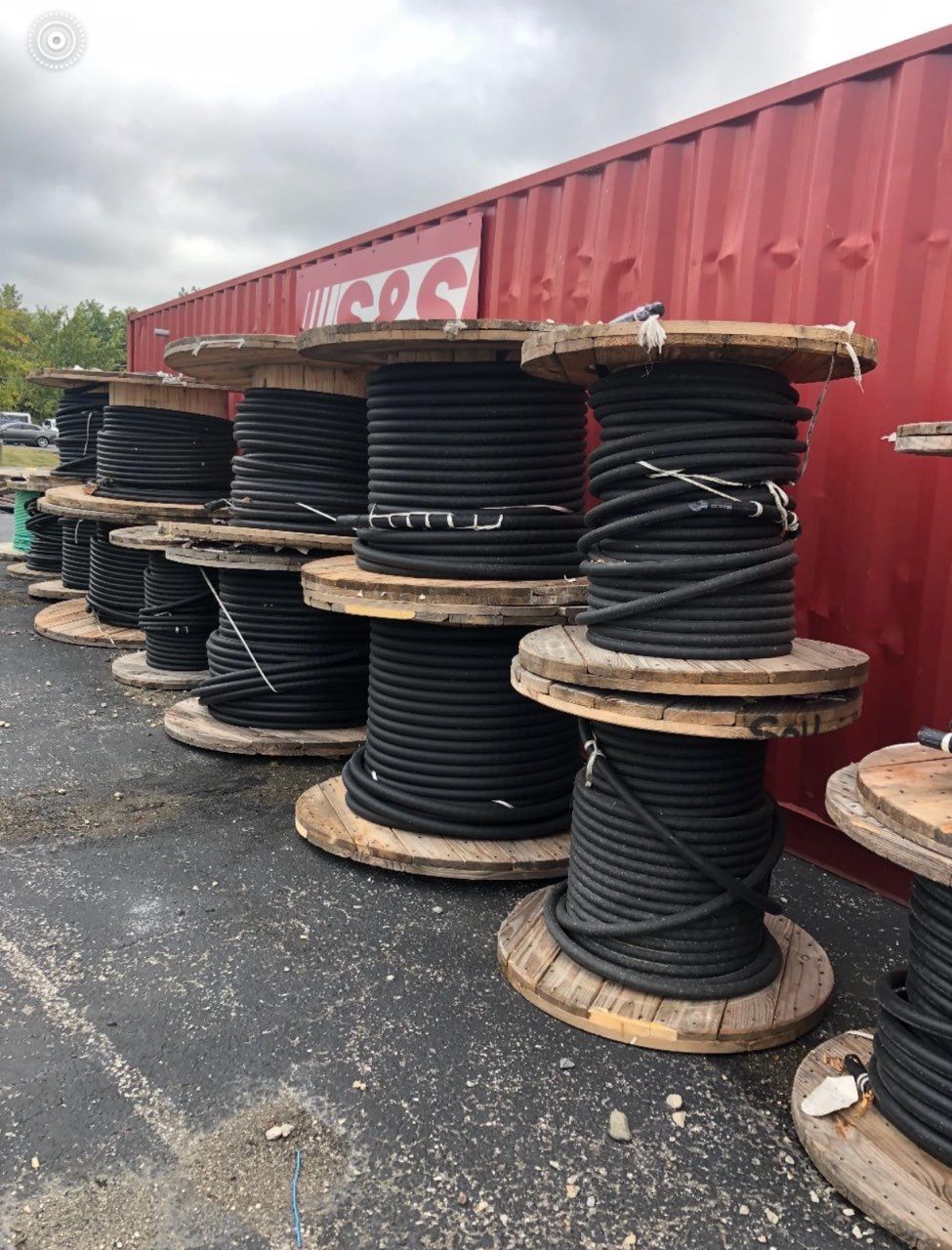
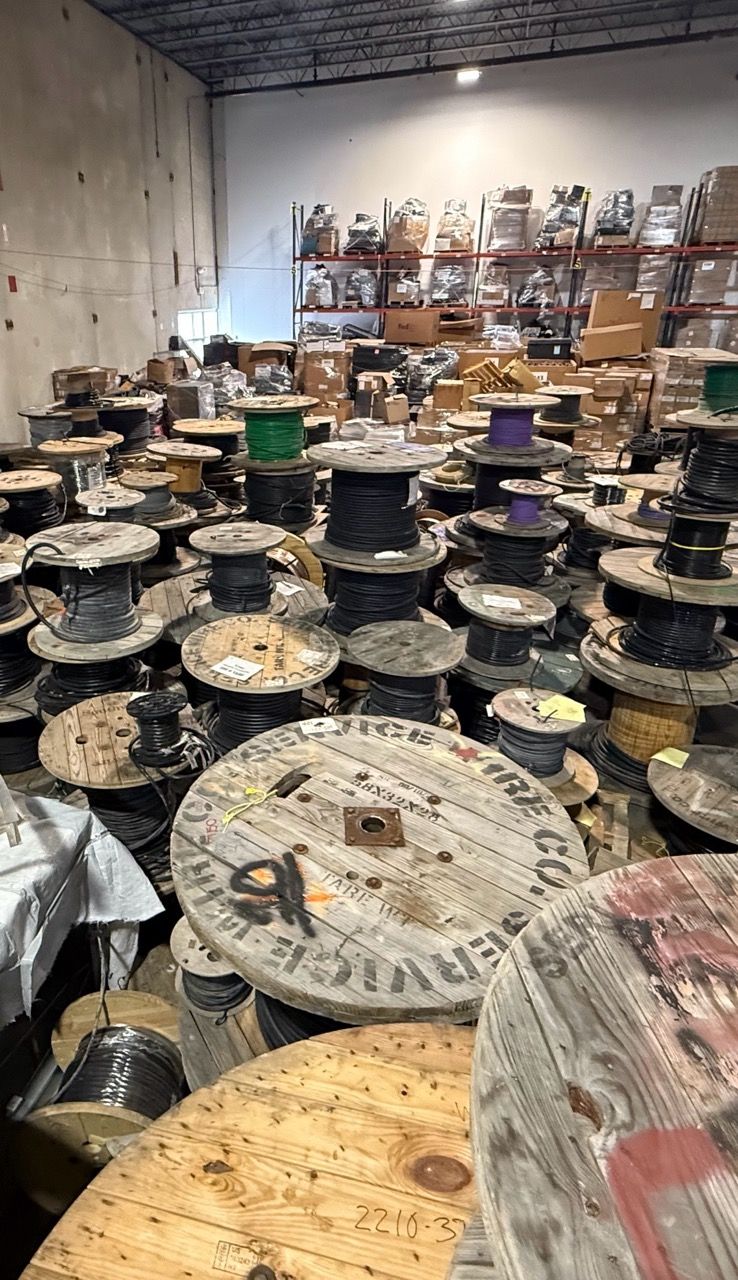
Wire and cable we buy in Schuylkill County
Municipalities we cover in Schuylkill County
Schuylkill County questions
Do you buy old mining cable in Schuylkill County?
Yes, when the jacket is sound and the print can be read. Cable that has been dragged over rock or left in standing water is usually limited to recovery value, so photographs of the jacket at both ends help.
Can you pick up in Shenandoah or Mahanoy City?
Pickup is arranged after a quote is accepted, and those boroughs are routine. The streets are steep and narrow, so tell us whether the material is in a basement, a garage or a yard before equipment is chosen.
Is aluminum URD from a farm worth selling?
Often yes. Direct burial aluminum in usable lengths is reviewed as cable rather than scrap, particularly when the jacket is intact and the conductor ends are clean. Coils that sat in the sun for years are judged more cautiously.
Have surplus wire on the floor right now?
Send photographs of the reels, tags and jacket print. We will tell you what the material is worth as wire, not just as metal.