Medium Voltage Cable Buyers in Pennsylvania
Shielded cable from 5 kV to 35 kV, priced on construction, footage, jacket condition and whatever test records survive with the reel.
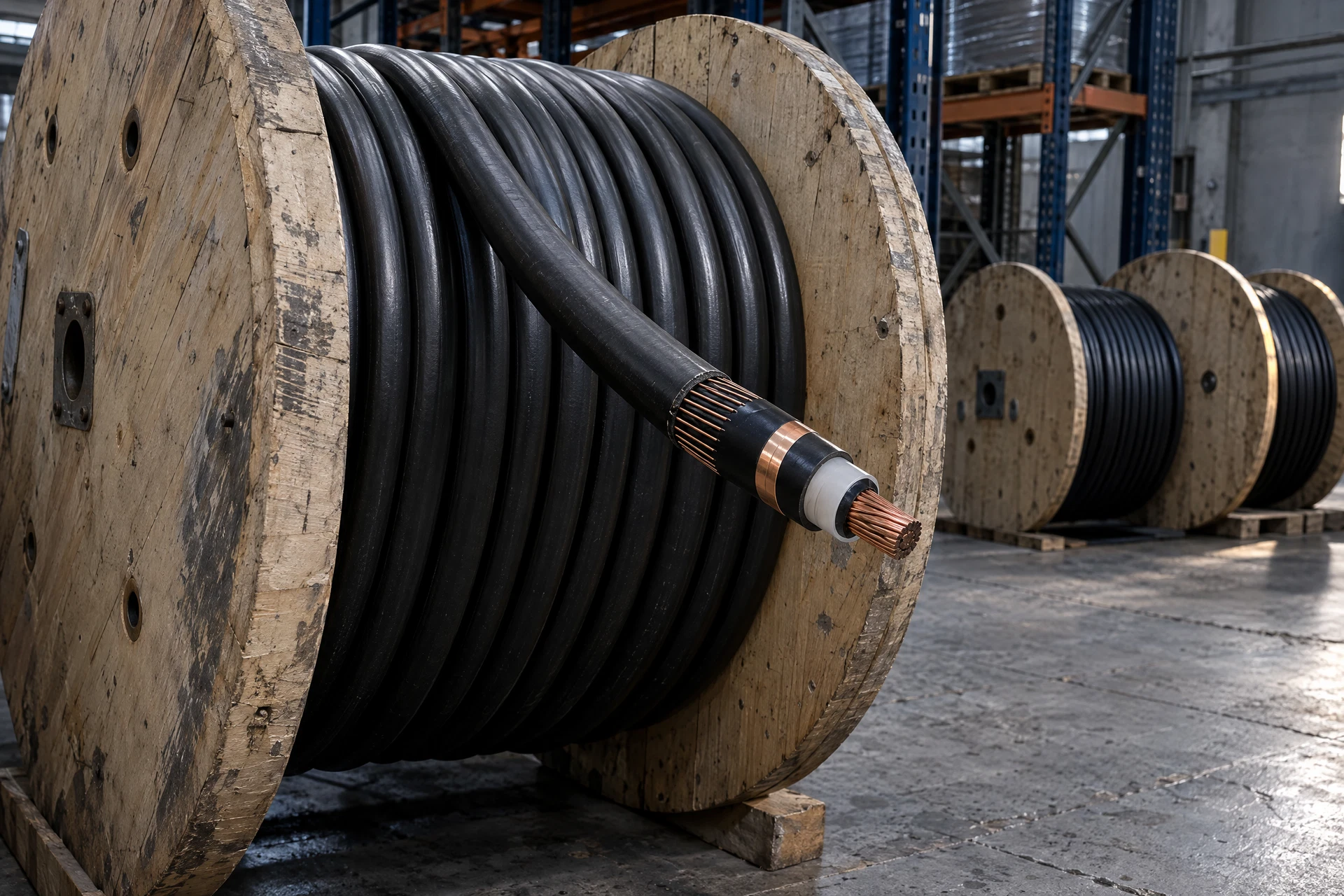
Medium voltage is the band between building wire and transmission cable: 5 kV, 8 kV, 15 kV, 25 kV and 35 kV in the standard ICEA classes. Almost everything in that range is shielded, because at those voltages the electric field has to be controlled at the conductor surface and again at the outside of the insulation. That construction is what separates a medium voltage reel from a 600 V reel of the same conductor size, and it is the first thing a buyer looks at.
Pennsylvania sellers usually meet this cable in plant substations, chiller and compressor feeders, utility distribution and data center switchgear rooms. A reel left over from a 15 kV feeder project can be worth many times its copper content when the jacket is intact and the footage is known. If the shields are damaged or the ends have been open to weather for years, the value drops toward recovery. Send the tag details and we will sort out which case applies.
| Voltage classes | 5 kV, 8 kV, 15 kV, 25 kV and 35 kV are the standard ICEA classes |
|---|---|
| Insulation | EPR or XLPE, with tree-retardant XLPE common on newer utility cable |
| Shielding | Semicon conductor and insulation shields, plus copper tape, wire or concentric neutral |
| Insulation level | 100 percent or 133 percent, so a 15 kV wall is about 175 or 220 mils |
| Standards | ICEA S-93-639 and AEIC CS8 for XLPE, AEIC CS6 for EPR |
How medium voltage cable is built
A medium voltage cable begins with a stranded copper or aluminum conductor, usually compact or compressed so the surface under the shield is smooth. A semiconductive conductor shield is extruded over it, then the insulation, then a semiconductive insulation shield. Those two shields do the work that makes the cable safe at 5 kV and above, holding the electric field inside the insulation instead of letting it concentrate at voids and at the surface. A metallic shield, copper tape, copper wires or concentric neutral wires, carries charging current and fault current back toward the source.
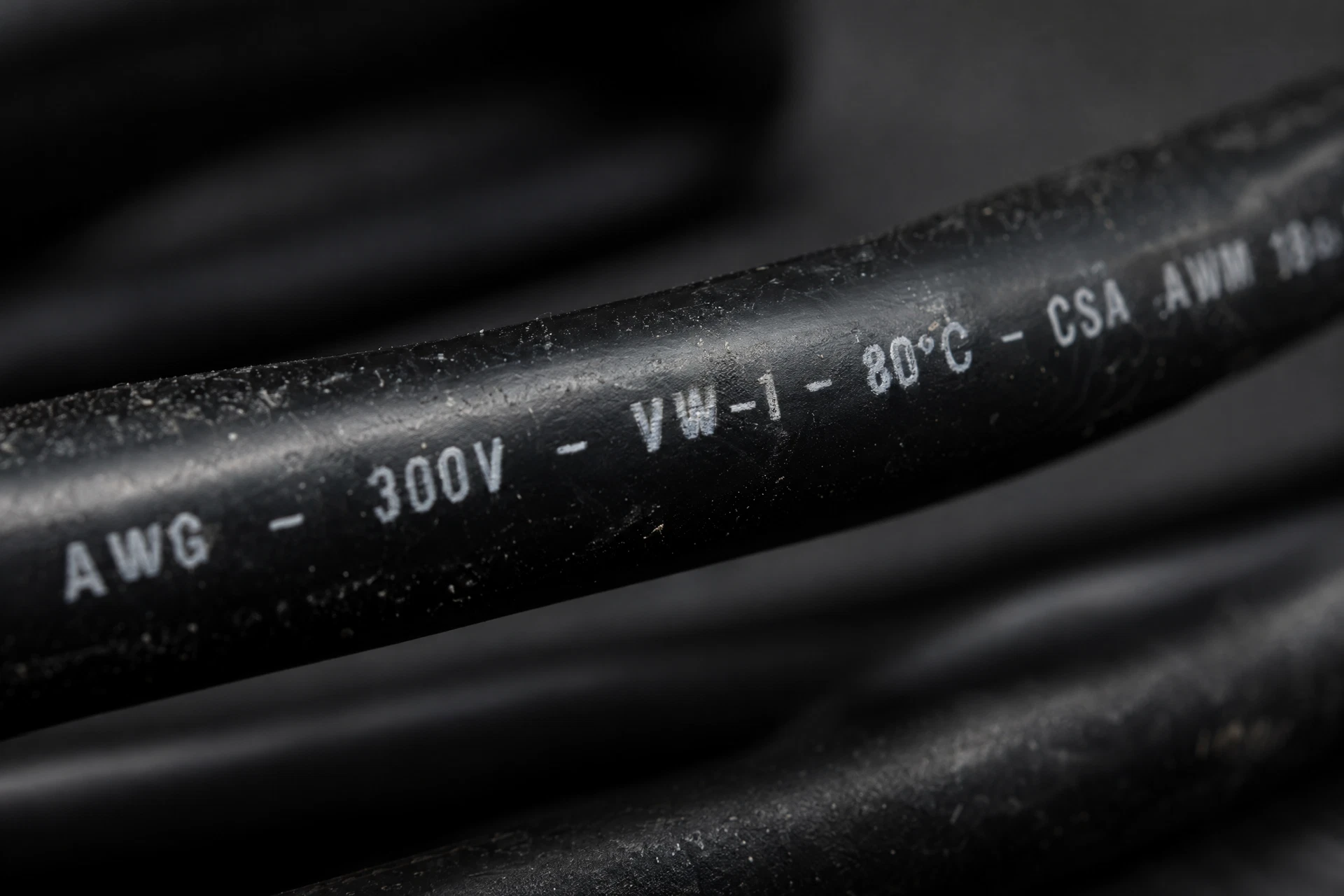
A jacket of PVC, chlorinated polyethylene or low smoke zero halogen compound covers the shield. Jacket print carries the identity of the reel: manufacturer, voltage class, insulation level, conductor size and material, insulation type, and the standard the cable was built to. A 15 kV cable might read 15 kV, 133 percent, 1/0 AWG copper, TR-XLPE, 220 mils, with an ICEA reference. The difference between the 100 percent and 133 percent insulation levels is wall thickness, not conductor size, and the two are not interchangeable in every installation.
Where Pennsylvania sellers encounter it
Plants that own their own substations are the most common source. A mill, a food plant, a paper machine line or a hospital campus will hold 5 kV and 15 kV feeders for chillers, compressors, large motors and unit substations. When a line is replaced or a building is rewired, the leftover length tends to stay on the reel in the electrical room or out in the yard.
Contractors who build and maintain those systems are the second source, and utilities are the third. Utility distribution work at 15 kV, 25 kV and 35 kV produces partial reels and cut lengths that never return to the warehouse. Data centers and large warehouses add 15 kV feeders to switchgear and UPS rooms, and those projects often leave more cable than the next phase needs.
- 5 kV motor feeder cable in older mills, compressor houses and pump stations
- 15 kV distribution cable from plant substations and utility crews
- 25 kV and 35 kV cable from utility and large industrial projects
What makes a medium voltage reel valuable
Length is the first question. A full factory reel with a legible tag and untouched ends is worth the most, because it can go back into service without a splice. A partial reel is still saleable when the remaining length is useful, but the price reflects the footage on the reel rather than the footage it once held.
Test documentation changes the conversation. Cable made to AEIC CS8 for XLPE or AEIC CS6 for EPR is factory tested for partial discharge and dissipation factor, and those reports usually travel with the reel. Without them, a buyer has to assume the cable is untested and price it that way, even when it looks perfect.
- Continuous length above a few hundred feet, in one piece
- Print that can still be read at arm's length in daylight
- Jacket free of cracks, gouges and flattening from the reel
- Factory test reports, footage counters and original tags
Condition and storage risks
Sunlight is the quiet problem. Jacket compounds are formulated for ultraviolet exposure, but years on an outdoor rack will chalk and crack a jacket, and once moisture reaches the metallic shield the corrosion starts underneath. Uncapped ends let water wick into the strand, and water inside a stranded conductor is difficult to remove without cutting back a considerable length.
Physical damage matters as much. A crushed reel flattens the bottom wraps, a forklift tine through the side of a reel reaches the insulation, and cable stored directly on the ground takes water into its lower layers. Medium voltage cable also has a minimum bending radius, so a dropped or dragged reel may carry hidden shield damage.
- Ultraviolet chalking and cracking on jacket surfaces
- Water in the strand from uncapped or open ends
- Green corrosion products on copper tape and wire shields
- Crushed or rotten reels that have flattened the inner wraps
Photos and records to send
Start with the tag, photographed square and readable, then the jacket print along a few feet of the outer wrap, then the reel face showing diameter and traverse width. Photograph both conductor ends, the jacket at several points around the reel, and any damage you already know about. Note whether the reel is wood or steel and roughly how much cable remains.
Records help more than people expect: the original invoice, the factory test report, a hipot or partial discharge record from the last acceptance test, and the footage written on the tag. With those in hand a quote can rest on what the cable is.
- Reel tag and full jacket legend
- Conductor ends and jacket close-ups
- Reel diameter, traverse width and approximate weight
- Test reports and purchase paperwork if they still exist

What we buy in this category
- 15 kV and 25 kV shielded cable on full or partial reels
- 5 kV and 8 kV motor feeder cable from plant substations
- 35 kV cable from utility and large industrial projects
- Copper and aluminum conductor from 1/0 through 1000 MCM
- EPR and XLPE insulation, 100 percent and 133 percent levels
- Tape shield, wire shield and concentric neutral constructions
- Cut lengths and removed cable with legible jacket print
- Factory test reports and reel tags that travel with the cable
Selling medium voltage cable in Pennsylvania
We review medium voltage cable from every Pennsylvania region: the southeastern industrial corridor, the Lehigh Valley, southwestern Pennsylvania, the Susquehanna Valley, the northeast and the northern tier. Location decides the pickup plan, so include the municipality in your message.
Medium Voltage Cable questions
What voltage range counts as medium voltage?
We use the usual ICEA range of 5 kV, 8 kV, 15 kV, 25 kV and 35 kV. Shielded cable marked anywhere in that band is in scope. Anything above 35 kV is handled as high voltage and reviewed on its own terms.
Is a partial reel of 15 kV cable worth selling?
Often yes, when the remaining length is long enough to be useful and the jacket and shields are intact. Short remnants with damaged ends usually carry recovery value only, and we will say so rather than overstate an offer.
How do I tell 100 percent from 133 percent insulation?
Read the print. The legend normally states the insulation level and the wall thickness in mils. A 15 kV cable at 100 percent typically has a 175 mil wall and at 133 percent about 220 mils, though the exact figure follows the standard it was made to.
Do you buy cable that was already in service?
Yes, removed cable is reviewed, but service history matters. Cable pulled from a duct with a known test record is treated differently from cable that sat in a wet vault for years. Photographs of the ends and any test data help.
Other wire and cable we buy
Shielded Power Cable
Sell surplus shielded power cable in Pennsylvania.
Buying detailsXLPE Cable
Sell surplus xlpe cable in Pennsylvania.
Buying detailsEPR Cable
Sell surplus epr cable in Pennsylvania.
Buying detailsConcentric Neutral Cable
Sell surplus concentric neutral cable in Pennsylvania.
Buying detailsHigh Voltage Cable
Sell surplus high voltage cable in Pennsylvania.
Buying detailsIndustrial Feeder Cable
Sell surplus industrial feeder cable in Pennsylvania.
Buying detailsHave surplus wire on the floor right now?
Send photographs of the reels, tags and jacket print. We will tell you what the material is worth as wire, not just as metal.