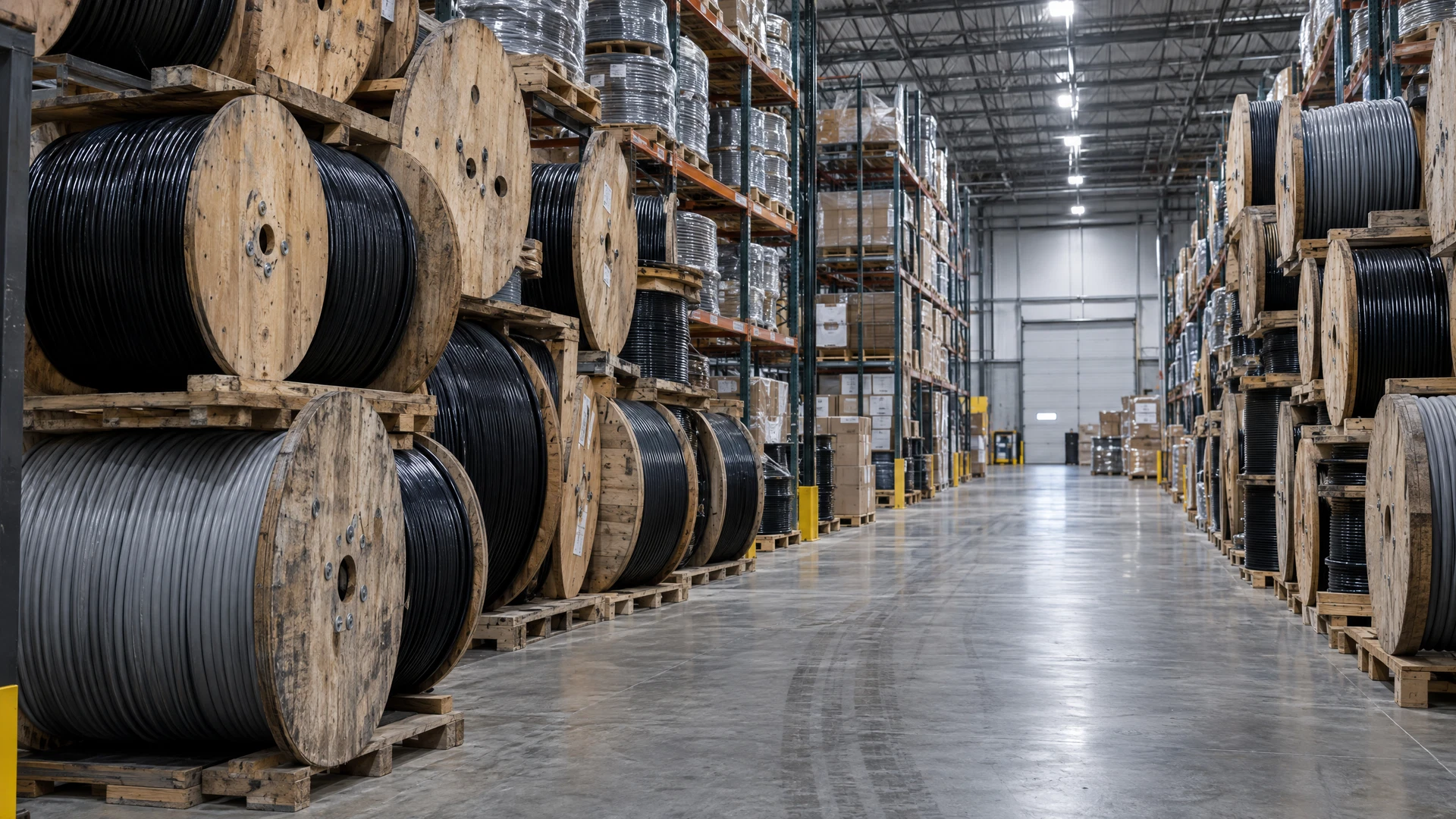
XHHW-2 Wire Buyers in Pennsylvania
Ninety degree wet-rated XLPE feeder and service wire, copper and aluminum, bought in reels and cut lengths across Pennsylvania.
XHHW-2 is the conductor most large feeders in Pennsylvania are built from today. It is cross-linked polyethylene insulation over copper or aluminum, rated 90 degrees C in both dry and wet locations. That combination lets an engineer size a feeder on the 90 degree column and still route it through a wet area without changing the wire. It is also thinner than a thermoplastic wire of equal rating, which matters when a 4 in conduit is already crowded and the pull is long.
The material shows up in sizes that make a reel heavy. Service entrance conductors in 4/0 aluminum, 500 kcmil feeders to a chiller, 1/0 copper runs to a remote panel, and 1000 kcmil pulls in a plant substation all fall in this category. Because those runs are measured in hundreds of feet, a miscalculated takeoff leaves a substantial partial reel behind, and a reel with 200 ft left is a normal sight at a plant surplus sale, and that is the inventory we review most often.
| Conductor | Annealed copper or AA-8000 aluminum, stranded in concentric layers on feeder sizes |
|---|---|
| Insulation | Cross-linked polyethylene thermoset, listed to UL 44, with no nylon jacket |
| Voltage rating | 600 V for building and feeder work, up to 35 kV in shielded designs |
| Temperature rating | 90 degrees C dry and 90 degrees C wet |
| Common sizes | 1/0 through 1000 kcmil, with 4/0 and 250 kcmil the most common |
Why the -2 rating matters on a feeder
A feeder often passes through more than one environment. It leaves a switchgear room, crosses a damp basement, enters a masonry wall and terminates outdoors. Under the code those transitions can put the conductor in a wet location for part of its run, and a conductor limited to 75 degrees C there has to be upsized or derated.
XHHW-2 removes the problem by holding 90 degrees C in wet conditions. That is why the -2 suffix appears on most new specification sheets and why a reel without it is a harder sale, even when the insulation looks identical.
- 90 degrees C in wet locations, not just dry
- Allows full ampacity through damp transitions
- Standard on most current feeder specifications
Where it is installed in Pennsylvania
Service entrances and distribution feeders account for most of the volume. Hospitals, schools, data centers and office buildings use it in conduit from the service switchboard to downstream panels. Industrial plants use it for chiller, compressor and process loads, often in tray where a tray-rated version is called for.
Aluminum XHHW-2 is the workhorse for long runs because the conductor is lighter and cheaper per amp. Copper XHHW-2 appears where conduit space is tight, where terminations are existing copper lugs, or where a specifier wants a smaller raceway.
- Service entrance conductors in conduit
- Switchboard to panel feeders
- Chiller, compressor and process loads
- Aluminum for long runs, copper for tight spaces
What separates resale from recovery
Footage is the first question. A 250 kcmil reel with 300 ft left will find a buyer, because that length covers a small feeder or a repair. The same reel with 40 ft left is a scrap item no matter how good the insulation is.
The second question is terminations. A cable cut cleanly from a surplus reel has square, bright ends. A cable removed from service often has lugs still attached, heat discoloration, or strand damage from a set screw. Those ends tell us how the conductor lived, and they affect both the grade and the price.
- Length that still covers a real pull
- Clean cut ends with no lugs attached
- No heat damage or strand deformation
Storage and identification
XLPE is durable, but the reel is not. A wooden reel stored outdoors for two seasons can delaminate and collapse under the weight of 1000 kcmil, and the wire that spills off the side gets kinked. Steel reels rust and leave stains that a buyer will ask about.
Identification is usually straightforward because the print is extruded under the insulation surface and lasts. The weak point is the reel tag, which fades or gets swapped. When a tag and the print disagree, the print wins.
- Inspect reel structure before lifting
- Read the print rather than the tag
- Note any kinked or flattened sections
What to send for an XHHW-2 review
Photograph the print, the tag, the reel face and both ends. Then list size, conductor material, approximate footage and reel count. If the wire was installed and removed, say so, because removed cable is reviewed differently from surplus stock.
Tell us the town and the access. A 1000 kcmil reel can weigh several thousand pounds, and pickup planning depends on whether there is a dock, a forklift and a clear path to the reel.
- Print and tag in one frame
- Both ends, close enough to judge condition
- Size, material, footage and access

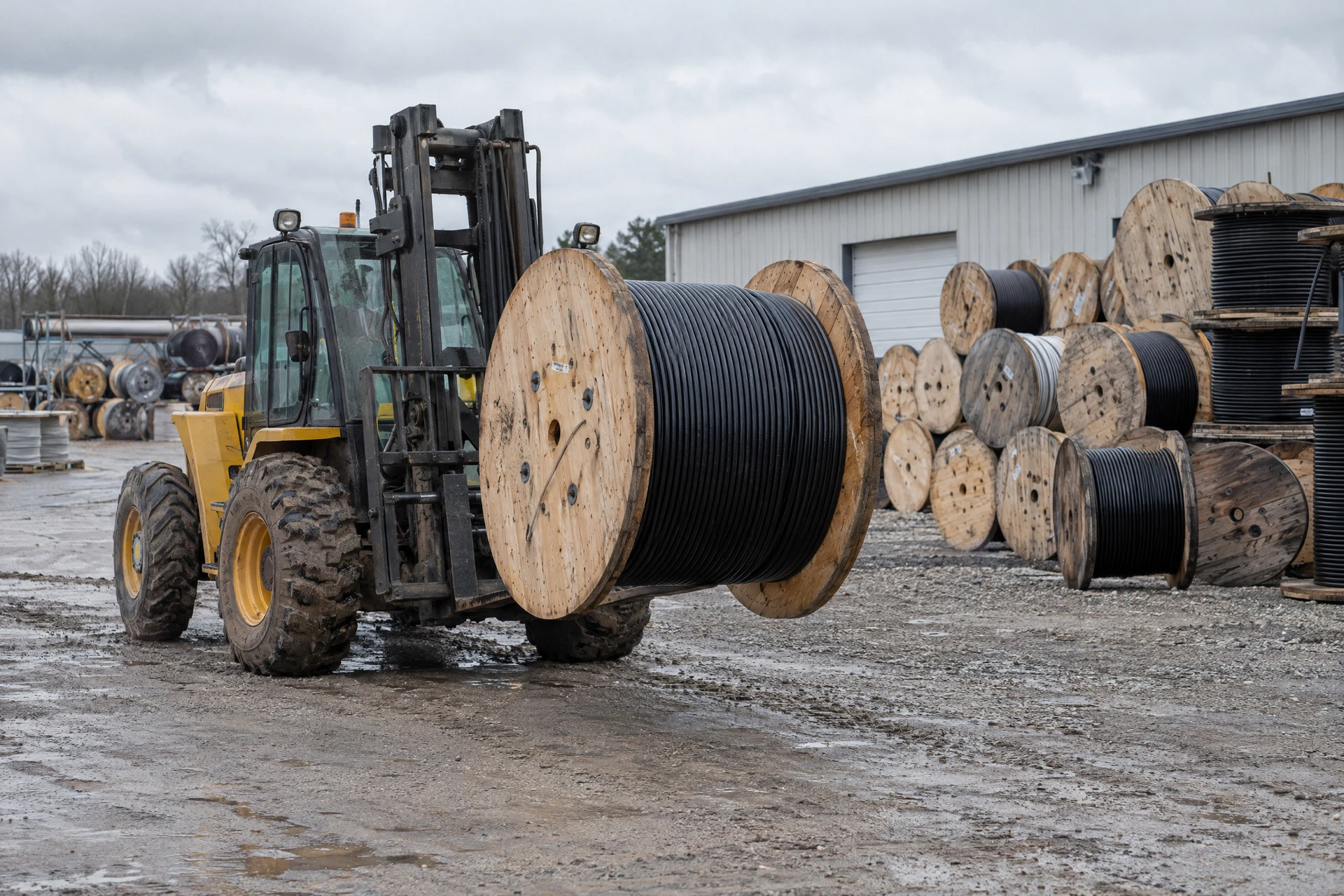
What we buy in this category
- XHHW-2 copper, 1/0 through 1000 kcmil
- XHHW-2 aluminum, 1/0 through 1000 kcmil
- 4/0 and 250 kcmil feeder reels with usable footage
- Service entrance conductors in copper and aluminum
- Tray-rated XHHW-2 and TC constructions
- Partial reels from plant and contractor projects
- Cut lengths of 2 AWG through 3/0 for repair work
Selling xhhw-2 wire in Pennsylvania
We review xhhw-2 wire from every Pennsylvania region: the southeastern industrial corridor, the Lehigh Valley, southwestern Pennsylvania, the Susquehanna Valley, the northeast and the northern tier. Location decides the pickup plan, so include the municipality in your message.
XHHW-2 Wire questions
How much footage makes a partial reel worth buying?
It depends on size and demand. A 4/0 or 250 kcmil reel with 150 ft or more is usually worth reviewing. Smaller sizes need more length, since a short piece of 2 AWG is easy to replace from stock.
Do you buy removed service entrance cable?
Yes, if the ends are clean and the print is legible. Cable pulled from a service often has lugs and heat damage at the terminations, and those sections are cut off before the rest is graded.
Is aluminum XHHW-2 worth less than copper?
Per pound of metal, yes, because aluminum is worth less as a commodity. Per amp of capacity the gap narrows, since aluminum needs a larger size. We price each reel on its own size and condition.
What if the reel tag is missing?
The jacket print carries the size, insulation type and voltage, which is most of what a buyer needs. A missing tag slows identification but does not rule out a purchase when the print is readable.
Other wire and cable we buy
XHHW Wire
Sell surplus xhhw wire in Pennsylvania.
Buying detailsAluminum Wire
Sell surplus aluminum wire in Pennsylvania.
Buying detailsTHWN-2 Wire
Sell surplus thwn-2 wire in Pennsylvania.
Buying detailsIndustrial Feeder Cable
Sell surplus industrial feeder cable in Pennsylvania.
Buying detailsBuilding Wire
Sell surplus building wire in Pennsylvania.
Buying detailsHave surplus wire on the floor right now?
Send photographs of the reels, tags and jacket print. We will tell you what the material is worth as wire, not just as metal.