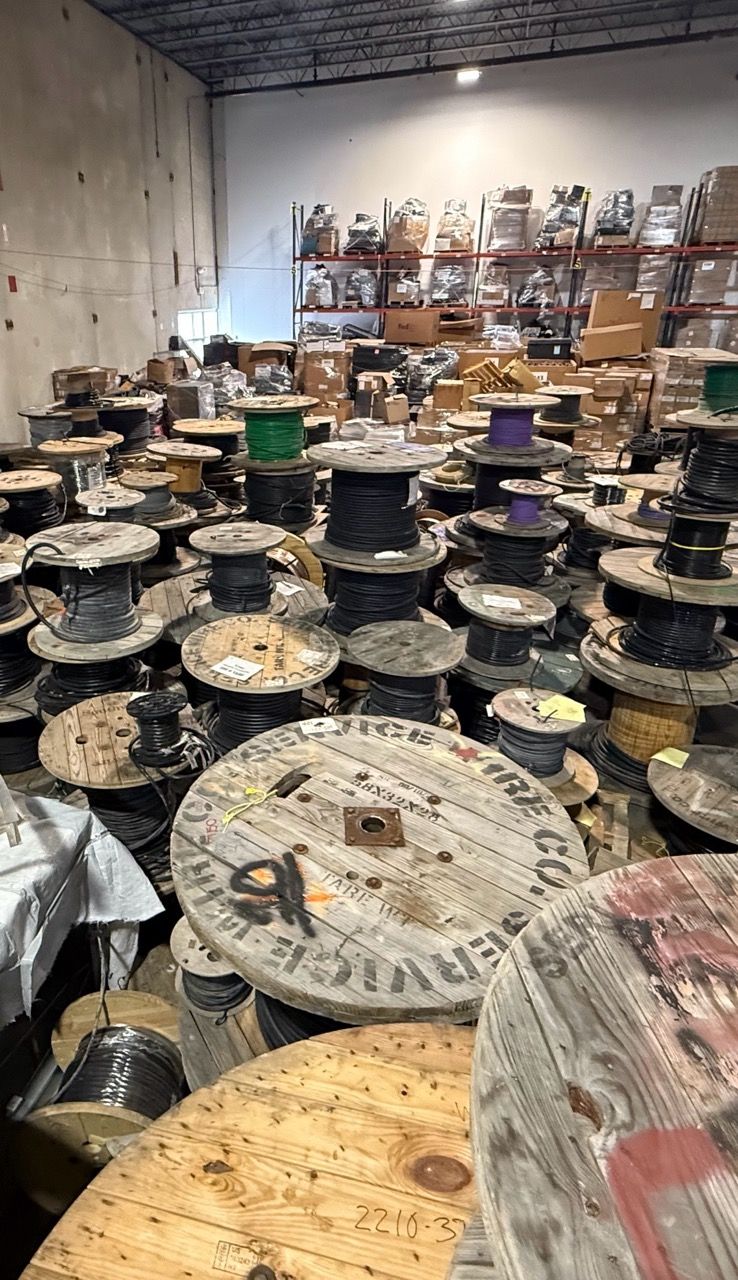
Electrical Wire Spools Buyers in Pennsylvania
Small packages of building and control wire, from 25 ft spools to pallet loads, bought on size, insulation and remaining length.
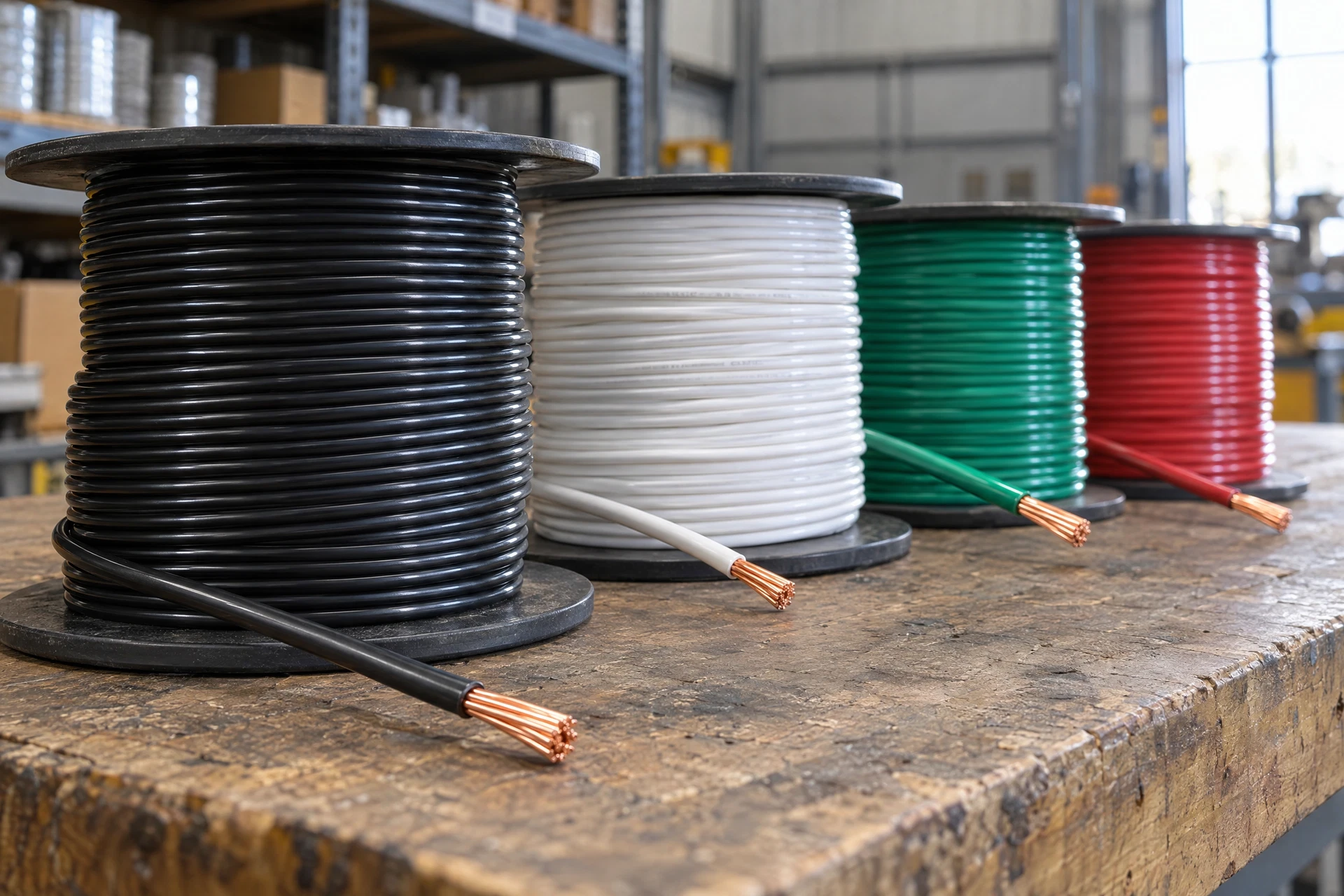
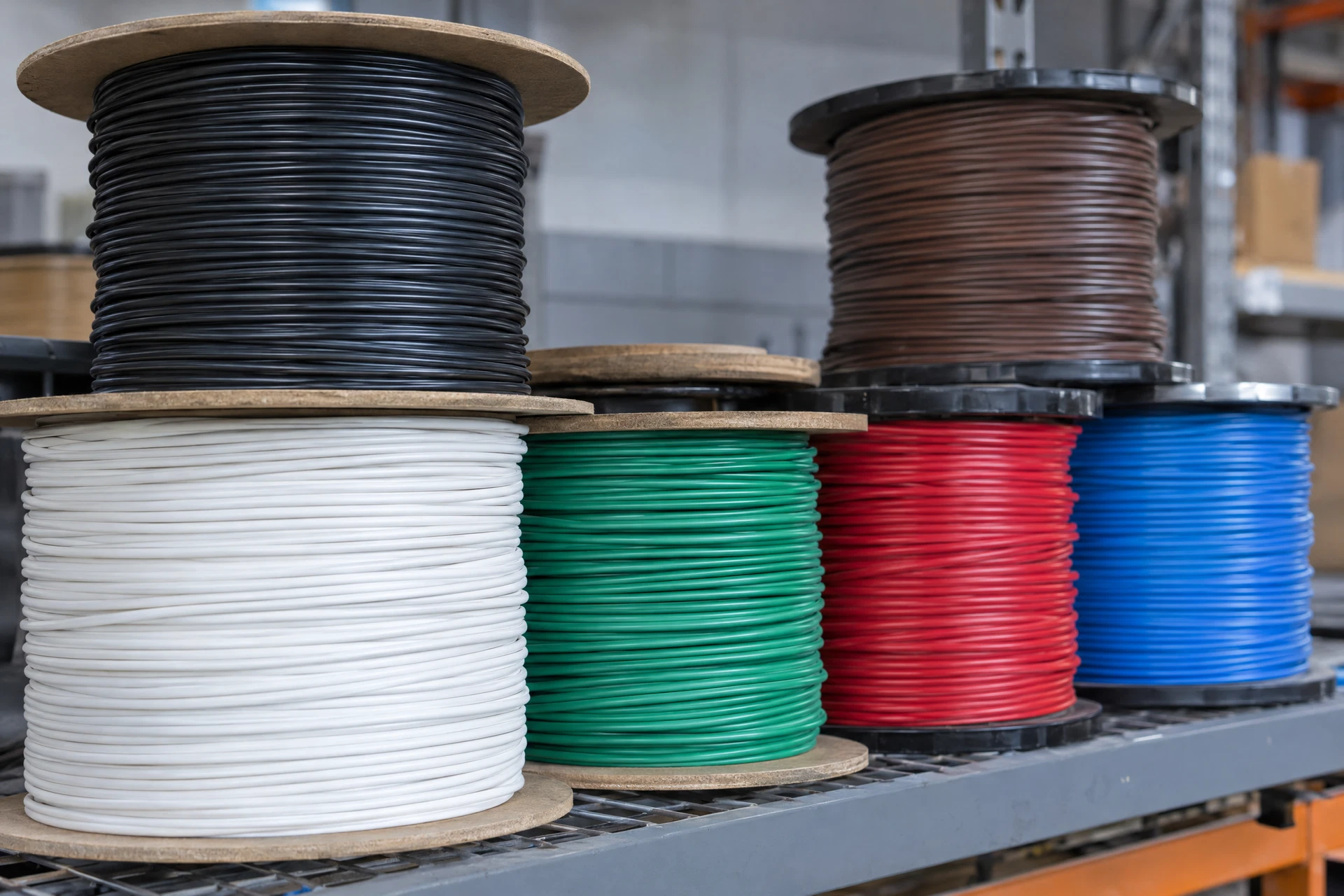
A spool is the small package. Where a reel holds hundreds or thousands of feet of cable, a spool holds a working quantity: 25, 50, 100, 250 or 500 feet of building wire, control wire or machine tool wire. Spools are made of plastic, plywood, hardboard or wood, and the flange diameter is what most people mean when they say a 12 inch spool. The wire on a spool is usually a single conductor, though small multiconductor control cable also ships that way.
Pennsylvania contractors, plants and distributors accumulate them constantly. A job needs 400 feet of 12 AWG THHN, the shop buys a 500 foot spool, and the remainder goes on a shelf. Multiply that across a year and a maintenance crib or a distributor's back room fills with partial spools that are too small for a project and too useful to discard. Most of those lots are sold in a single conversation once someone photographs the shelf.
| Typical capacity | About 25 ft to 500 ft, depending on wire size and spool dimensions |
|---|---|
| Materials | Plastic, plywood, hardboard and wood, with plastic common for THHN and MTW |
| Sizing | Spools are described by flange diameter and traverse width, such as 12 in by 6 in |
| Packages | Spool, coil, pail and box, each with different handling needs |
| Labeling | Labels give size, insulation, voltage rating, length and manufacturer |
Spools, coils and reels, and what the words mean
In the trade the words overlap, but they describe different packages. A spool has flanges at both ends and a barrel between them, and it is handled by hand or on a rack. A coil is wire wound without a permanent support, often tied and bagged. A reel is the large drum, wood or steel, that needs a forklift or a reel stand. A pail is a plastic container with wire coiled inside, common for THHN in small sizes.
The distinction matters when you describe a lot. Ten 500 foot spools of 12 AWG THHN and one 5,000 foot reel of the same wire are different products with different buyers. Photographs that show the package type, the label and the remaining wire settle the question faster than a written description.
- Spool: flanged package, handled by hand
- Coil: wire wound and tied without flanges
- Reel: large drum moved by forklift or crane
- Pail: plastic container, common for small THHN
Where Pennsylvania sellers end up with spools
Contractors are the largest source, because every job leaves partial spools behind. A shop that wires commercial buildings will have shelves of 10, 12 and 14 AWG in several colors, plus 8 and 6 AWG for feeders and equipment connections. When the shop moves or cleans out, those shelves become a single lot.
Plants, hospitals, school districts and property managers hold maintenance stock that accumulates for years. Distributors carry slow-moving spools that no longer justify shelf space, and machine shops end up with MTW and control wire in colors nobody orders anymore. All of it is saleable as a lot, even when no single spool is worth much on its own.
- Contractor shop cleanouts after a project
- Plant and hospital maintenance cribs
- School district and property management stock
- Distributor slow-moving shelf inventory
Full spools versus partial spools
A full spool still sealed in its factory wrap with the original label is the easiest thing to sell, because the length is known and the wire has never been exposed. An opened spool with a legible label and most of the wire remaining is nearly as good. A partial spool with no label and a loose tail is a question mark, and it will be priced as such.
Mixed lots are normal and are reviewed as a group. Colors, sizes and insulation types can be sorted at the shop, but that takes time, and a sorted lot usually brings more than an unsorted pile. If the wire is still on the spool and the spools are labeled, the sorting is already done.
- Factory wrap and label intact
- Remaining length known or clearly marked
- Wire tail secured rather than loose
- Spools sorted by size and color where possible
Storage problems specific to spools
Plastic spools crack when they are dropped or when they carry weight in cold weather, and a cracked flange lets the wire unwind into a tangle. Hardboard and cardboard spools absorb moisture and lose strength, and a damp shelf will soften them until the wire pushes through. Wooden spools are sturdy but attract moisture and insects if stored on a floor.
Wire itself suffers from the same storage conditions as cable. Sunlight degrades the insulation on spools left near a window or outdoors, and damp air dulls bare copper and leaves a green film. Small spools stored loose in a bin get tangled, and a tangled spool often has to be rewound before it can be used, which is why tangles reduce value.
- Cracked plastic flanges and collapsed hardboard
- Sunlight damage to insulation on exposed spools
- Corrosion on bare copper and on cut ends
- Tangled wire from loose tails and mixed bins
Photos and records for a spool lot
Photograph the labels first, since the label is the identity of the spool. Then take a wide shot of the shelf or pallet so the count and the range of sizes are visible, and close shots of any damaged flanges or loose wire. If the spools are still in factory wrap, show that clearly.
A simple list helps: size, insulation type, color, approximate remaining footage and how many spools of each. Purchase records are useful when they exist, but most spool lots are sold on what the labels say. A spool lot is quoted as a group, with pickup arranged around how the material is packaged.
- Label photographs for each size and color
- Wide shot showing the full lot
- Damaged flanges and loose tails
- A count by size, insulation and color
What we buy in this category
- Full spools of THHN and THWN-2 in all colors
- Partial spools with legible labels
- XHHW-2 and MTW spools
- Control and tray cable spools
- Bare copper and grounding wire spools
- Pails and coils of small gauge wire
- Mixed pallets from shop cleanouts
- Distributor slow-moving stock
Selling electrical wire spools in Pennsylvania
Reels of electrical wire spools turn up from Philadelphia and the southeastern counties through the Lehigh Valley, and from Pittsburgh and the Mon Valley across to Harrisburg, Lancaster and York. Send the city or township with the photographs so pickup can be planned realistically.
Electrical Wire Spools questions
What counts as a spool rather than a reel?
A spool is the smaller flanged package, usually holding 25 to 500 feet and handled by hand. A reel is the large drum moved with equipment. The words get used loosely, so a photograph is the quickest way to be clear.
Do you buy spools with only a little wire left?
Very short lengths are usually reviewed as part of a larger lot rather than on their own. A single spool with 30 feet left has little value, but a pallet of them from a shop cleanout is worth quoting.
Are plastic spools acceptable?
Yes. Plastic, plywood, hardboard and wood spools are all fine. Cracked flanges and collapsed spools are noted because they affect how the wire can be handled and whether it is tangled. Wooden spools are also fine, though they are heavier and more likely to have absorbed moisture.
Can you pick up a pallet of mixed spools?
Pickup is arranged after the quote is accepted. Tell us whether the pallet is stable, how much it weighs and whether a forklift can reach it, and we will plan accordingly. Loose spools that cannot be stacked are usually boxed or banded before they travel.
Other wire and cable we buy
Electrical Cable Reels
Sell surplus electrical cable reels in Pennsylvania.
Buying detailsTHHN Wire
Sell surplus thhn wire in Pennsylvania.
Buying detailsCopper Wire
Sell surplus copper wire in Pennsylvania.
Buying detailsBuilding Wire
Sell surplus building wire in Pennsylvania.
Buying detailsXHHW Wire
Sell surplus xhhw wire in Pennsylvania.
Buying detailsHave surplus wire on the floor right now?
Send photographs of the reels, tags and jacket print. We will tell you what the material is worth as wire, not just as metal.