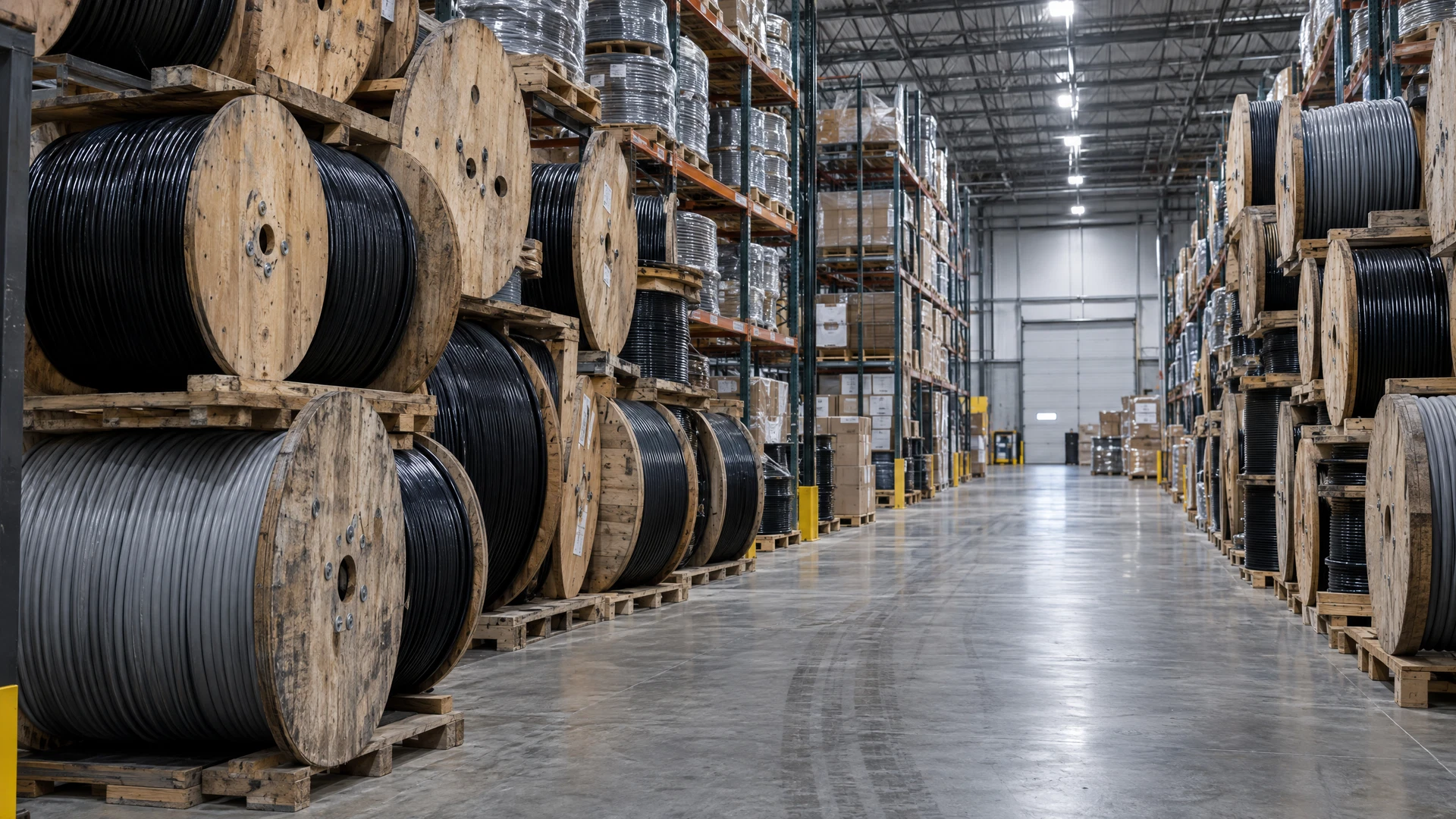
Luzerne County Pennsylvania Electrical Wire Buyers
Surplus wire from Wilkes-Barre contractors, Hazleton warehouses and Pittston shops, reviewed by buyers who know the Wyoming Valley.
Luzerne County was built on anthracite, and the evidence is everywhere in the Wyoming Valley. Breakers, headframes, patch towns and rail spurs mark a industry that employed tens of thousands before the Knox Mine disaster in 1959 and the decline that followed. Wilkes-Barre rebuilt after the 1972 flood and kept its courthouse and its grid. The valley's towns were built close together on steep ground, and the rail lines that served the mines still define where the industrial buildings are. That layout shapes every pickup.
What replaced coal is warehousing and light manufacturing along I-81 and I-80, with industrial parks near Hazleton and distribution centers that serve the entire eastern seaboard. Those buildings are new, but the towns around them are old, and both produce wire: clean reels from new construction and mixed copper from houses and shops that are finally being rewired. The interstate made the difference, and the counties along it rebuilt their economy around freight rather than extraction. Warehouse work replaced mine work.
| County seat | Wilkes-Barre |
|---|---|
| Main employment sectors | Warehousing and distribution, light manufacturing, health care, logistics, education |
| Key corridors | I-81, I-80, I-476 and the Turnpike, Route 309 |
| Typical wire | 600 V THHN and THWN-2, MC cable, tray cable, 480 V feeder |
| Municipalities covered | Wilkes-Barre, Hazleton, Pittston, Nanticoke, Kingston |
Anthracite and the Wyoming Valley
Coal built the valley's towns, railroads and banks, and it also built its electrical infrastructure. Mines ran on direct current in the early years, then converted to AC with substations at the pit mouth and cable strung along the breakers.
Little of that remains in service, but the industrial buildings that supported mining still stand in Nanticoke, Plymouth and Pittston. Their wiring is old, often ungrounded, and usually scheduled for replacement rather than repair. The mines also left subsidence, acid drainage and a rail network that still reaches most of the valley floor.
- Old ungrounded service cable from mine era buildings
- Cloth covered copper from breaker and shop buildings
- Bare copper grounding from service upgrades
- Old service cable from mine era commercial buildings
Warehousing along I-81
The I-81 corridor between Hazleton and Wilkes-Barre became one of the busiest warehouse districts in the country, because a truck can reach New York, Philadelphia and Harrisburg within a day. Buildings went up quickly and are still being expanded.
Electrical work in those buildings is repetitive and produces predictable surplus. Lighting packages, dock equipment and conveyor systems all require wire, and a change in layout after rough-in leaves reels that nobody wants to store. A building that went up in a year is often expanded in a season, and the electrical work follows.
- Full reels of 12 and 10 AWG THHN and XHHW-2
- MC cable from lighting and dock packages
- Tray and control cable from conveyor systems
- Lighting whips and MC cable from new construction
Wilkes-Barre, Pittston and the river towns
The Susquehanna runs through the valley floor and the towns sit close to it, which is why the 1972 flood did so much damage. Rebuilding replaced service equipment in much of downtown Wilkes-Barre, and those installations are now reaching the age of their first major upgrade.
Contractors working in the city deal with narrow streets, steep side hills and basements that flood. Wire that has been underwater is bought as recovery material, and we ask about water exposure before quoting. Contractors there work around steep streets and narrow alleys that were laid out for wagons.
- Flood exposed cable is reviewed at recovery value
- SEU and SER from service replacements
- MC cable from downtown commercial renovations
- Service cable from downtown panel replacements
Hazleton and the industrial parks
Hazleton's industrial parks sit on former mining land that was graded and served with new roads and utilities. The buildings there are large, modern and electrically straightforward, with clean rooms for switchgear and clear labeling.
That makes their surplus easy to price. Tags are intact, storage is dry, and the material is usually still on the original reel. It is the strongest category of lot in the county. The parks were graded from mine land, which is why the buildings sit on engineered fill.
- Factory sealed reels with footage counters
- XHHW-2 and THHN in commercial sizes
- Data cable from office build-outs
- Data cable from office and control room fit-outs
Winter storage and jacket damage
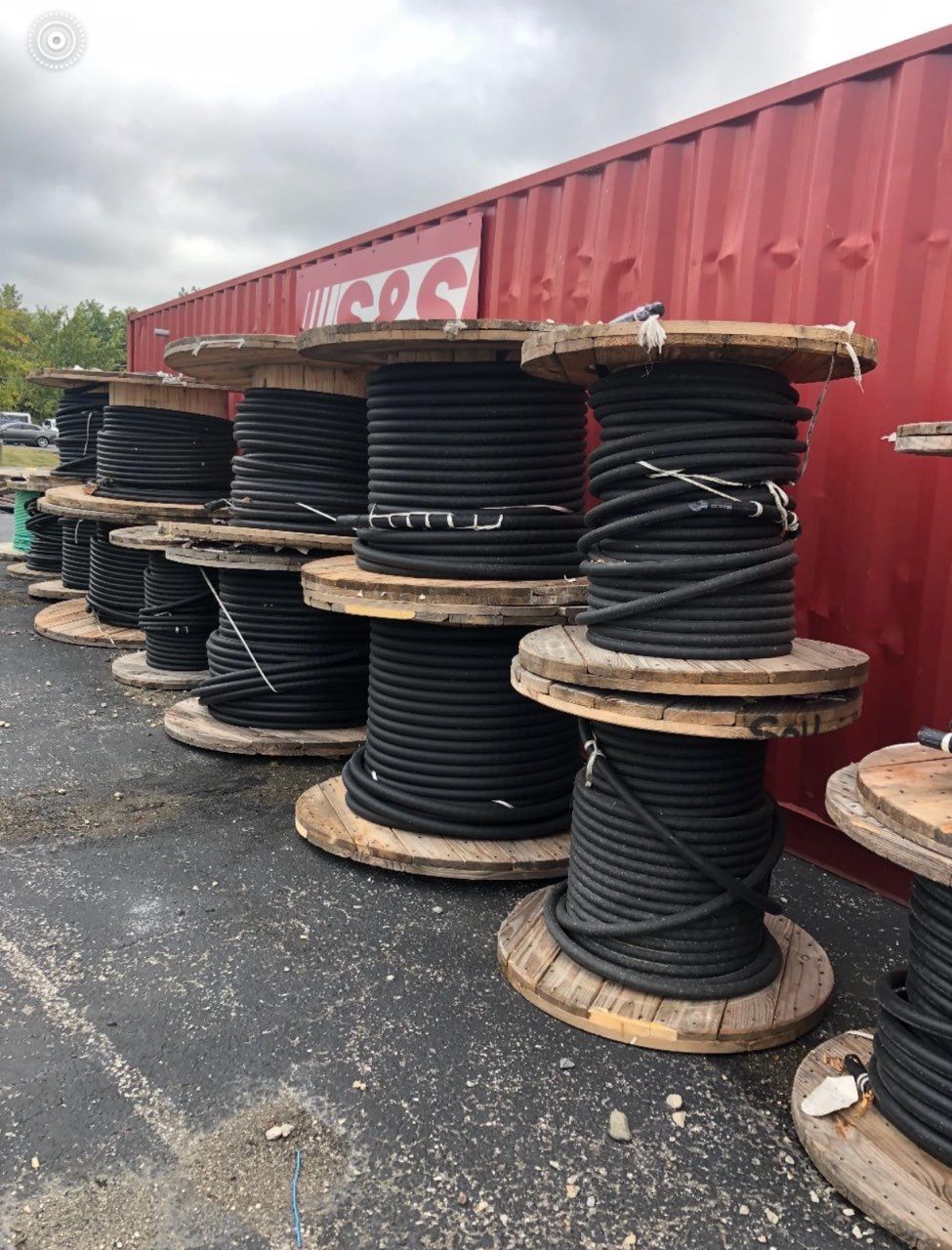
Northeastern Pennsylvania winters are hard on cable stored outdoors. Freeze and thaw cycles crack jackets, snow sits on reels for months, and spring melt finds every cut end.
A reel that spent two winters behind a warehouse is not the same as one that stayed inside. We look at the jacket and the conductor ends, and we describe what we see rather than assuming the worst or the best. That is why we ask for photographs of the jacket rather than a description of it.
- Photograph jacket cracks and exposed conductor ends
- Indoor storage usually keeps a lot in the usable category
- Reels on pallets fare better than reels on gravel
- Note whether the reel sat on pallets or on gravel
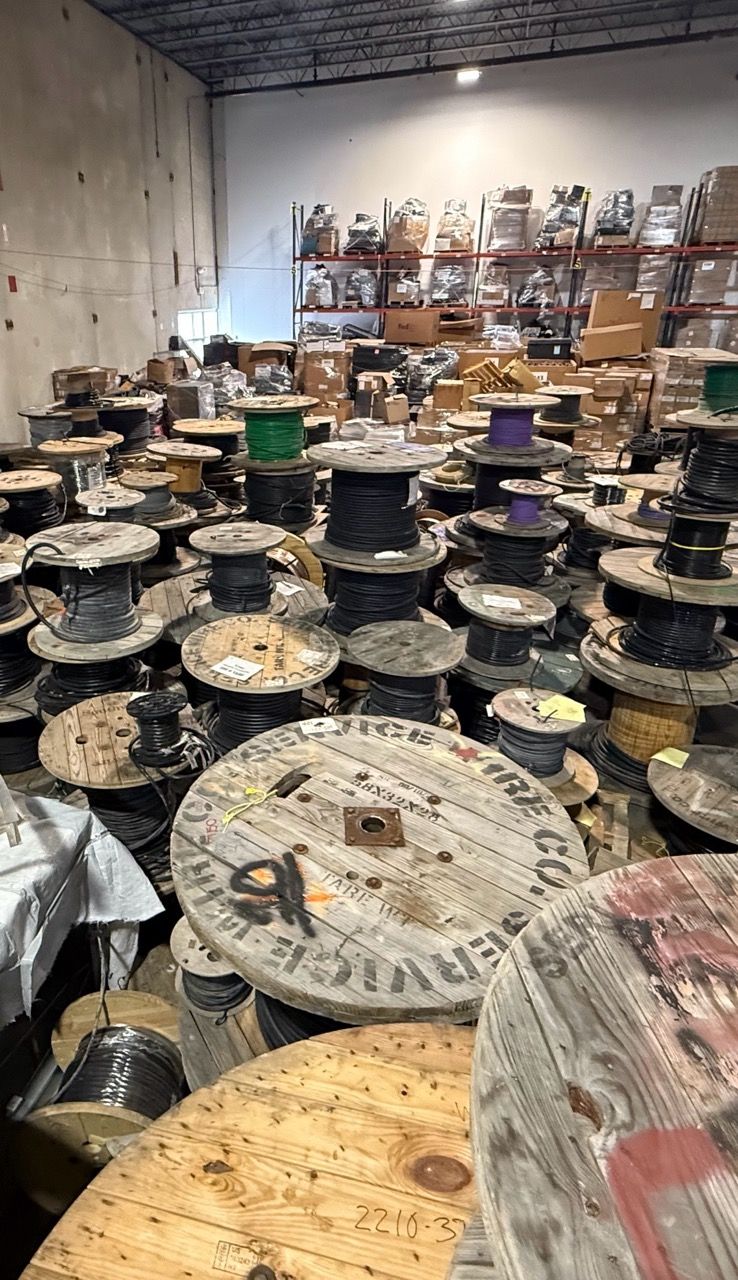
Wire and cable we buy in Luzerne County
Municipalities we cover in Luzerne County
Luzerne County questions
Do you buy wire from Hazleton area warehouses?
Yes. Warehouse lots are usually the cleanest in the county, with intact tags and dry storage. Full reels of THHN or XHHW-2, MC cable from lighting and tray cable from conveyor work are the most common items.
Is cable that was underwater in a flood still bought?
It is bought as recovery material, not as reusable cable. Water wicks into stranded conductor and shield, and the damage is not always visible. We price it on copper or aluminum content and say so before pickup.
Can you pick up from a Wilkes-Barre basement?
Pickup is scheduled after review. Basements in the city often have low headroom, narrow stairs and no direct outside access, so tell us what the carry looks like and whether a lift gate would help.
Have surplus wire on the floor right now?
Send photographs of the reels, tags and jacket print. We will tell you what the material is worth as wire, not just as metal.