
Copper Wire Buyers in Pennsylvania
Copper wire in any construction, from branch-circuit spools to 500 kcmil feeder reels, reviewed for resale across Pennsylvania.
Copper is the conductor most Pennsylvania wire is built around. It conducts better than any other metal in common electrical use, it bends without cracking at the radius a panel requires, and it holds tight under a set screw. That is why the material turns up in nearly every lot we review: solid 14 AWG in a lighting homerun, 7-strand 2 AWG in a subpanel feeder, 500 kcmil in a chiller feed, and bare stranded copper on a ground ring.
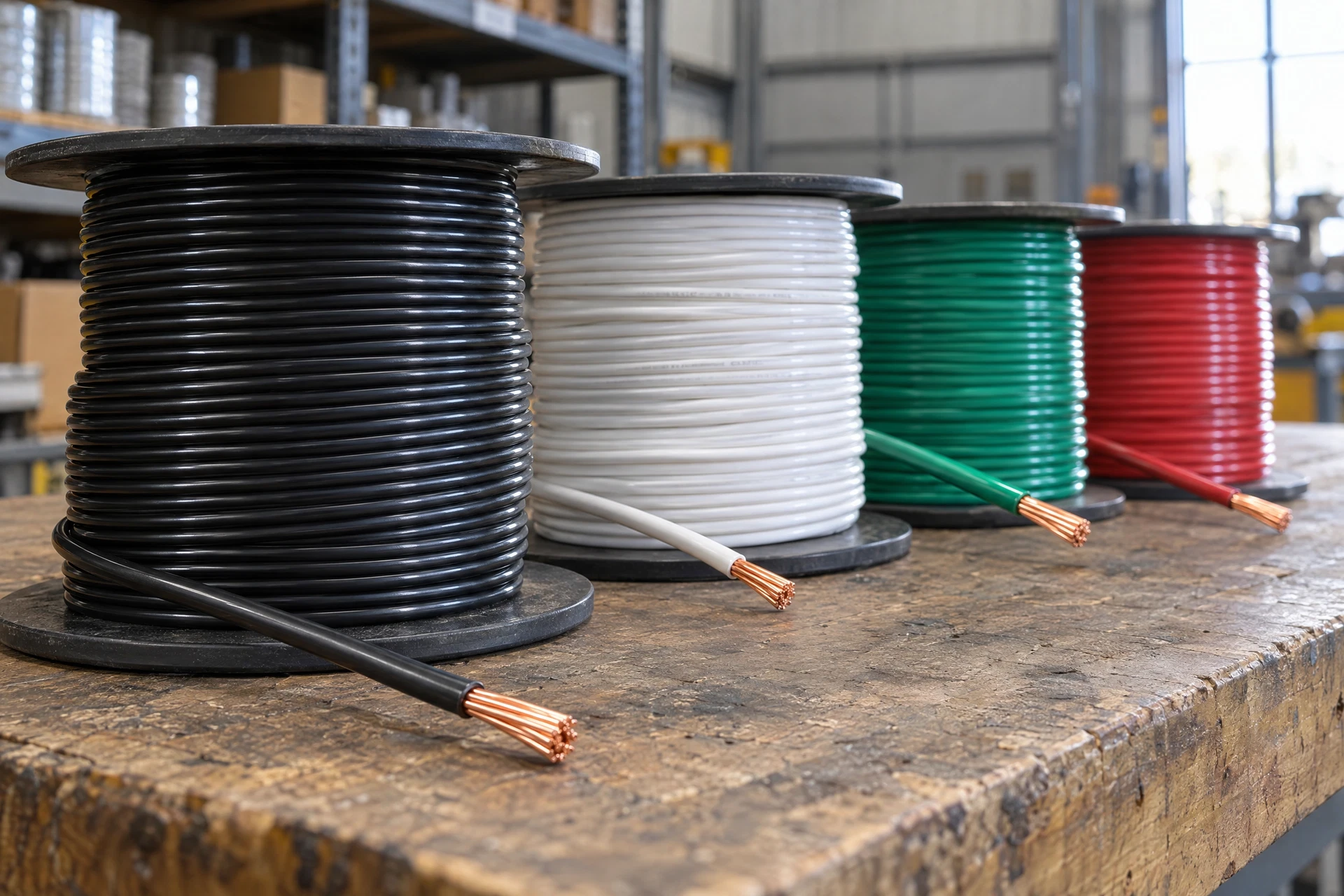
Sellers rarely have just one kind. A plant closing might release a pallet of mixed spools, some factory sealed, some half used, some with the tag long gone. A contractor cleaning out a gang box brings short coils of THHN in six colors. A distributor may add sealed spools from a cancelled order. We review the lot as it stands and separate what can go back into service as wire from what only carries copper recovery value.
| Conductor | Annealed copper, solid or stranded, with Class B concentric stranding on 8 AWG and larger |
|---|---|
| Insulation and jacket | Thermoplastic PVC with a nylon jacket on THHN, thermoset XLPE on XHHW, bare on grounding wire |
| Voltage rating | 600 V on building wire, 2 kV through 35 kV on shielded power cable |
| Temperature rating | 60, 75 or 90 degrees C depending on compound and whether the location is wet |
| Sizes and standards | 14 AWG through 1000 kcmil under UL 83, UL 44, ASTM B3 and ASTM B8 |
How copper wire is built
Copper wire begins as continuous cast rod, drawn through dies until it reaches the circular mil area the gauge calls for, then annealed to restore softness. Sizes 8 AWG and larger are stranded in concentric layers around a center wire, which is why a 500 kcmil conductor handles like rope rather than rod. Compact and compressed stranding pull those layers tighter to reduce the finished diameter.
Insulation goes on in one or more passes. Thermoplastic compounds are extruded hot and harden as they cool. Thermoset compounds are cured, usually in a continuous vulcanizing tube, so they will not remelt under a soldering iron or a hot lug.
- Solid conductor holds shape in switchboards and device terminations
- Class B stranding is standard for building wire, Class C and D for flexible cable
- Tinned copper appears in wet, high-sulfur and marine-adjacent work
Where copper wire comes from in Pennsylvania
Most lots originate in three places: industrial maintenance departments, electrical contractors, and distributors clearing slow stock. Food plants, machine shops, paper mills and pharmaceutical sites around the state all keep spare conductor for breakdown repairs, and when a maintenance budget lapses those spools sit on a shelf for years.
Contractors produce a steadier trickle. A hospital addition, a school renovation or a data center fit-out leaves partial reels of 10 AWG in five colors, 4 AWG feeders and a few hundred feet of 350 kcmil that never got pulled.
- Plant maintenance stock, often 10 AWG through 4 AWG
- Contractor leftovers from commercial and institutional projects
- Distributor overstock and cancelled-order reels
- Demolition removals with cut ends and no tag
What makes a copper reel resellable
Resale depends on knowing what the wire is and how much is left. A sealed reel with a factory tag, legible jacket print and a footage counter reading is straightforward. An open reel holding 180 ft of 2 AWG THHN is still worth reviewing, because that length finishes somebody's feeder.
Value drops toward recovery when the construction cannot be identified, the jacket is deeply scored or sun-cracked, the strands are corroded green, or the lengths are too short to pull. Mixed colors in one box are fine. Mixed sizes and insulations on a single reel are not, because nobody can certify what is on it.
- Print showing size, insulation type and voltage
- Enough length for a pull, not just a pigtail
- Intact jacket with no ring cuts or crushed spots
- One construction per reel, or clearly separated spools
Condition, storage and identification
Copper outlasts the insulation around it. Indoor storage on a rack leaves a reel close to new. A year in a yard brings UV chalking, water wicking into the ends, and a wooden reel that may not survive being lifted. Steel reels rust and can stain the outer layer of wire.
Identification usually decides the outcome. Tags fade, print rubs off where the wire dragged across a tray, and a spool respooled on site often carries no label at all. A clean cut end and a readable print a few feet in will usually settle the question.
- Photograph the tag before it fades further
- Note indoor or outdoor storage and how long
- Look for water in the ends and green corrosion between strands
Photographs and details that speed a copper quote
Send photographs of each reel from the side, the tag, and the conductor end. Include the footage if it is written anywhere and say whether the reel is still sealed. A written list of sizes and constructions helps more than a single wide shot of a dark aisle, though both are useful.
Tell us the town, whether there is a dock or a forklift, and roughly how much material is involved. Copper is heavy, and a full 500 kcmil reel is not a two-person lift. We review the inventory, return a quote, and arrange pickup once it is accepted.
- Side view showing the remaining wraps
- Close-up of jacket print and reel tag
- Cut end showing conductor and strand count
What we buy in this category
- THHN and THWN-2 single conductor, 14 AWG through 1000 kcmil
- XHHW and XHHW-2 copper in conduit and tray constructions
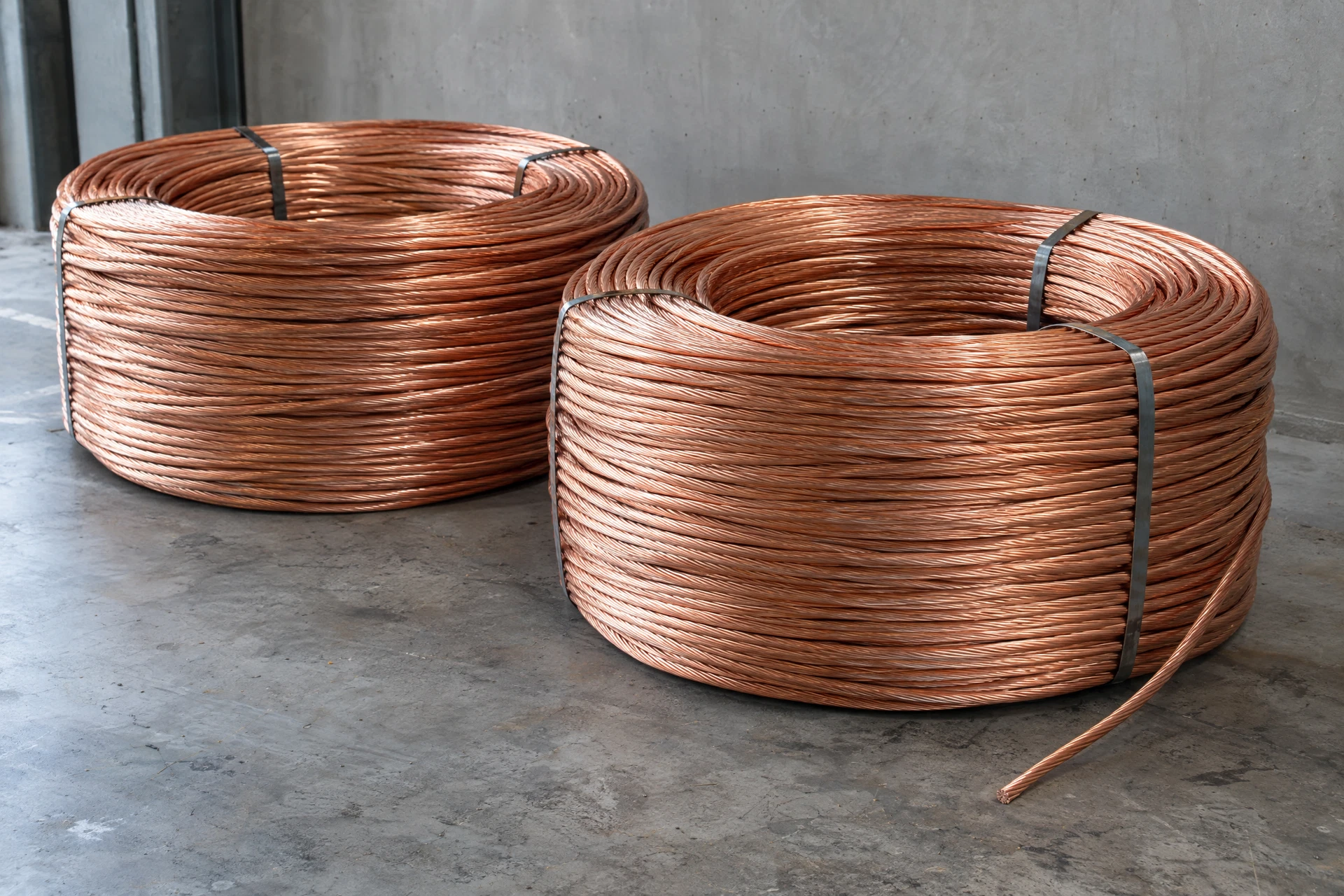
- Bare and green-insulated grounding conductor, solid and stranded
- RHW-2 and USE-2 dual-rated copper
- Shielded copper power cable, 5 kV through 35 kV
- Welding cable and flexible single conductor in usable lengths
- Full reels, partial reels, coils, cut lengths and mixed pallets
Selling copper wire in Pennsylvania
From the Route 202 corridor to the Mon Valley and the I-81 warehouse belt, copper wire is stored in shops and yards all over the state. Send the city or township, the access details and the photographs, and the pickup can be planned against the real site.
Copper Wire questions
Is partial copper wire worth selling?
Often yes, if the length is usable and the construction can be identified. A partial reel of 2 AWG or 4 AWG with legible print is reviewed as wire. Short coils and unidentified material are usually valued on copper content instead.
Do you buy mixed pallets of copper wire?
Yes. Mixed lots are sorted by construction and gauge during review. Keeping spools upright and tags visible speeds that process, and separating bare copper from insulated wire helps both sides of the conversation and shortens the review.
What documentation helps most?
Reel tags, jacket print and footage counters do most of the work. A purchase record or packing list is useful on large lots, but photographs of the tag and the conductor end usually answer the same questions.
Can you pick up from a plant in Pennsylvania?
Pickup is scheduled after the quote is accepted. Tell us about dock height, forklift capacity and whether reels are banded to pallets, since a full 500 kcmil reel may need equipment on site to move it safely.
Other wire and cable we buy
Aluminum Wire
Sell surplus aluminum wire in Pennsylvania.
Buying detailsTHHN Wire
Sell surplus thhn wire in Pennsylvania.
Buying detailsBare Copper Wire
Sell surplus bare copper wire in Pennsylvania.
Buying detailsBuilding Wire
Sell surplus building wire in Pennsylvania.
Buying detailsXHHW-2 Wire
Sell surplus xhhw-2 wire in Pennsylvania.
Buying detailsHave surplus wire on the floor right now?
Send photographs of the reels, tags and jacket print. We will tell you what the material is worth as wire, not just as metal.