EPR Cable Buyers in Pennsylvania
Rubber insulated cable, from portable cord up to 69 kV shielded feeder, bought on insulation type, footage and jacket condition.
EPR stands for ethylene propylene rubber, a thermoset compound used as insulation and often as a jacket on flexible cable. It stays flexible in cold weather, tolerates flexing and bending better than polyethylene, and resists the water treeing that troubled early XLPE. Those properties made it the default insulation for portable power cable, mining cable and much of the shielded cable installed before the 1980s, particularly where a cable had to be rolled out, moved and reterminated more than once.
In Pennsylvania it appears in quarries and mines, wastewater plants, steel mills, portable substations and anywhere a cable has to be moved or reterminated. Utility crews still hold 15 kV EPR cable in stores, and plant electricians often prefer it for feeders that see vibration. It is a smaller share of the surplus market than XLPE, which makes each reel easier to identify and harder to replace. Buyers who still specify it tend to hold on to what they find, which keeps demand steady for clean reels.
| Polymer | Ethylene propylene rubber, a thermoset that stays flexible at low temperature |
|---|---|
| Temperature | Commonly 90 degrees C continuous, with emergency ratings set by the manufacturer |
| Voltage range | Made from 600 V portable cable through 69 kV shielded cable |
| Standard | AEIC CS6 covers EPR insulated cable rated 5 kV through 69 kV |
| Trade-off | Better flex and water tree resistance, lower dielectric strength than XLPE |
How EPR cable is built and marked
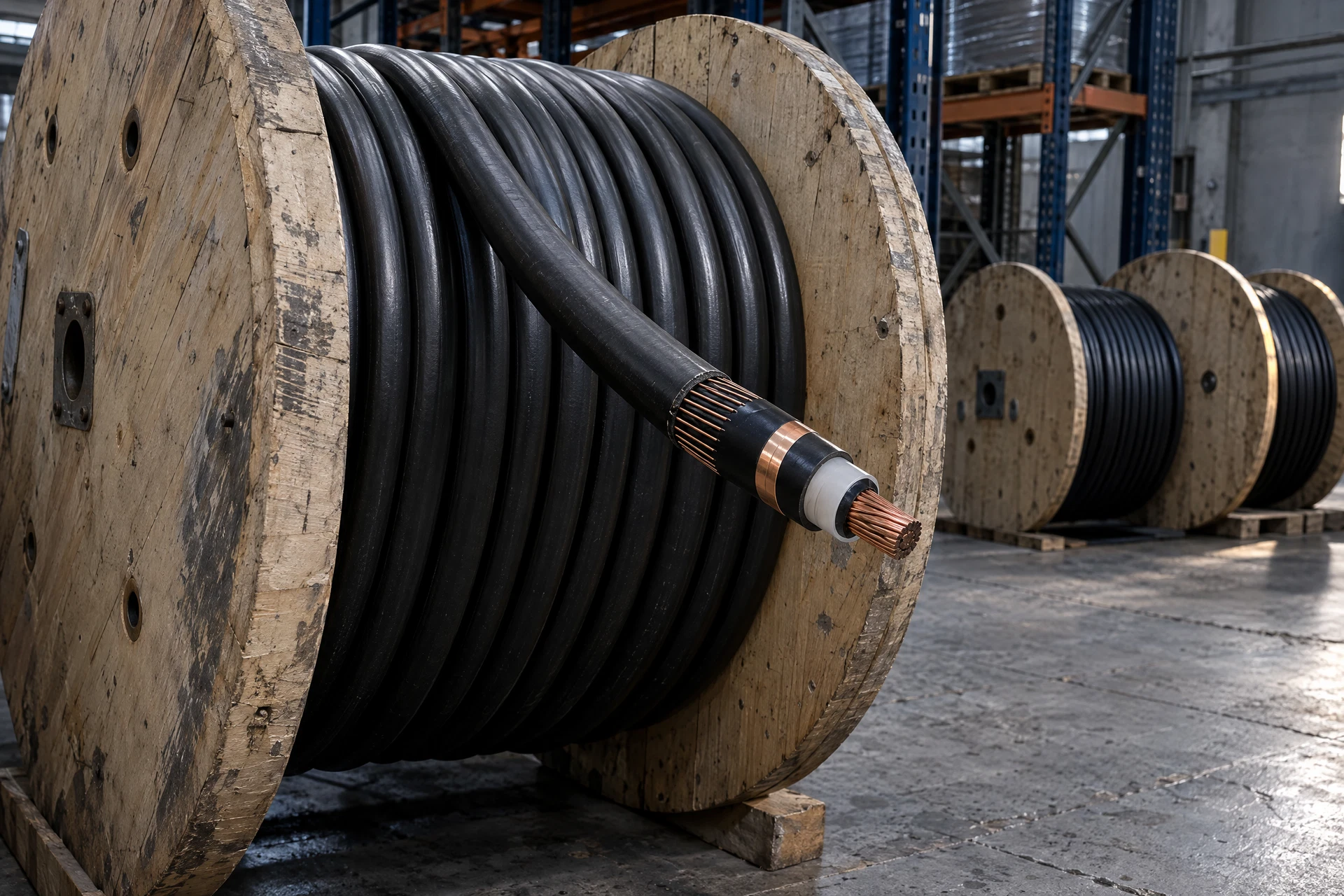
The conductor is stranded copper or aluminum, with a semiconductive shield over it on shielded constructions. EPR insulation is applied by extrusion and then vulcanized, which is what makes it a thermoset rather than a thermoplastic. On medium voltage cable the insulation is followed by a semiconductive insulation shield, a metallic shield and a jacket, usually chlorinated polyethylene on rubber cable because it bonds well and flexes with the core.
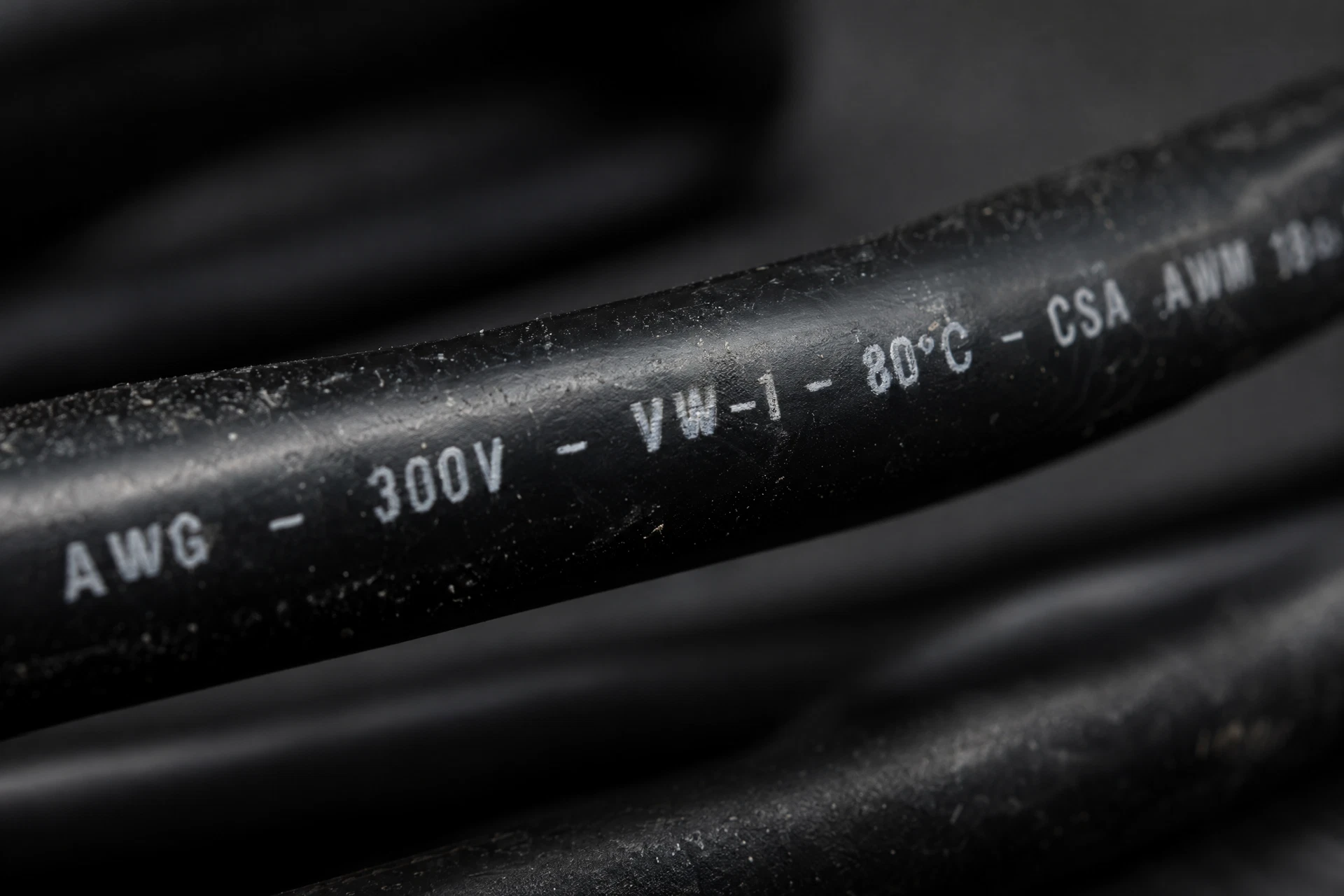
Print on EPR cable usually names the insulation directly, and the word EPR is the fastest way to identify it in the field. A legend may read 15 kV, 133 percent, EPR, 1/0 AWG copper, with the shield type and jacket compound following. Portable and mining cable carry their own markings under articles 400 and 501 of the NEC, and those markings matter as much as the voltage class.
- Insulation is vulcanized rubber, not thermoplastic
- CPE jackets are common because they flex with the core
- Print usually names EPR and the voltage class
- Portable cable carries its own NEC article 400 markings
Where Pennsylvania sellers encounter EPR cable
Quarries, mines and heavy construction sites are the classic source, because trailing cable and portable distribution cable are built on EPR. Wastewater treatment plants use it around wet wells and submersible equipment. Steel mills and foundries keep it for crane and ladle circuits where heat and flexing combine, and portable substations often use EPR jumpers that are rolled out and reterminated repeatedly.
Utility stores are the other source. A crew that standardized on EPR years ago may still hold reels of 15 kV EPR that no longer match current specifications. When those stores are cleaned out, the cable is often in excellent condition because it was kept indoors and never installed. That is the best case in this category, and it is not unusual.
- Trailing and portable cable from quarries and mines
- Wet well and submersible circuits at wastewater plants
- Crane, ladle and vibration duty in steel mills
- Older utility stores of 15 kV EPR feeder cable
What makes EPR cable worth buying
Age matters less with EPR than with some compounds, because the rubber does not embrittle the way thermoplastic insulation can. A twenty-year-old reel stored indoors may still be perfectly serviceable, and buyers who understand the material will pay for that. The catch is that EPR absorbs moisture at the surface over time, so storage history has to be known rather than assumed.
Beyond condition, the usual factors apply. Continuous footage, legible print and an undamaged jacket carry most of the value, and a reel tag that identifies the manufacturer and the year helps. Because EPR is less common in new construction, a buyer may value it for a specific replacement need rather than for general resale, and that can work in the seller's favor.
- Indoor storage with capped ends
- Continuous length and readable print
- Jacket free of ozone cracks and splits
- A tag that gives manufacturer, year and voltage class
Condition and storage risks
Rubber has its own failure modes. Ozone attacks stressed EPR in the presence of air and electrical discharge, producing fine cracks that run perpendicular to the bend. Sunlight accelerates surface degradation, and a reel that has stood outdoors for years will show a chalked, crazed jacket even if the insulation underneath is sound.
Compression set is the other concern. Cable wound tightly on a small reel and left for a decade takes a set that makes it stiff and hard to train in a duct. Water at the ends, corrosion on the copper shield and crushed reels are the same problems found on any medium voltage reel, and they are reviewed the same way.
- Ozone cracking on jackets under bend stress
- Sun damage and surface crazing from outdoor storage
- Compression set from long storage on a small barrel
- Water ingress at uncapped ends
Photos and records to send
A clear photograph of the print legend settles most questions, because it names EPR directly. Follow it with the tag, both ends, the jacket surface and the reel face. If the cable is portable or mining cable, photograph the outer jacket markings as well, since those determine where it can legally be used.
Send the purchase record if it exists, along with any test report and the storage history. For older EPR the year of manufacture is genuinely useful, because it tells a buyer which specification the cable was built to. The lot is reviewed as a whole, and the offer reflects what the material is rather than what it weighs.
- Print legend showing EPR and the voltage class
- Tag, ends and jacket close-ups
- Portable or mining cable jacket markings
- Year of manufacture and storage history

What we buy in this category
- 15 kV and 25 kV EPR shielded cable
- 5 kV and 8 kV EPR motor feeder cable
- 600 V EPR portable and trailing cable
- Mining and quarry cable with legible markings
- Copper conductor from 2 AWG through 1000 MCM
- Full reels, partial reels and cut lengths
- Cable with CPE or PVC jackets
- Older EPR stores kept indoors
Selling epr cable in Pennsylvania
Most epr cable we review comes from plants and contractors in the southeast, the Pittsburgh region and the central counties, with smaller lots from Scranton, Wilkes-Barre, Erie and the northern tier. Tell us where the material sits and we will confirm coverage.
EPR Cable questions
How can I tell EPR from XLPE on an old reel?
Read the print first, since most cable names its insulation. If the print is gone, EPR tends to feel rubbery and returns when compressed, while XLPE feels harder and more waxy. A clean cut showing a uniform, slightly resilient wall also points to EPR.
Is EPR cable still manufactured?
Yes, though XLPE holds most of the medium voltage market. EPR remains common for portable, mining and flexible applications, and some utilities still specify it where flexibility and wet performance matter more than ampacity. Its flexibility keeps it in demand for portable and mining work.
Does older EPR cable lose value?
Not automatically. Rubber that was stored indoors often remains serviceable for decades. Cable stored outdoors with cracked jackets and wet ends is a different story and is priced accordingly. Age alone is not the deciding factor, and the year of manufacture helps establish what specification it was built to.
Do you buy EPR portable cord in short lengths?
Short lengths of portable cord are usually reviewed as a lot rather than individually. Coils with legible markings and clean jackets are worth more than tangled cutoffs, and a photograph of the whole pile is the best place to start.
Other wire and cable we buy
XLPE Cable
Sell surplus xlpe cable in Pennsylvania.
Buying detailsMedium Voltage Cable
Sell surplus medium voltage cable in Pennsylvania.
Buying detailsShielded Power Cable
Sell surplus shielded power cable in Pennsylvania.
Buying detailsWelding Cable
Sell surplus welding cable in Pennsylvania.
Buying detailsSOOW Cable
Sell surplus soow cable in Pennsylvania.
Buying detailsHave surplus wire on the floor right now?
Send photographs of the reels, tags and jacket print. We will tell you what the material is worth as wire, not just as metal.