
Concentric Neutral Cable Buyers in Pennsylvania
Underground distribution cable with copper neutral wires applied over the insulation shield, bought on neutral size, footage and jacket condition.
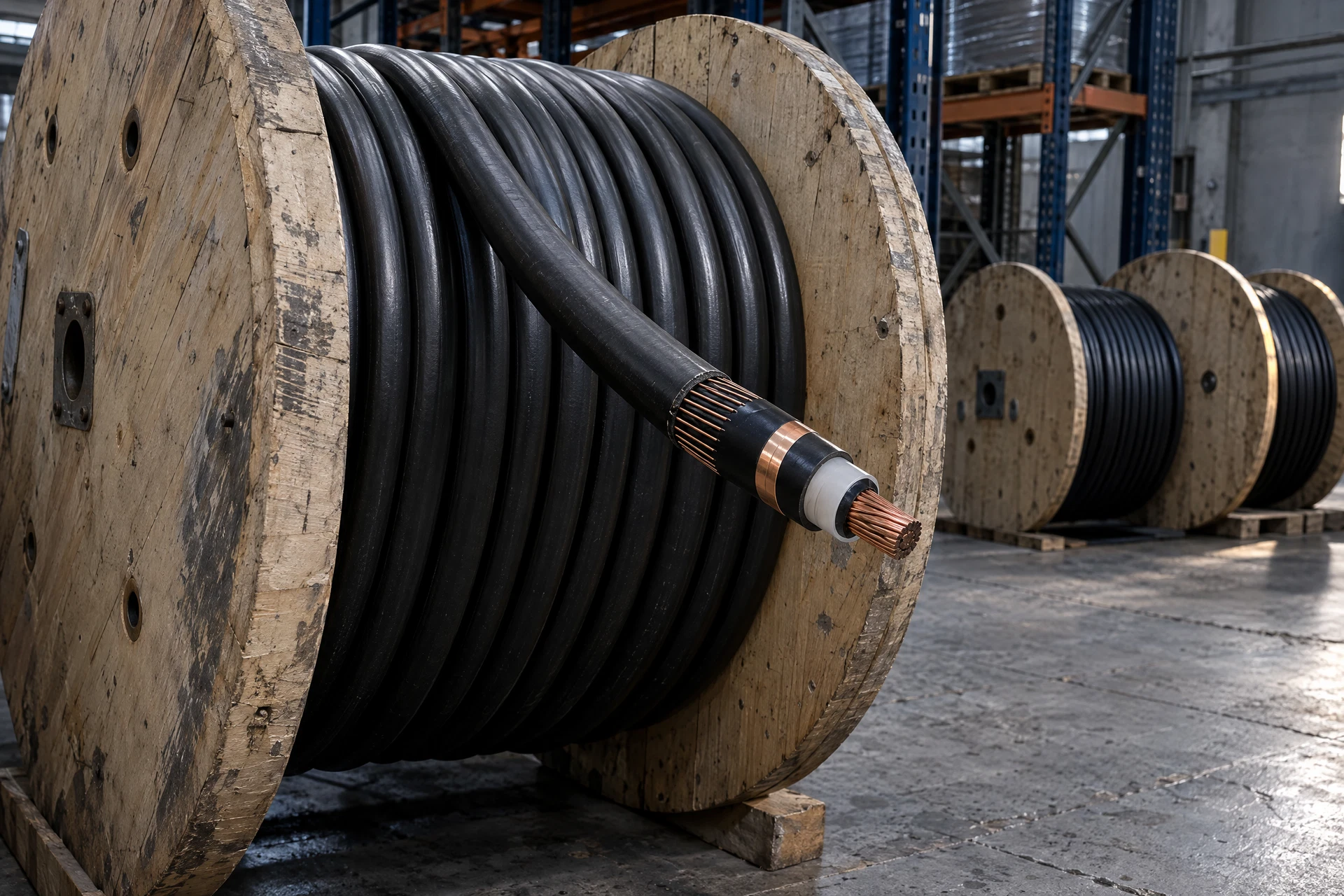
Concentric neutral cable carries its neutral as a layer of copper wires wound helically over the insulation shield. The wires touch the semiconductive layer along their length, so they act as the metallic shield and as the neutral at the same time. That dual role is why utilities use the construction for underground distribution: one cable does the work of a shielded cable plus a separate neutral conductor. The construction also saves a trench, since there is no separate neutral to bury alongside.
In Pennsylvania it runs under streets, parking lots and plant yards at 15 kV and 25 kV, feeding pad-mounted transformers and sectionalizing cabinets. The 600 V version, often called URD cable, does the same job for residential and commercial services. Sellers usually meet it when a utility rebuilds a subdivision, a plant reroutes an underground feeder, or a contractor finishes a job with a partial reel. Jacketed cable from a subdivision job is the most common form we are asked about.
| Neutral | Copper wires applied helically over the insulation shield, in contact along their length |
|---|---|
| Neutral sizes | Commonly 2 AWG through 4/0, with one-third, one-half and full neutral constructions |
| Function | Carries unbalanced load current and fault current, and serves as the metallic shield |
| Typical use | Utility underground distribution at 15 kV and 25 kV, plus 600 V URD service cable |
| Standard | ICEA S-94-649 covers concentric neutral cable rated 5 kV through 46 kV |
How concentric neutral cable is built
Under the neutral wires the cable looks like any shielded medium voltage cable: stranded conductor, conductor shield, insulation, insulation shield. The copper wires are then applied helically, with a lay length that keeps them in continuous contact with the semiconductive layer. A jacket is extruded over the wires on jacketed constructions, leaving only the ends exposed for terminating.
The neutral can be sized as a full neutral, a one-half neutral or a one-third neutral relative to the phase conductor. A full neutral carries the same current as the phase conductor and is used where significant unbalanced load or fault current is expected. The smaller neutrals save copper and are common on utility systems that rely on separate grounding conductors and frequent grounding points.
- Copper wires applied helically, not braided or taped
- Jacketed and unjacketed versions both exist
- Neutral may be full, one-half or one-third of the phase size
- Print usually gives both phase and neutral sizes
Where Pennsylvania sellers encounter it
Utilities are the main source, since concentric neutral is their standard underground distribution cable. Subdivision rebuilds, road projects and transformer replacements all generate partial reels, and utilities retire cable that no longer matches current standards even when it is still sound. Contractors working under utility contracts hold the same material in their yards between jobs.
Plants use it for underground feeders between buildings, to parking lot lighting and to remote pump stations. Hospitals and universities with campus distribution run it between buildings where duct banks are impractical. Because the neutral is part of the cable, it suits locations where a separate neutral run would be difficult to protect.
- Utility subdivision and road reconstruction work
- Pad-mounted transformer and sectionalizing cabinet feeds
- Campus and plant underground distribution
- Parking lot and street lighting circuits
What makes a concentric neutral reel valuable
The neutral wires are copper, and there are a lot of them, so the metal value of this construction is higher than the phase conductor alone suggests. That sets a floor under the price. Above that floor, value depends on whether the cable can be returned to service: a full reel with intact jacket and clean neutral wires is worth considerably more than the same weight of cut-up cable.
The neutral size is worth confirming before you call it in. A full neutral 1/0 cable and a one-third neutral 1/0 cable look similar on the outside but differ in copper content, and the print is the only reliable way to tell. Footage, jacket condition and the presence of the tag fill out the rest of the picture.
- Neutral wire size and full, half or third designation
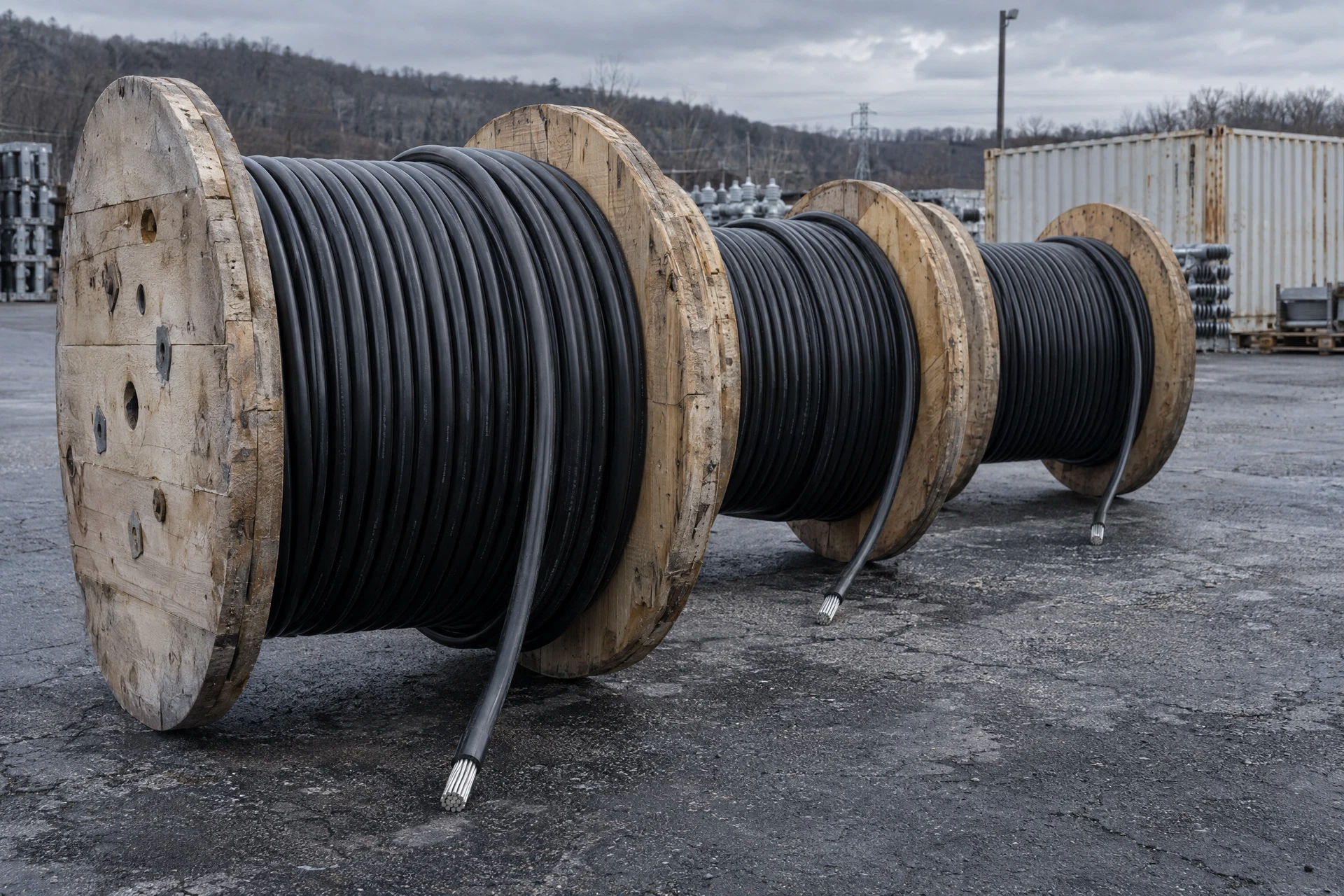
- Continuous footage on a sound reel
- Jacket intact over the neutral wires
- Tag and print that agree on the construction
Condition and storage risks
The exposed neutral wires are the vulnerable part on unjacketed cable. A reel that was dragged across concrete will have flattened or broken wires, and broken wires reduce the fault current path. Even on jacketed cable, a jacket split lets water reach the wires, and copper corrosion follows quickly in a wet yard.
The usual storage problems apply with one addition: because the neutral is on the outside, abrasion matters more than it does on a tape shielded cable. Reels stored on gravel or moved with a chain rather than a sling often show damage along one side. Sunlight degrades the jacket, and water in the ends reaches the conductor the same way it does anywhere else.
- Broken or flattened neutral wires from dragging
- Jacket splits exposing the neutral to moisture
- Green corrosion on copper wires after wet storage
- Abrasion damage along one side of the reel
Photos and records to send
Photograph the print, which normally lists both the phase and neutral sizes, then the neutral wires at the cut end where the lay and count are visible. Take a wide shot of the reel and close shots of any jacket damage. If the cable is unjacketed, show the condition of the wires along the outer surface.
Send the tag details, the approximate footage and the storage history. If the cable came from a utility, the purchase record or stores tag may give the year and the specification. Demand for that construction shapes the offer, so neutral size, footage and jacket are all weighed before a number is given.
- Print showing phase and neutral sizes
- Neutral wires at the cut end
- Jacket condition along the outer wraps
- Utility stores tag or purchase record
What we buy in this category
- 15 kV and 25 kV concentric neutral cable
- 600 V URD cable with copper neutral
- Jacketed and unjacketed constructions
- Full, half and one-third neutral cable
- Copper phase conductor from 2 AWG through 1000 MCM
- Full reels, partial reels and cut lengths
- Cable from utility rebuilds and plant projects
- Reels with legible print and stores tags
Selling concentric neutral cable in Pennsylvania
We review concentric neutral cable from every Pennsylvania region: the southeastern industrial corridor, the Lehigh Valley, southwestern Pennsylvania, the Susquehanna Valley, the northeast and the northern tier. Location decides the pickup plan, so include the municipality in your message.
Concentric Neutral Cable questions
What is a concentric neutral?
It is a layer of copper wires wound helically over the insulation shield of a cable. The wires serve as the neutral conductor and as the metallic shield, carrying unbalanced load current, fault current and charging current back to the source.
Why do utilities use concentric neutral cable?
One cable provides phase conductor, shield and neutral, which simplifies underground installation. The neutral also gives a low impedance fault path, which helps protective relaying clear faults quickly on a distribution circuit. It also installs faster, since one pull places the phase conductor and the neutral together.
Does the neutral size affect the offer?
Yes. A full neutral contains more copper than a one-third neutral of the same phase size, and the print states which one you have. Neutral size and count are part of how the reel is valued.
Can unjacketed cable be sold?
Yes, but the exposed wires are inspected closely. Broken strands, heavy corrosion and abrasion reduce the value, and cable in that condition may only carry recovery value. Photographs of the wires along the outer surface tell the story better than a description.
Other wire and cable we buy
URD Cable
Sell surplus urd cable in Pennsylvania.
Buying detailsMedium Voltage Cable
Sell surplus medium voltage cable in Pennsylvania.
Buying detailsUnderground Electrical Cable
Sell surplus underground electrical cable in Pennsylvania.
Buying detailsXLPE Cable
Sell surplus xlpe cable in Pennsylvania.
Buying detailsShielded Power Cable
Sell surplus shielded power cable in Pennsylvania.
Buying detailsHave surplus wire on the floor right now?
Send photographs of the reels, tags and jacket print. We will tell you what the material is worth as wire, not just as metal.