XLPE Cable Buyers in Pennsylvania
Cross-linked polyethylene cable in shielded and unshielded forms, bought on voltage class, footage, print and test paperwork.
XLPE is cross-linked polyethylene, the insulation that took over medium voltage cable in the 1970s and has held the position since. Cross-linking turns a thermoplastic into a thermoset, so the insulation holds its shape at temperatures that would soften plain polyethylene. It also has high dielectric strength, which means a thinner wall can do the job that EPR needs a thicker wall to do. That is why a 15 kV XLPE cable is thinner and lighter than the EPR equivalent at the same voltage, which matters on a long pull.
That thin wall is the reason XLPE reels are everywhere in Pennsylvania. Utilities use it at 15 kV, 25 kV and 35 kV, industrial plants use it for substation feeders, and solar and wind collection systems run it at 35 kV. The same polymer appears as XHHW-2 building wire at 600 V, which is why a single warehouse can hold both a spool of 4/0 XHHW-2 and a reel of 15 kV shielded cable. Both are worth reviewing together when a shop clears out its stock.
| Polymer | Cross-linked polyethylene, a thermoset cured by peroxide or silane |
|---|---|
| Temperature | Commonly 90 degrees C continuous, 130 degrees C emergency, 250 degrees C short circuit |
| Dielectric strength | Higher than EPR, so a thinner insulation wall serves the same class |
| Water treeing | Older XLPE is vulnerable, which is why tree-retardant TR-XLPE became standard |
| Standards | AEIC CS8 for 5 kV to 46 kV, AEIC CS7 for 69 kV to 138 kV |
How XLPE cable is built and marked
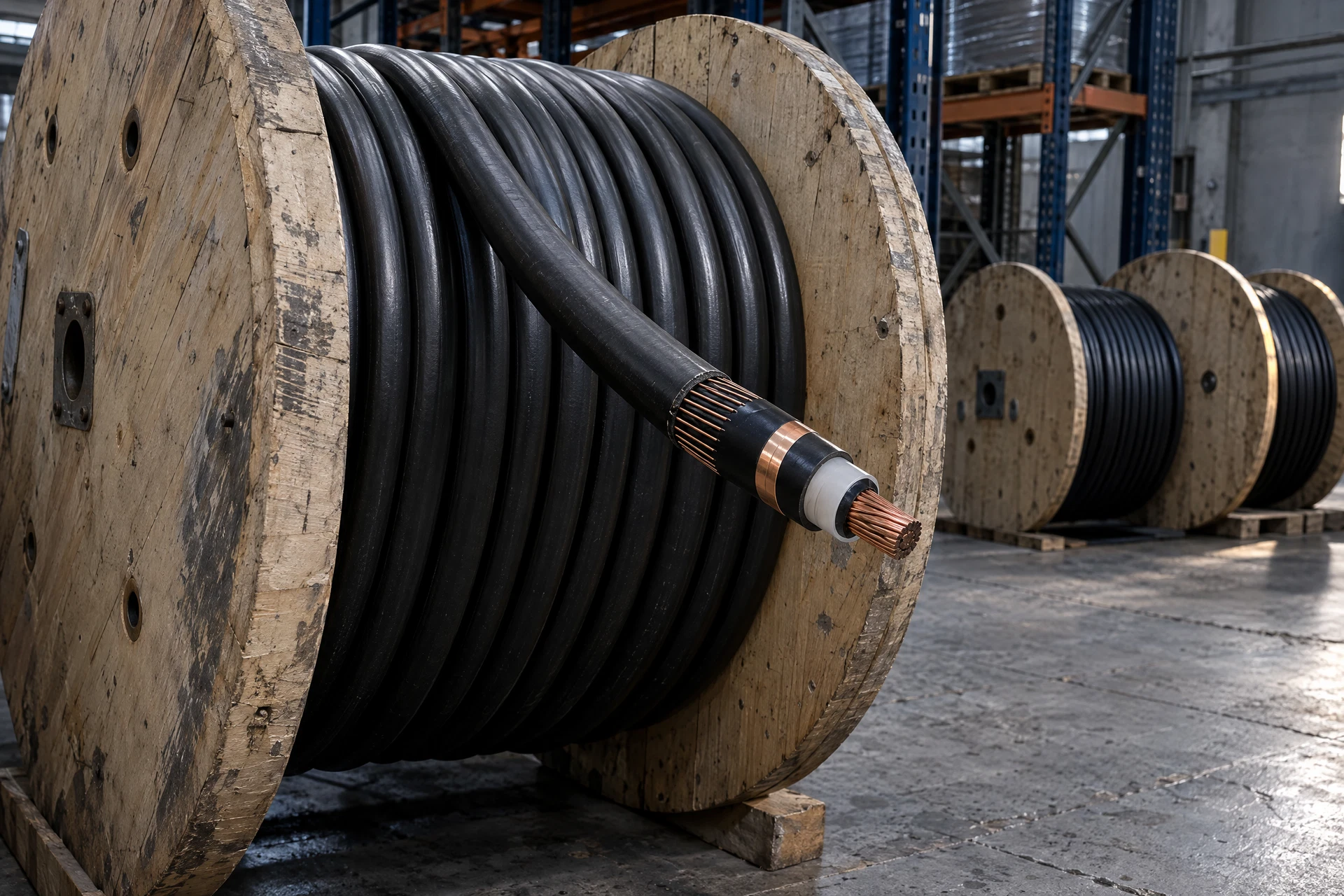
Shielded XLPE cable carries a semiconductive conductor shield, the XLPE insulation, a semiconductive insulation shield, a metallic shield and a jacket. The insulation is cured after extrusion, and peroxide curing leaves byproducts that have to dissipate before the cable is tested or energized. That is why manufacturers hold cable for a period before shipping, and why a fresh reel and an old one can behave differently in a partial discharge test.
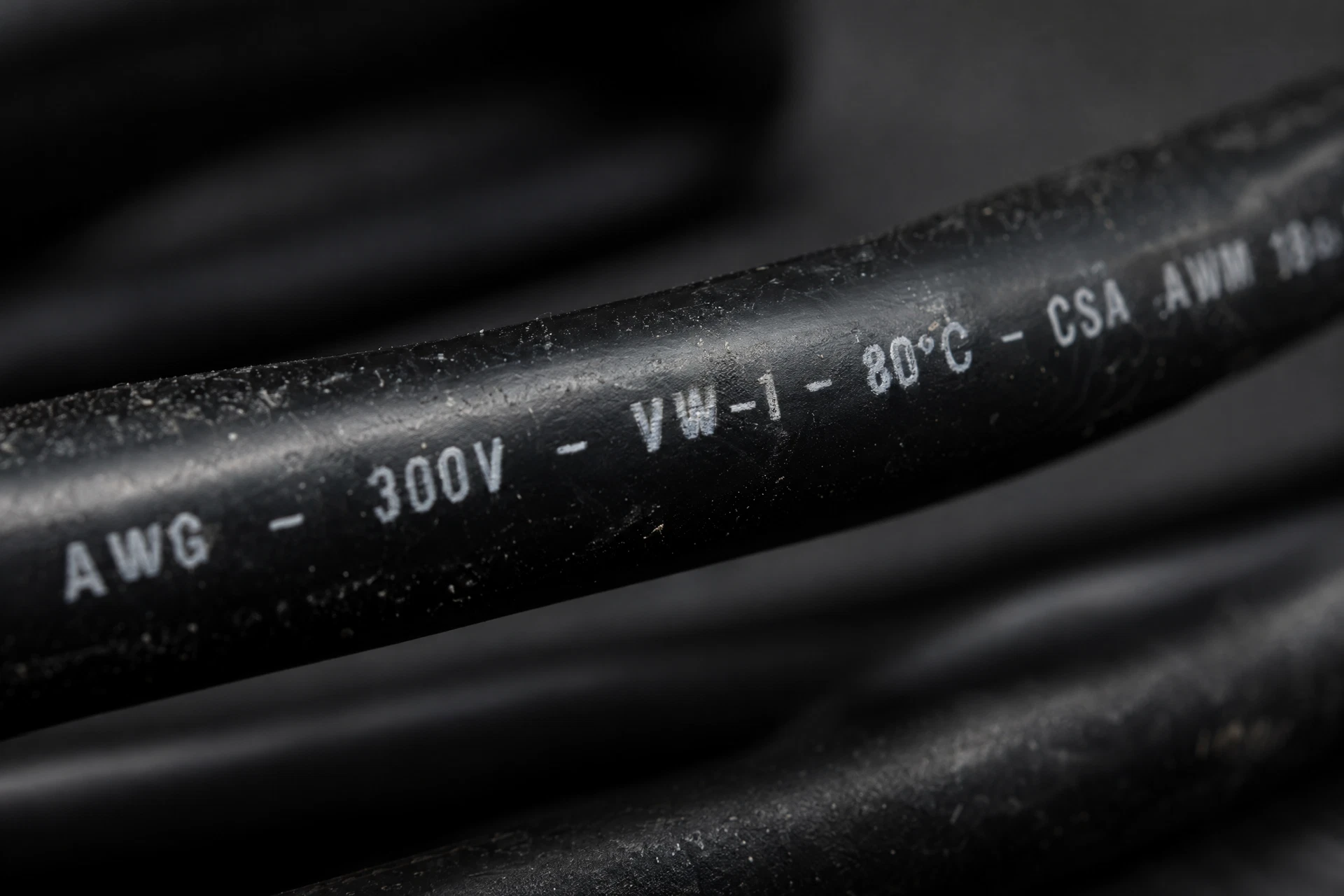
Print identifies the compound and the class. Look for XLPE, TR-XLPE or XHHW-2 depending on the product, followed by the voltage class, the insulation level in percent, the conductor size and material, and the wall thickness in mils. Tree-retardant compound is usually marked TR-XLPE or XLPE-TR, and that marking matters because it tells a buyer the cable was made for wet underground service.
- Semicon shields on both sides of the insulation
- TR-XLPE markings indicate tree-retardant compound
- Wall thickness in mils appears in the print
- XHHW-2 is the 600 V building wire version of the same polymer
Where Pennsylvania sellers encounter XLPE cable
Utility distribution is the largest source, at 15 kV, 25 kV and 35 kV. Substation crews, line crews and contractors working for them all end up with partial reels. Industrial plants hold 5 kV and 15 kV XLPE feeders for chillers, compressors, pumps and unit substations, and those reels surface when a plant is upgraded or a line is relocated.
Data centers and large warehouses pull 15 kV cable between their own substations and the gear that feeds UPS rooms. Solar and wind projects in the state use 35 kV collection cable, and those jobs often leave partial reels behind when the array layout changes. At the low end, every electrical distributor in Pennsylvania stocks XHHW-2 in sizes from 14 AWG to 1000 MCM, and slow-moving spools are a routine surplus item.
- 15 kV, 25 kV and 35 kV utility distribution reels
- Plant feeders to chillers, compressors and unit substations
- 35 kV collection cable from solar and wind projects
- XHHW-2 building wire spools in all sizes
What makes an XLPE reel valuable
Because XLPE is the standard, a buyer can usually place it, which supports the price. What holds value back is uncertainty: an unmarked reel with a faded tag could be 15 kV or 25 kV, 100 percent or 133 percent, and each combination fits a different installation. Legible print removes that uncertainty and is worth real money on a large reel.
Test records matter as much here as anywhere. A factory partial discharge report or a field acceptance test tells a buyer the insulation has not been damaged. On the building wire side, the calculation is simpler: copper or aluminum content, insulation type, footage, and whether the spool is factory sealed or opened.
- Readable class, level and wall thickness in the print
- Tree-retardant compound marking
- Factory or field test reports
- Full factory lengths with sealed ends
Condition and storage risks
XLPE does not rot, but it does tree. Water treeing is a slow degradation that starts at voids and contaminants in the insulation and grows in the presence of moisture and voltage. Cable that never saw voltage is not affected in the same way, which is why unused surplus is treated more kindly than cable pulled from service.
The visible risks are ordinary: sunlight chalking the jacket, water in the strand from open ends, corrosion on the copper shield, and mechanical damage from handling. A reel stored on its side, with the wraps bearing on a damp floor, will show damage along one edge. Those photographs tell a buyer more than a description does.
- Water treeing in older cable that saw years of service
- Ultraviolet degradation of the jacket
- Moisture in the conductor from uncapped ends
- Edge damage from reels stored on their side
Photos and records to send
Photograph the print in two places on the outer wrap, the tag, both ends, and the reel face. If the cable is banded and the factory seal is intact, show that. For XHHW-2 spools, photograph the spool label and the wire end, and count how many spools are in the lot.
Include the voltage class and insulation level in your message if you already know them, since that saves a step. Test reports, purchase records and any footage counter readings complete the picture. Each lot is looked at on its own terms, and the answer is a quote with a pickup plan rather than an instant number.
- Two print photographs and the reel tag
- Both conductor ends
- Spool labels for building wire lots
- Test reports and purchase records

What we buy in this category
- 15 kV, 25 kV and 35 kV shielded XLPE cable
- 5 kV and 8 kV plant feeder cable
- 35 kV solar and wind collection cable
- XHHW-2 building wire from 14 AWG to 1000 MCM
- TR-XLPE utility cable with legible print
- Full reels, partial reels and cut lengths
- Copper and aluminum conductors
- Cable with factory test reports
Selling xlpe cable in Pennsylvania
We review xlpe cable from every Pennsylvania region: the southeastern industrial corridor, the Lehigh Valley, southwestern Pennsylvania, the Susquehanna Valley, the northeast and the northern tier. Location decides the pickup plan, so include the municipality in your message.
XLPE Cable questions
What is the difference between XLPE and TR-XLPE?
TR-XLPE is cross-linked polyethylene with additives that resist water treeing. It is the standard compound for utility underground cable. Standard XLPE still appears in dry locations and in older installations, and the print tells you which one you have.
Is 15 kV XLPE cable worth more than EPR?
Not automatically. XLPE is more common, which makes it easier to resell, but condition, footage and documentation drive the number. A clean EPR reel with test records can beat a weathered XLPE reel without them.
Do you buy XHHW-2 spools from distributors?
Yes. Slow-moving spools in standard sizes are a routine purchase. Full, factory-sealed spools with labels bring the best value, and opened spools are reviewed on the remaining footage. Sizes from 6 AWG through 4/0 are the easiest to place, and 250 MCM and above move more slowly.
How is the insulation level marked?
The print usually states 100 percent or 133 percent along with the wall thickness in mils. A 15 kV cable at 133 percent carries a thicker wall than the same conductor at 100 percent, and the two suit different grounding schemes.
Other wire and cable we buy
EPR Cable
Sell surplus epr cable in Pennsylvania.
Buying detailsMedium Voltage Cable
Sell surplus medium voltage cable in Pennsylvania.
Buying detailsHigh Voltage Cable
Sell surplus high voltage cable in Pennsylvania.
Buying detailsConcentric Neutral Cable
Sell surplus concentric neutral cable in Pennsylvania.
Buying detailsShielded Power Cable
Sell surplus shielded power cable in Pennsylvania.
Buying detailsHave surplus wire on the floor right now?
Send photographs of the reels, tags and jacket print. We will tell you what the material is worth as wire, not just as metal.