
Underground Electrical Cable Buyers in Pennsylvania
Direct burial and duct bank cable from Pennsylvania contractors, reviewed on burial rating, jacket condition and length.
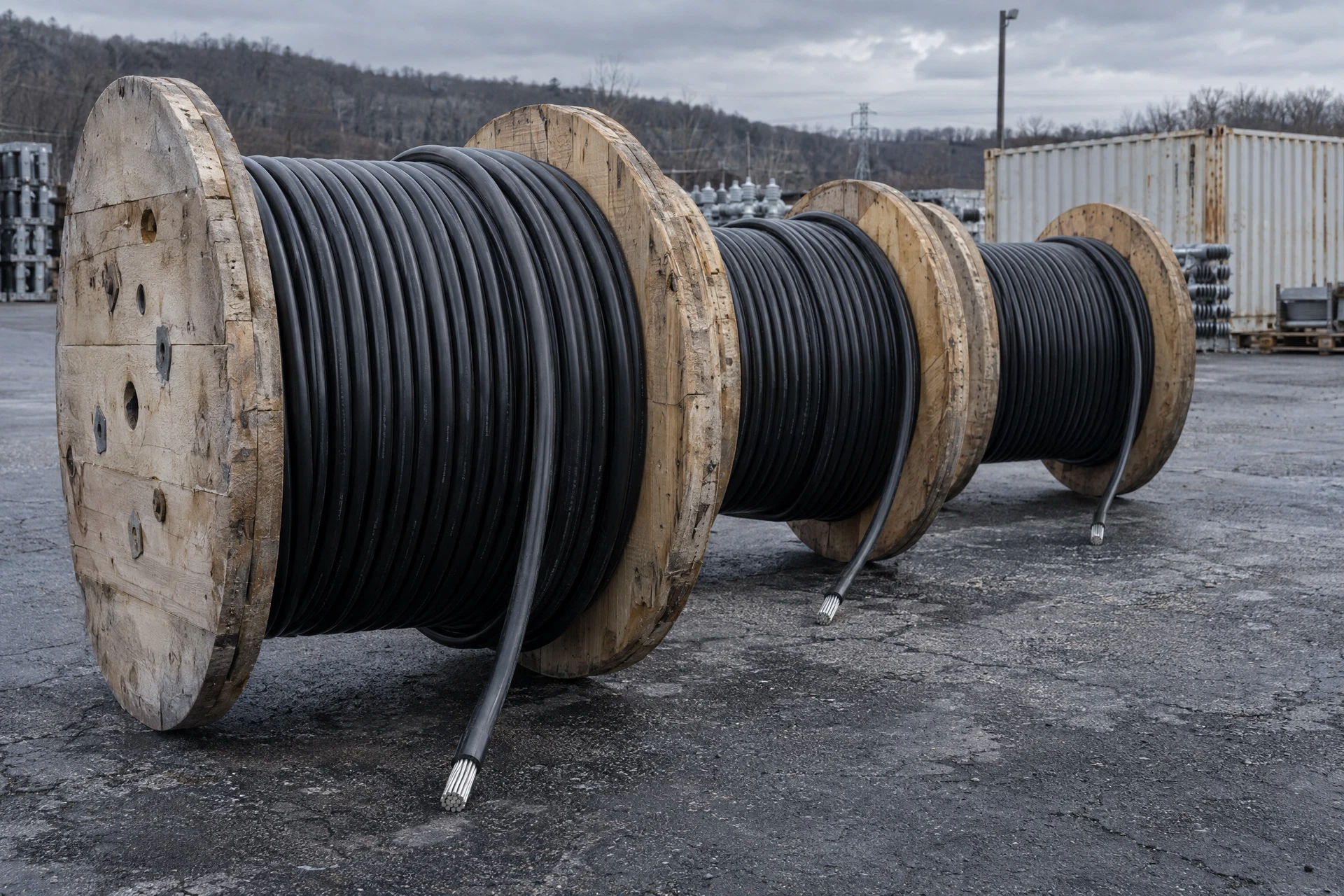
Underground electrical cable is the material installed below grade, either direct buried in earth or pulled through a duct bank. The products that serve that environment share two requirements: insulation that tolerates moisture for decades and a jacket that resists soil chemicals, sunlight at the ends and the abrasion of being pulled. USE-2, RHW-2, URD assemblies and direct burial rated tray cable all belong to the group. USE-2, RHW-2, URD assemblies and direct burial rated tray cable all belong to the group, and all are quoted on the same facts.
Pennsylvania sellers most often hold this material after a service upgrade, a lighting project or a subdivision phase that was shortened. Because buried cable is difficult to inspect once installed, buyers are careful about jacket damage, and a coil with ring cuts will be quoted well below one that is clean. Length, size and burial rating are the three facts that matter most. Length, size and burial rating are the three facts that matter most, and a coil without a readable print is priced as unknown cable.
| Constructions | USE-2 and RHW-2 single conductors, URD triplex and quad assemblies, and direct burial rated tray cable |
|---|---|
| Conductors | Copper or aluminum, 14 AWG through 1000 kcmil, stranded |
| Insulation and jacket | XLPE or RHW-2 compound, sunlight resistant, rated for wet locations and direct burial |
| Voltage | 600 V for service and distribution work, with 5 kV through 35 kV cable for primary runs |
| Standards | UL 854 for USE, UL 44 for RHW-2, and NEC Article 300.5 for burial requirements |
What underground electrical cable includes
The category is defined by where the cable goes rather than by a single listing. A residential service buried 24 inches in earth is usually USE-2 or a URD triplex. A campus distribution run may be 15 kV shielded cable in a duct bank. A lighting circuit under a parking lot may be direct burial tray cable. Each product has its own listing, but all of them are built for permanent wet contact.
That is the difference between underground cable and ordinary building wire. THHN is not rated for wet locations or direct burial, so it cannot be substituted no matter how well the trench is prepared. Cable that carries a USE-2, RHW-2 or direct burial TC marking can be installed below grade, and the print is the only reliable proof.
- Direct burial in earth or installation in duct bank
- Wet location rating is mandatory
- Sunlight resistance matters at the ends and risers
- THHN and THWN are not substitutes
Where Pennsylvania sellers use underground cable
Service upgrades and outbuilding feeds produce most of the surplus. A farm, a detached garage or a shop building needs a buried feed, and the contractor buys a 250 or 500 ft coil, buries most of it and keeps the balance. Street lighting and parking lot lighting projects leave similar remnants, often in smaller sizes.
Subdivision and road work produce larger quantities, usually aluminum triplex or quad. Industrial sites bury cable for yard lighting, gate operators, pump stations and temporary construction power. Municipalities doing pole to underground conversions also generate surplus when a route changes after the cable has been delivered.
What makes underground cable resellable
Burial rating and size come first. A coil of 2/0 aluminum USE-2 with a legible print is useful to any rural contractor, while unmarked cable of the same size may not sell at all because a buyer cannot prove it is rated for the trench. Aluminum triplex in 4/0 is the standard residential service size and moves quickly.
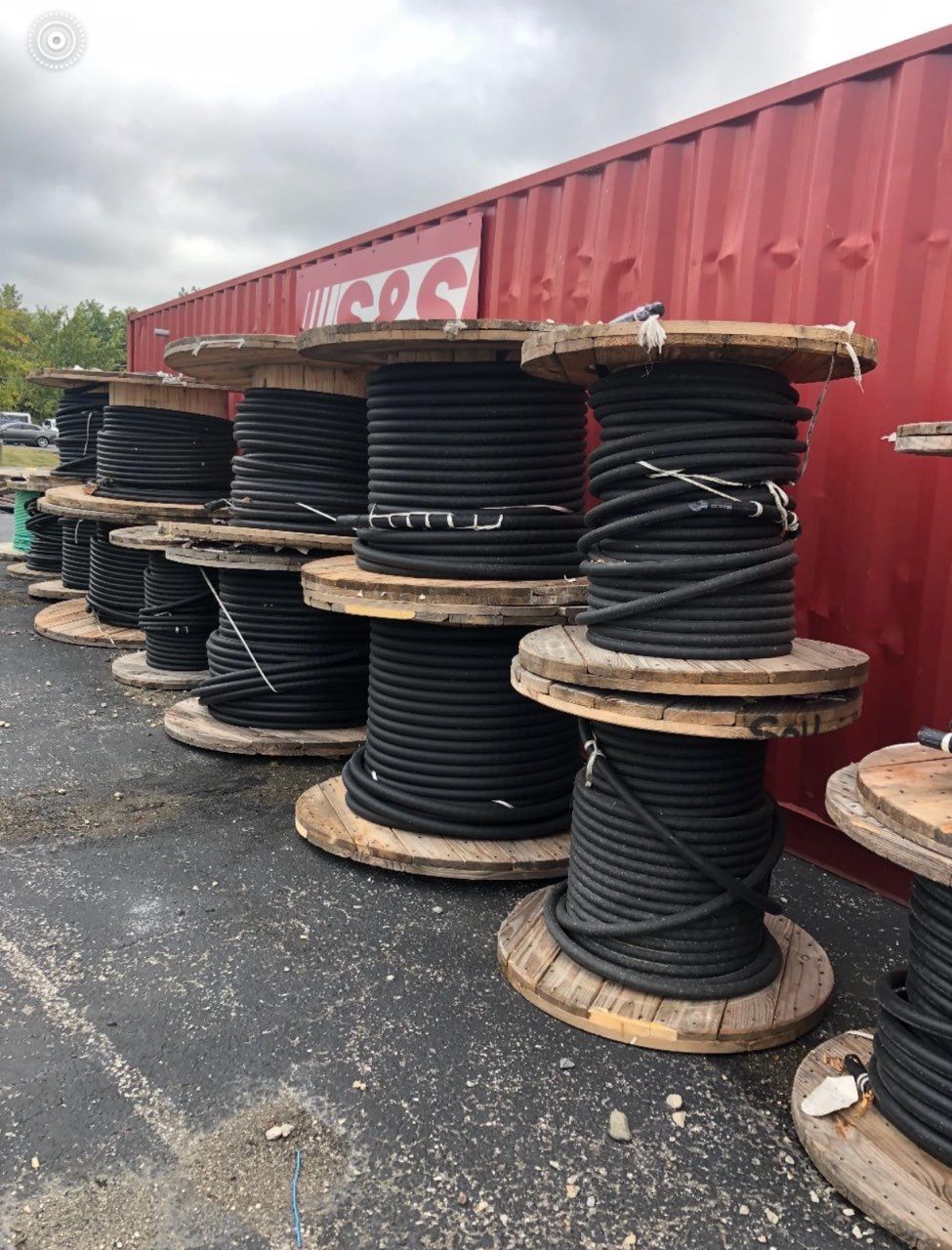
Jacket condition is the second filter. Ring cuts, gouges and flattened sections are disqualifying for direct burial because the insulation is what keeps water out over decades. A coil that was stored indoors, still banded, with clean round jacket, is the best material in the category. Copper in 4 AWG through 1/0 also holds value for grounding and small services.
- Legible USE-2 or RHW-2 print
- Banded coils with clean jacket
- Aluminum triplex and quad service cable
- Copper in 4 AWG through 1/0
Condition, storage and identification
Underground cable is built to survive burial, so ordinary weather is not the main risk. Mechanical damage is. A coil dragged across gravel, run over by a truck or dropped from a tailgate can have cuts that are invisible until the cable is energized. Sunlight hardens the outer surface over years, and a jacket that has gone chalky may crack when it is unrolled.
Identification relies on the print, which states the listing, the size, the voltage and the temperature rating, and repeats every few feet. Coil tags and purchase records fill in what the print cannot. Where the marking is gone, a buyer has no way to confirm the burial rating, and the material is priced as unknown rather than as underground cable.
What to send for a quote
Send a photo of the print, the coil tag and the coil itself, with the size and metal for each item. Note the length and whether the coil is banded, and photograph any jacket damage rather than describing it. Where the cable is medium voltage, a stripped end photo of the shield is essential.
A quote follows our review of the lot, and pickup is scheduled once it is accepted. Coils of large aluminum cable are heavy, and reels of medium voltage cable need equipment, so tell us what is available at the site and whether the material is indoors or in a yard.
- Jacket print showing burial rating
- Coil tag and length
- Size and conductor metal
- Jacket damage photographs
- Yard or indoor location and loading gear
What we buy in this category
- Aluminum USE-2 in 2/0 and 4/0
- URD triplex and quad assemblies
- Copper RHW-2 and USE-2 in 4 AWG through 1/0
- Direct burial rated tray cable
- Street and parking lot lighting cable
- Medium voltage cable from duct bank work
- Banded coils over 100 ft
- Yard stored coils offered for review
Selling underground electrical cable in Pennsylvania
From the Route 202 corridor to the Mon Valley and the I-81 warehouse belt, underground electrical cable is stored in shops and yards all over the state. Send the city or township, the access details and the photographs, and the pickup can be planned against the real site.
Underground Electrical Cable questions
What makes cable suitable for direct burial?
The listing. USE-2, RHW-2 and direct burial rated tray cable carry a wet location rating and are listed for installation in earth. Ordinary building wire such as THHN is not, regardless of how deep the trench is.
Do you buy cable that has already been buried?
Yes, though removed cable is inspected closely for jacket damage from digging equipment. Cable that was pulled out cleanly is still usable. Cable with cuts or crushed insulation is quoted on metal content. Cable with cuts or crushed insulation is quoted on metal content rather than as usable stock.
How deep does buried cable have to be?
NEC Article 300.5 sets minimum cover depths that vary by voltage, raceway and location, with 24 inches typical for a residential service in earth. We describe the cable rather than advising on a specific installation.
Can you identify cable when the print has worn off?
Rarely with confidence. Without the print, the burial rating cannot be verified, so the material is priced as unknown cable or on metal content. A clean section of jacket somewhere on the coil sometimes still carries the marking.
Other wire and cable we buy
USE-2 Cable
Sell surplus use-2 cable in Pennsylvania.
Buying detailsURD Cable
Sell surplus urd cable in Pennsylvania.
Buying detailsSEU Cable
Sell surplus seu cable in Pennsylvania.
Buying detailsTray Cable
Sell surplus tray cable in Pennsylvania.
Buying detailsMedium Voltage Cable
Sell surplus medium voltage cable in Pennsylvania.
Buying detailsHave surplus wire on the floor right now?
Send photographs of the reels, tags and jacket print. We will tell you what the material is worth as wire, not just as metal.