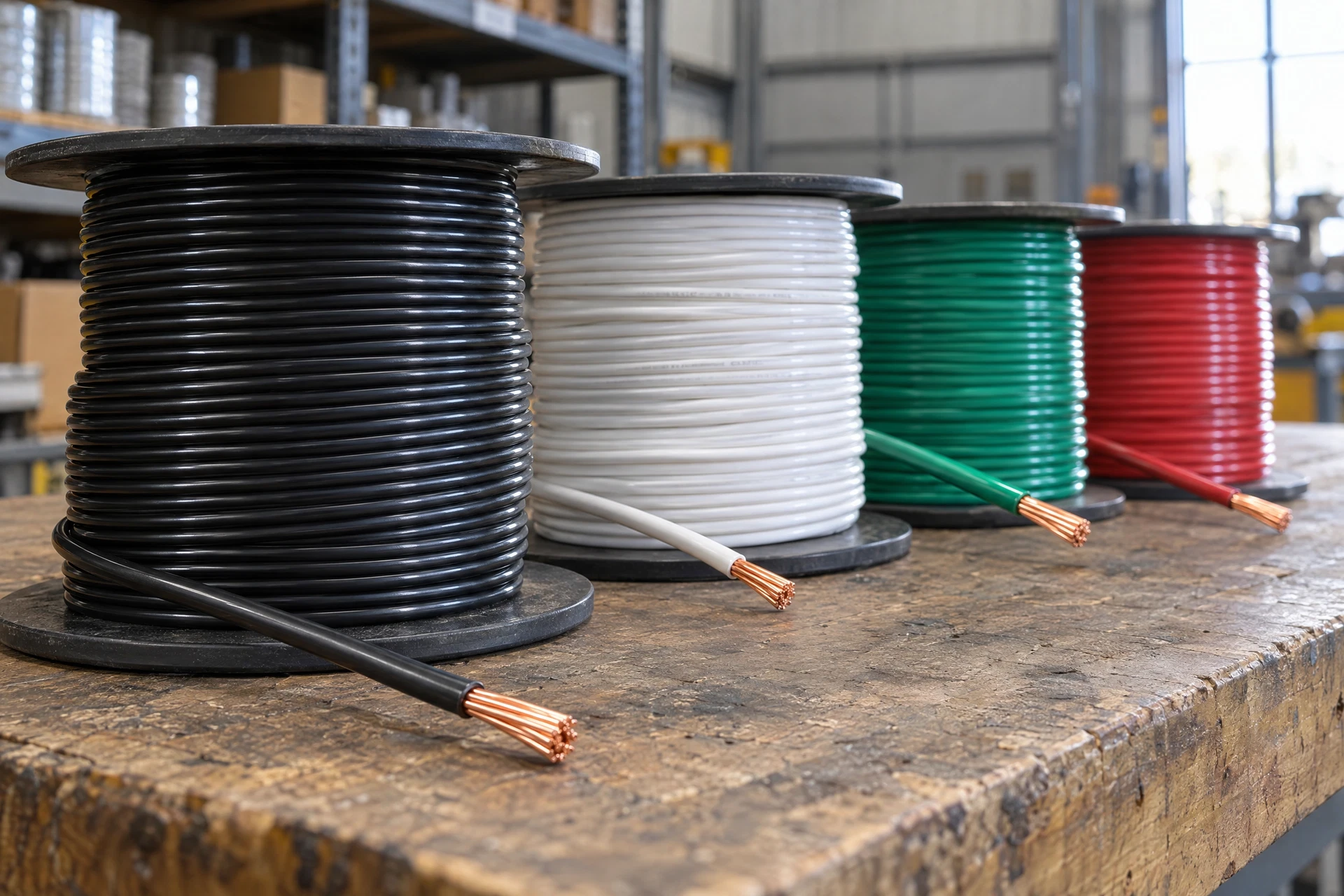
#8 AWG Wire Buyers in Pennsylvania
Eight gauge copper in solid and seven-strand, used for 40 A circuits and small feeders, bought across Pennsylvania.
Number 8 AWG copper measures 0.1285 in across the bare conductor and about 16,510 circular mils in area. It lands in the 40 A class at 60 degrees C, with 50 A available at 75 degrees C and 55 A at 90. That range covers a lot of ordinary work: a 40 A range circuit, an air conditioner disconnect, a small subpanel, a solar string combined at a rooftop box. It is also a size that appears in almost every mechanical room in the state.
Eight gauge is also the smallest size most crews will pull as a feeder, and the largest size that still comes in a compact coil. That combination makes it a frequent leftover. A mechanical contractor replacing a condenser buys 100 ft, uses 60, and leaves a coil on the van that eventually reaches a shelf and then a surplus pile. The same happens in plants, where a spare coil of 8 AWG sits in a crib for a decade after the machine it was bought for is scrapped.
| Size | 8 AWG, 0.1285 in bare copper diameter, about 16,510 circular mils |
|---|---|
| Ampacity class | 40 A at 60 degrees C, 50 A at 75 degrees C and 55 A at 90 degrees C for copper |
| Construction | Solid or 7-strand copper, with 7-strand standard for feeder and raceway work |
| Common insulations | THHN, THWN-2, XHHW-2, and bare for grounding |
| Standards | UL 83, UL 44, ASTM B3 and B8, with green insulation for equipment grounding |
The size and its rating range
The jump from 10 to 8 AWG roughly doubles the copper area, and the ampacity follows. At 60 degrees C a copper 8 AWG conductor carries 40 A, at 75 degrees C it carries 50, and at 90 degrees C it carries 55. Which column applies depends on the insulation, the terminations and the ambient temperature, not on the wire alone.
Stranding changes with the job. Solid 8 AWG is common for grounding electrode conductors and for short device runs where bending is minimal. Seven-strand 8 AWG is the norm in conduit and for anything that has to be pulled, because it turns a corner without kinking.
- Roughly double the area of 10 AWG
- 40, 50 and 55 A across the three temperature columns
- Solid for grounding, 7-strand for pulls
Where #8 is used in Pennsylvania
HVAC work is the largest single source. A 40 A condensing unit takes 8 AWG copper, and every changeout produces a short length of it. Electric ranges, wall ovens, hot tubs and small welders also use 8 AWG, as do 40 A subpanels in shops and garages.
Solar installers use 8 AWG for string and combiner wiring, and plant maintenance uses it for small motor circuits, control power and equipment grounds. Contractors working in older Pennsylvania buildings often find 8 AWG where a modern drawing would call for 6, which produces its own small surplus when a panel is upgraded.
- 40 A HVAC and appliance circuits
- Small subpanels and shop feeders
- Solar string and combiner wiring
- Grounding electrode conductors on small services
What makes an 8 AWG lot resellable
Length and insulation type decide most of it. A sealed 500 ft spool of 8 AWG THHN moves quickly. A 40 ft coil is a harder sale unless someone has a matching repair, and a coil with no print is harder still, because 8 AWG looks similar to 6 AWG at a glance and the difference matters.
Bare 8 AWG is a separate product with its own buyers, mostly contractors doing service grounding. Green-insulated 8 AWG is the insulated grounding conductor of choice for small feeders, and it sells to the same crews.
- Sealed spools over loose coils
- Bare and green grounding stock kept separate
- Enough length for a feeder or a grounding run
Kinks, print and coil condition
Eight gauge is stiff enough that it does not tangle easily, which helps. The risks are mechanical: a coil that was bent sharply around a corner has a kink that will not straighten, and a jacket scraped against concrete can expose the insulation underneath.
Print on 8 AWG is legible in most cases, and the size is easy to confirm with a wire gauge or a caliper. If the print is gone, measure the bare conductor and count strands rather than guessing from the outside diameter, since insulation thickness varies by type.
- Check for sharp kinks and jacket scrapes
- Measure bare conductor, not overall diameter
- Confirm 7-strand versus solid before quoting
Photographs that answer the 8 AWG questions
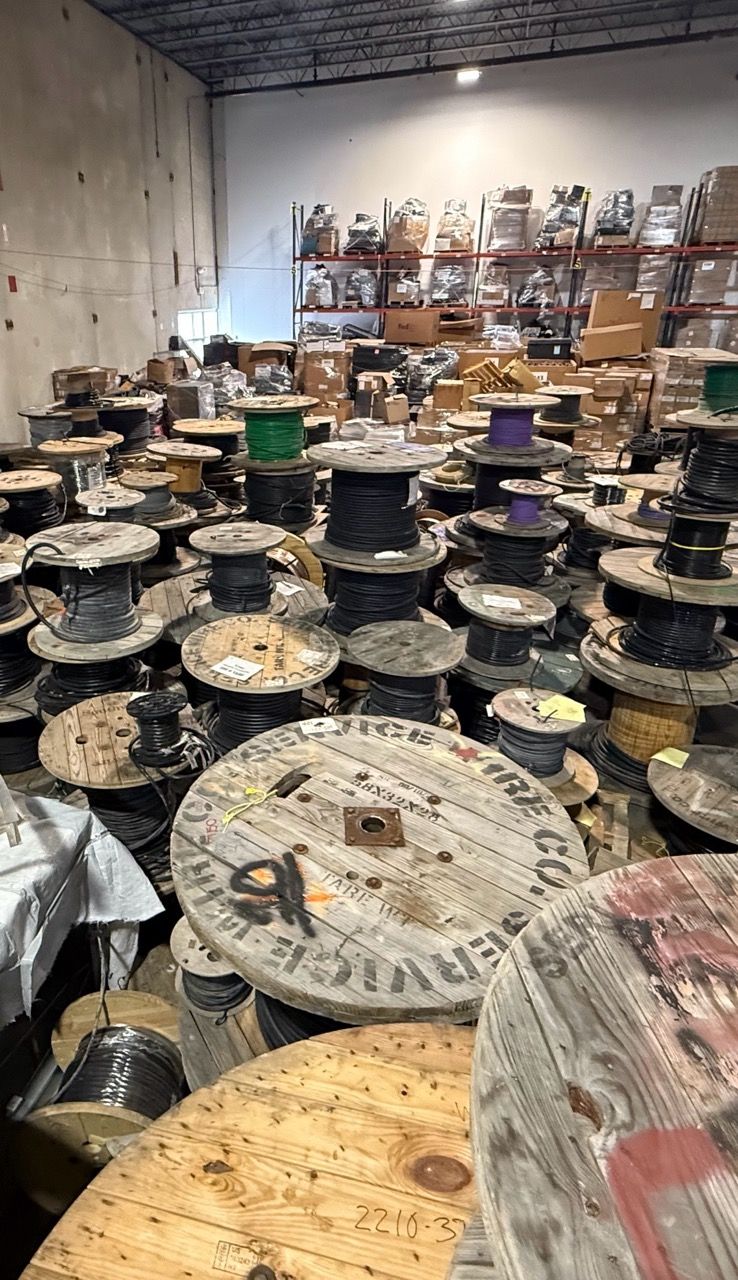
Send the spool label, the print and a photo of the coil so the remaining wraps are visible. State whether the wire is bare, green or a circuit color, and give the approximate footage and number of pieces.
If the lot came from HVAC service work, say so. Those coils are often short, and knowing the source helps us judge whether the lengths are worth reviewing as wire or as copper content.
- Label, print and coil photo
- Bare, green or circuit color
- Footage, piece count and source
What we buy in this category
- 8 AWG THHN in black, white, red, green and blue
- 8 AWG THWN-2 and dual-rated spools
- 8 AWG XHHW-2 copper in partial reels
- Bare 8 AWG solid grounding conductor
- Green-insulated 8 AWG equipment ground
- Partial coils of 50 ft and up from HVAC work
- Sealed 500 ft factory spools
Selling #8 awg wire in Pennsylvania
#8 awg wire arrives from job sites, warehouses and maintenance rooms across all 67 counties. Whether the reels are in Bucks County or Beaver County changes the logistics, not the review, so include the address when you send photographs.
#8 AWG Wire questions
What is #8 wire used for?
It covers 40 A circuits at the 60 degree column, which means ranges, ovens, air conditioners and small subpanels. It also serves as a grounding electrode conductor on smaller services and as string wiring in solar arrays.
Is 8 AWG solid or stranded better?
It depends on the use. Solid is easier to terminate at a ground bar and holds shape in a panel. Seven-strand is easier to pull through conduit and resists vibration, which is why feeder and HVAC work usually specifies it.
Do you buy short HVAC coils?
Yes, in lots. A single 30 ft coil is not worth a pickup on its own, but a box of them from a season of changeouts is reviewed as a group. Longer pieces are separated out and priced as wire.
How do I confirm the size without a label?
Measure the bare conductor diameter or use a wire gauge. Eight AWG copper measures 0.1285 in bare. Do not measure over the insulation, because THHN, XHHW-2 and rubber insulations all add different thicknesses. A caliper and a strand count settle it.
Other wire and cable we buy
#10 AWG Wire
Sell surplus #10 awg wire in Pennsylvania.
Buying details#6 AWG Wire
Sell surplus #6 awg wire in Pennsylvania.
Buying detailsTHHN Wire
Sell surplus thhn wire in Pennsylvania.
Buying detailsBare Copper Wire
Sell surplus bare copper wire in Pennsylvania.
Buying detailsBuilding Wire
Sell surplus building wire in Pennsylvania.
Buying detailsHave surplus wire on the floor right now?
Send photographs of the reels, tags and jacket print. We will tell you what the material is worth as wire, not just as metal.