Welding Cable Buyers in Pennsylvania
Flexible welding lead from Pennsylvania fabricators and maintenance shops, bought on stranding, jacket condition and length.
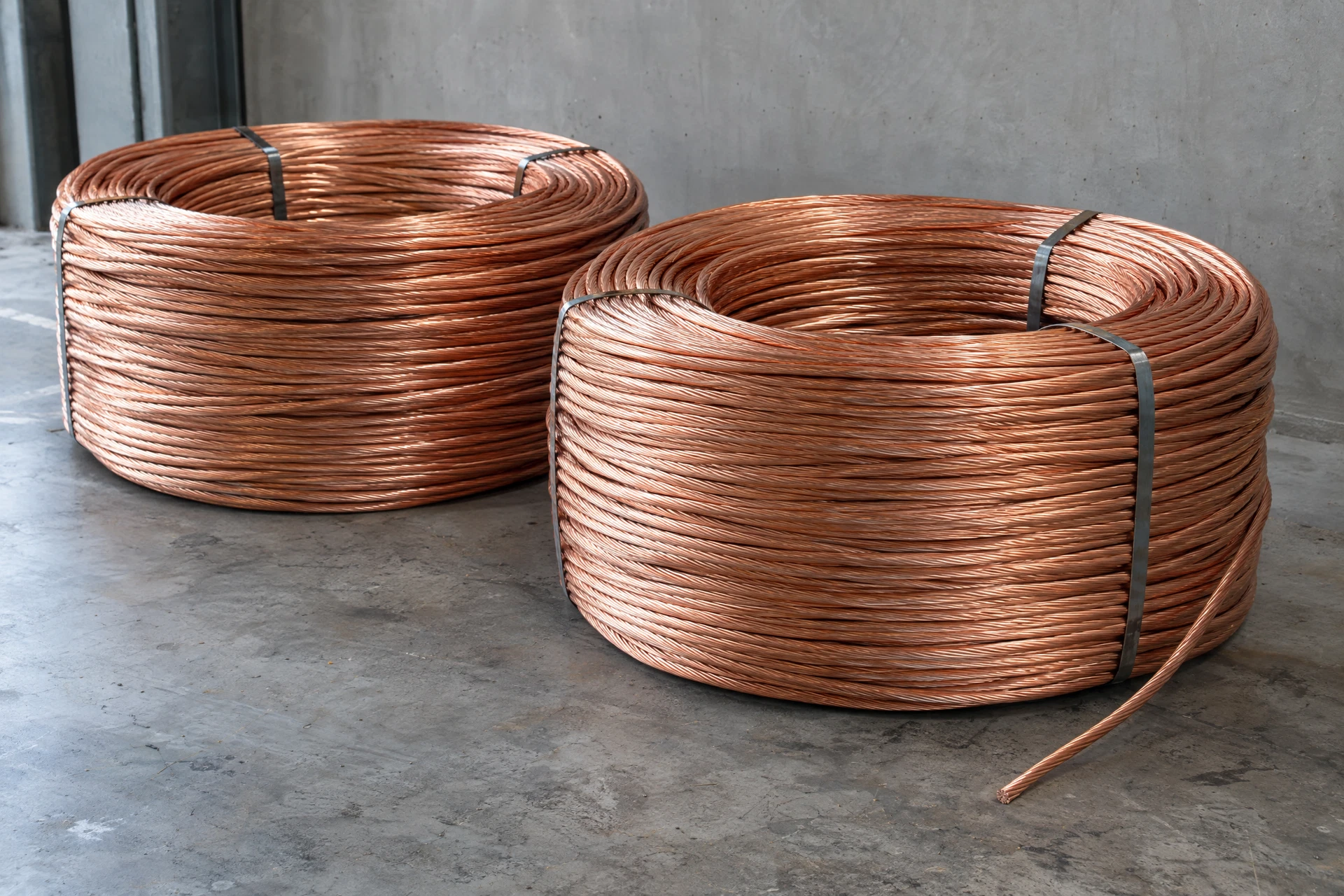
Welding cable is a finely stranded copper conductor with a flexible rubber insulation and jacket, built to be dragged, coiled and flexed thousands of times without work hardening. The stranding is the defining feature: class K and class M constructions use hundreds of fine wires instead of the coarse strands found in building wire, which is what makes the cable limp and tolerant of repeated bending at the stinger and the ground clamp. That stranding is also why the cable weighs more per foot than building wire of the same gauge.
Pennsylvania has a deep base of fabrication shops, rail and heavy equipment repair yards, and plant maintenance departments that weld every day. Those shops buy welding cable in 250 and 500 ft coils, cut leads to length, and end up with remnants. Because the cable is nearly pure copper and the insulation is thick, the material has both resale value and a substantial metal value. Long leads are the ones that keep their resale value, since a shop can always use another 50 ft.
| Construction | Rope stranded copper conductor with a flexible rubber insulation and jacket, no shield |
|---|---|
| Conductors | Copper, class K or class M stranding, from 6 AWG through 4/0, with 2/0 and 3/0 most common |
| Insulation | EPDM or neoprene rubber, oil resistant, rated for flexing and outdoor use |
| Voltage and temperature | 600 V; commonly rated 90 C, with some constructions at 105 C |
| Standards | NEC Article 630 covers welding cable ampacity; many constructions carry a UL flexible cable listing |
What welding cable is
The product exists because a welding circuit is electrically simple but mechanically brutal. Current runs at low voltage and high amperage, often 200 to 400 A, and the lead is dragged across concrete, coiled over a hook and stepped on all day. Fine stranding keeps the copper flexible, and a thick rubber jacket absorbs abrasion that would destroy a thermoplastic insulation in a week.
Welding cable is not the same as portable cord. SOOW is a multi-conductor cord for tools and equipment, with smaller conductors and a different stranding. Welding cable is a single large conductor designed for one job: carrying weld current from the machine to the work without overheating or breaking.
- Single conductor, fine class K or M stranding
- Rubber insulation and jacket for flex life
- Ampacity set by NEC Article 630, not by building wire tables
- Different product from SOOW portable cord
Where Pennsylvania sellers use welding cable
Job shops and fabrication houses are the core. A shop with six weld stations buys cable by the coil, replaces leads when the jacket wears through, and keeps the old lead in a pile because it is obviously worth something. Structural steel, rail car repair, trailer manufacturing and agricultural equipment repair all consume it steadily.
Plant maintenance departments use welding cable for repair work and for temporary power to equipment. Pipeline and utility contractors use long leads in the field. When a shop closes, changes process or converts to a different machine, the lead inventory becomes surplus, sometimes in coils of 100 ft or more that were never cut.
What makes welding cable resellable
Size and length drive the price. A full 250 ft coil of 2/0 or 3/0 is a stock item for any welding supply house and moves quickly. Cut leads of 10 to 25 ft are still useful to a small shop, but they are priced closer to scrap because the buyer has to test them. 4/0 carries the most copper per foot and the highest metal value.
Jacket condition decides whether a lead is resale stock. Cuts, deep abrasion and exposed copper end the conversation for resale, though the copper is still recovered. A lead with an intact jacket, clean ends and legible print can be sold as cable. Coils that were never uncoiled are the best of all.
- Sealed or unopened 250 ft coils
- 2/0, 3/0 and 4/0 copper leads
- Intact rubber jacket with legible print
- Long cut leads over 20 ft
Condition, storage and identification
Rubber ages. Ozone, sunlight and heat cause cracking that starts at the surface and eventually reaches the copper. A coil stored in a shop for years is usually fine, while a lead left outdoors through several summers may crack when it is unrolled. Bend a short section and look for surface cracks before assuming a lead is sound.
Identification is straightforward because welding cable is printed with the size, the stranding class and the voltage. Ends are often tinned or fitted with lugs, and a lug that is corroded green tells you the lead saw damp storage. Where the print is gone, the diameter of the copper and the flexibility of the strand bundle identify the size closely enough to quote.
What to send for a quote
Send photos of the print, the coil or lead ends, and the jacket along its length. List each item by size and length. If a lead has visible damage, show it, because the difference between resale cable and copper recovery is usually a two inch cut in the jacket.
Review comes first, then a quote, then a pickup scheduled at your convenience. Welding cable is dense and a 250 ft coil of 4/0 is heavy, so tell us whether it is on a pallet and what equipment is available. Loose leads can be boxed, which makes loading simpler.
- Print showing size and stranding
- Photos of jacket along the run
- Length and count by size
- Lugs, splices or damaged sections
- Coil weight and loading access
What we buy in this category
- 2/0 and 3/0 welding cable in full coils
- 4/0 copper leads, long lengths
- 1/0 and 1 AWG welding cable
- Cut leads from 10 ft to 50 ft
- Rubber jacketed cable with legible print
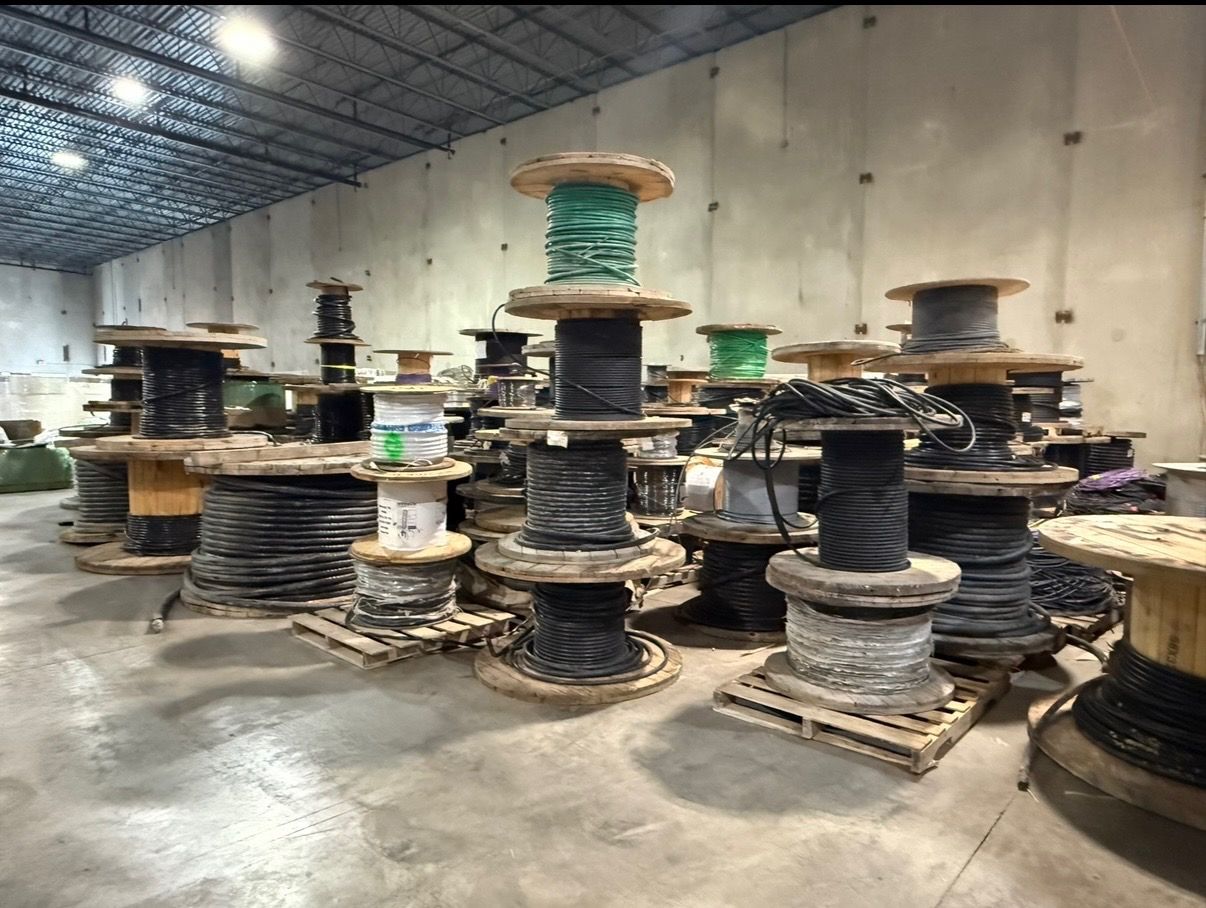
- Surplus coils from shop closures
- Plant maintenance lead inventory
- Damaged leads for copper recovery
Selling welding cable in Pennsylvania
welding cable arrives from job sites, warehouses and maintenance rooms across all 67 counties. Whether the reels are in Bucks County or Beaver County changes the logistics, not the review, so include the address when you send photographs.
Welding Cable questions
How is welding cable different from SOOW cord?
Welding cable is a single large conductor with fine stranding for flexibility. SOOW is a multi-conductor portable cord for tools, with smaller conductors and a different jacket compound. They are not interchangeable. The ampacity tables in Article 630 also differ from building wire tables.
Do you buy welding cable with damaged jacket?
We review it, but exposed copper usually means the lead is valued on metal content rather than as usable cable. A short damaged section can be cut out, and we quote the remaining length. A clean cut end photo usually settles whether the lead is worth reusing.
What sizes of welding cable sell best?
2/0 and 3/0 are the most requested, followed by 1/0 and 4/0. Small sizes such as 6 and 4 AWG are used for lighter work and move more slowly unless they are in full coils.
Can you take loose leads rather than coils?
Yes. Loose leads are common in shop cleanouts. We ask for lengths and sizes, and boxed leads are easier to load than a tangle on a floor. Lengths over 20 ft are the ones that can be sold as cable rather than scrap.
Other wire and cable we buy
SOOW Cable
Sell surplus soow cable in Pennsylvania.
Buying detailsFlexible Electrical Cable
Sell surplus flexible electrical cable in Pennsylvania.
Buying detailsCopper Wire
Sell surplus copper wire in Pennsylvania.
Buying details1/0 Wire
Sell surplus 1/0 wire in Pennsylvania.
Buying details2/0 Wire
Sell surplus 2/0 wire in Pennsylvania.
Buying detailsHave surplus wire on the floor right now?
Send photographs of the reels, tags and jacket print. We will tell you what the material is worth as wire, not just as metal.