Flexible Electrical Cable Buyers in Pennsylvania
Flexible cable of every kind from Pennsylvania shops and contractors, quoted on stranding, jacket and length.
Flexible electrical cable is a family rather than a single product. It includes portable cord such as SOOW and SJOOW, heavy duty Type W and Type G-GC cable for stage and distribution work, welding lead, flexible control cable and the small cords used on appliances and tools. What they share is fine stranded copper and a rubber or thermoplastic elastomer jacket that survives repeated bending. What they share is fine stranded copper and a jacket that survives repeated bending without cracking at the flex point.
The category matters to a seller because the same pallet can hold several different products with very different values. A coil of 4/0 Type W is worth many times its weight in scrap, while a box of 18/3 appliance cord is close to copper value. Sorting by print, gauge and conductor count before quoting is the only way to get the number right. Sorting by print, gauge and conductor count before quoting is the only way to get the number right, and it usually takes an hour.
| Construction | Single or multiconductor assemblies with fine stranded copper and a rubber or elastomer jacket |
|---|---|
| Conductors | Class K and class M stranding, 18 AWG through 500 kcmil depending on the product |
| Insulation | EPDM, neoprene or thermoplastic elastomer insulation and jacket, oil and water resistant in most types |
| Voltage | 300 V for SJ types, 600 V for S and W types, with 2 kV ratings on some mining and stage cable |
| Standards | UL 62 for portable cord, NEC Article 400, and Article 630 for welding cable |
What flexible electrical cable covers
The common thread is strand count. Building wire uses seven or nineteen strands in a 12 AWG conductor, while flexible cable may use over a hundred fine wires. That construction bends without work hardening, which is essential for a cord that is coiled daily. The jacket compound is equally important, since a thermoplastic jacket cracks under repeated flex while a thermoset rubber one does not.
Within the family, the products are not interchangeable. Type W is a heavy duty single or multiconductor cable for distribution and stage work. G-GC adds grounding conductors for mining and heavy equipment. SOOW is portable cord for tools and equipment. Welding cable is a single conductor with especially fine stranding. Each has its own ampacity table and its own installation rules.
- Fine stranding is the defining feature
- Thermoset rubber jackets resist flex cracking
- Type W, G-GC, SOOW and welding lead are distinct products
- Voltage ratings run from 300 V to 2 kV
Where Pennsylvania sellers use flexible cable
Entertainment and event production uses Type W and stage cable, and the crews that serve venues in Philadelphia, Pittsburgh and the smaller cities replace it regularly. Industrial maintenance uses SOOW for portable equipment and welding cable for repair work. Marinas, farms and construction sites use cord for temporary power and pumps.
Machine builders buy flexible control cable and cord to wire equipment that moves. Food processing plants use washdown rated cord on equipment that is hosed down daily. Because flexible cable wears out rather than becoming obsolete, most surplus is new material left from a project rather than removed cable.
What makes flexible cable resellable
Gauge, conductor count and jacket condition determine value, and the spread between products is wide. A sealed 250 ft coil of 4/0 Type W is a high value item for a stage or distribution company. A partial coil of 12/3 SOOW is a modest but steady seller. Small appliance cord is close to metal value and is quoted accordingly.
Jacket integrity is the gate. Flexible cable fails at the jacket first, and a cord with cuts, exposed conductors or a crushed section cannot be resold as cable. Ends tell a story too: tinned ends, taped splices and taped repairs all suggest a hard life. Factory coils with banding and labels are the easiest to place.
- Sealed coils with factory labels
- Type W and G-GC in large gauges
- 12/3 and 10/4 portable cord
- Intact jacket with legible print
Condition, storage and identification
Rubber has a shelf life that shortens with heat, sunlight and ozone. A coil stored next to a transformer can crack within a year, while the same coil in a cool dry room lasts a decade. Bend a section and look for surface checking. On large Type W, look at the jacket where it was coiled, since compression damage shows there first.
Identification is printed along the jacket and includes the type, gauge, conductor count and voltage. Where the print is worn, the cut end shows the stranding and the conductor count, and the jacket thickness suggests whether the product is a 300 V or 600 V type. A photo of the print is worth more than a description in any quote request.
What to send for a quote
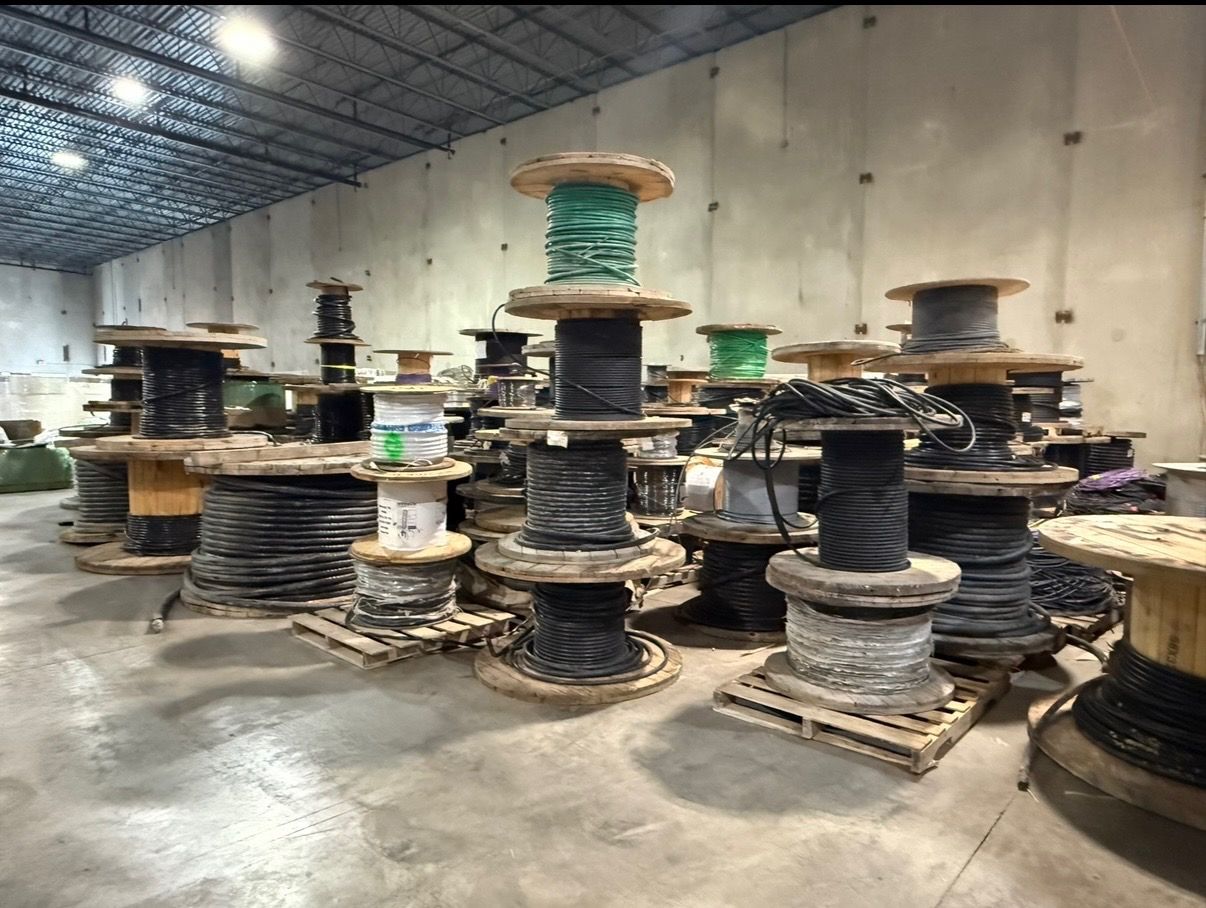
Send a photo of the print, the cut ends and the coil, with the gauge and length for each item. If a lot contains several products, separate them by type before photographing, because Type W and SOOW price differently and a mixed pile is harder to quote accurately.
The inventory is reviewed and quoted, then shipped or collected as you prefer. Flexible cable is compact and ships well, so small lots are practical. Tell us whether coils are banded and whether large Type W reels need equipment to load.
- Jacket print showing type and gauge
- Cut end photo for stranding and count
- Length per coil
- Sorting by product type
- Banding and loading needs
What we buy in this category
- Type W and G-GC cable in 2 AWG through 4/0
- 12/3 and 10/4 SOOW portable cord
- Sealed factory coils with labels
- Flexible control cable from machine builders
- Welding lead in long lengths
- Stage and entertainment cable
- Washdown rated cord from food plants
- Mixed flexible cable lots for sorting
Selling flexible electrical cable in Pennsylvania
From the Route 202 corridor to the Mon Valley and the I-81 warehouse belt, flexible electrical cable is stored in shops and yards all over the state. Send the city or township, the access details and the photographs, and the pickup can be planned against the real site.
Flexible Electrical Cable questions
What makes cable flexible enough to sell as flex?
Fine stranded copper, usually class K or class M, plus a thermoset rubber jacket. Building wire with seven strands will crack if it is flexed repeatedly, so stranding is the first thing we check. Stranding is the first thing we check, and the print usually states the class.
Do you buy Type W and stage cable?
Yes. Large gauge Type W is one of the more valuable flexible products, and stage cable from entertainment work is reviewed the same way. Jacket condition and length decide most of the price. Jacket condition and remaining length decide most of the price, and sealed coils are always easier to place.
Can flexible cable be used for permanent wiring?
Portable cord is limited to the uses Article 400 permits, which generally exclude permanent building wiring. We describe the product and its listing rather than advising on a specific installation. We describe the product and its listing rather than advising on a specific installation, since that is the electrician's call.
What if a coil has no label?
The jacket print usually identifies it. If that is gone, the cut end shows the conductor count and stranding, and the jacket thickness indicates the voltage class. A short sample helps confirm. A short sample helps confirm the gauge when the print has worn away entirely.
Other wire and cable we buy
SOOW Cable
Sell surplus soow cable in Pennsylvania.
Buying detailsWelding Cable
Sell surplus welding cable in Pennsylvania.
Buying detailsControl Cable
Sell surplus control cable in Pennsylvania.
Buying detailsLow Voltage Cable
Sell surplus low voltage cable in Pennsylvania.
Buying detailsElectrical Cable Reels
Sell surplus electrical cable reels in Pennsylvania.
Buying detailsHave surplus wire on the floor right now?
Send photographs of the reels, tags and jacket print. We will tell you what the material is worth as wire, not just as metal.