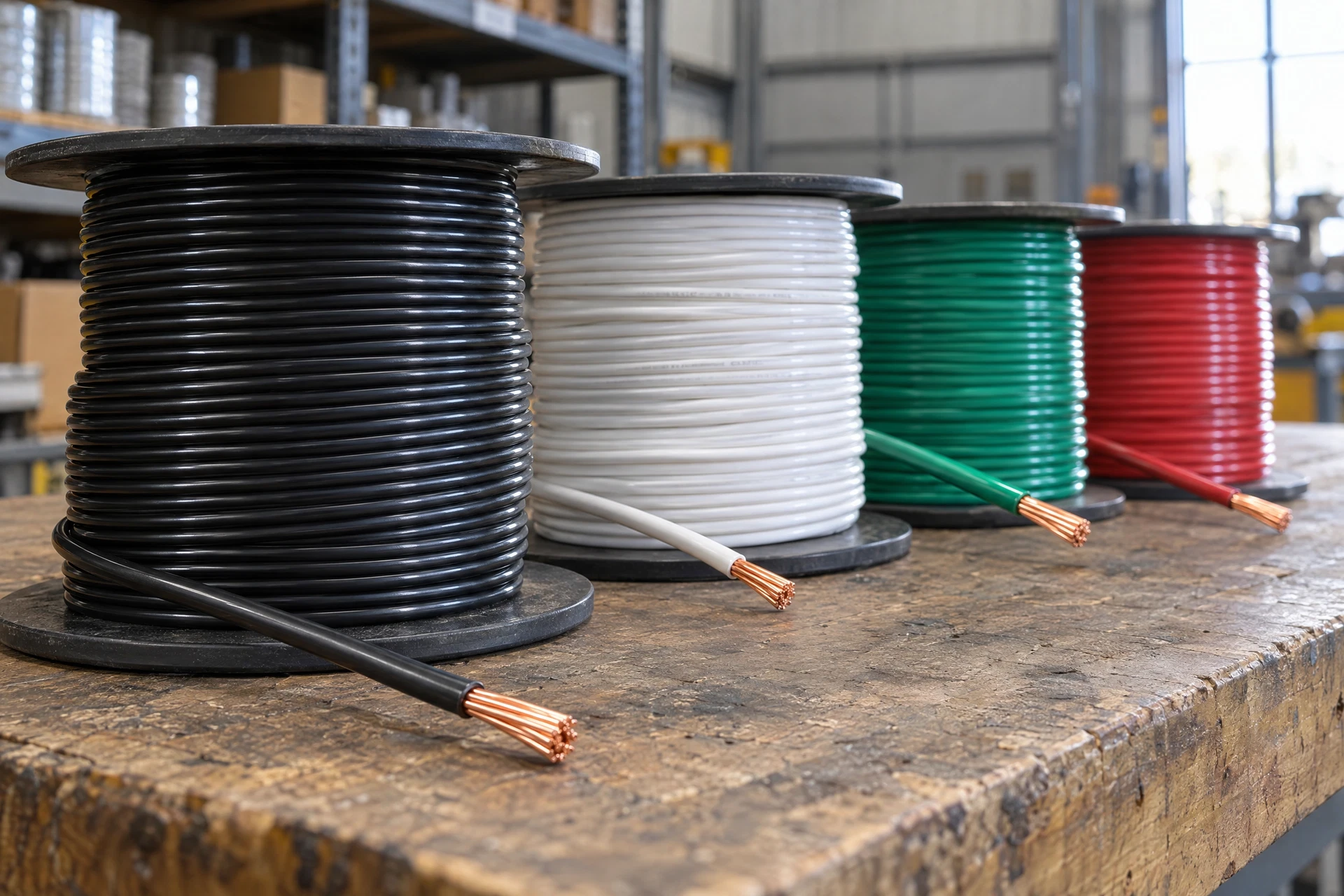
1/0 Wire Buyers in Pennsylvania
The smallest feeder size most crews stock, 105,600 circular mils, bought on metal, insulation type, footage and reel condition.
1/0 is spoken as one ought and written either 1/0 or 1-0. At 105,600 circular mils it sits just above 1 AWG in the American Wire Gauge series, and it is the smallest conductor the National Electrical Code permits to be run in parallel. That rule alone keeps it in stock everywhere, because designers who parallel feeders start here even when they later move up to 250 MCM or larger. It is also light enough for one person to carry a short length, which is not true of the sizes above it.
In Pennsylvania it appears in 100 A subfeeds, small commercial tenant spaces, generator and transfer switch feeders, pump stations and grounding electrode conductors. Distributors sell it on 500 foot and 1,000 foot reels, so a job that needs 380 feet leaves a partial reel behind. Those partial reels are the most common 1/0 surplus item we see described. Utility service work and small industrial jobs add a steady trickle of single reels, often with the original tag still attached.
| Circular mils | 105,600, the figure that defines the 1/0 size in the AWG series |
|---|---|
| Stranding | 19 wires in standard concentric strand, with compact and compressed versions common |
| Ampacity framework | NEC Table 310.16 lists 150 A for copper at 75 degrees C and 120 A for aluminum |
| Insulation | THHN and THWN-2, XHHW-2, and 1/0 in SER, SEU, URD and medium voltage cable |
| Typical uses | 100 A feeders, subpanels, generator feeders and grounding electrode conductors |
How the 1/0 size is defined
The AWG system counts backward, so smaller numbers mean larger wire until 1 AWG, after which the series continues as 1/0, 2/0, 3/0 and 4/0. The area is expressed in circular mils, where one circular mil is the area of a circle one thousandth of an inch across. 1/0 carries 105,600 of them, which works out to about 0.083 square inches of copper.
Standard 1/0 is a 19 wire concentric strand. Compact strand presses the wires together so the finished conductor is slightly smaller in diameter for the same area, and compressed strand falls between the two. The difference matters at termination, because a lug sized for compact 1/0 may be tight on a standard strand of the same nominal size.
- 1/0 follows 1 AWG and precedes 2/0
- 105,600 circular mils, roughly 0.083 square inches
- 19 wire concentric strand is standard
- Compact and compressed strand change the outside diameter, not the area
Where 1/0 wire shows up in Pennsylvania
Small commercial work is the main source: tenant fit-outs, restaurant and retail services, and subpanels fed from a house panel. Contractors also use it for generator and transfer switch feeders, where the load is moderate but the run is long enough that voltage drop pushes the size up from 2 AWG.
Municipal and utility work adds pump stations, lift stations and small building services. In grounding work, 1/0 bare copper serves as a grounding electrode conductor for services in the 350 to 600 kcmil range under the NEC table, which means a service upgrade can leave a coil of bare 1/0 behind.
- 100 A subfeeds and small commercial services
- Generator and transfer switch feeders
- Pump and lift station circuits
- Bare 1/0 for grounding electrode conductors
What a 1/0 reel is worth
Copper 1/0 is dense enough that the metal value is meaningful, and it sets a floor under any lot. Above that floor, the insulation type and the footage decide the rest. A sealed 1,000 foot reel of 1/0 THHN in black is easy to sell. A pile of 40 foot cutoffs in six colors is a different product and is priced as recovery.
Aluminum 1/0 is a smaller market. It is worth less per pound and it is less often specified in small feeder sizes, though it appears in service work where aluminum was the standard. Mixed copper and aluminum lots should be described separately, because they are valued separately.
- Copper versus aluminum, priced on different scales
- Sealed factory reels against opened partials
- Single color lengths against mixed cutoffs
- Insulation type, since THHN and XHHW-2 serve different markets
Storage and condition problems
1/0 spends most of its life on a shelf or in a truck, so the damage is usually mechanical. Nicks in the jacket expose the conductor, and a nick on aluminum starts an oxide film that has to be cleaned before termination. Wire stored in a damp crib will show white or green corrosion at the cut ends even when the jacket is sound.
Sunlight is a slower problem. Spools kept near a window or on an open rack for years will chalk and crack, and the outer layer may be unusable while the inner wraps are fine. That is worth saying in a description, since a buyer who knows the outer layer is weathered can still value the rest.
- Jacket nicks from handling and tight bends
- Oxide and corrosion on aluminum ends
- Chalking on spools stored in sunlight
- Crushed spools that have kinked the inner wraps
Photos and records that help
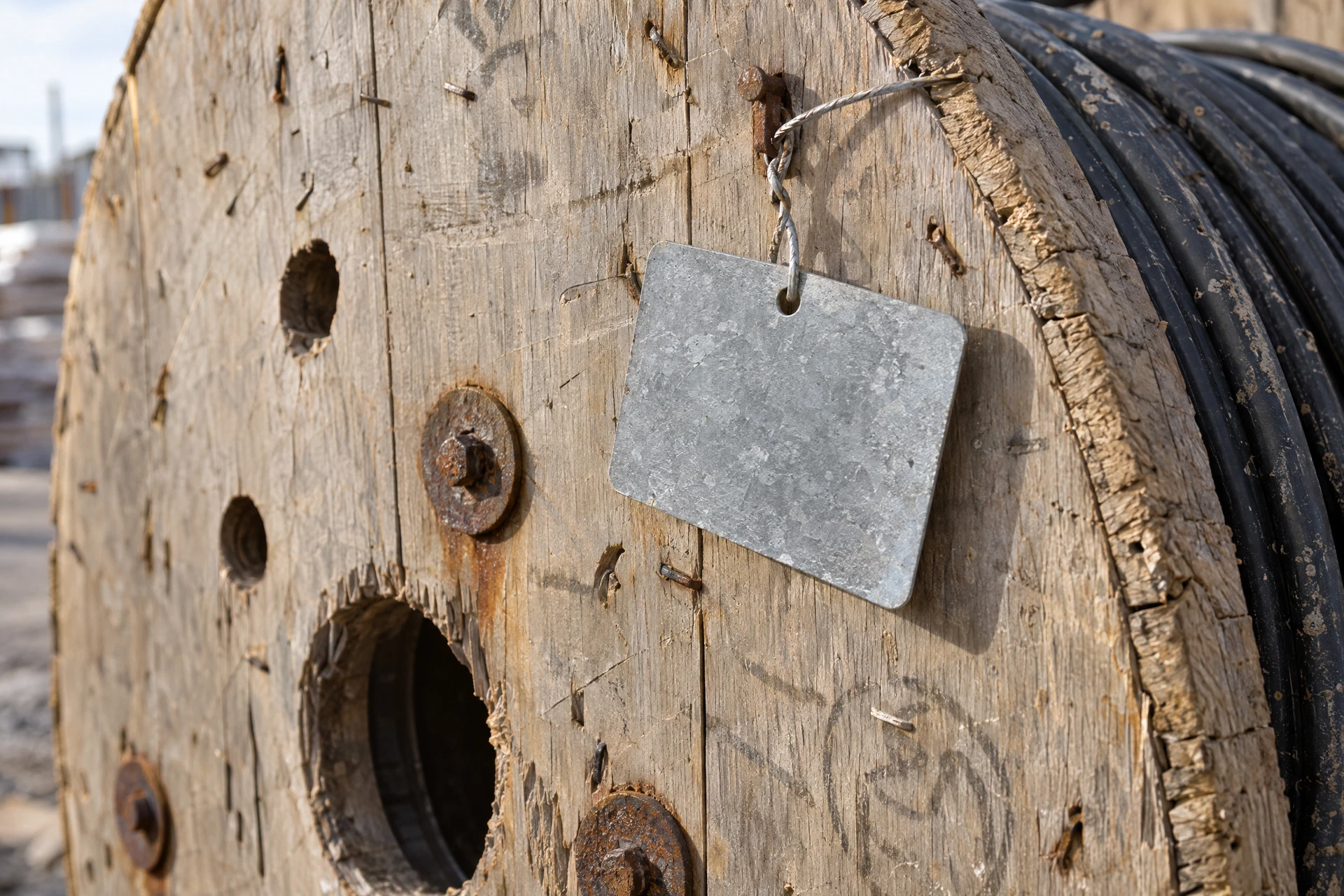
Photograph the spool or reel label, the wire end, and the print on the jacket if there is any. For a mixed lot, spread the spools out and take one wide photograph so the count and colors are visible. Note whether each spool is factory wrapped or opened.
Send the approximate footage per spool and the insulation type if the label is readable. Purchase records help when the wire came from a specific job, but most 1/0 lots are sold on the label and the condition. The answer comes back as a quote rather than an instant figure, once the labels and the footage have been checked.
- Spool labels and wire ends
- One wide photograph of the full lot
- Footage per spool where it is known
- A note on factory wrap against opened spools
What we buy in this category
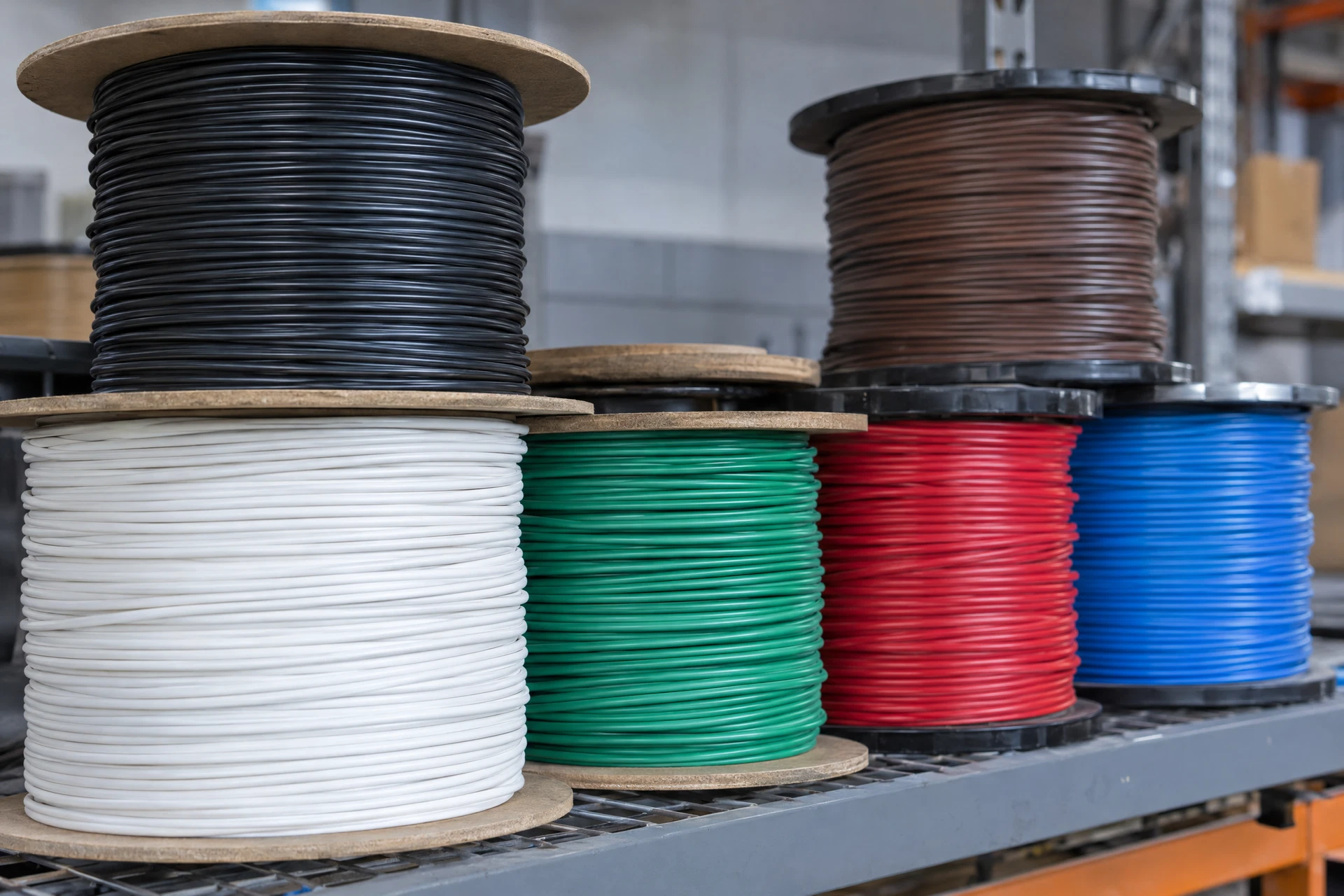
- 1/0 copper THHN and THWN-2 on full or partial reels
- 1/0 aluminum XHHW-2 and SER cable
- Bare 1/0 copper for grounding
- 1/0 URD and service entrance cable
- Mixed color cutoffs from contractor shops
- Sealed factory spools with legible labels
- 1/0 conductor in medium voltage cable
- Pallet lots from plant maintenance cribs
Selling 1/0 wire in Pennsylvania
From the Route 202 corridor to the Mon Valley and the I-81 warehouse belt, 1/0 wire is stored in shops and yards all over the state. Send the city or township, the access details and the photographs, and the pickup can be planned against the real site.
1/0 Wire questions
Is 1/0 the same as 1 AWG?
No. 1/0 is one size larger than 1 AWG, with 105,600 circular mils against about 83,690 for 1 AWG. The slash notation marks the point where the gauge series changes, so 1/0 is also written 1-0.
How much current does 1/0 copper carry?
NEC Table 310.16 lists 150 A for copper at 75 degrees C with three current-carrying conductors in a raceway at 30 degrees C ambient. Actual ampacity falls with higher ambient temperature, more conductors or derating for continuous load.
Do you buy 1/0 aluminum wire?
Yes, though it is valued below copper per pound. Aluminum 1/0 is common in service work, and clean, dry spools with legible labels are easier to place than corroded cut lengths. Heavy white oxide on the strands usually means recovery value only.
What if the spool label is gone?
The wire can often still be identified by measuring the conductor or comparing it against a known sample. Without a label the footage is uncertain, so the lot is usually reviewed on measured length and condition rather than on the original package.
Other wire and cable we buy
2/0 Wire
Sell surplus 2/0 wire in Pennsylvania.
Buying details4/0 Wire
Sell surplus 4/0 wire in Pennsylvania.
Buying details#2 AWG Wire
Sell surplus #2 awg wire in Pennsylvania.
Buying detailsTHHN Wire
Sell surplus thhn wire in Pennsylvania.
Buying detailsXHHW-2 Wire
Sell surplus xhhw-2 wire in Pennsylvania.
Buying detailsCopper Wire
Sell surplus copper wire in Pennsylvania.
Buying detailsHave surplus wire on the floor right now?
Send photographs of the reels, tags and jacket print. We will tell you what the material is worth as wire, not just as metal.