Washington County Pennsylvania Electrical Wire Buyers
Surplus wire from Washington County gas sites, Charleroi plants and Canonsburg shops, reviewed with the print and the tag in hand.
Washington County has been an energy county for two centuries, first for coal and coke, then for oil, and now for natural gas. The coke region around Charleroi and Monongahela supplied Pittsburgh's furnaces, and the glass plants that grew up beside the river used the same fuel. The National Road crossed the county at Washington, and the town that grew on it became a courthouse and market center for the farms and mines around it. More gathering line runs through these townships than most people outside the industry expect.
The current base is a mix of midstream gas work, manufacturing and distribution. Compressor stations, processing sites and pipeline facilities dot the rural townships, while the I-70 and I-79 interchange at Washington has drawn warehouses, offices and the Southpointe business park. Each of those settings uses wire differently, and each leaves a different kind of surplus behind. Much of it comes from contractors who finish a station and carry the remainder back to a shop, not from plants closing their doors.
| County seat | Washington |
|---|---|
| Main employment sectors | Natural gas midstream and processing, coal and coke heritage industries, manufacturing, warehousing, higher education and healthcare |
| Key highway and rail corridors | I-70 and I-79 at Washington, US 40, Route 19 and Route 519; Norfolk Southern's Monongahela line through Charleroi and Monongahela |
| Typical wire families | Instrumentation and control cable, tray cable, THHN and XHHW-2, 5 kV to 15 kV cable, URD, armored cable |
| Municipalities covered | Washington, Canonsburg, Charleroi, Monongahela, California, Donora, Bentleyville, Houston |
Coal, coke and gas shaped the county's load
The coke works are gone, but their electrical legacy is not. Charleroi and Monongahela were built around heavy industry on the river, and the buildings that remain have service entrances sized for machinery that no longer runs. Rewiring one of those buildings usually means pulling out feeders that were abandoned decades ago and installing new ones, which leaves a mix of old and new cable in the same storage room.
The gas side is newer and more standardized. A compressor station or a processing site uses packaged buildings, motor control centers and instrumentation loops, and the wiring is specified rather than improvised. That produces instrument cable, tray cable and medium voltage feeders in clean, labeled lots when a site is upgraded or decommissioned.
- Abandoned feeders in river towns built for heavy industry
- Instrument and control cable from gas site upgrades
- Medium voltage feeders at compressor and processing sites
Where surplus wire accumulates
Contractors who serve the gas industry are the largest single source. They buy in quantity for a pad or a station, finish the job, and carry the remainder to a shop in Washington or Canonsburg where it joins material from a dozen other projects. That stock is usually well labeled and stored indoors, and it often includes cable types a general electrician would never order.
The older towns contribute a different mix. Charleroi, Donora and Monessen have small fabricators and maintenance shops in buildings that have been through several owners, and the wire there tends to be older, heavier and less documented. Both kinds of lot are reviewed, but they are reviewed with different questions.
- Contractor shops holding gas industry overstock
- Small fabricators in Charleroi and Donora
- Warehouse fit-outs along the I-70 corridor
Wire types most common here
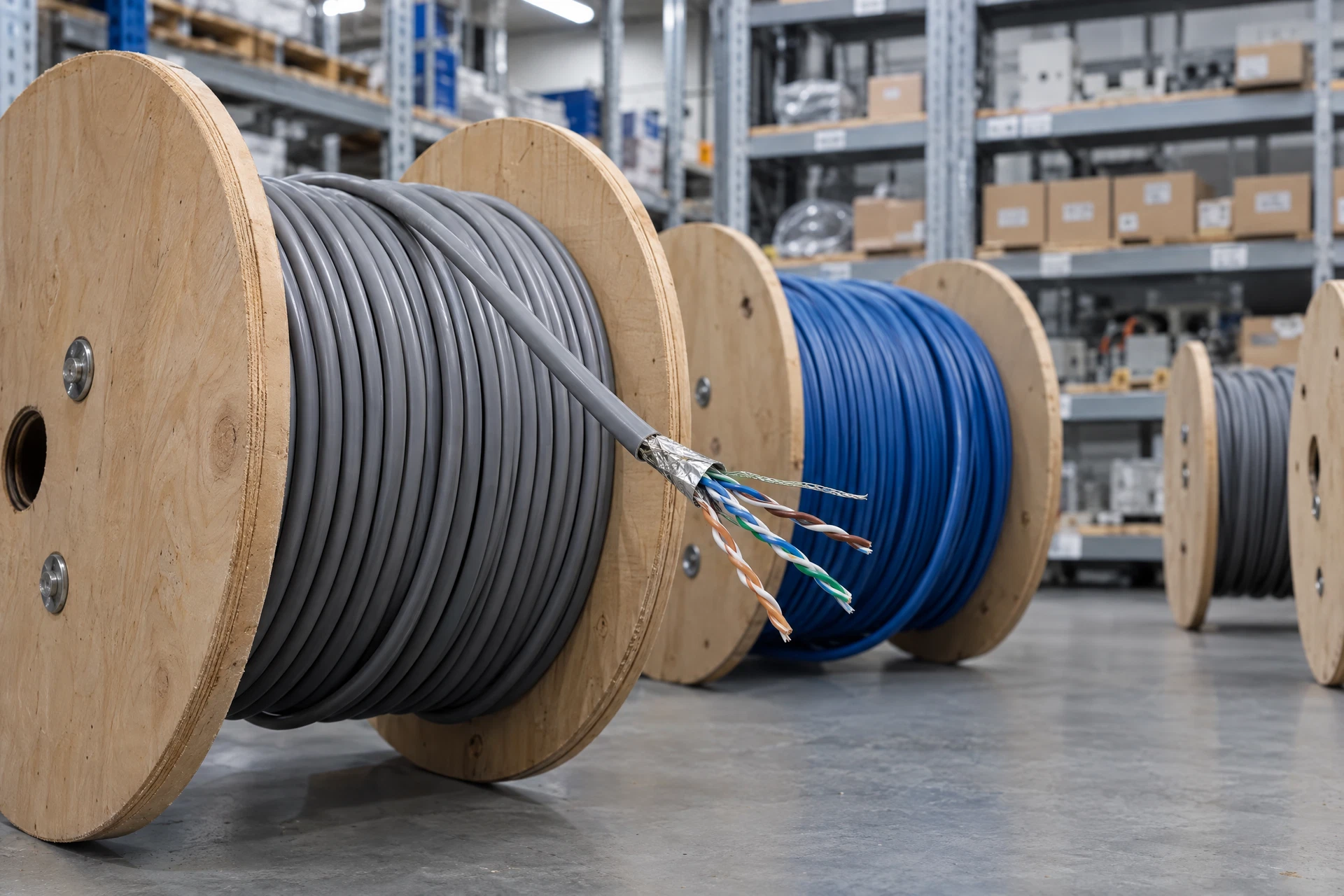
Instrumentation cable is the signature item in Washington County. Gas sites run shielded, twisted pair cable in trays and conduits between transmitters and control rooms, and a station upgrade can leave partial reels of 16 and 18 AWG pairs that are worth more as cable than as copper. Tray cable follows, since much of the field wiring is run in open tray.
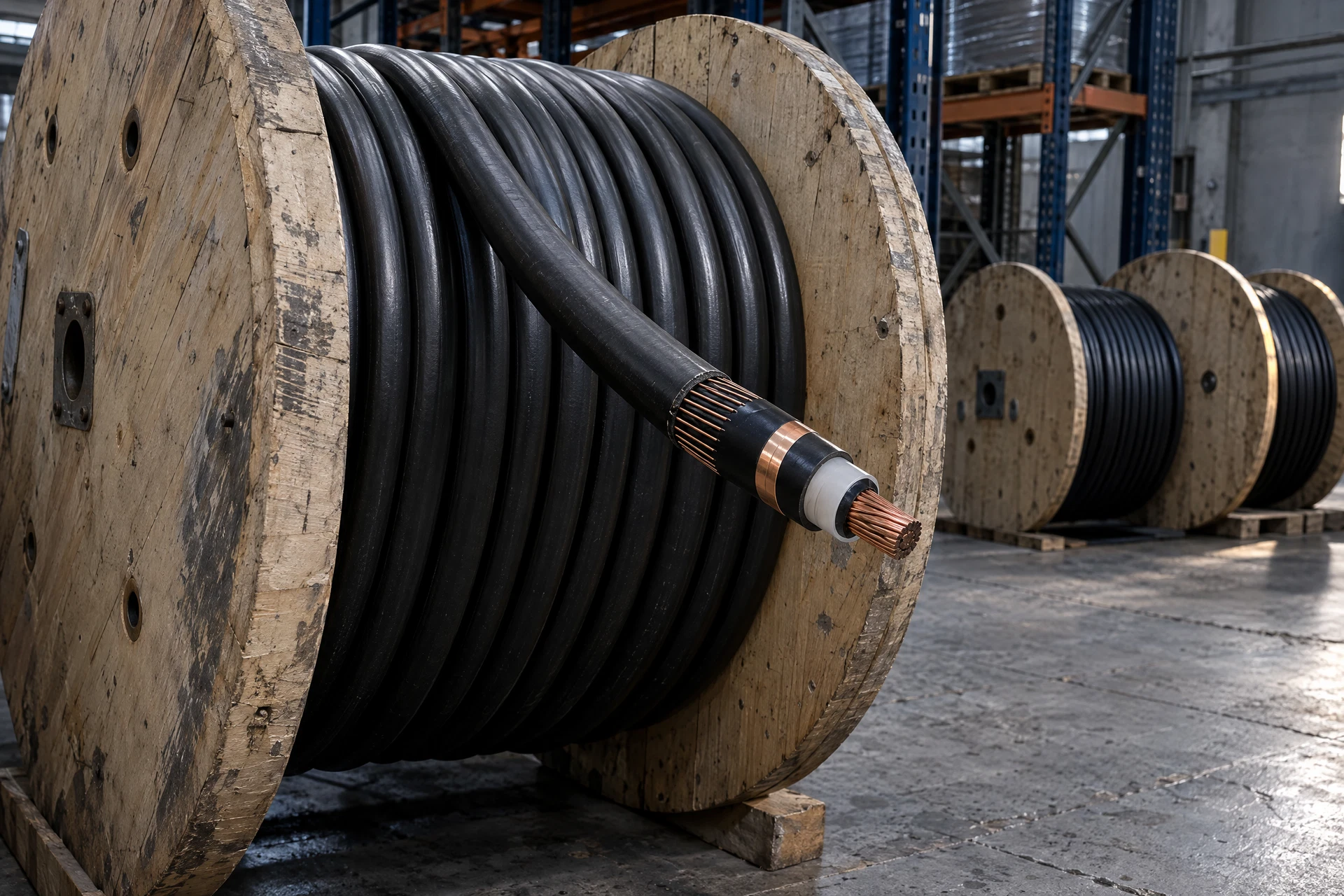
Below that sits ordinary power wiring: THHN and XHHW-2, URD for underground services, and 5 kV or 15 kV cable at the larger stations. Armored cable appears where a plant wanted protection without conduit, and welding cable shows up in the fabrication shops that survived the coke era.
- Shielded instrumentation cable, 16 and 18 AWG
- Tray cable from station and plant field wiring
- URD and USE-2 underground service cable
- 5 kV and 15 kV shielded power cable
Moving reels across the Mon Valley
I-70 and I-79 cross at Washington, which makes the county seat one of the easiest pickup points in southwestern Pennsylvania. Route 19 and US 40 serve the older corridors, and Route 88 runs north toward the river towns. Rural townships are reached by two lane roads that can be steep and narrow, especially where a gas site sits at the end of a driveway.
The river towns have their own constraints. Charleroi and Monongahela sit on narrow shelves between the bluff and the water, and a long trailer may not be able to turn around at a plant gate. For those sites a straight truck or a flatbed is usually the answer, and the driver needs to know about the grade before arriving.
- Narrow river shelves at Charleroi and Monongahela
- Two lane access roads to rural gas sites
- Winter ice on the hill roads south of Washington
Documenting an energy or plant inventory
For instrumentation cable, the print matters more than the tag. It carries the pair count, the gauge, the shield type and the voltage rating, and those details determine whether the cable is usable. Photograph a clean section of print and the reel face, then note the approximate footage from the counter if one is available.
For power cable, start with the tag and work outward: conductor material, size, insulation, voltage and length. Note whether the reel has been stored indoors and whether the ends are sealed. If a lot mixes several constructions, list them separately rather than as one weight, because a mixed pallet is reviewed item by item.

Wire and cable we buy in Washington County
Municipalities we cover in Washington County
Washington County questions
Do you buy instrumentation cable from gas site work?
Yes. Shielded twisted pair cable in 16 and 18 AWG is reviewed when the print can be read, since pair count and shield type drive the value. Partial reels with a known footage are handled the same way as full ones.
Can you pick up at a compressor station?
Pickup follows a review and an accepted quote. Site access usually requires a contractor orientation and a gate escort, so tell us the operator's requirements early and allow time for them to be met. Rural station driveways may not take a long trailer.
What about wire from a closed plant in Charleroi?
Closure lots are reviewed like any other inventory, though they are often mixed and poorly documented. Photographs of each distinct construction, plus the jacket print, keep a large lot from being valued as a single pile of scrap.
Have surplus wire on the floor right now?
Send photographs of the reels, tags and jacket print. We will tell you what the material is worth as wire, not just as metal.