Instrumentation Cable Buyers in Pennsylvania
Shielded instrument cable from Pennsylvania process plants, reviewed on pair count, shield type and remaining length.
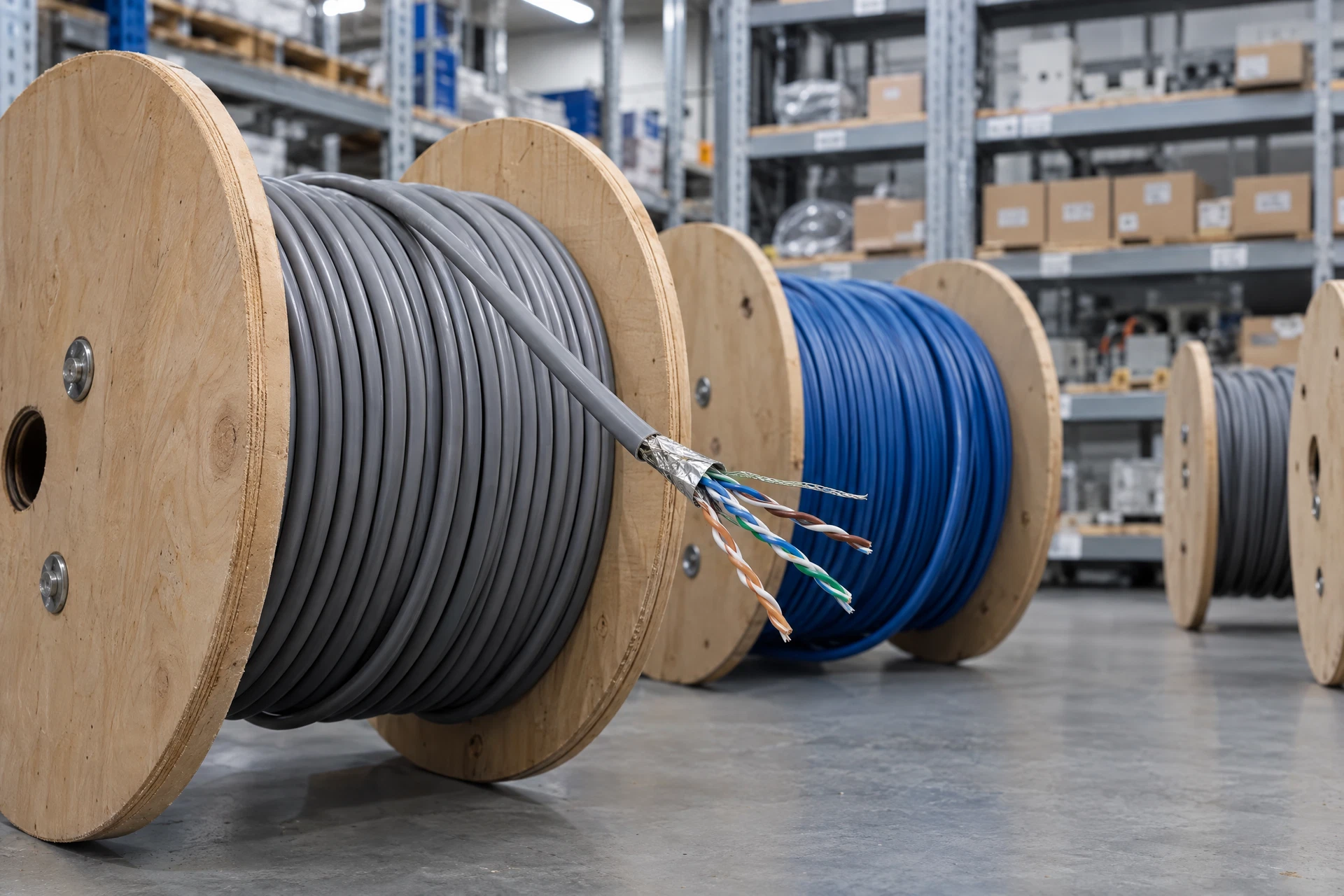
Instrumentation cable carries low level analog signals from sensors to control systems, and its construction is built around protecting those signals from electrical noise. Conductors are usually 16 or 18 AWG copper, arranged in twisted pairs or triads, with an individual foil shield around each pair and an overall shield over the bundle, each with its own drain wire. The twists cancel induced noise and the shields keep it away from the conductors. That layered shielding is why the cable costs more per foot than ordinary control cable of the same gauge.
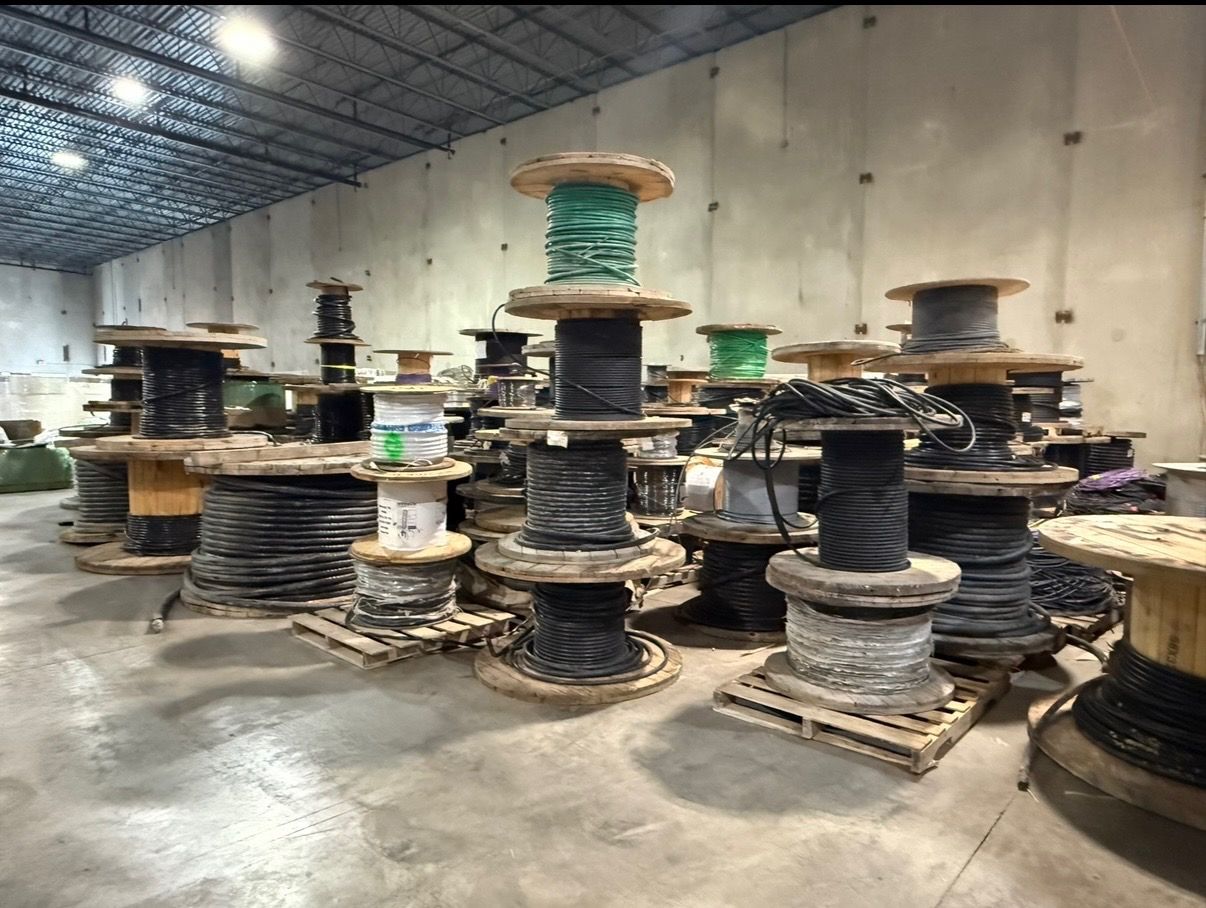
Refineries, chemical plants, water authorities and food processors in Pennsylvania all run instrument cable by the mile, and all of them accumulate partial reels. A project that specifies 12 pair cable may finish with 400 ft on a 1000 ft reel, and that reel is worth reviewing carefully because instrument cable is one of the more expensive products per foot in a plant's electrical store. Sealed reels with the factory tag are the easiest to place, and they are the ones we ask to see first.
| Construction | Twisted pairs or triads with individual and overall foil shields, drain wires and an overall PVC jacket |
|---|---|
| Conductors | Stranded copper, most often 16 or 18 AWG, with 20 AWG and 14 AWG also available |
| Insulation | XLPE or polyethylene, with PVC or CPE jackets; 300 V and 600 V versions both exist |
| Temperature | Commonly rated 90 C dry and 75 C wet |
| Standards | UL 13 as PLTC or UL 1277 as TC, with ICEA S-82-552 covering many instrument constructions |
What instrumentation cable is
The product is designed for signals in the milliamp and millivolt range, where a stray voltage from a nearby motor cable can corrupt a reading. Twisting the pair makes the two conductors see the same noise and cancel it at the receiver. Foil shields around each pair and around the bundle block capacitive coupling, and the drain wires give the installer a way to ground the shield at one end.
That construction is what separates it from control cable. Control cable switches a contactor and does not care about a few volts of noise. Instrument cable carries a 4 to 20 mA signal or a thermocouple reading and cares a great deal. The pair count, the shield arrangement and the voltage rating are the three details that determine what a reel can be used for.
- Twisted pairs or triads with individual shields
- Overall shield with a separate drain wire
- 300 V PLTC and 600 V TC versions both common
- Pair counts from 1 to 36 or more
Where Pennsylvania sellers use instrumentation cable
Process plants are the main users. A refinery or chemical plant runs instrument cable from field transmitters to a marshalling panel, often in tray with power cables separated by a barrier. Water and wastewater treatment works use it for flow, level and pressure transmitters. Food plants use it for temperature probes and clean in place systems where washdown demands a tough jacket.
System integrators and instrument contractors buy reels for a project and keep the balance. Because the cable is ordered to a pair count that matches an instrument schedule, a design change can strand a whole reel. Those reels, still sealed with the factory tag, are the best material in this category and are always worth photographing properly.
What makes instrumentation cable resellable
Pair count and shielding set the price. A sealed 1000 ft reel of 12 pair 18 AWG with individual and overall shields is a valuable item to any integrator. Single pair and 4 pair constructions are more common and easier to place but worth less per foot. High pair counts take longer to sell because fewer projects need them.
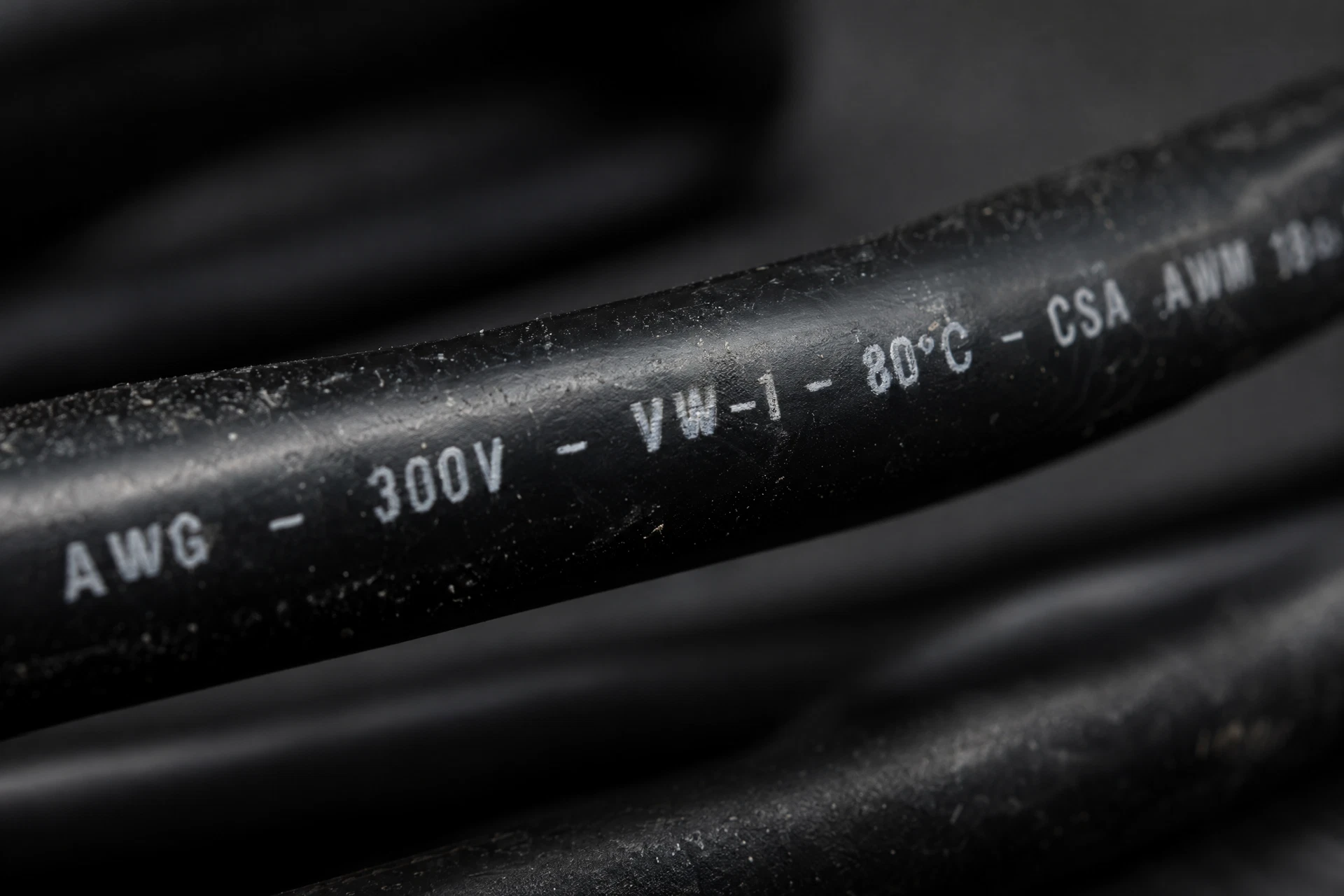
The jacket print and the reel tag carry unusual weight here, because a buyer must know the shield arrangement before installing the cable. A reel labeled as having individual pair shields can be used where an overall shield alone would not satisfy the design. Without that documentation, the cable is discounted even if it is physically sound.
- Sealed reels with pair count and shield details
- 12, 16 and 24 pair constructions
- Individual and overall shielded versions
- Thermocouple extension cable in two pair
Condition, storage and identification
Small conductors and foil shields are fragile. A reel dropped on its edge can crease the foil, and a crease in a shield is a permanent defect in the noise protection. Tight coiling sets the jacket, and a cable that has taken a set is harder to pull through tray without damage. Storage indoors, on the flange, keeps a reel in sellable condition.
Identification depends on the print and the tag, both of which usually list the pair count, the gauge and the shield type. The cut end shows the foil wraps and drain wires directly, which is often the fastest confirmation. Where a reel is unmarked, a two foot sample lets us count pairs and confirm the construction.
What to send for a quote
Send the reel tag, the jacket print and a photo of the cut end fanned out so the shields and pairs are visible. List the pair count, gauge and length for each reel, and note whether the shields are individual, overall or both. A copy of the original instrument schedule is ideal when it exists.
The review ends with a quote, and pickup is scheduled when it is accepted. These reels are light but awkward, and they damage easily in transit, so tell us whether they are boxed and whether they can be handled without dragging them across a floor.
- Reel tag plus jacket legend
- Cut end photo with pairs fanned out
- Pair count, gauge and length
- Shield arrangement
- Boxed or loose, and handling notes
What we buy in this category
- 12, 16 and 24 pair shielded instrument cable
- Single pair and 4 pair 18 AWG reels
- Individual and overall shielded constructions
- Thermocouple extension cable with matched alloy conductors
- 600 V TC rated instrument cable
- Sealed reels from canceled projects
- Partial reels from integrator stock
- Mixed pair counts for sorting
Selling instrumentation cable in Pennsylvania
Reels of instrumentation cable turn up from Philadelphia and the southeastern counties through the Lehigh Valley, and from Pittsburgh and the Mon Valley across to Harrisburg, Lancaster and York. Send the city or township with the photographs so pickup can be planned realistically.
Instrumentation Cable questions
What is the difference between individual and overall shields?
An individual shield wraps each pair, and an overall shield covers the whole bundle. Cable with both gives the best noise rejection and is specified for analog signals run near power. The print states which arrangement a reel has.
Do you buy instrumentation cable by the pair count?
Yes. Pair count drives the price along with length. High counts such as 24 or 36 pair are specialty items, while 1, 2, 4 and 8 pair constructions sell more quickly to integrators and maintenance departments.
Can you identify cable with a faded jacket print?
Often. The cut end shows the foil shields and drain wires, and counting the pairs confirms the construction. A short sample is the most reliable way, and we ask for one when a lot is significant.
Is instrumentation cable the same as PLTC?
Many instrument cables are listed as PLTC, and others are listed as Type TC. The listing determines where the cable can be installed, so we read the print rather than treating the terms as interchangeable.
Other wire and cable we buy
Control Cable
Sell surplus control cable in Pennsylvania.
Buying detailsPLTC Cable
Sell surplus pltc cable in Pennsylvania.
Buying detailsTray Cable
Sell surplus tray cable in Pennsylvania.
Buying detailsCommunication Cable
Sell surplus communication cable in Pennsylvania.
Buying detailsLow Voltage Cable
Sell surplus low voltage cable in Pennsylvania.
Buying detailsHave surplus wire on the floor right now?
Send photographs of the reels, tags and jacket print. We will tell you what the material is worth as wire, not just as metal.