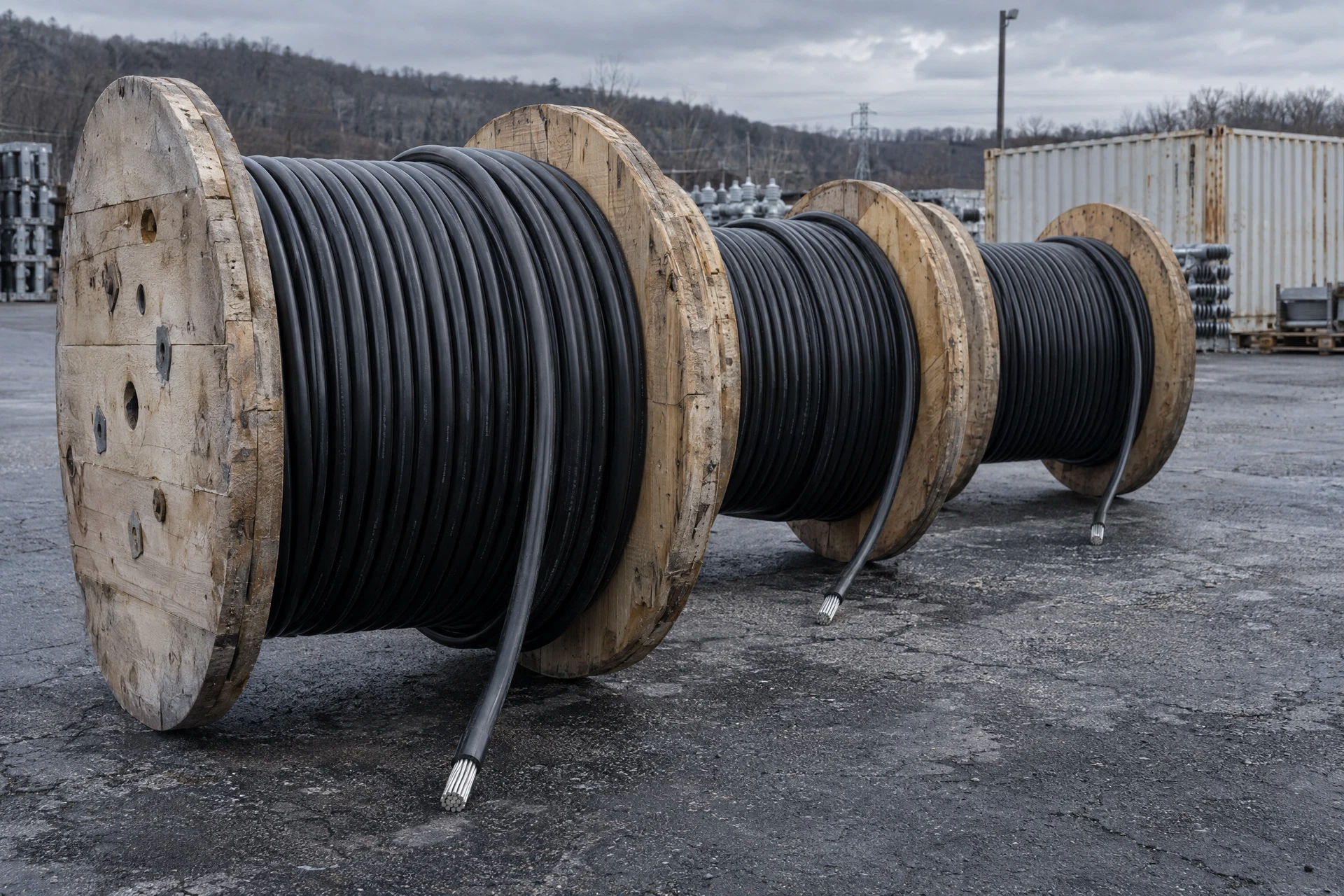
SER Cable Buyers in Pennsylvania
Four-wire service entrance cable from Pennsylvania contractors and farms, reviewed on conductor size and jacket condition.
SER cable is the round service entrance assembly with four conductors: two insulated phase conductors, an insulated neutral and a bare equipment ground. It is the cable an electrician pulls from a meter base to a 200 A panel, or from a main panel to a subpanel in a detached building, because it carries the neutral and the ground as separate conductors. Aluminum SER in 4/0 and 2/0 is the standard residential service riser in most of Pennsylvania.
The material reaches the surplus market through service upgrades, panel replacements and small commercial work. A contractor who buys a 250 ft coil for a 90 ft run keeps the balance on the truck, and a farm or shop that rewired a building often has a partial coil left in the barn. Copper SER is less common but carries more value per foot, and it is always worth photographing before anything else. A 4/0 coil that never left the truck is the most common single item in this category.
| Construction | Round assembly of two or three insulated phase conductors, an insulated neutral and a bare ground |
|---|---|
| Conductors | Aluminum is standard from 6 AWG through 500 kcmil; copper versions are available in the same sizes |
| Insulation | XHHW-2 or USE-2 rated singles under a sunlight resistant overall jacket |
| Voltage and temperature | 600 V; conductors commonly rated 90 C dry and 75 C wet |
| Standards | UL 854 and NEC Article 338, Type SE style R |
What SER cable is
Type SE is service entrance cable, and the R suffix means the assembly is round. Inside the jacket are two or three insulated phase conductors, an insulated neutral and a bare ground conductor, all cabled together. Because the neutral is insulated, SER can feed a subpanel where the neutral and ground must stay separate, which is the reason it outsells the older three-wire style for anything beyond a simple residential service.
The distinction that matters for resale is SER versus SEU. SEU is a three-wire assembly with a bare neutral wrapped concentrically around the insulated conductors, intended for 120/240 V single phase service. SER is the four-wire version with an insulated neutral and a separate bare ground. The two are not interchangeable in a subpanel feeder.
- Four conductors: two or three phases, insulated neutral, bare ground
- Round jacket, sunlight resistant
- Aluminum is the common commercial product
- Not the same as three-wire SEU
Where Pennsylvania sellers use SER cable
Residential service work is the main source. A 200 A upgrade from a 100 A panel usually involves a new 4/0 aluminum SER riser, and the leftover coil stays with the contractor. Rural properties use SER for barns, workshops and detached garages, where a subpanel is fed from the house and the run is long enough that the cable is bought in a 250 ft length.
Light commercial work adds another stream. Small retail buildings, churches, fire halls and machine shops feed subpanels with SER when the run is inside the building envelope. Plants occasionally use it for a remote panel in an office area, though most industrial distribution uses tray cable or conduit and individual conductors.
What makes SER cable resellable
Size and metal decide the price. Four-wire 4/0 aluminum SER is the most traded item in the category, followed by 2/0 and 1/0. Copper SER in 2/0 or 4/0 carries several times the value per foot and is worth confirming carefully, since a copper coil is sometimes mistaken for aluminum by a seller reading an old invoice.
Coil length matters as much as size. A sealed 250 ft coil with the factory wrap and footage label is straightforward to place with any service contractor. A 30 ft cutoff has almost no resale life, though the copper or aluminum content still has value. Sunlight resistance and a legible print showing the type and temperature rating help a buyer justify using it.
- 4/0 and 2/0 aluminum four-wire coils
- Copper SER in any size above 6 AWG
- Sealed coils with factory footage labels
- Jacket print showing Type SE and the temperature rating
Condition, storage and identification
Aluminum conductors oxidize, but the oxide is not a problem until the cable is stripped and terminated. What matters more is the jacket: UV exposure hardens it, and a coil stored outdoors for two summers will crack when it is unrolled. Water standing in an open end can travel under the jacket and discolor the conductors, which a buyer will notice at the cut.
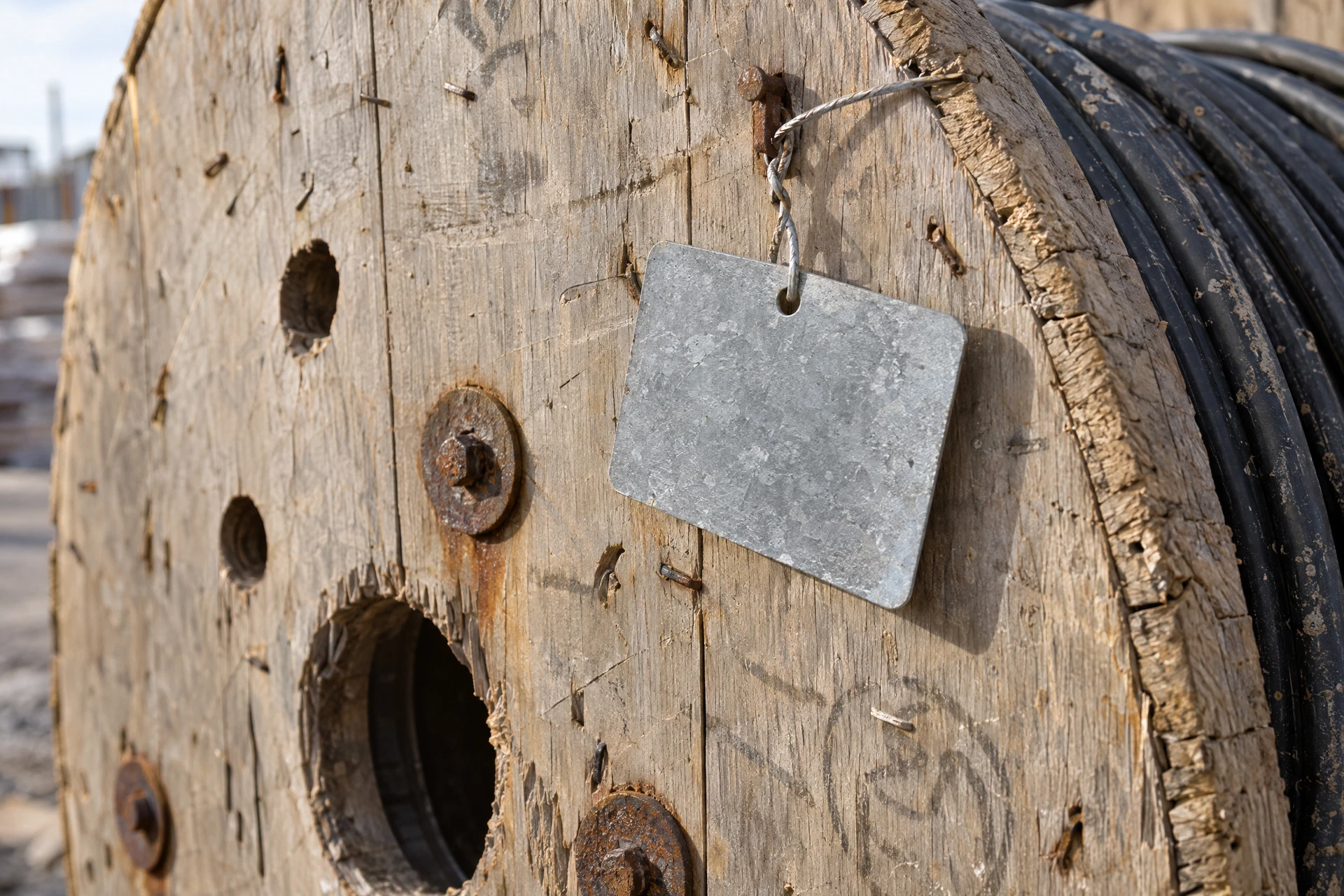
Identification is usually simple. The jacket print carries the type, the conductor size and the temperature rating, and most manufacturers print the neutral size separately because it can be smaller than the phases. Reel or coil tags confirm footage. Where the print is gone, the conductor count and the bare ground distinguish SER from SEU quickly.
What to send for a quote
Send a photo of the jacket print, the coil tag and the cut end. State the conductor size and whether the metal is aluminum or copper, because the two are priced very differently and a photo of a clean cut end settles it. Give the approximate length of each coil and whether it has been stored inside.
We review the lot, return a quote and schedule pickup once it is accepted. SER coils are heavy for their size, so tell us whether the material is on a pallet, in a truck bed or on a shelf, and whether a lift gate or forklift will be available at the pickup address.
- Jacket print or coil tag
- Cut end photo showing conductor metal
- Size, conductor count and length
- Indoor or outdoor storage history
- Loading access at the site
What we buy in this category
- 4/0 aluminum SER, full and partial coils
- 2/0 and 1/0 four-wire service entrance cable
- Copper SER from 6 AWG through 4/0
- 250 ft factory coils with footage labels
- Leftover risers from panel upgrade work
- SER cut lengths from subpanel feeders
- Sunlight resistant jacket constructions
- Mixed service entrance lots for sorting
Selling ser cable in Pennsylvania
ser cable arrives from job sites, warehouses and maintenance rooms across all 67 counties. Whether the reels are in Bucks County or Beaver County changes the logistics, not the review, so include the address when you send photographs.
SER Cable questions
How is SER different from SEU?
SER has four conductors with an insulated neutral and a separate bare ground, so it can feed a subpanel. SEU is a three-wire assembly with a bare concentric neutral and is used mainly for single phase service entrances.
Do you buy aluminum SER as well as copper?
Yes, and aluminum is the more common material. Copper coils are priced higher per pound and per foot, so we ask for a clean cut end photo to confirm which metal the cable contains. We confirm the metal from a cut end before quoting.
Can SER cable be used indoors?
It is commonly installed indoors in service and feeder work, subject to the jacket and listing. Whether a specific run is permitted depends on the installation, so we describe the cable and let the buyer's electrician make that call.
What lengths of SER are worth selling?
A full 250 ft coil is the easiest to place. Lengths above 50 ft can still suit a small service or subpanel. Shorter pieces are usually valued on metal content, and we say so before quoting.
Other wire and cable we buy
SEU Cable
Sell surplus seu cable in Pennsylvania.
Buying detailsAluminum Wire
Sell surplus aluminum wire in Pennsylvania.
Buying detailsURD Cable
Sell surplus urd cable in Pennsylvania.
Buying detailsUSE-2 Cable
Sell surplus use-2 cable in Pennsylvania.
Buying details4/0 Wire
Sell surplus 4/0 wire in Pennsylvania.
Buying detailsHave surplus wire on the floor right now?
Send photographs of the reels, tags and jacket print. We will tell you what the material is worth as wire, not just as metal.