
4/0 Wire Buyers in Pennsylvania
The 211,600 circular mil workhorse of service work, bought on conductor metal, insulation, footage and how the reel was stored.
4/0 is the largest of the zero series and the size most electricians reach for when a service needs 200 A in aluminum or a feeder needs margin in copper. At 211,600 circular mils it holds about 0.166 square inches of conductor, and it is heavy enough that a full 1,000 foot reel of copper is a two person lift with equipment, not a hand carry. It is also the size where copper and aluminum diverge most in price, so identifying the metal correctly matters before anything else.
Pennsylvania has a steady supply of it. Service upgrades, meter bank replacements, generator installations and utility service laterals all consume 4/0, and each job tends to leave a partial reel. The 4/0 aluminum URD assembly with two 4/0 phases and a 2/0 neutral is common enough that buyers recognize it on sight. Utility service work adds a steady supply of laterals, and plant maintenance departments keep spare reels that surface at turnover or during a shutdown.
| Circular mils | 211,600, about 0.166 square inches of conductor area |
|---|---|
| Stranding | 19 wires in standard concentric strand, with compact and compressed versions available |
| Ampacity framework | NEC Table 310.16 lists 230 A for copper at 75 degrees C and 180 A for aluminum |
| Assemblies | 4/0-4/0-2/0 URD, 4/0 SER, and 4/0 singles in THHN or XHHW-2 |
| Typical uses | 200 A services, meter banks, generator feeders, large equipment circuits |
The 4/0 size in everyday practice
The relationship between 4/0 aluminum and a 200 A service is one of the constants of American electrical work. Aluminum 4/0 is listed at 180 A, and the dwelling service allowance in the code permits that to serve a 200 A load in single family work. Copper 4/0 is listed at 230 A, which is why copper 4/0 is often used where the load is heavier or the run is longer.
The strand is normally 19 wires, and compact 4/0 aluminum is common because it terminates more reliably in the lugs used on meter sockets and panels. Compressed strand falls between standard and compact and behaves similarly at the lug.
- 4/0 aluminum is the standard 200 A residential service conductor
- Copper 4/0 at 230 A covers heavier or longer feeders
- 19 wire strand is standard
- Compact aluminum terminates more predictably in meter sockets
Where 4/0 turns up across Pennsylvania
Service work is the main channel. A row of townhouses, a small apartment building or a strip center with multiple meters will consume hundreds of feet of 4/0 in SER and URD, and the leftovers accumulate in contractor shops. Utilities also use 4/0 aluminum for service laterals, so utility yards hold partial reels of their own.
Plants and institutions add generator feeders, chiller circuits and distribution ties. Temporary power for construction sites uses 4/0 in cable assemblies that are rolled out and recovered repeatedly, and those often come back with jacket scuffs but sound conductors.
- Residential and multifamily service work
- Utility service laterals in aluminum
- Generator and transfer switch feeders
- Temporary power cable recovered from job sites
Why 4/0 moves quickly
Demand for 4/0 is broad and constant, so a clean reel does not sit. That is the main reason it holds value better than a specialty size. A sealed reel of 4/0 THHN or a factory length of 4/0-4/0-2/0 URD can be placed with a contractor within days, which a buyer knows and prices accordingly.
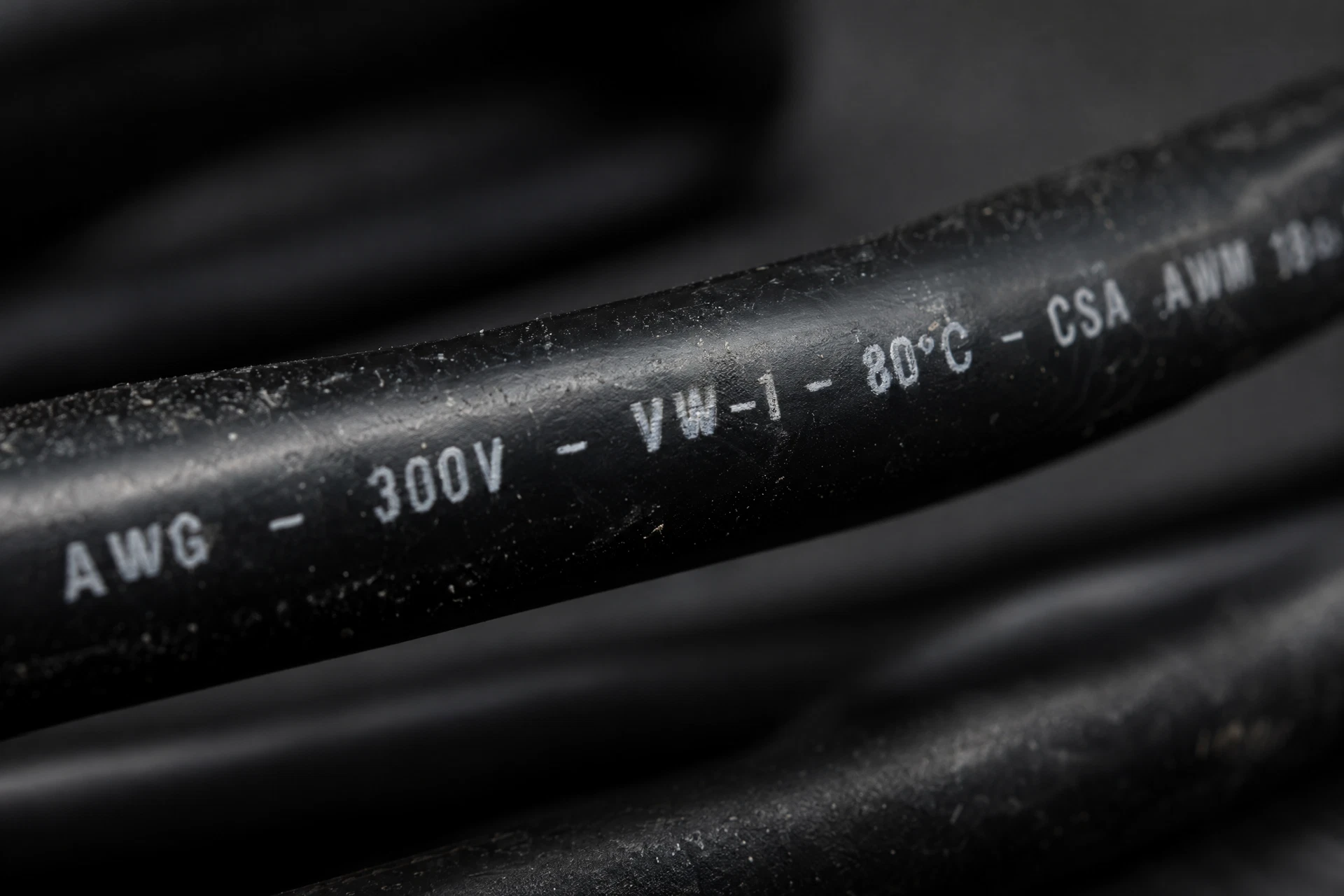
The exception is material with an uncertain identity. A reel with no tag and faded print might be 4/0 or 3/0, copper or aluminum, and that ambiguity costs money. Clear print and a readable tag are worth more on this size than almost any other, because the difference between the two possibilities is large.
- Constant demand from service work
- Recognizable URD assemblies
- Clear print removes size and material doubt
- Copper reels carry more value per pound than aluminum
Condition and handling
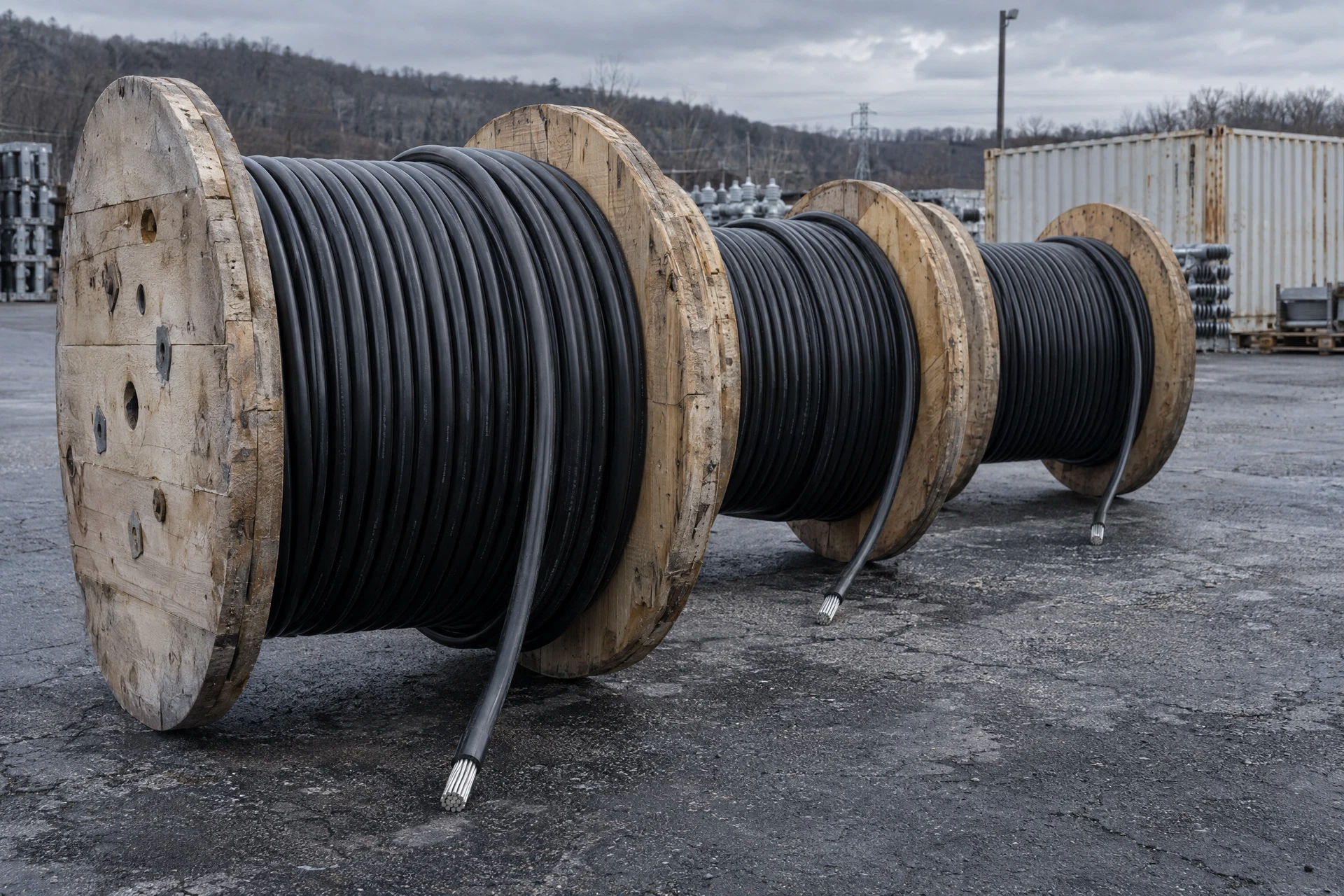
Weight is the enemy here. A full 4/0 copper reel can weigh well over a thousand pounds, and reels that heavy are often dragged rather than lifted. Dragging scuffs the jacket on one side and can break the flange, and a broken flange lets the outer wraps loosen and cross over each other.
Aluminum corrosion is the other thing to look at. Bright strands at the cut are a good sign, white powder is not. On URD assemblies, check the neutral conductors as well, since they are smaller and corrode faster than the phase conductors they run beside.
- Scuffed jackets from dragging heavy reels
- Broken flanges and crossed outer wraps
- White oxide on aluminum phase and neutral strands
- Neutral corrosion on URD assemblies
What to send with a 4/0 inquiry
Send the tag, the print, both ends and a side view of the reel. For URD or SER, photograph the cut end so the conductor arrangement is visible. Note the approximate footage and whether the reel is full or partial, and say whether the material is copper or aluminum.
If the cable came from a utility or a specific job, mention it, since utility spec cable sometimes differs from commercial stock in jacket compound and neutral size. The quote rests on those details rather than on a description alone.
- Tag and print photographs
- Cut end showing conductor arrangement
- Footage and full or partial status
- Copper or aluminum, and the source if known
What we buy in this category
- 4/0 copper THHN and XHHW-2 reels
- 4/0 aluminum SER and SEU cable
- 4/0-4/0-2/0 URD assemblies
- Bare 4/0 copper grounding conductor
- Partial reels from service upgrades
- Generator and temporary power cable
- Utility service lateral reels
- Mixed service cable from contractor shops
Selling 4/0 wire in Pennsylvania
Most 4/0 wire we review comes from plants and contractors in the southeast, the Pittsburgh region and the central counties, with smaller lots from Scranton, Wilkes-Barre, Erie and the northern tier. Tell us where the material sits and we will confirm coverage.
4/0 Wire questions
Is 4/0 aluminum good for a 200 A service?
It is the common choice. Aluminum 4/0 is listed at 180 A, and the dwelling service provision in the code allows that for a 200 A single family service. Commercial work usually needs a larger size or copper.
How much does 4/0 copper weigh per foot?
Bare copper 4/0 weighs roughly 0.65 pounds per foot, and insulated cable weighs more depending on the jacket and insulation. A full 1,000 foot reel is therefore heavy enough to need equipment rather than people.
Do you buy 4/0 URD with a 2/0 neutral?
Yes. That assembly is common utility and service cable, and it is reviewed as a complete cable rather than as three separate conductors. Neutral condition and jacket integrity both matter. Jacket condition along the outer wraps matters as much as the conductor size.
What if only part of the print is readable?
Send a photograph anyway. Size and material can often be confirmed by measuring the conductor or comparing it with a sample. The quote may be adjusted until the identity is certain. A photograph of the tag and the end of the cable is usually enough to work it out.
Other wire and cable we buy
3/0 Wire
Sell surplus 3/0 wire in Pennsylvania.
Buying details250 MCM Wire
Sell surplus 250 mcm wire in Pennsylvania.
Buying details2/0 Wire
Sell surplus 2/0 wire in Pennsylvania.
Buying detailsURD Cable
Sell surplus urd cable in Pennsylvania.
Buying detailsAluminum Wire
Sell surplus aluminum wire in Pennsylvania.
Buying detailsSER Cable
Sell surplus ser cable in Pennsylvania.
Buying detailsHave surplus wire on the floor right now?
Send photographs of the reels, tags and jacket print. We will tell you what the material is worth as wire, not just as metal.