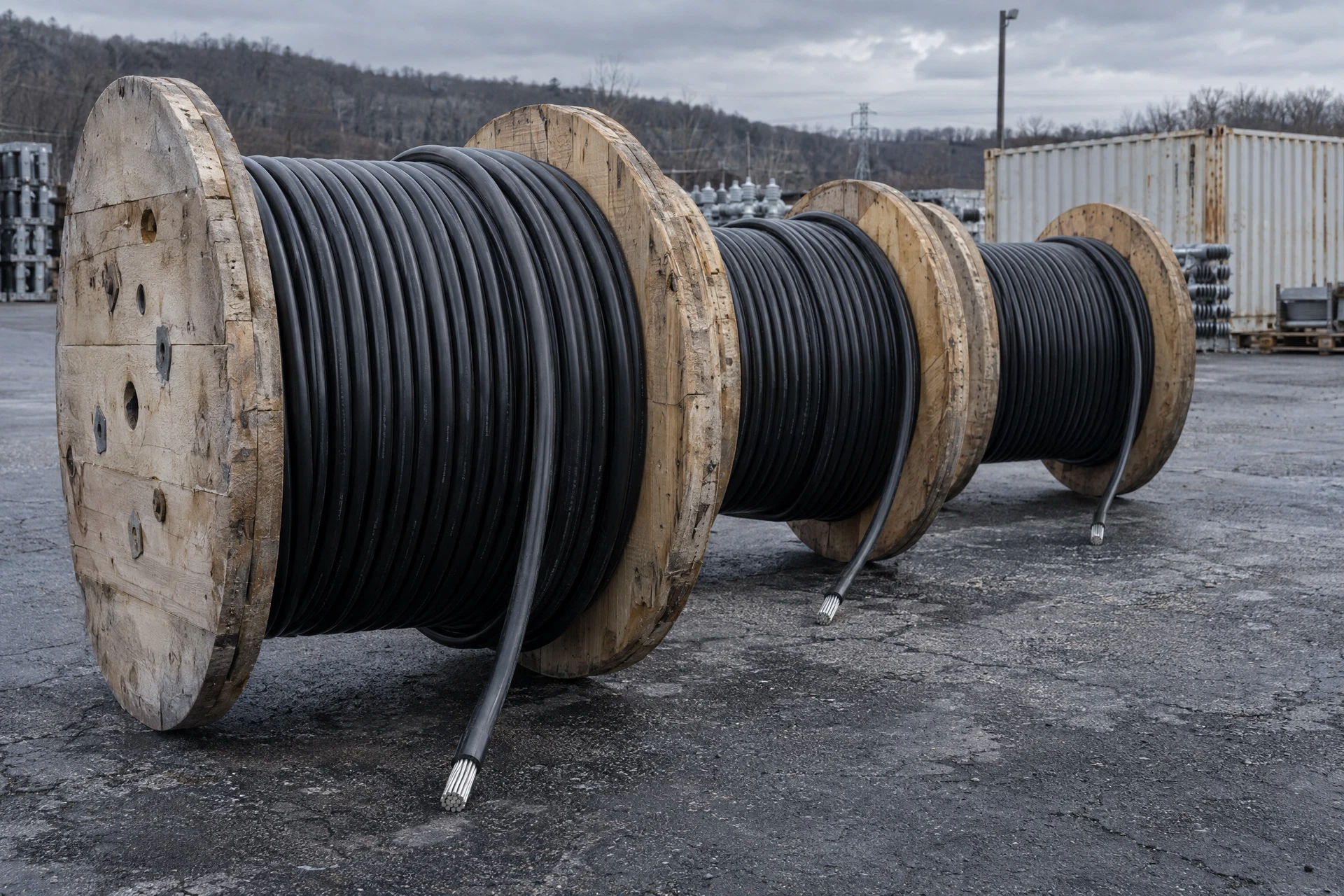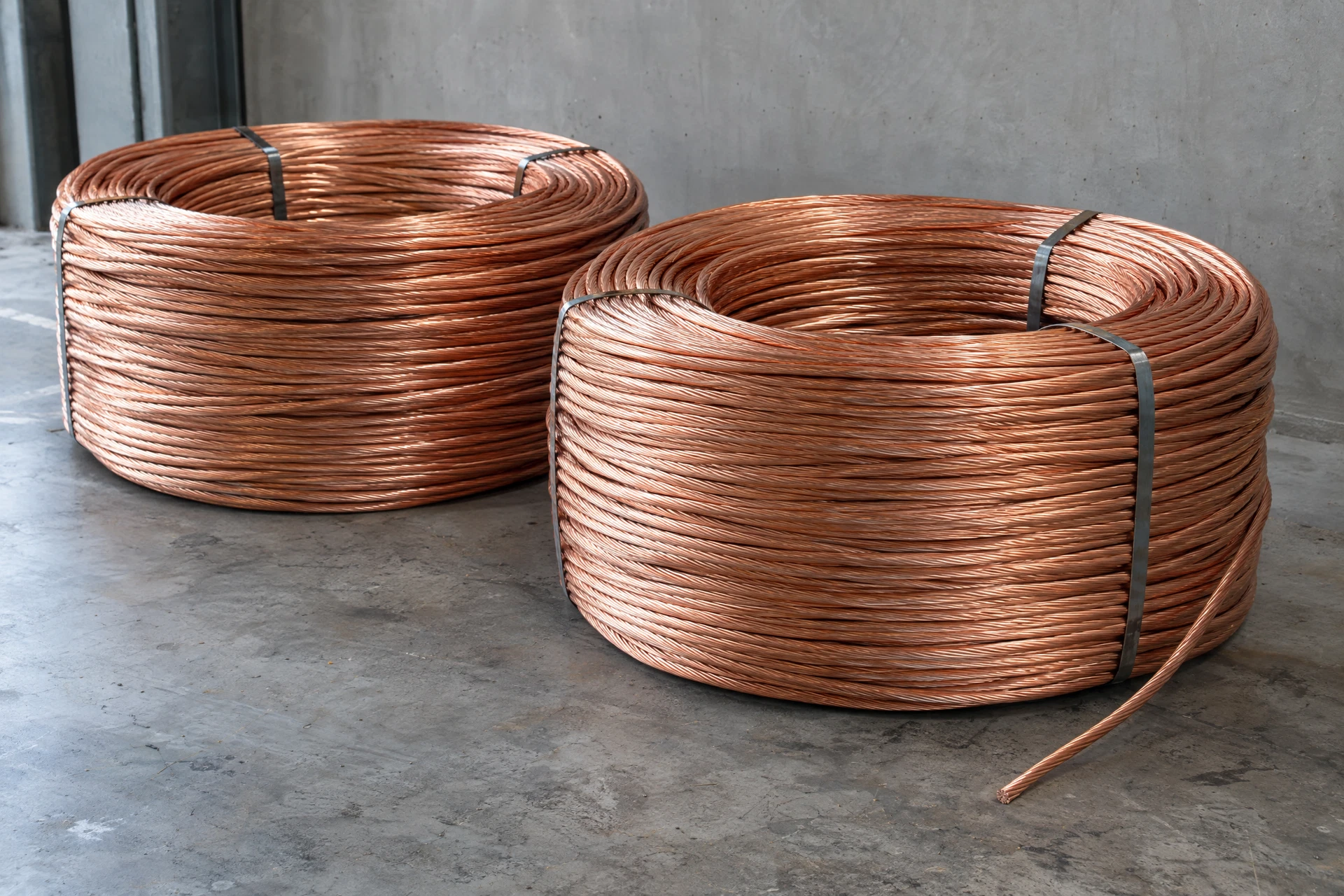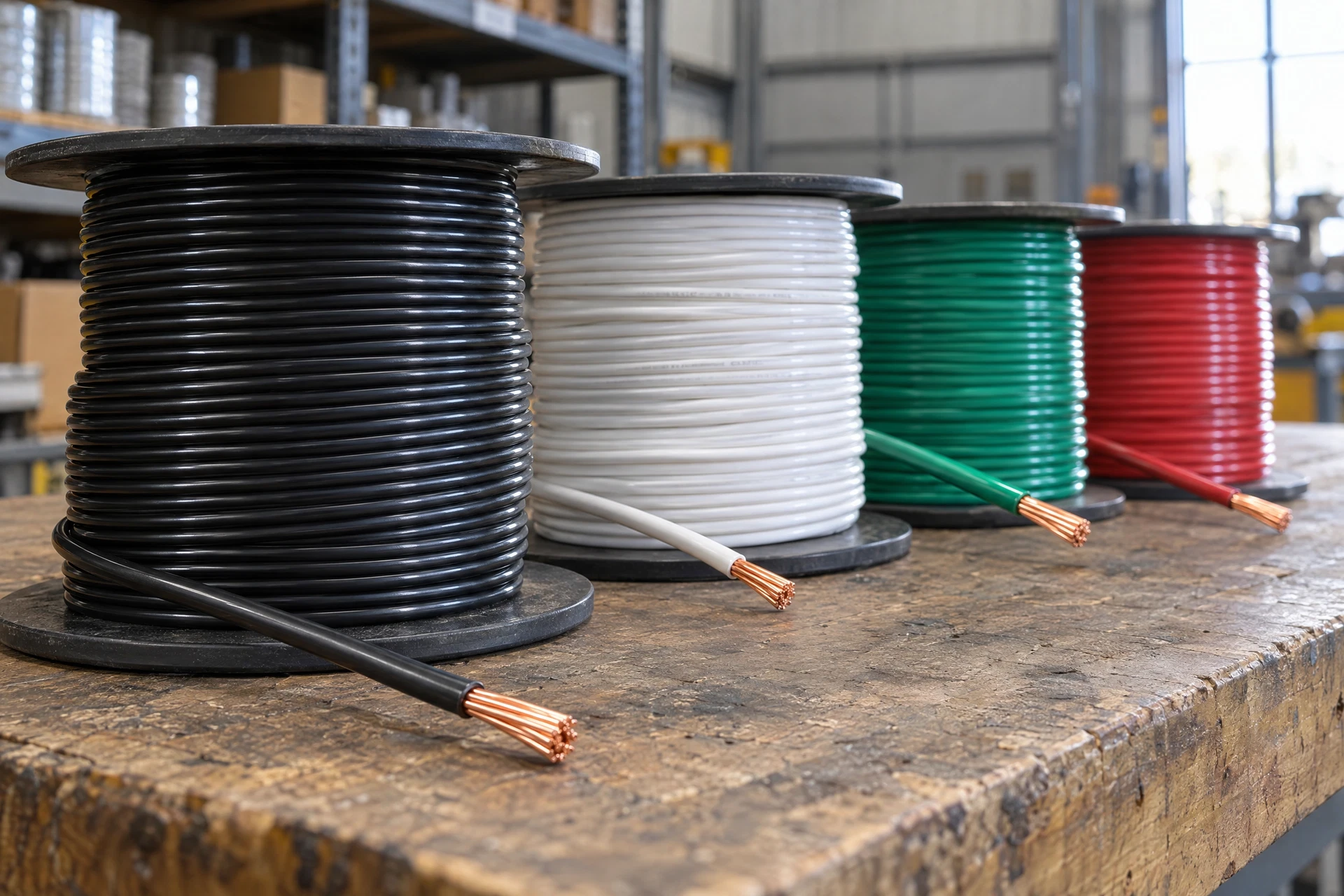
Copper and aluminum are both sold by the foot on a reel and both end up as conductor inside a raceway, but they are not interchangeable in value. Copper is the benchmark at 100 percent IACS, and aluminum reaches about 61 percent of it on the same scale. That gap drives conductor sizing, termination hardware and the price a buyer can justify. It also explains something sellers notice quickly: two reels that look alike on a pallet can carry very different quotes.
The practical questions are narrower than the metallurgy. What alloy is it, what insulation is printed on the jacket, how was it terminated, how was it stored, and how many usable feet remain. A factory-sealed reel of 4/0 aluminum XHHW-2 from a service upgrade is a different asset than a sun-faded coil of USE-2 pulled out of the ground. A buyer is not comparing metals in the abstract. A buyer is comparing two specific reels and the jobs each one can still serve, which is why the same size can quote two ways.
| Copper conductivity | 100 percent IACS, the reference standard |
|---|---|
| Aluminum conductivity | About 61 percent IACS at equal cross section |
| Equivalent sizing | Aluminum runs roughly two AWG sizes larger than copper |
| Typical 600 V insulations | THHN, THWN-2 and XHHW-2, 14 AWG to 750 kcmil |
| What moves the quote | Usable length, legible print and documented storage |
Conductivity is a ratio, not a verdict
Annealed copper is the reference metal for conductivity at 100 percent IACS. Aluminum sits near 61 percent on the same scale, so a given cross section carries roughly three fifths of the current of copper at the same temperature rise. Resistance per circular mil-foot makes the point from the other side: about 10.4 ohms for copper and 17.0 ohms for aluminum at 20 degrees Celsius. In practice an aluminum conductor needs about two AWG sizes larger than copper for comparable ampacity, which is why 4/0 aluminum is often compared with 2/0 copper in feeder work.
The ratio explains part of the price gap per pound, but not all of it. Aluminum is roughly a third the density of copper, so a reel of 500 kcmil aluminum holds far more feet per pound than its copper counterpart. Aluminum also costs less per pound of metal. Utilities and large feeders use it because the installed cost of a long run is lower, not because the metal is a compromise. A surplus aluminum reel from a utility job or a service upgrade can be a working asset even though its recovery value per pound trails copper.
Terminations decide whether aluminum is trusted
Aluminum forms an oxide layer within minutes of exposure to air, and that layer resists current. A reliable aluminum termination assumes the oxide has been broken and excluded: brushed, coated with a listed antioxidant compound, then torqued to the connector maker's value with a wrench rather than by feel. Connectors marked AL9 or CU9 are listed for the metal. A reel that was opened for a project and returned with clean, greased ends reads differently than one whose conductors were cut and left bare in a damp trailer.
Small-gauge aluminum branch wiring installed from roughly 1965 to 1973 is a separate subject. That era's 12 and 10 AWG aluminum, made from an alloy that crept under terminal pressure, built a reputation that still shapes how buyers read aluminum today. Modern building wire uses AA-8000 series alloys and compact stranded construction, which behaves differently under the same lug. On an older reel, the alloy designation and the jacket print matter more than the gauge alone.
- AL9 and CU9 markings identify connectors listed for aluminum conductor
- Antioxidant compound is part of the termination, not an optional extra
- Compact stranded AA-8000 is a different product from 1960s branch aluminum
Ampacity, derating and the rating on the jacket
Ampacity tables assume specific conditions: an ambient temperature, a count of current-carrying conductors, and a termination temperature. Put more than three current-carrying conductors in one raceway and the allowable current drops by adjustment factors that begin at 80 percent for four to six conductors. Run conduit across a hot roof and ambient correction applies on top of that. The 90 degree Celsius column is often the starting point for derating, but the real limit is frequently the 75 degree column because of terminations, and NM-B is held to the 60 degree column regardless of what its insulation could survive.
For a seller, the insulation type on the reel decides which column applies. THHN is rated 90 degrees Celsius dry and 75 wet. THWN-2 and XHHW-2 carry 90 degree wet ratings, which is why they hold interest for outdoor and underground work. A buyer reading a tag wants insulation, voltage class and temperature rating together, because a 600 volt reel with a 60 degree rating serves a narrower set of jobs than a 600 volt, 90 degree wet rated reel of the same size.
- More than three current-carrying conductors in a raceway triggers adjustment
- Terminations often cap the usable column below the insulation rating
Insulation families and what each one signals
Most surplus in Pennsylvania is 600 volt building wire: THHN, THWN-2 and XHHW-2 from 14 AWG to 750 kcmil, plus armored and metal-clad assemblies. Above that sit tray cable, control and instrumentation cable, and medium voltage cable rated 5 kV through 35 kV with EPR or XLPE insulation, a metallic shield and an overall jacket. Each family has its own buyers. A partial reel of 15 kV shielded cable is not interchangeable with building wire, and its value turns on insulation level, shield type and whether test paperwork survived.
Flexible cords and welding cable form a third group. SOOW and welding cable are stranded finely enough to flex, with jackets formulated for abrasion and oil. Welding cable is bought by length for shop use, so a clean 250 foot coil of 2/0 is a working asset rather than scrap.
Where the two metals part company commercially
Copper reels draw contractors, panel shops, machine builders and plant maintenance crews who need a specific size quickly. That demand is broad and the metal moves easily, so a documented partial reel of 2/0 copper THHN can be resold as wire. Aluminum draws a narrower group: utilities, underground crews, large service work and feeder installations. The narrower demand is not a defect, but an unusual aluminum size can sit longer, and a quote will reflect that.
At the far end both metals meet at recovery value. A twenty foot cut of 500 kcmil, a sun-cracked coil of USE-2 and a tangle of stripped THHN are priced against conductor content rather than a catalog number. The distinction is worth stating plainly: usable length and legible identification separate wire value from metal value, and the copper or aluminum underneath is the same in either case.
Presenting a mixed lot of copper and aluminum
Separate the metals before photographing anything. A pallet that mixes copper THHN, aluminum SER and bare copper grounding conductor is hard to read in a photo and easy to misquote. Group by metal, then insulation family, then size. Put the reel tag in frame for each group, and write the size on tape on the flange when the tag is missing or faded.
Do not strip anything to prove a point. Cut ends photograph well as they are, and stripping a coil destroys the identification that makes it sellable as wire. If a reel has been outdoors, say so and photograph the jacket where the sun hit it, since UV damage shows as discoloration, chalking or fine surface cracks a buyer should see.