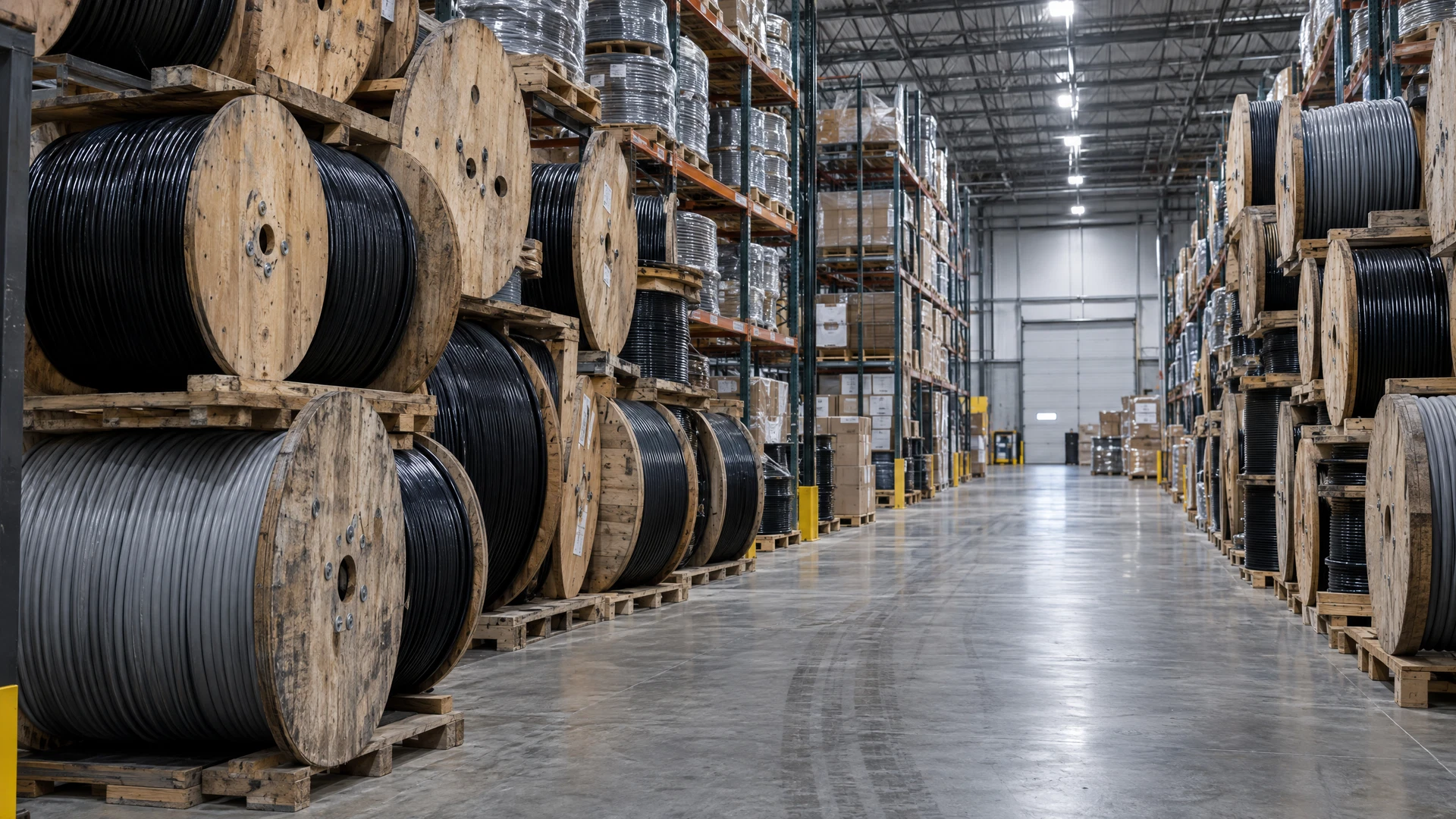
Allegheny County Pennsylvania Electrical Wire Buyers
Surplus wire from Pittsburgh mills, hospitals and contractors, reviewed by buyers who know the three rivers and the Mon Valley.
Allegheny County built its electrical trade around steel, and the geography still explains where wire sits. The Allegheny and Monongahela meet at the Point to form the Ohio, and the flat land along all three rivers carried mills, coke works and rail. Homestead, Duquesne and Clairton kept furnaces and coke batteries running for most of the last century. Those plants are largely gone, but the machine shops, maintenance crews and contractors that served them remain, along with hospitals and universities that now anchor the payroll.
Pittsburgh's hospitals, universities and robotics firms buy wire in a different pattern than the old mills did. A research building needs clean 480 V distribution, isolated grounds and data cable. A mill rebuild needs tray cable and shielded feeder. Both leave surplus. A lab fit-out that changes scope mid-project can strand a full reel of 500 MCM, and a plant shutdown can leave cut lengths of welding cable on a shelf for years, still tagged with the original footage. Most of that material is still tagged, which makes it easier to place.
| County seat | Pittsburgh |
|---|---|
| Main employment sectors | Health care and higher education, robotics and software, steel and metal processing, logistics |
| Key corridors | I-76, I-79, I-376, I-279 and Route 28 |
| Typical wire | 600 V THHN and THWN-2, tray cable, 5 kV to 15 kV shielded feeder |
| Municipalities covered | Pittsburgh, McKeesport, Duquesne, Clairton, Monroeville, Penn Hills, Bethel Park, Mt. Lebanon |
What the mills left behind
Steel wire in Allegheny County was sized for loads that no longer exist. A rolling mill ran on 480 V bus with 4/0 and 500 MCM feeders in conduit trays, and the cranes above used festoon and welding cable that wore out on a schedule.
When a bay was rebuilt, crews often coiled the old feeder instead of scrapping it, because the next rebuild might need the same length. That habit is why older plants in the Mon Valley still hold reels that were set aside decades ago.
- Feeder sizes from 1/0 through 750 MCM, often aluminum
- Tray cable and machine tool wire from rebuilt lines
- Welding cable with a worn jacket but sound conductor
- Bus duct and switchgear cable from mill electrical rooms
Wire from hospitals, labs and universities
Health care and research replaced a good share of the mill payroll. Hospital campuses in Oakland and the robotics and software offices around them run on 480 V distribution, emergency feeders and large quantities of data and control cable.
Those buildings are renovated constantly. A lab fit-out that changes scope can strand a full reel of 500 MCM, and a chiller replacement can leave 15 kV shielded cable with a few hundred feet remaining on the reel.
- SER and SEU from service upgrades
- MC cable from corridor and lab renovations
- Cat 6 and fiber from network retrofits
- Isolated ground conductors and bare copper from equipment rooms
- Generator and transfer switch cable from campus projects
Reels that move through the Mon Valley
McKeesport, Duquesne and Clairton sit on flat river ground where rail and barge access made heavy industry possible. The same access helps now, since a reel that weighs two tons needs a dock, a forklift and a truck that can take the weight.
Route 28 along the Allegheny and I-376 through the city carry most local freight. I-79 and the Turnpike connect the county to Ohio and to the eastern side of the state, which matters when a lot is large enough to interest a buyer outside Pittsburgh.
- Dock height and forklift capacity decide the pickup plan
- Barge and rail spurs still serve several river sites
- Outdoor storage along the rivers accelerates jacket damage
- Rail sidings at McKeesport and Duquesne still load flatbeds
Condition, tags and what changes value
A factory-sealed reel with a legible tag is the easiest lot to price. The tag gives the construction, the gauge or MCM, the voltage rating and the footage, and those four facts decide most of the value.
Opened reels are reviewed on what remains. A reel with 300 feet of 4/0 THHN is still wire. A coil of unidentified conductor with a sun-cracked jacket is closer to metal value, and we say so before any quote is issued.
- Jacket print and manufacturer labels help identify unknown cable
- Weathered or waterlogged reels are reviewed at recovery value
- Cut lengths under about 25 feet are rarely worth more than copper content
- Reels stored on end collect water in the core
How a pickup is arranged in Allegheny County
Sellers send photographs of the reels, the tags and the storage area. From those we identify the material and return a quote. If it is accepted, a pickup is scheduled with a carrier that can handle the weight and the access.
City jobs bring their own complications. A basement in Mt. Lebanon or a tight lot in Penn Hills may need a lift gate and a longer carry. Telling us about stairs, alleys and parking early keeps the schedule realistic.
- Reels are weighed or counted before the truck arrives
- Certificates of insurance are available for plant access
- Paperwork and payment terms are agreed before dispatch
- A plant gate pass usually takes a day to arrange


Wire and cable we buy in Allegheny County
Municipalities we cover in Allegheny County
Allegheny County questions
Do you buy wire from closed mill buildings in the Mon Valley?
Yes, including removed cable. Material pulled from a decommissioned line is reviewed on conductor size, jacket condition and length. Cable that sat in water or against a leaking roof is usually valued on copper recovery rather than as usable wire.
What sizes appear most often around Pittsburgh?
Plant work tends to produce 1/0 through 500 MCM aluminum and copper feeder, with 4/0 among the most common. Commercial and institutional jobs bring 12 and 10 AWG THHN, MC cable and the occasional 15 kV run.
Can you handle a reel that needs a crane?
Large reels are moved with the equipment the site provides or with a carrier that has the right capacity. Tell us the approximate weight and the distance from the reel to the truck before a pickup is scheduled.
Have surplus wire on the floor right now?
Send photographs of the reels, tags and jacket print. We will tell you what the material is worth as wire, not just as metal.