Lehigh County Pennsylvania Electrical Wire Buyers
Surplus wire from Allentown plants, Whitehall warehouses and Macungie contractors, reviewed by buyers who know the Lehigh Valley.
Lehigh County was steel and trucks before it was logistics, and all three still leave marks. Bethlehem Steel built the furnaces that defined the valley, Mack Trucks built heavy vehicles in Allentown for a century, and the Lehigh River carried coal down to the canal system at Easton. The canal system that carried coal to Easton is gone, but the rail lines that replaced it still run through the valley, and the industrial land along them is still in use. Freight still explains where the plants sit.
The furnaces are cold now, but the valley did not empty out. Warehouses fill the land along I-78, machine shops and food plants occupy the older buildings, and Allentown, Emmaus, Whitehall and Macungie all renovate steadily. Wire from those jobs ranges from a partial spool of THHN to a 15 kV feeder pulled out of a plant substation. The county also holds a large amount of housing from the mill era, and that housing is being rewired one unit at a time. Service cable is the result.
| County seat | Allentown |
|---|---|
| Main employment sectors | Logistics and warehousing, manufacturing, health care, food processing, construction |
| Key corridors | I-78, I-476 and the Turnpike, US-22 and Route 309 |
| Typical wire | 600 V THHN and THWN-2, MC cable, tray cable, 15 kV shielded feeder |
| Municipalities covered | Allentown, Emmaus, Whitehall Township, Macungie, Bethlehem |
Bethlehem Steel and what followed
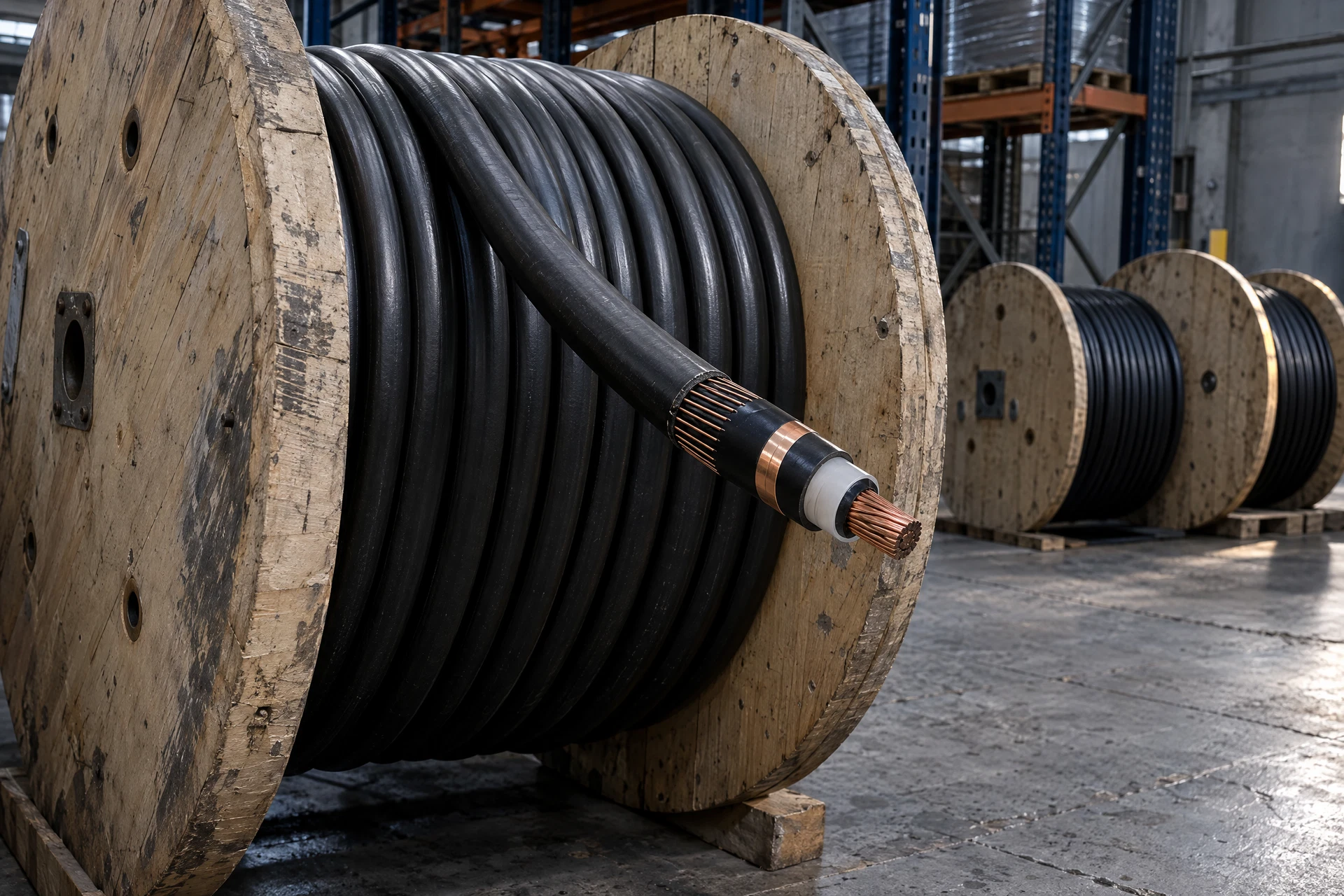
The steel plant on the Lehigh River employed tens of thousands at its peak and shaped every supply chain in the valley. Its coke works, blast furnaces and rolling mills ran on 480 V distribution, heavy bus and cable trays that crossed the entire site.
The plant closed in stages and the land became a casino, warehouses, a hospital and office space. Much of the electrical infrastructure was removed, but buildings that were reused kept their substations, and work in them still produces shielded cable and large feeder. The site's substations were built to feed loads that no longer exist, which is why so much of the cable there is oversized.
- 5 kV and 15 kV cable from reused plant substations
- Tray cable and armored cable from mill buildings
- Large copper feeder in 4/0 through 750 MCM
- Bus and switchgear cable from mill substations
Allentown plants and the truck legacy
Heavy vehicle manufacturing left Allentown a base of suppliers, machine shops and testing facilities that still work in metal. Those shops run presses, welders and paint lines, all of which need feeder, control and grounding.
The city's older neighborhoods add the residential side. Twin homes and rowhouses on the south and east sides are rewired as they change hands, and the service cable that comes out is often copper worth separating from the rest of a load. The city's housing stock is old enough that a rewire often exposes three generations of work.
- Welding cable and SOOW cord from fabrication bays
- Service cable and SEU from residential rewires
- Motor feeder from press and conveyor lines
- Panel and meter cable from twin home rewires
Logistics along I-78 and Route 309
The warehouse corridor along I-78 is the county's largest construction market. Buildings of a million square feet go up in a season, and the electrical work inside them is repetitive: high bay lighting, dock equipment, chargers and conveyor power.
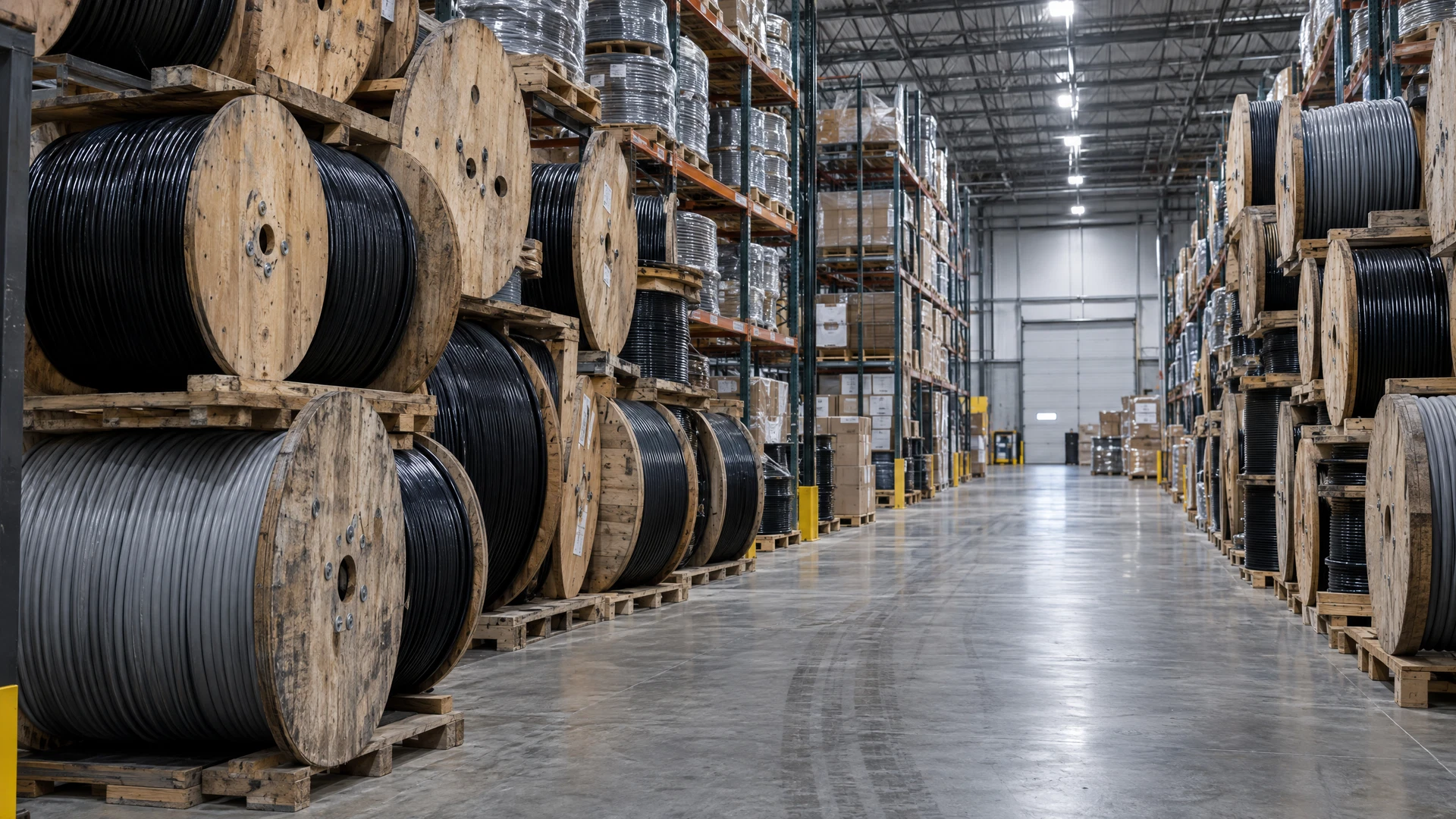
Surplus from that work is predictable. Full reels of THHN and XHHW-2 in 12 and 10 AWG, tray cable, and long runs of MC cable left over when a lighting layout changes after the wire is pulled. A building that size needs a substation of its own, and the feeder from it is heavy.
- THHN and XHHW-2 in 12 and 10 AWG, often full reels
- MC cable from lighting and dock packages
- Tray cable and control cable from conveyor work
- Dock equipment feeder and controls
Older city wiring in Allentown
Allentown has blocks of housing and commercial buildings from before 1940, and some of them still carry knob and tube in the walls and cloth covered cable in the basement. Renovation exposes material that has not been touched in decades.
That wire is copper, and it is bought for copper. The distinction between it and modern THHN matters, because a seller who expects building wire pricing for 80 year old conductor will be disappointed, and it is better to explain that at the start. Some of it is still in service, which is why the work is scheduled rather than emergency.
- Knob and tube and cloth covered cable are copper recovery
- Old service entrance cable often has heavy copper conductors
- Modern rewires leave usable THHN and SEU
- Cloth covered copper from prewar housing
Scheduling a pickup in the Lehigh Valley
The valley is easy to reach from three directions, which helps when a lot is large. I-78, the Turnpike and US-22 all cross the county, and most industrial addresses have a dock that a trailer can use.
City pickups take more planning. A basement in Allentown or a garage in Emmaus may need a lift gate, and a Saturday appointment is often the only time a maintenance crew is available. We work around those constraints rather than pretending they do not exist. A Friday afternoon appointment is often easier for a maintenance crew than a weekday morning.
- Dock pickups can usually be scheduled within a few days
- Residential and basement lots may need a lift gate
- Tell us about shift schedules and gate hours
- Ask about elevator access for heavy reels

Wire and cable we buy in Lehigh County
Municipalities we cover in Lehigh County
Lehigh County questions
Do you buy cable from the old Bethlehem Steel buildings?
Yes, when it is removed and accessible. Reused mill buildings still hold tray cable, armored cable and substation feeder. Material that sat in a flooded basement or against a leaking roof is reviewed at recovery value rather than as reusable cable.
What do Lehigh Valley warehouses leave behind?
Mostly full and partial reels of 12 and 10 AWG THHN or XHHW-2, MC cable from lighting packages, and tray or control cable from conveyor installations. Lighting layout changes after the wire is pulled are a common source.
Can you pick up from an Allentown rowhouse?
Pickup is arranged after the material is reviewed. Tell us about the basement stairs, the alley and the parking situation, since a 300 pound reel of service cable is handled differently from a box of spools.
Have surplus wire on the floor right now?
Send photographs of the reels, tags and jacket print. We will tell you what the material is worth as wire, not just as metal.