A wire quote is built from evidence, and photographs are most of that evidence. The buyer cannot walk the aisle, spin the reel or read the print at an angle, so the pictures have to carry the identification and the condition. Most slow quotes are not caused by difficult material. They are caused by a set of photographs that shows a pallet from four feet away with no tag in focus. Two sellers with comparable material can receive quotes a week apart because one of them sent a readable tag.
The useful set is small and predictable: the tag, the jacket print, the whole reel, the cut end, and enough of the storage area to show how the material has lived. This guide explains what each photograph is meant to prove, how to take it with a phone, and which details sellers routinely leave out that would have changed the number. None of it requires special equipment. A phone, a rag and a few minutes of daylight are enough. Daylight helps more than gear.
| Most useful photo | A sharp, square image of the reel tag |
|---|---|
| Second photo | Jacket print over at least two feet |
| Cut end | Shows strand type, metal and moisture |
| Scale reference | A person, pallet or forklift in the wide shot |
| Common mistake | Many dim photos of the same flange |
Start with the tag, square and in focus
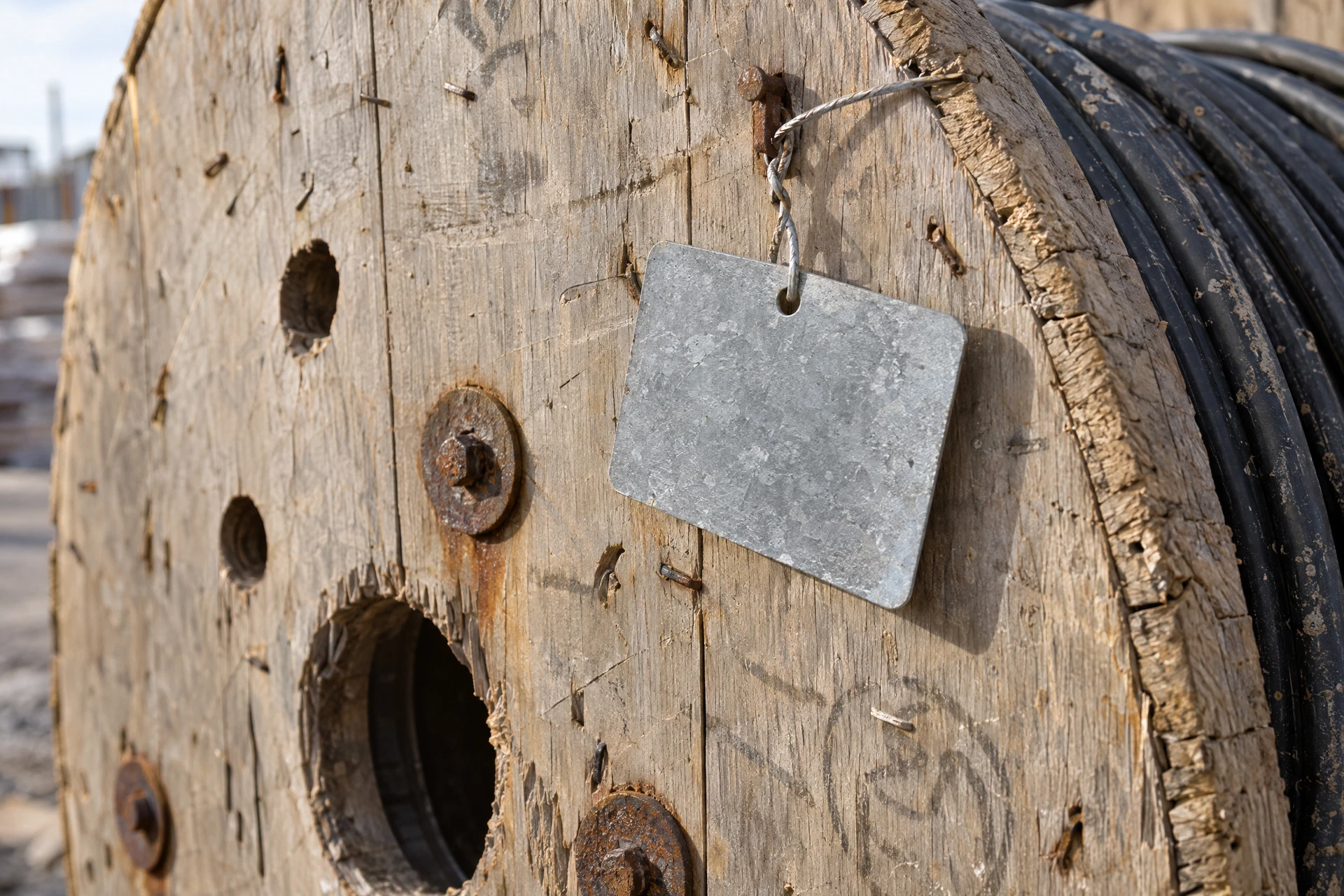
The tag is the single highest value photograph in the set. Fill the frame with it, hold the phone parallel to the surface rather than at an angle, and use the flash if the tag is in shadow. If the tag is faded, take two shots, one straight on and one from a slight angle where the embossing or the pen strokes catch the light. A second shot of the reverse side is worth taking, since tags are often used twice.
Include a reference for size when the tag is small or handwritten, such as a pen laid alongside it. If the tag is missing, photograph the flange where manufacturers often stencil the size and length, and photograph any shipping label still stuck to the wrap. A partial tag that shows a length and a date is still evidence, even when the item code has worn away.
Photograph the jacket print where it is cleanest
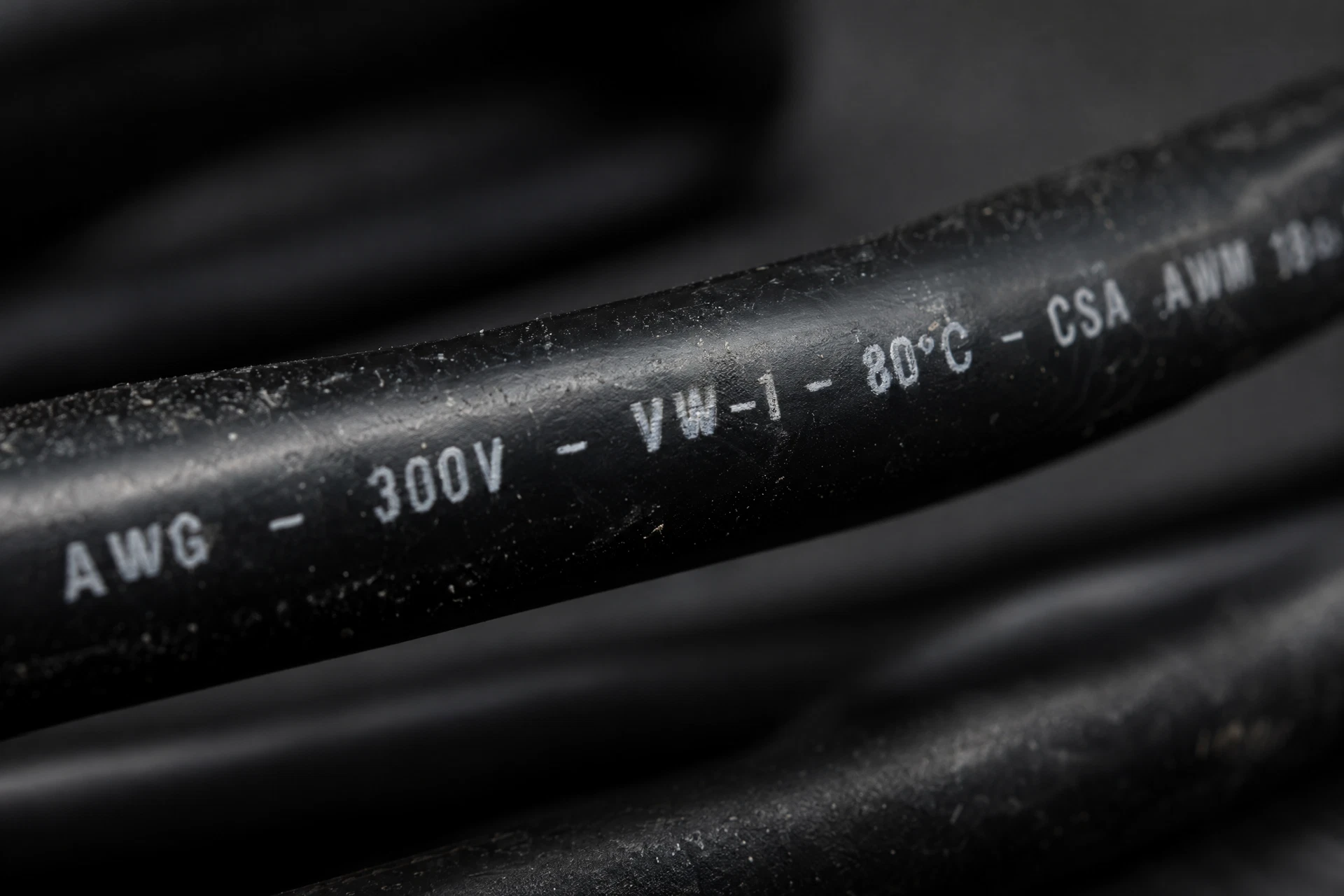
Jacket print is the second piece of identification and the only one that survives a lost tag. Wipe a stretch of jacket with a rag, find where the letters are legible, and shoot from about eighteen inches so the text fills the frame. Two or three feet of print in one frame is better than a tight crop on four words, because the repetition confirms the reading and shows the print is continuous rather than a fragment.
Print on the outer wrap is usually clearest, since the inner layers were protected from abrasion but the outer layer was exposed to light. On cable that has been outdoors, print may be chalky and hard to read, and the photograph should show that honestly. A buyer who can see the chalky print will ask better questions than one who is told the print is fine.
- Fill the frame with two or three feet of legible print
- Shoot the outer wrap first, where print is usually clearest
- Show chalky or faded print rather than describing it as readable
Show the whole reel, then the remaining wrap
A wide photograph answers size, quantity and handling at once. Stand back far enough that the entire reel is in frame with a little floor around it, and put a person, a pallet or a forklift in the shot for scale. Large reels look small in photographs and small reels look large, so scale is not a detail. If there are twelve reels, take one wide shot of the group and individual shots of the ones with different products.
Then photograph the wrap face on, so the remaining layers and the banding are visible. A factory wrap looks different from a re-reeled one: the factory wrap is tight, uniform and usually covered, while a re-reel shows uneven tension and hand-tied ends. That difference tells a buyer whether the length on the tag is original or approximate, which is exactly the question the quote turns on.
Cut ends and conductor faces
A cleanly cut conductor face is the most informative close-up in the set. It shows whether the conductor is copper or aluminum, stranded or solid, compact or concentric, and whether the strands are bright or darkened. Cut one end square with cable shears or a saw, wipe the face, and shoot it straight on with the insulation shoulder in frame. Do not strip a long section to show the metal.
The face also shows moisture. Aluminum that has been wet shows white or gray oxide between strands, and fine-stranded copper that has wicked water shows dark discoloration deep in the bundle. Both are normal in recovered cable and both affect how much must be trimmed before use. A photograph lets a buyer estimate that trim instead of assuming the worst.
- Cut square, wipe the face, shoot straight on
- The face shows metal, stranding and oxidation
- Do not strip a long section to prove conductor quality
Document storage honestly
Storage is the part sellers describe and buyers doubt. Photograph the reel where it sits: indoors on a rack, indoors on a concrete floor, outdoors on gravel, or outdoors on bare ground. Include the wall, the rack or the sky so the setting is obvious. A reel that has been outdoors for a year has a story written on it in chalking, water staining on the flange and rust on the banding, and that story is visible in a photograph.
Look for the specific damage signs before you shoot. UV degradation shows as a dull, chalky surface and fine cracks that appear when the jacket is flexed. Water ingress shows as staining that follows the wrap and a darker band at the low side of the reel. Reel crush shows as a flattened flange or a jacket that has taken a set. Photograph each of these where they occur, up close, rather than mentioning them in a sentence.
- Include the wall, rack or ground so the setting is unmistakable
- Flex a jacket edge to reveal UV cracking, then photograph it
- Show water staining and flange damage rather than summarizing
Quantity, access and paperwork in one set
Finish with the practical photographs that decide whether a pickup is easy. A wide shot of the storage area shows how many reels there are and how they are arranged. A shot of the dock, the door or the aisle shows what a truck can reach. If a reel needs a forklift, photograph the machine and the space around it. If it is in a basement, photograph the stairs, because that single image changes the handling plan.
Paperwork photographs are optional but useful: a purchase invoice with pricing redacted, a packing list or a weight ticket. They confirm product and date without exposing commercial terms. Skip photographs of unrelated equipment, because a lot that appears to include switchgear or panels will be read as a mixed sale and the review will slow down while someone asks what is actually for sale.
- One wide shot of the storage area shows the true quantity
- Photograph the dock, door or stairway that the reel must pass
- Leave unrelated equipment out of frame