
Electric Utility Surplus Wire Buyers in Pennsylvania
URD, primary and secondary distribution, ACSR and substation control cable from utility stores and contractor yards.
A utility buys to a standard, not to a project. Material is specified by approved list, stocked in a central store, and issued to crews who may return part of a reel at the end of a job. Over years, that cycle produces surplus. A standard changes, a conductor size is retired, a subdivision is built with a different primary, and the reels that remain no longer match what crews are allowed to install. That is usually the moment surplus appears.
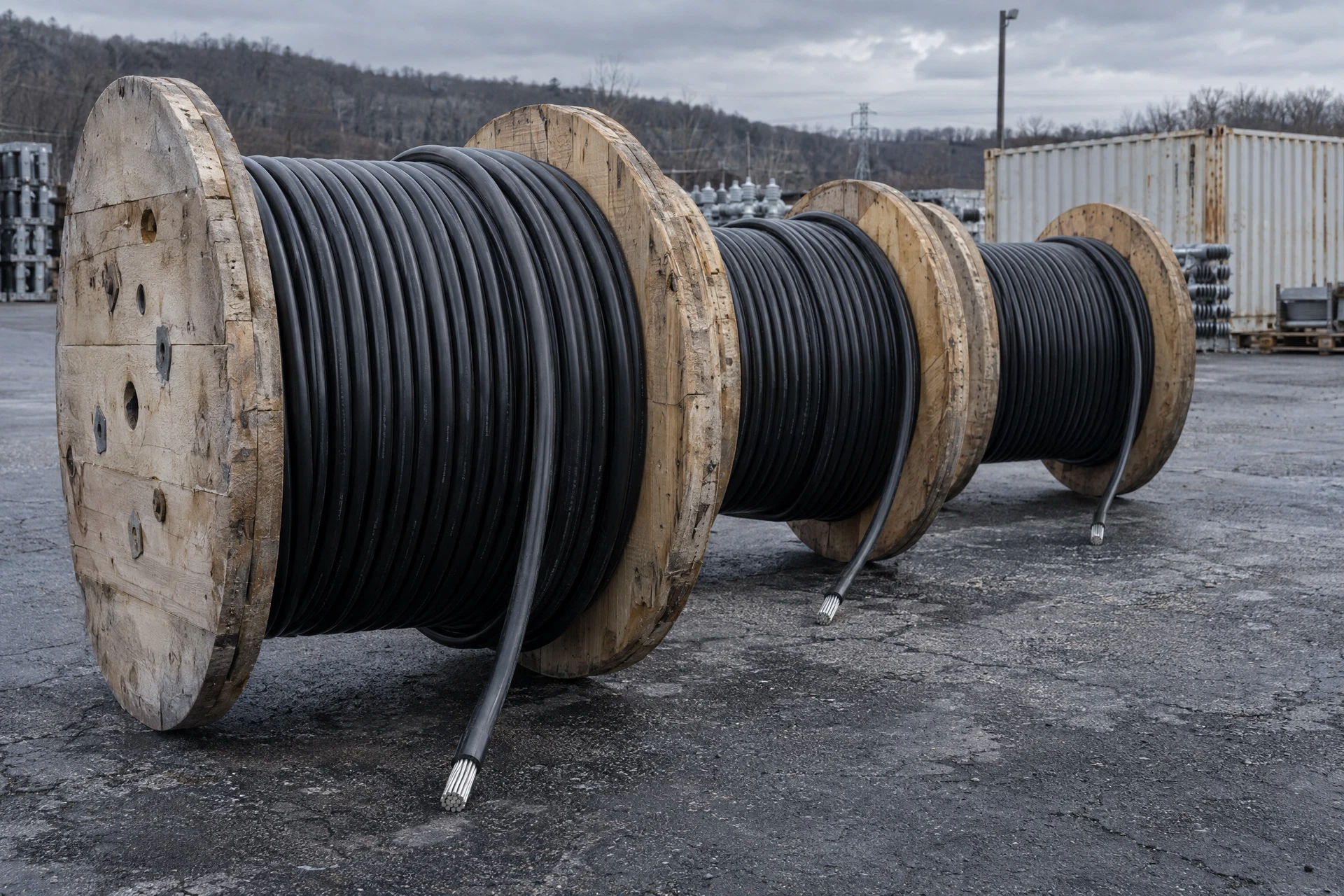
We review that material from utilities, their contractors and the yards that serve them across Pennsylvania. Utility stock is distinctive. URD with concentric neutral, primary cable rated for underground distribution, ACSR and covered overhead conductor, and the shielded control cable that runs between substation equipment. Most of it is heavy, most of it is stored outdoors, and all of it needs the tag read before anything else. Every reel is read before it is moved, and the reading decides the rest.
| Typical stock | URD, primary, ACSR and control cable |
|---|---|
| Voltage | 600 V secondary through 35 kV class |
| Conductor | Copper and aluminum, ACSR and AAC |
| Condition | Yard-stored reels and returned lengths |
| Access | Escorted entry to secured yards |
Why utility stores accumulate surplus
Standards drive utility purchasing. A distribution standard specifies one primary cable construction, one neutral configuration and one set of secondary sizes, and stores stock enough to cover a storm season. When the standard is revised, the material bought under the old one becomes unusable for new work even though the cable itself is sound.
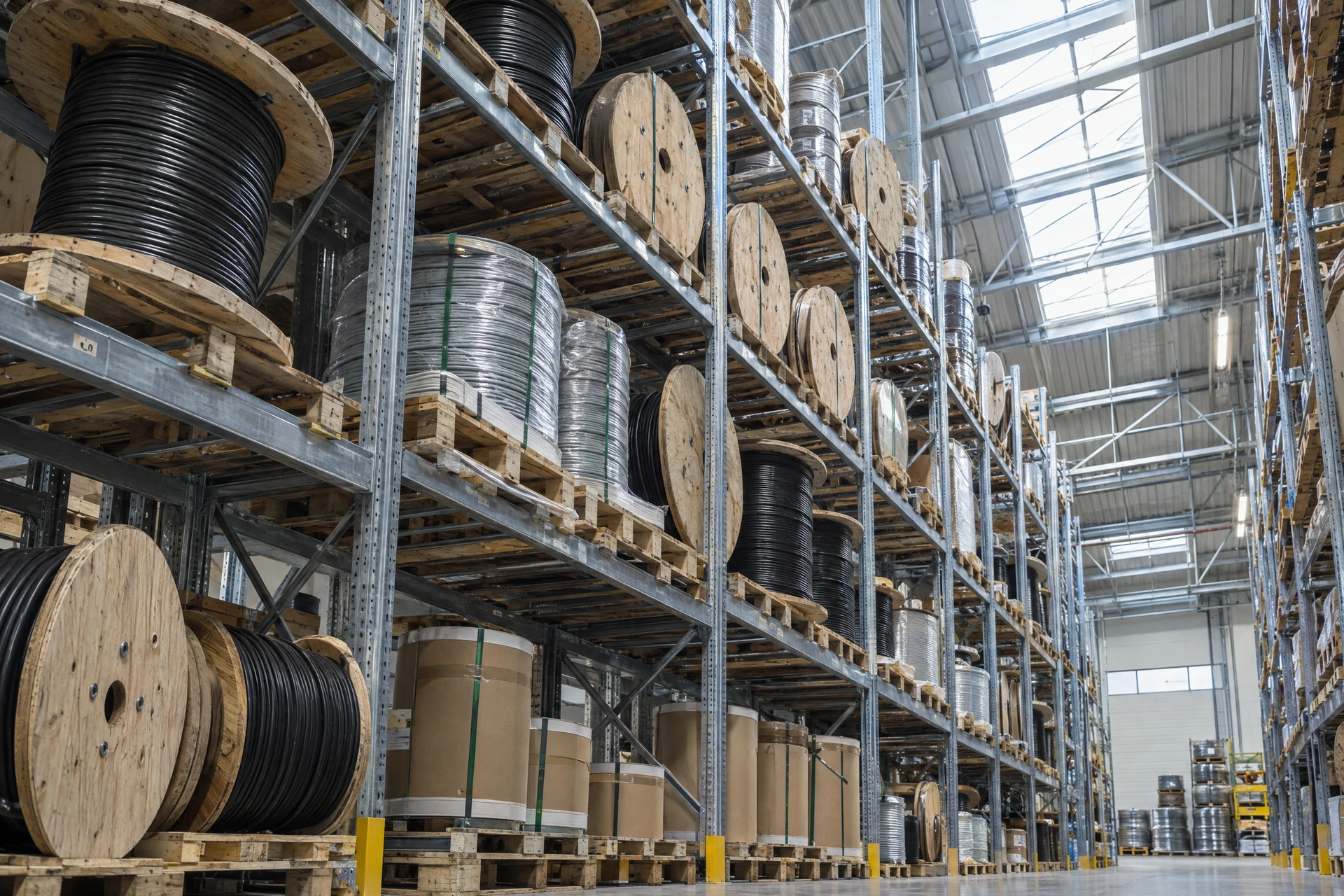
Project returns add volume. A crew that pulls 1,200 feet from a 2,000 foot reel returns the remainder to the store, where it is logged and racked. Over a few years those partial reels fill a bay, and the bay becomes a candidate for clearing when space is needed.
- Material bought under a superseded standard
- Partial reels returned from distribution projects
- Storm stock held beyond its rotation date
- Retired conductor sizes and configurations
Underground distribution: URD, primary and secondary
Underground residential distribution cable is the largest category. Primary URD is commonly 15 kV or 35 kV class with copper or aluminum conductor, shielded and jacketed, often with a concentric neutral of copper wires laid over the insulation. Secondary URD runs at 600 V in triplex or quadruplex, aluminum or copper, with a bare messenger in some constructions.
The distinctions matter in review. Jacketed concentric neutral cable holds up better in storage than unjacketed, where the neutral wires are exposed to soil and moisture. Direct burial rated cable stored on a reel in a yard for years is still reviewed as usable, but the jacket surface and the neutral wires get close inspection.
- 15 kV and 35 kV primary URD with concentric neutral
- 600 V secondary triplex and quadruplex
- Jacketed and unjacketed neutral constructions
- Copper and aluminum conductor in both classes
Overhead: ACSR, ACSM and covered conductor
Overhead conductor arrives on wooden or steel reels and is stored outdoors on stands so it can be paid out later. ACSR is the workhorse, with a steel core for span strength and aluminum strands for conductivity. AAC and AAAC appear where corrosion resistance matters more than tensile strength, and ACSM and ACAR show up on longer spans and in reconductoring work.
Covered conductor is a separate category. Tree wire and spacer cable used in wooded rights of way carry a thick covering over the conductor, and that covering is what fails first in storage. Ultraviolet exposure, abrasion from the reel, and standing water in the reel arbor all show on the surface.
- ACSR in distribution and subtransmission sizes
- AAC, AAAC and ACSM where corrosion or span matters
- Covered conductor and tree wire for wooded rights of way
- Guy strand and static wire on partial reels
Substation control cable and grounding
A substation runs on small cable. Shielded control cable carries trip and close signals between protective relays, breakers and current transformers, and it is usually specified with an overall shield and a drain wire to control interference. Station service cable, potential and current transformer leads, and grounding conductors make up the rest.
Control cable is judged on the shield and the jacket rather than on footage alone. A reel with a crushed shield or a jacket cut by a reel flange may be unusable for relaying even if most of the length is intact. Bare copper grounding conductor is simpler, and it is reviewed on size, stranding and surface condition.
- Shielded control cable with drain wire
- Station service and transformer lead cable
- Bare copper grounding conductor in coils
- Fiber and pilot wire for line protection
Pickup from a utility yard or contractor store
Utility yards are secured sites with gate control, and access usually requires a visitor badge, a escort and a scheduled window. Reels are stored outdoors on stands or in rows, sometimes behind other material, so the yard crew has to pull them before a truck can load. That work is scheduled, not improvised.
Weight is the practical limit. A full reel of 1,000 MCM copper or a large ACSR reel can exceed what a standard flatbed can legally carry with other freight, and a boom truck may be needed to lift reels that cannot be rolled. We ask for reel diameters, conductor size and the yard's loading equipment before scheduling.
- Gate control, visitor badges and escorted access
- Yard crew pulls reels before the truck arrives
- Boom truck for reels that cannot be rolled
- Weight and axle limits checked against the load
Wire and cable we buy from utilities
- Primary URD with concentric neutral
- 600 V secondary triplex and quadruplex
- ACSR and AAC overhead conductor
- Covered conductor and tree wire
- Shielded substation control cable
- Bare copper grounding conductor
- Partial reels returned from distribution projects
Where this inventory comes from in Pennsylvania
Utilities questions
Do you buy cable made to a utility specification?
Yes. Utility specification cable is identified by the jacket print and the reel tag, which usually carry the standard number. Material built to a superseded standard is reviewed on the construction and the size rather than on the standard itself.
Can you handle reels stored outdoors for years?
Outdoor storage is normal for utility stock. Jacket fade and surface dirt are expected. The review focuses on cracking, damage from the reel flange, water in the arbor hole and the condition of any exposed neutral wires.
What access do you need at a utility yard?
A scheduled window, a visitor badge and an escort, plus confirmation that the yard crew has pulled the reels to a loading area. We also need the loading equipment available on site, since many reels cannot be rolled to a truck.
Do you buy substation control cable in short lengths?
Short lengths are reviewed case by case. Control cable is often used in runs of a few hundred feet, so a partial reel can still be useful. Crushed shields and jacket damage matter more than footage, since relaying cable has to be sound end to end.
Have surplus wire on the floor right now?
Send photographs of the reels, tags and jacket print. We will tell you what the material is worth as wire, not just as metal.