Power Plant Surplus Wire and Cable Buyers in Pennsylvania
Outage spares, medium voltage feeders and instrumentation cable from generation sites, reviewed as resalable stock.
A generating station stocks cable the way it stocks turbine parts. Enough to get through an outage, plus a margin. An outage is a scheduled window measured in days, and a cable that arrives late can push a restart, so planners order more than the work requires and stage it in an on site warehouse. When the unit comes back online, the remainder stays there because the next outage may need it. Nobody wants to explain a restart delay to a control room.
Decommissioning produces a different kind of lot. A retired unit leaves trays full of cable, motor feeders cut at both ends, and instrumentation runs that lead nowhere. We review both kinds of material from Pennsylvania generation sites, the neat spare reels and the removed cable, with the same question. What is still usable, and what is only conductor. The difference between the two is documentation and storage rather than age, and neither question is answered by looking at the jacket.
| Typical stock | MV feeders, tray and instrumentation cable |
|---|---|
| Voltage | 600 V through 35 kV class |
| Sizes | 14 AWG through 1000 MCM |
| Condition | Outage spares and removed cable |
| Access | Badged and escorted site entry |
Why generation sites hold so much cable
Outage planning is the main source. Work is scoped months ahead, material is ordered to that scope, and a contingency allowance is added because a late cable can cost a day of generation. When the scope shrinks during the outage, which it often does, the surplus never goes back to the supplier and never gets returned to stores.
Retrofits add volume in waves. A scrubber upgrade, a baghouse conversion, a water treatment change or a control system replacement each brings its own cable specification, and each leaves material behind when the project closes. Unit retirements then convert an entire plant's cable into surplus at once.
- Contingency allowances ordered for outage scope
- Scope reductions after material is staged
- Environmental and control retrofits with their own specifications
- Retired units with trays still full of cable
Medium voltage feeders and switchyard cable
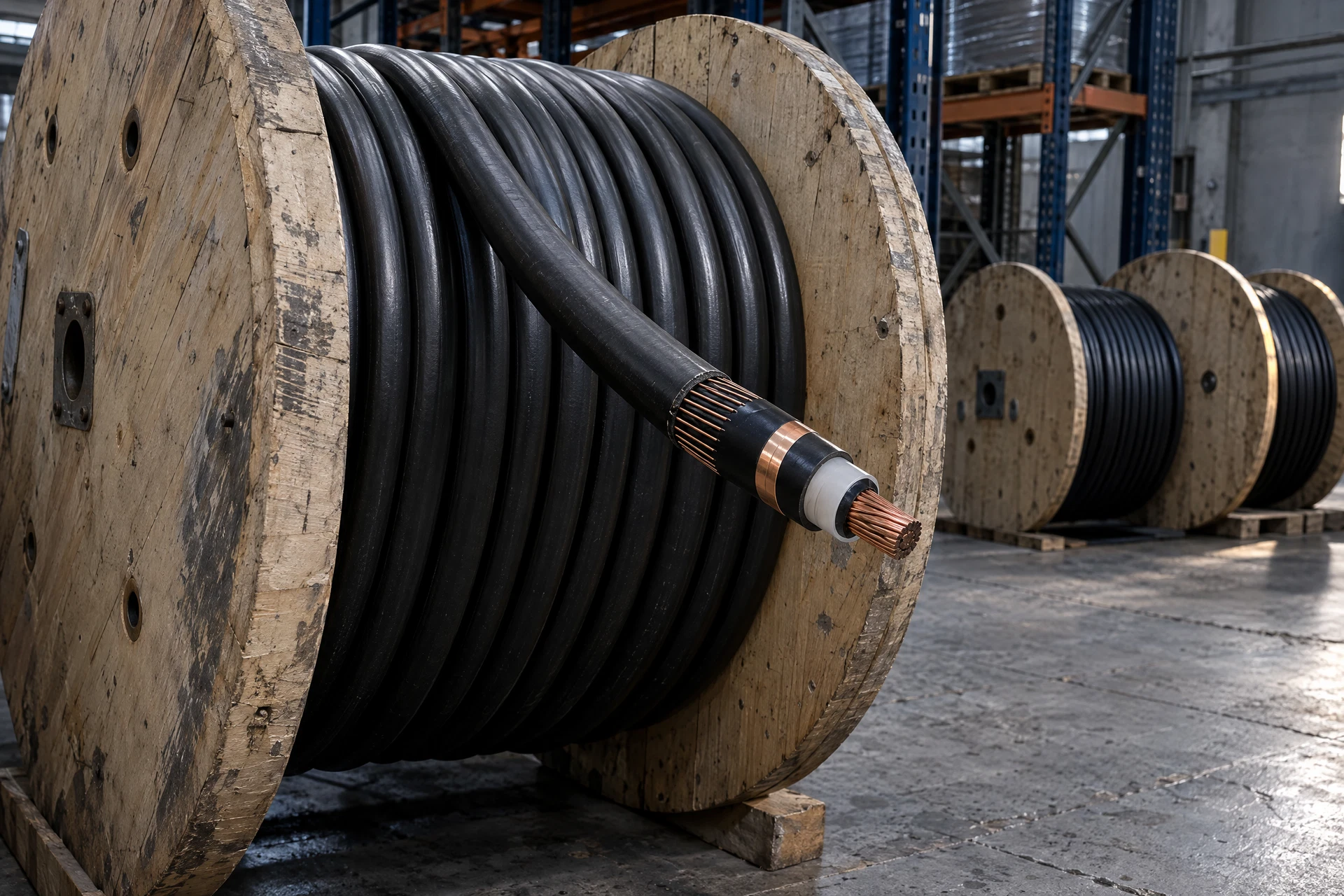
Large motors, unit substations and auxiliary transformers are fed at medium voltage, commonly 4,160 V, 13.8 kV or 25 kV depending on the plant. The cable is shielded, with copper tape or wire shielding over the insulation and a jacket over that, and it is heavy enough that a full reel needs equipment to move.
Switchyard and intertie cable sits at the higher end of that range. Constructions vary between EPR and XLPE insulation, and older cable may use a different shield and jacket combination than current stock. The reel tag matters more here than anywhere else, because the voltage class and insulation type cannot be guessed from appearance.
- 4,160 V and 13.8 kV motor and transformer feeders
- Shielded constructions with copper tape or wire shield
- EPR and XLPE insulation in older and newer stock
- Switchyard cable at 25 kV and 35 kV class
Tray, instrumentation and control cable
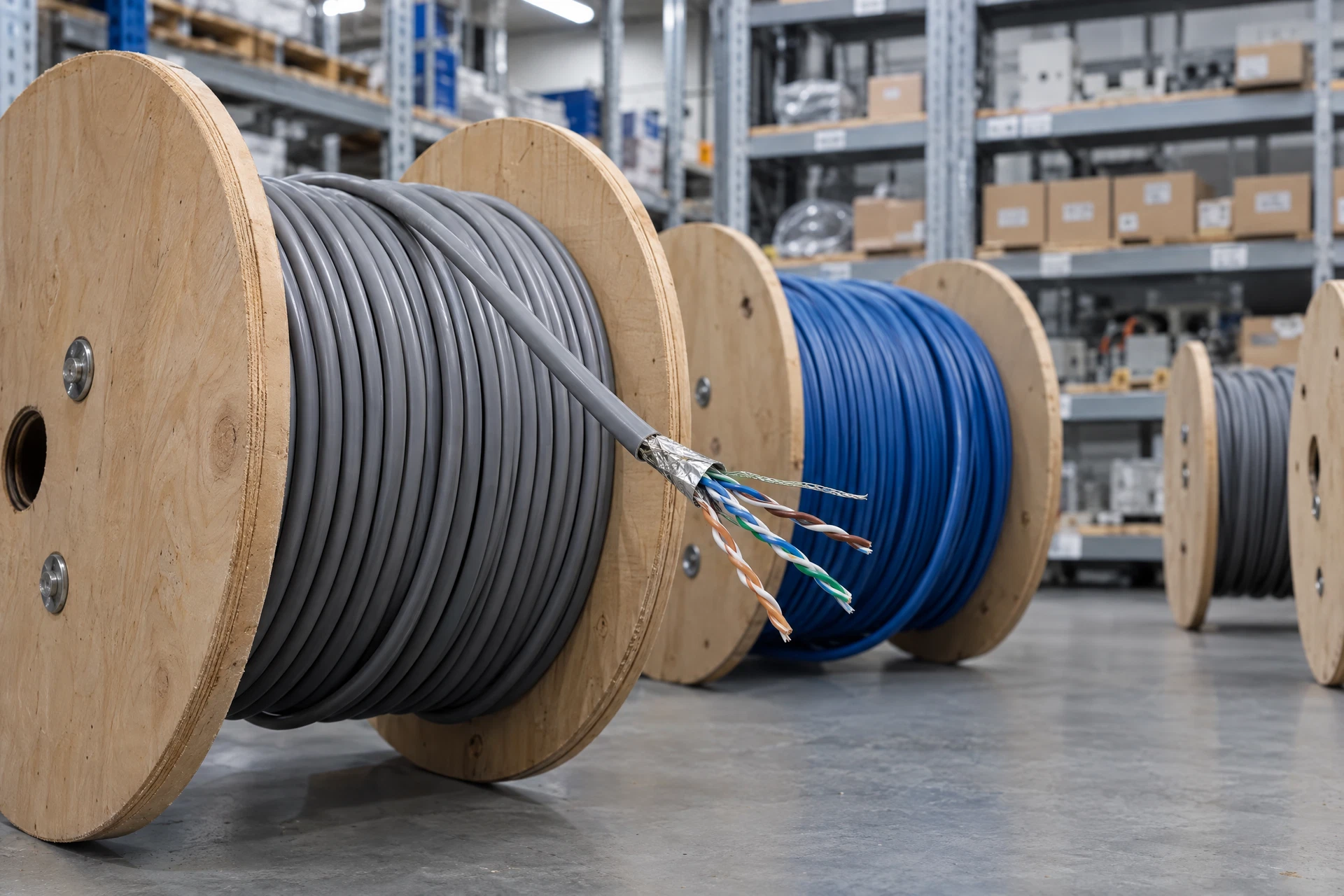
Most of a plant's cable is not power cable. Tray cable runs in the cable trays that cross every elevation, carrying control circuits, small power and signal wiring. Instrumentation cable carries 4 to 20 milliamp loops and thermocouple signals back to the control room, usually as shielded twisted pairs with an overall shield.
Control cable handles breaker trip and close circuits, auxiliary contacts and annunciation. Fiber appears in station networks and in some protection schemes. Because these cables are small and cheap per foot, plants hold many partial reels, and a single shelf can carry twenty different part numbers.
- Tray cable and TC-ER in trays at every elevation
- Shielded instrumentation pairs and thermocouple extension
- Control cable for breakers and auxiliaries
- Fiber for station networks and protection
Outage and decommissioning stock
Outage leftovers are usually the better material. Reels were bought for a known circuit, stored indoors, and opened once. Some never left the warehouse at all. They arrive with tags, factory wrap and a purchase record that ties them to a date and a specification.
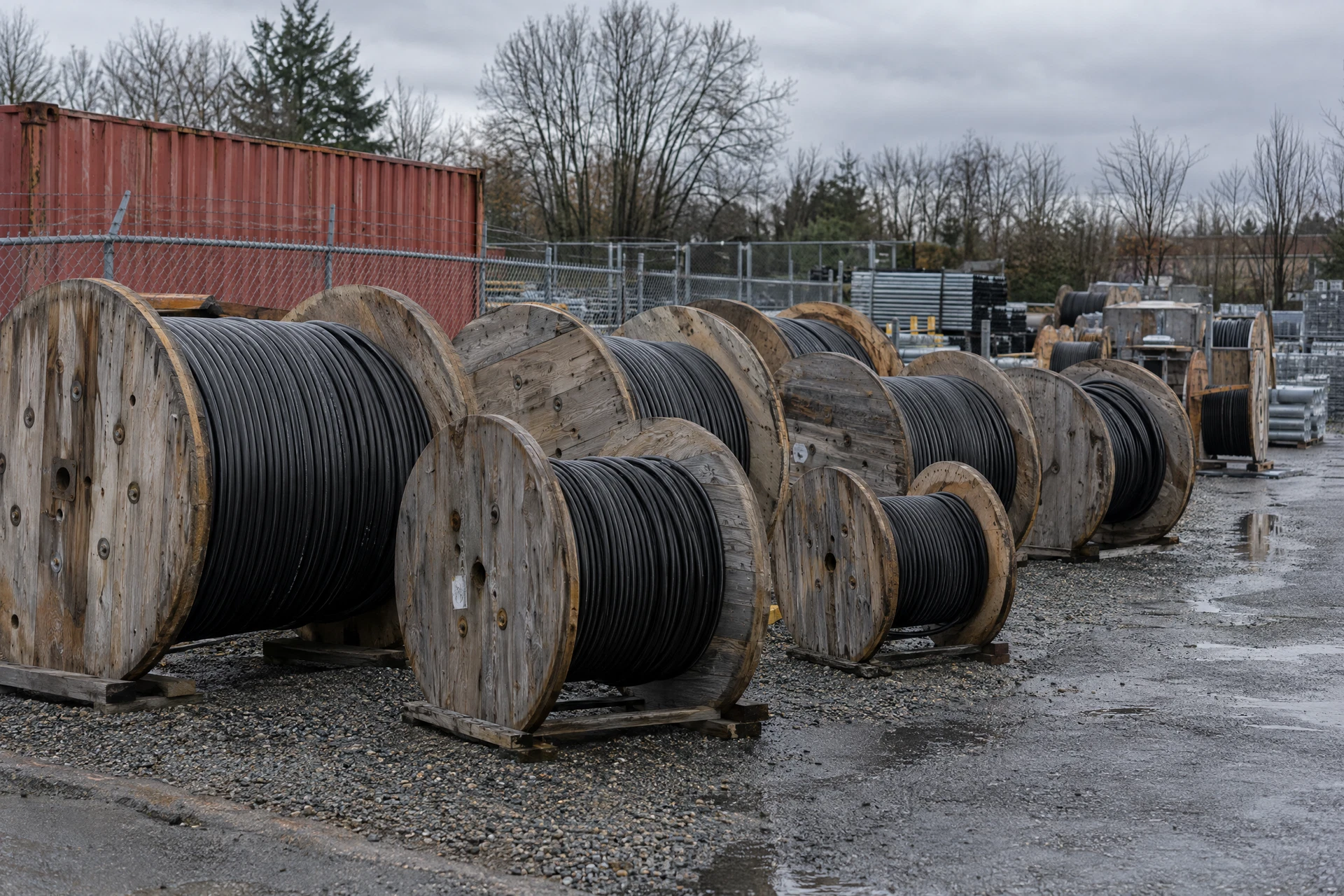
Decommissioning stock is the opposite. Cable is cut out of trays in whatever lengths the removal allowed, coiled on the floor, and hauled to a laydown yard. Footage is unknown, jackets carry abrasion from the removal, and the honest starting point is that most of it will be reviewed on conductor content rather than as resalable wire.
- Unopened outage spares with tags and wrap
- Opened reels with documented remaining footage
- Cable cut from trays during unit retirement
- Coiled removal cable with unknown lengths
Pickup at a generating station
Site access takes planning. Stations require visitor screening, a safety briefing, a badge and an escort, and some require clearance before a driver is allowed through the gate. Vehicles are inspected, and photography is usually restricted, which affects how the material is documented before the visit.
The warehouse dock is built for plant equipment, so reel weight is rarely the problem. The constraint is scheduling. Loadouts compete with outage traffic, and a truck that arrives during a major overhaul may wait hours. We confirm the window, the dock and the material staging before dispatch.
- Visitor screening, safety briefing and escort
- Restricted photography, so documentation happens first
- Loadout windows that avoid outage traffic
- Material staged at the warehouse dock before arrival
Wire and cable we buy from power plants
- 5 kV and 15 kV shielded feeder reels
- Tray cable and TC-ER pulled from trays
- Shielded instrumentation cable
- Thermocouple extension cable
- Control cable for breakers and auxiliaries
- Bare copper grounding conductor
- Removed motor feeder cable
Where this inventory comes from in Pennsylvania
Power Plants questions
Do you buy cable left over from an outage?
Yes. Outage spares are often the cleanest material on site, since reels were bought for a known circuit and stored indoors. Tags, purchase records and remaining footage all help, and an unopened reel is reviewed as new stock.
Can you review cable removed during decommissioning?
Yes, with realistic expectations. Cable cut from trays has unknown footage and abrasion from removal. Some lengths are resalable, and much of it is valued on conductor content. The review states which category a lot falls into.
What documentation helps at a plant?
Reel tags and jacket print come first. Purchase orders, spare parts lists and cable schedules tie material to a circuit and a date. For medium voltage cable, the tag is essential because the insulation type and voltage class cannot be judged by appearance.
How is access arranged at a generating station?
Access is arranged in advance. Stations require visitor screening, a safety briefing and an escort, and some require clearance before a driver is approved. We collect that information before scheduling, so the loadout is not delayed at the gate.
Have surplus wire on the floor right now?
Send photographs of the reels, tags and jacket print. We will tell you what the material is worth as wire, not just as metal.