Northampton County Pennsylvania Electrical Wire Buyers
Surplus wire from Easton river plants, Bethlehem's South Side and Nazareth shops, reviewed by buyers who know the Lehigh Valley.
Northampton County sits where the Lehigh meets the Delaware, and that confluence made it a shipping point before it was an industrial one. Canal boats carried anthracite from the Wyoming Valley to Easton, where it was loaded onto river craft bound for Philadelphia. Bethlehem's South Side grew into a separate steel city across the river from its namesake. The canal era left a waterfront of stone warehouses and brick commercial blocks, and those buildings are still being converted. Conversion work exposes old service equipment.
The county still manufactures, though the products changed. Easton has food and consumer goods plants, Nazareth and Northampton have machine shops and specialty manufacturers, and Route 33 and I-78 carry freight through the valley. The wire in those buildings is older than the equipment it serves, which is why so much of it comes out during upgrades. The plants that remain are smaller than the steel works, but they run the same three phase equipment and they replace it on the same schedules. That keeps material moving.
| County seat | Easton |
|---|---|
| Main employment sectors | Manufacturing, food and consumer products, logistics, health care, education |
| Key corridors | I-78, Route 33, US-22 and the Lehigh Line rail corridor |
| Typical wire | 600 V THHN and THWN-2, MC cable, tray cable, 5 kV feeder |
| Municipalities covered | Easton, Nazareth, Northampton, Bethlehem Township and South Bethlehem |
Two rivers, two canals and the Easton waterfront
Easton's waterfront was built for transfer. Coal came down the Lehigh Canal, goods moved onto the Delaware, and the town filled with warehouses, foundries and repair shops that served both.
The canals are gone as freight routes, but the building stock remains, and much of it has been converted to restaurants, offices and small manufacturing. Conversions expose old service equipment, and the cable that comes out is usually copper with cloth or rubber insulation. The canal company's warehouses held coal before they held anything else, and their stone walls still carry old conduit.
- Cloth and rubber insulated copper from canal era buildings
- Service cable from commercial conversions
- Bare copper grounding from panel replacements
- Conduit and wire from canal era warehouse conversions
Bethlehem's South Side
South Bethlehem grew around the steel plant and kept its own street grid, churches and commercial district. The plant's electrical system was built to serve furnaces, and the buildings around it were wired to industrial standards rather than residential ones.
Redevelopment brought a casino, hotels, a hospital and university space, but the older industrial buildings still hold tray cable, bus and heavy feeder. When a tenant changes, the electrical work is a partial demolition as much as an installation. The plant's own rail siding is gone, but the buildings that served it are not.
- Tray cable and armored cable from reused industrial buildings
- Heavy feeder from tenant substation changes
- 5 kV cable from older plant distribution
- Motor feeder from crane and furnace bays
Nazareth, Northampton and the smaller boroughs
Nazareth and Northampton are boroughs built around specific employers and the rail lines that served them. Their plants are smaller than the steel works but just as electrically dense, with presses, ovens, compressors and packaging lines.
A typical lot from that area is a mixed pallet: motor feeder, control cable, some SOOW cord and a few partial spools from a lighting project. Reviewing it as a group is usually more productive than pricing each item separately. A borough plant that closes often reopens under a new owner with the same equipment.
- Motor feeder and control cable from packaging lines
- SOOW cord and portable power cable
- Partial spools of THHN from lighting upgrades
- Compressor and oven feeder from food plants
I-78 and Route 33 distribution
The interchange of I-78 and Route 33 turned farmland into warehouse space within a generation. Those buildings are new enough to have clean electrical rooms, and old enough for the first round of conveyor and lighting upgrades.
Surplus from a distribution center is often a full reel or two plus a stack of partial spools. It is the easiest material to review, because the tags are intact and the storage has been dry. A lot from that corridor is usually the easiest in the county to price.
- Full reels of THHN and XHHW-2 with intact tags
- MC cable from lighting retrofits
- Control cable from conveyor additions
- Lighting whips and MC cable from new warehouses
Reel tags and voltage in older plants
Older Northampton County plants were wired at voltages that are no longer standard in new construction. A 240 V delta service or an ungrounded 480 V system changes what the cable is and how it can be reused.
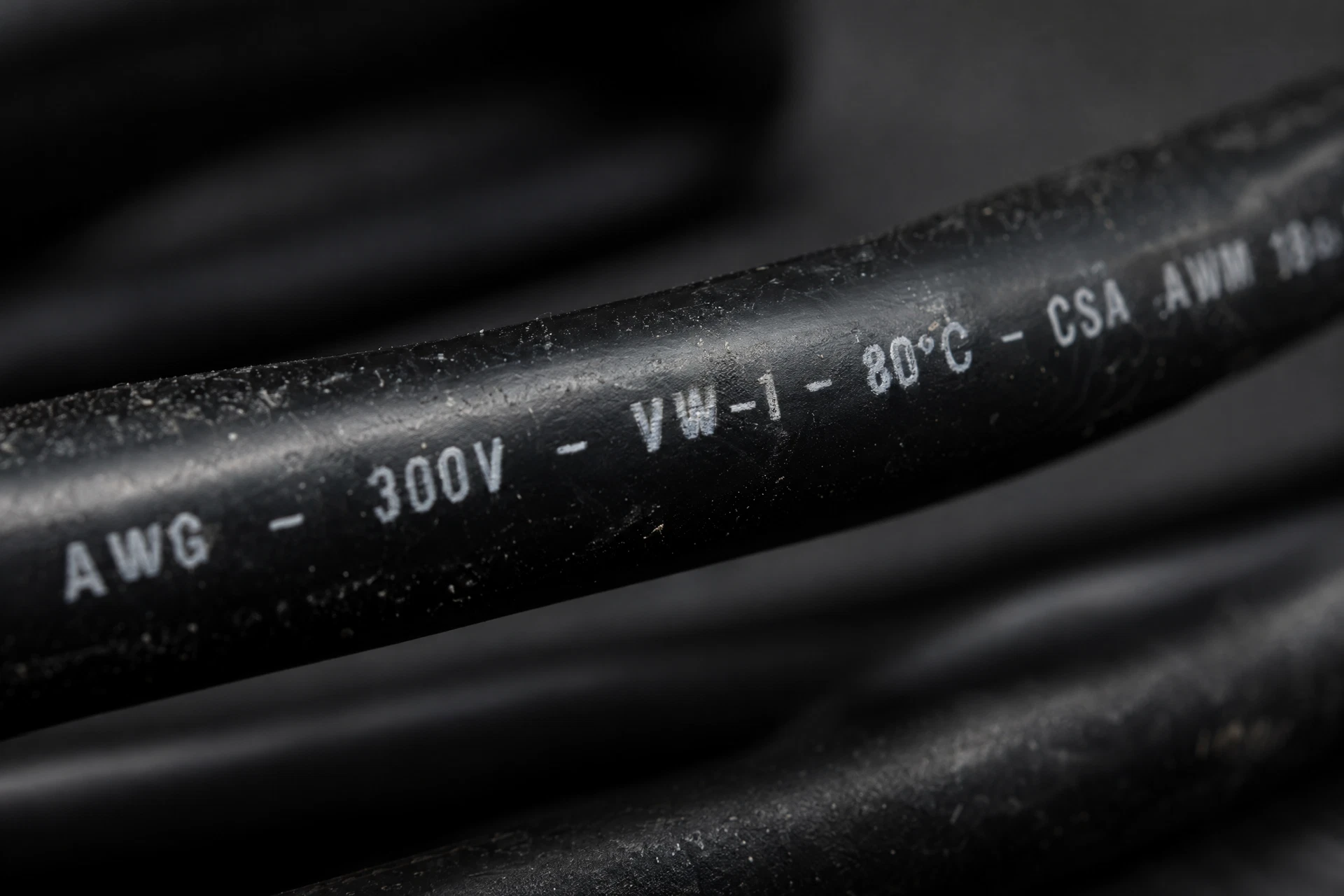
We read the tag and the jacket print before assuming anything. Where the rating is unclear, the material is described as unidentified and priced accordingly, which protects both sides of the transaction. Where the print is gone, the conductor stranding and the jacket material are the next best evidence.
- Note the voltage rating printed on the jacket
- Unmarked cable is priced as unidentified material
- Shielded cable needs the shield type recorded
- Record the shield type on any medium voltage reel
Wire and cable we buy in Northampton County
Municipalities we cover in Northampton County
Northampton County questions
Do you buy wire from Easton canal era buildings?
Yes. Conversions of older waterfront buildings produce cloth covered and rubber insulated copper, along with modern THHN from the new work. The old material is bought on copper content and the new material on its rating and length.
What comes out of a South Bethlehem plant?
Tray cable, armored cable, bus and heavy feeder are typical, along with 5 kV cable from older distribution. Condition varies widely, since some buildings were heated and maintained while others sat empty for years. Tag photographs settle most questions.
Can you review a mixed pallet from a Nazareth shop?
Yes. Mixed pallets are normal in smaller plants. A photograph of the whole pallet plus close ups of any tags or jacket print is enough for a first review, and sorting by conductor type helps before pickup.
Have surplus wire on the floor right now?
Send photographs of the reels, tags and jacket print. We will tell you what the material is worth as wire, not just as metal.