
Surplus Wire Buyers for Pennsylvania Manufacturing Plants
Plant maintenance stock, machine changeovers and line upgrades leave usable reels that are worth reviewing as wire.
A manufacturing plant buys wire for three reasons. To build something, to fix something, and to be ready for the next breakdown. The third reason is why maintenance cribs fill up. A plant running three shifts keeps spare reels of tray cable, control cable and motor lead wire so a line does not sit idle waiting on a supply house, and the stock is replenished long before anyone uses it. Budget cycles reward that caution, and so does the fear of a stopped line.
Line changeovers and machine replacements strand material that was ordered for one installation. A conveyor move leaves 300 feet of 8 AWG. A press replacement leaves shielded drive cable in a size the plant no longer runs. We review those lots across Pennsylvania, whether it is one reel on a crib shelf or a rack full of mixed spools from a plant that has changed hands twice. The review starts with the tag and the jacket print, because those decide almost everything.
| Typical stock | THHN, tray cable, VFD and control cable |
|---|---|
| Common sizes | 12 AWG through 500 MCM |
| Voltage | 600 V class, plus 5 kV and 15 kV feeders |
| Condition | Crib stock, opened reels, pulled cable |
| Access | Escorted pickup after plant orientation |
Why a plant ends up holding usable wire
Three habits create plant surplus. Purchasing buys to the next price break, so a 500 foot reel arrives for a 380 foot run. Maintenance keeps a crib stocked against breakdowns, because a stopped line costs more per hour than a spare reel of tray cable. And engineering specifies for the machine being installed, which means the material fits that machine and little else.
Decommissioning adds to it. When a line is removed, the feeders and control cable that served it are pulled or abandoned in place, and whatever sat in the crib for that line stays there because no one owns the decision to sell it.
- Over-orders from price-break purchasing
- Crib stock held against breakdowns
- Machine-specific cable after a changeover
- Decommissioned line feeders and control runs
What plant cribs and electrical rooms hold
The core is 600 V building wire in THHN and XHHW-2, from 12 AWG branch circuits up to 500 MCM feeders. Industrial plants add tray cable and TC-ER for exposed runs, VFD cable for drives, and shielded instrumentation cable for process signals. Motor lead wire, bus drop cable and SOOW cord appear wherever machines are portable or frequently moved.
Older plants often hold 5 kV and 15 kV shielded cable for large motors and unit substation feeders. Plants with their own distribution also keep bare copper grounding conductors and concentric neutral cable for outdoor runs between buildings.
- THHN, THWN-2 and XHHW-2 from 12 AWG to 500 MCM
- Tray cable, TC-ER and VFD cable for drives
- Shielded instrumentation and thermocouple extension cable
- 5 kV and 15 kV shielded feeder cable in older plants
Condition in an industrial setting
Plant storage is rarely clean. A crib next to a machining line collects oil mist, and a reel under a pipe rack takes heat and ultraviolet exposure for years. Jacket condition drives the review. A chalky, faded surface on a reel that never left the building is often still workable, while cracking at the bend radius is not.
Underground and ducted cable is judged on the ends. Moisture wicking into stranded copper shows as green corrosion under the jacket, and that is visible in a photograph of the cut end. Cable pulled from a duct and coiled on the floor is treated as removed material, not as new stock.
- Oil mist, coolant and dust on jacket surfaces
- Ultraviolet fade and heat exposure under pipe racks
- Moisture wicking visible at the conductor ends
- Pulled cable assessed as removed rather than unused
Access and pickup at a working plant
Most plants require contractor orientation before a truck arrives, and some require a short safety course, a badge and an escort for the whole visit. Production schedules matter too. A pickup scheduled during shift change will sit at the gate, and a loading dock shared with inbound freight needs a window rather than an open-ended arrival.
Rigging is the other constraint. A 48 inch reel of 500 MCM copper can weigh well over 3,000 pounds, and a dock plate rated for a pallet jack is not a forklift ramp. We ask for reel diameters, approximate weights and forklift capacity before scheduling.
- Contractor orientation, badges and escorted access
- Dock windows that avoid shift change and inbound freight
- Forklift capacity and reel weight confirmation
- Material staged and released by the plant before pickup
Records that make a plant lot easy to review
Maintenance and engineering groups usually have more documentation than they realize. A spare parts list identifies the cable by manufacturer part number. Purchase orders show the original quantity and footage. A maintenance system entry for the machine that used the cable dates the stock and explains why it is spare.
Photographs do the rest. A reel tag, the jacket print, the cut end and a wide shot of the storage area together tell us what the lot is and how it has been kept. That is enough for a first review and a quote.
- Spare parts lists and manufacturer part numbers
- Purchase orders showing original footage
- Maintenance history tying stock to a specific machine
- Reel tag, jacket print and cut end photographs
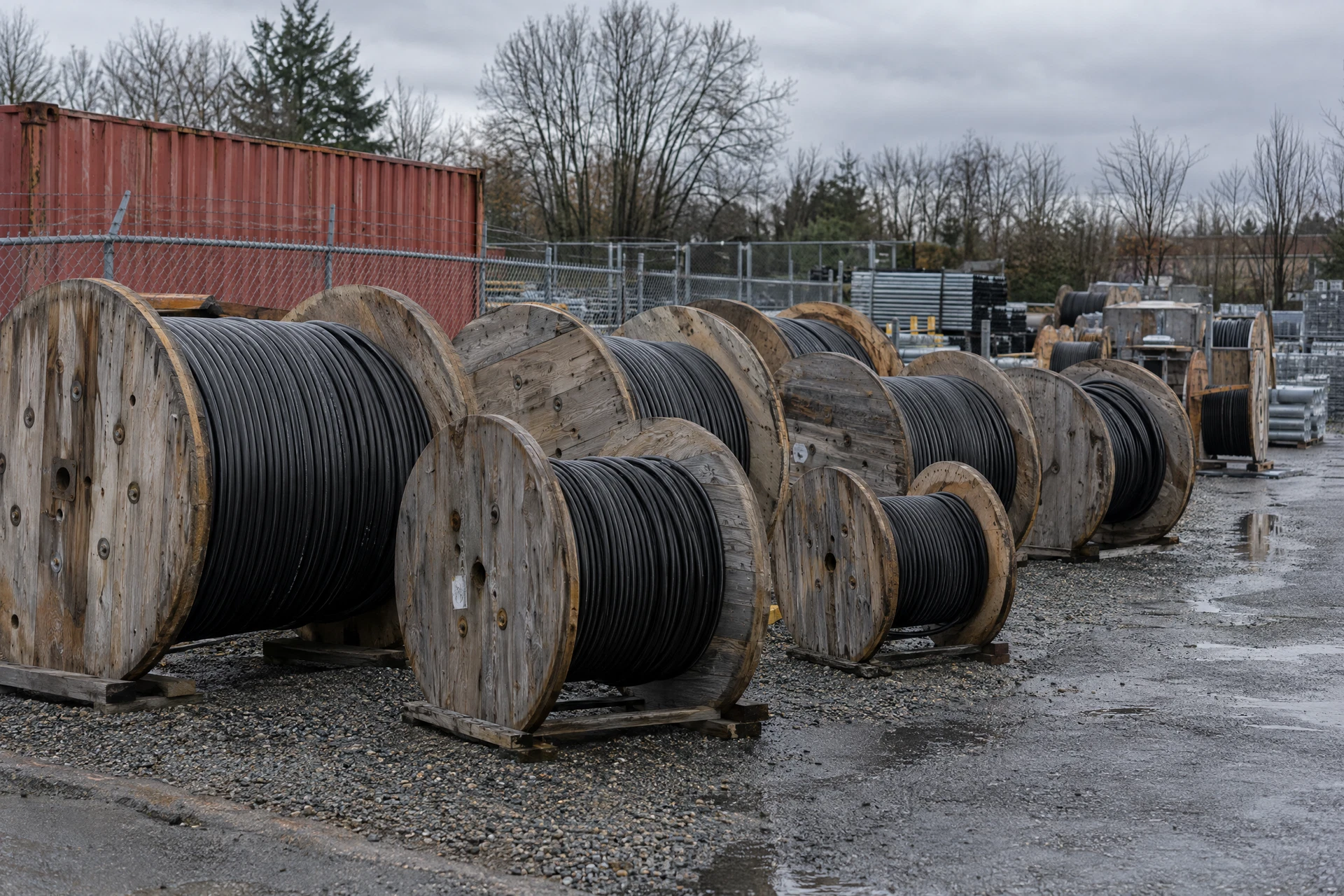
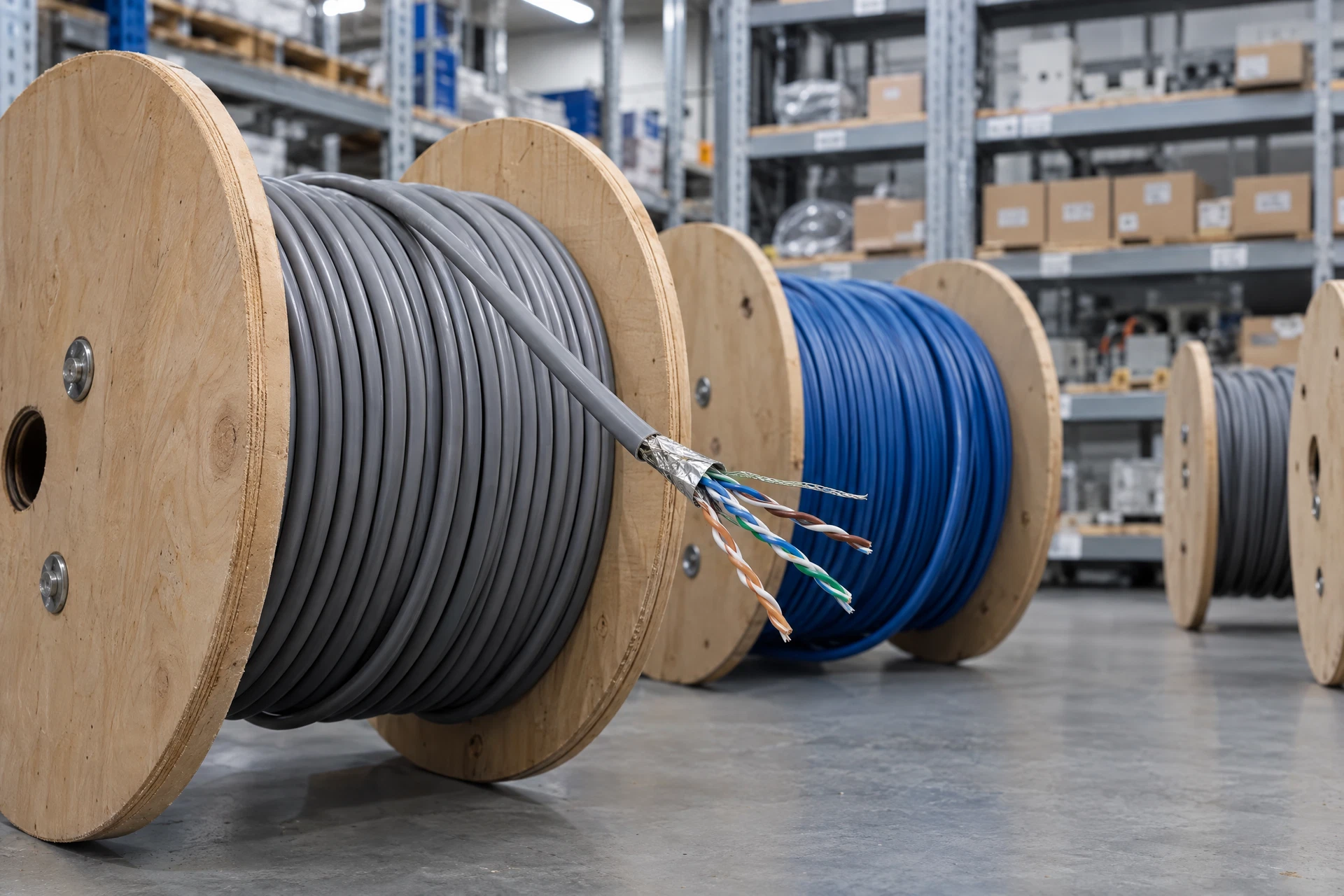
Wire and cable we buy from manufacturing plants
- THHN and XHHW-2 feeder reels
- Tray cable and TC-ER in full and partial reels
- VFD cable for drive installations
- Shielded instrumentation and control cable
- Motor lead wire and bus drop cable
- 5 kV and 15 kV shielded feeder cable
- Bare copper grounding conductors
Where this inventory comes from in Pennsylvania
Manufacturing Plants questions
Do you buy from a plant maintenance crib?
Yes. Crib stock is reviewed reel by reel, including opened reels with partial footage. A list with sizes, approximate footages and tag photographs lets us review the whole crib in one pass rather than visiting shelf by shelf.
Can you work around a plant's production schedule?
Pickups are scheduled around production, usually during a slow shift or a planned shutdown. We confirm the dock window, escort arrangements and forklift availability in advance, then stage the material near the dock before the truck arrives on site.
What about cable pulled from a decommissioned line?
Pulled cable is reviewed as removed material. Footage is estimated, jacket damage is noted, and cut ends are photographed. Some of it can be resold, and some only has conductor recovery value. The review says which, without promising an outcome or a price.
Do you buy VFD cable in nonstandard constructions?
Often, yes. Drive cable with symmetrical grounds, overall shields or specific armor is reviewed on the jacket print and the reel tag. Unusual constructions are harder to place, so the review weighs the size and footage against likely demand.
Have surplus wire on the floor right now?
Send photographs of the reels, tags and jacket print. We will tell you what the material is worth as wire, not just as metal.