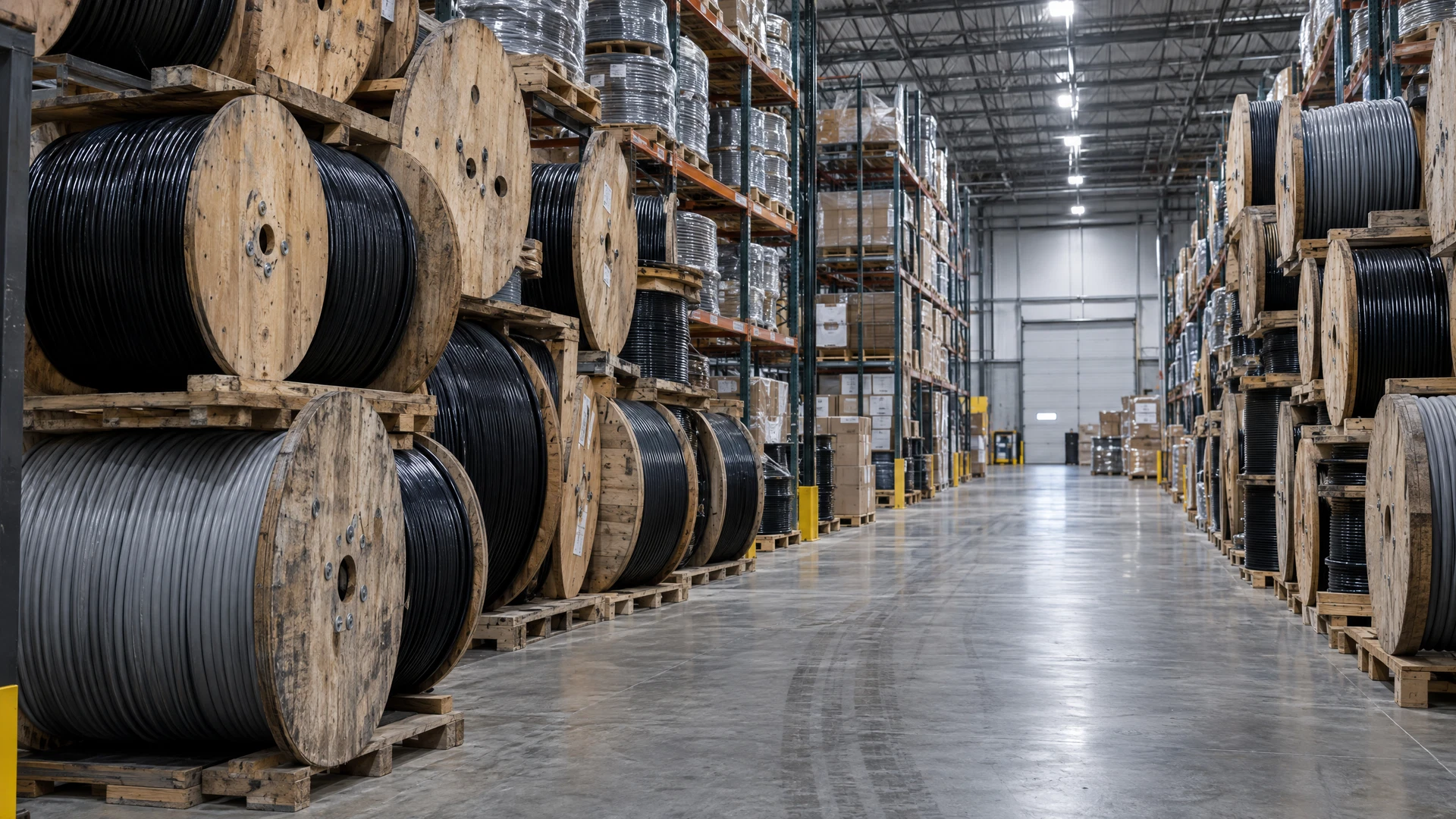
Lancaster County Pennsylvania Electrical Wire Buyers
Surplus wire from Lancaster food plants, Manheim warehouses and Lititz manufacturers, reviewed by buyers who know the farm economy.
Lancaster County farms feed people far outside Pennsylvania, and the county's industrial base grew up around that fact. Feed mills, canneries, cold storage, poultry plants and snack manufacturers cluster near the farms, and the towns that serve them, Lancaster, Ephrata, Manheim, Lititz, Elizabethtown and Columbia, all have their own factories. The county's farms and food plants are close enough together that a single contractor may work on a barn, a cooler and a packaging line in the same month. That range shows up in the wire.
The result is an electrical market built on refrigeration, motors and washdown. Wire in a food plant has to survive moisture, cleaning chemicals and temperature swings, and much of it is replaced on a sanitation schedule rather than a failure. That produces steady surplus of a specific kind: motor feeder, control cable and washdown rated cord. Much of that work is repair rather than new construction, which means short lengths, partial spools and a great deal of portable cord. It adds up over a year.
| County seat | Lancaster |
|---|---|
| Main employment sectors | Food processing and agriculture, manufacturing, tourism and hospitality, health care |
| Key corridors | US-30, Route 283, Route 222 and I-76 |
| Typical wire | 600 V THHN and THWN-2, tray cable, washdown cord, 480 V feeder |
| Municipalities covered | Lancaster, Ephrata, Manheim, Elizabethtown, Lititz, Columbia |
Food processing and the farm economy
Lancaster County's food industry runs from field to freezer. Poultry, dairy, produce and snack plants operate around the clock, and each one depends on refrigeration, conveyors and packaging equipment that cannot stop for long.
Electrical work in those plants is scheduled during short shutdowns, which encourages prefabrication and spare material. Reels are ordered with margin, and the margin often stays in the maintenance shop after the job is finished. A plant that runs three shifts has a narrow window for electrical work, which pushes material toward prefabrication and spares.
- Motor feeder and control cable from packaging lines
- Refrigeration and compressor feeder
- Washdown rated cord and cable
- Sanitation area cord and washdown cable
Manheim, Lititz and the industrial boroughs
Manheim has an auction and a warehouse district, Lititz has manufacturers in buildings that date back generations, and Ephrata has a mix of food, metal and packaging work. Each borough has its own small industrial base.
Wire from those shops is often older than the equipment it feeds. Upgrades pull out cloth covered or rubber insulated cable alongside newer THHN, and the two are priced very differently. Each borough has its own industrial strip along the rail line that used to serve it.
- Mixed old and new cable in the same lot
- Machine tool wire and 480 V feeder
- Bare copper from panel and grounding work
- Compressor and conveyor feeder from small plants
Lancaster city and the older housing
Lancaster city has blocks of rowhouses and twins from the nineteenth and early twentieth centuries, many of them renovated one unit at a time by small contractors.
Service changes are constant. A 100 A service becomes 200 A, the meter moves to the alley side, and the old SEU comes out with the panel. The copper in those service cables is heavy for its length, which makes small residential lots worth collecting. A block of ten units can produce a barrel of copper in a season.
- SEU and SER from service upgrades
- Knob and tube copper from gut renovations
- MC cable from kitchen and bath remodels
- Old service cable and meter pans from alley upgrades
Route 30, Route 283 and the Turnpike
US-30 runs east to west through the county, Route 283 connects Lancaster to Harrisburg, and the Turnpike crosses the northern townships. That network supports warehouses, truck terminals and the cold storage that food distribution requires.
Distribution surplus is predictable. Lighting packages, dock equipment and conveyor power all generate leftover wire, and a tenant change often leaves a pallet in the corner of a maintenance area with nobody assigned to sell it. Distribution buildings along Route 30 turn over tenants quickly, and each turnover brings a small electrical scope.
- THHN and XHHW-2 from warehouse construction
- MC cable from lighting retrofits
- Dock and conveyor feeder with controls
- Cold storage feeder from food distribution
Washdown, cold storage and the cable that survives
Cable in a food plant is judged by its jacket. Washdown hoses, caustic cleaners and freeze thaw cycles attack ordinary PVC quickly, and a jacket that has gone brittle will not survive another installation.
We look at flexibility, cracking and water ingress at the cut ends. Material that has held up is priced as usable cable. Material that has not is priced on copper, and the difference is usually obvious once the jacket is bent. A jacket that has gone brittle will crack when it is bent, and that test takes a second.
- Bend the jacket to check for cracking
- Note exposure to washdown chemicals
- Cold storage cable often has brittle insulation
- Note the cleaning chemicals used near the cable
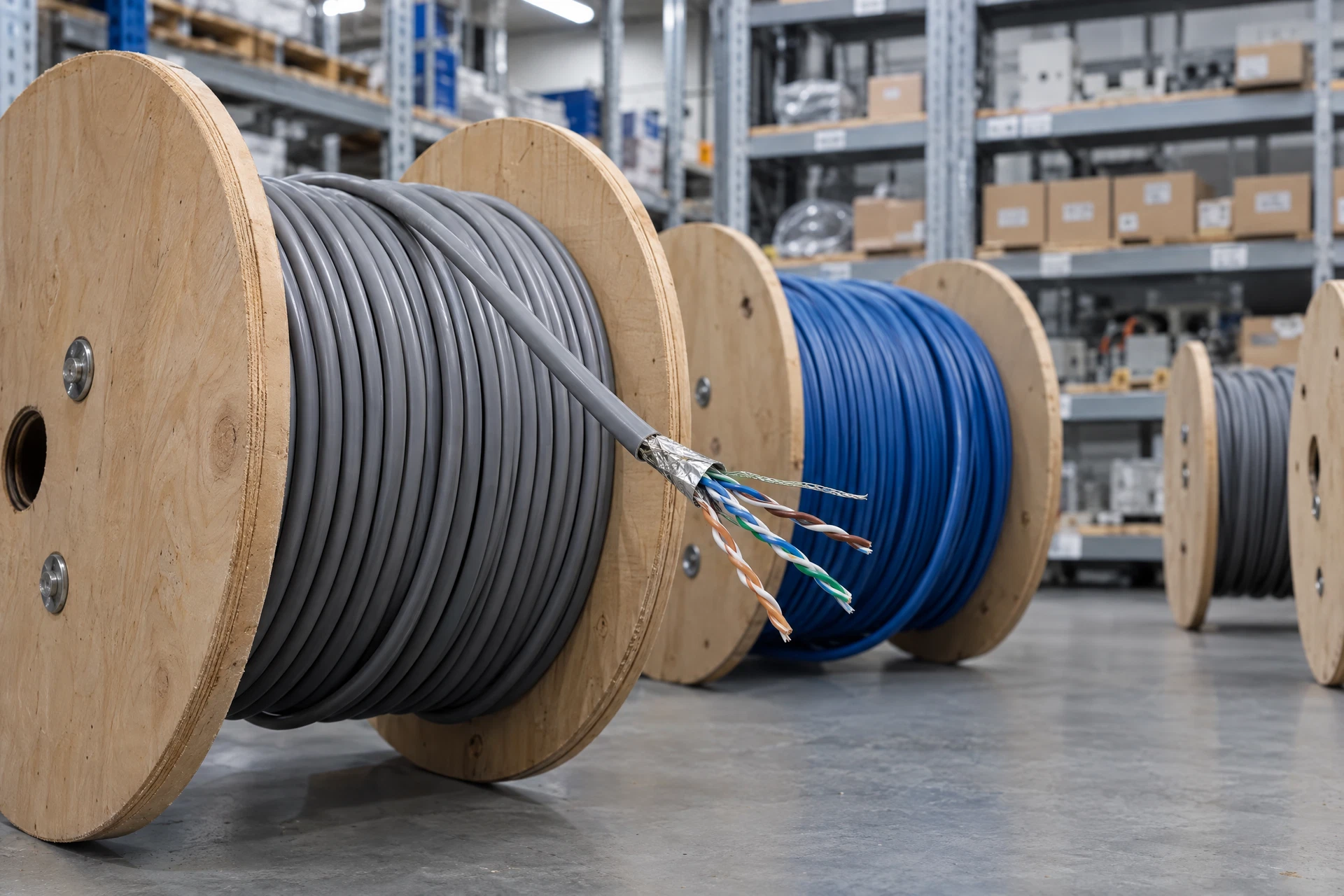
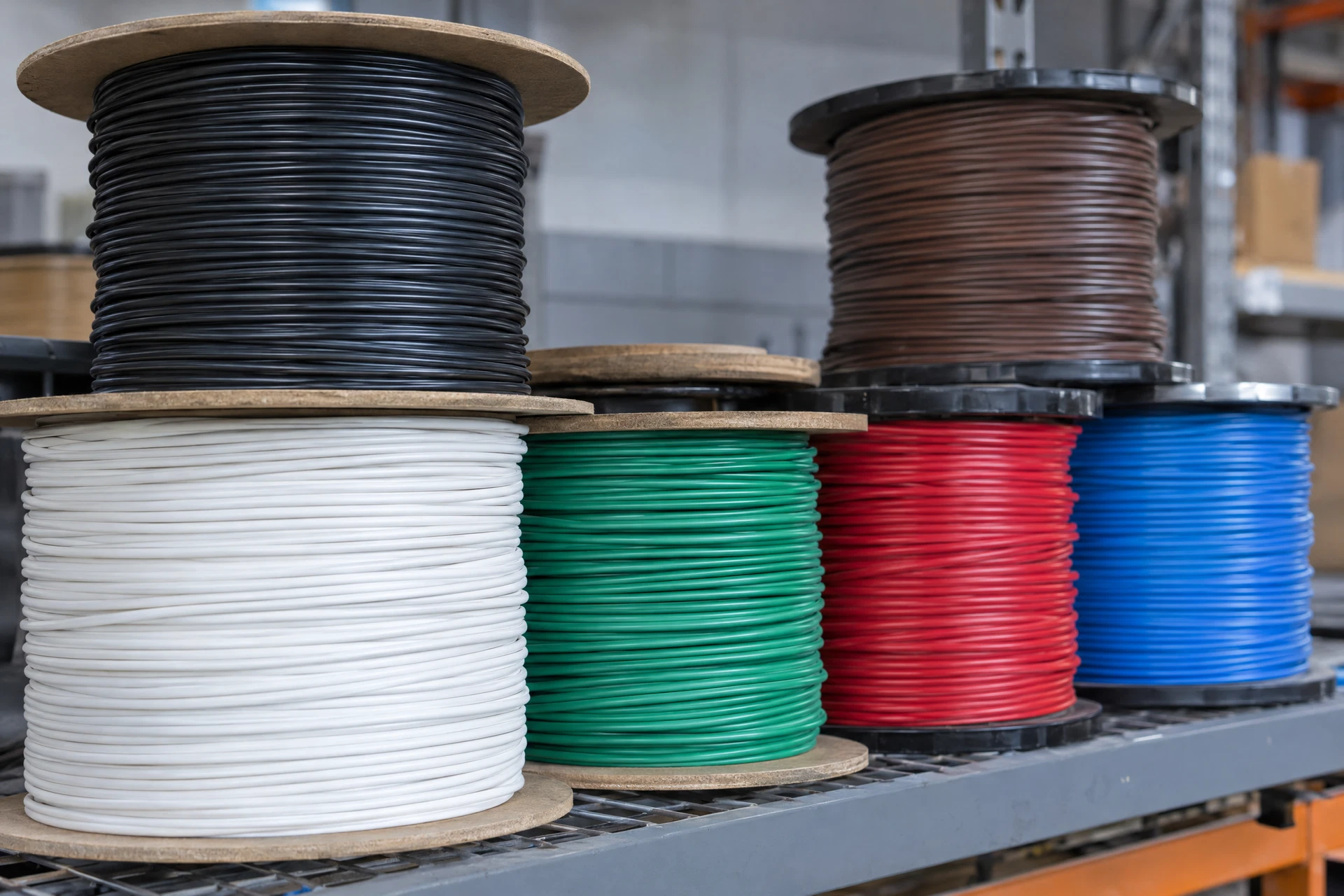
Wire and cable we buy in Lancaster County
Municipalities we cover in Lancaster County
Lancaster County questions
Do you buy wire from Lancaster food processing plants?
Yes. Food plant lots usually contain motor feeder, control cable, refrigeration feeder and washdown cord. Jacket condition matters more there than anywhere else, since cleaning chemicals and moisture shorten cable life. Jacket condition decides the rest.
Is washdown cable from a plant still usable?
Sometimes. If the jacket is still flexible and the cut ends are dry, it can be reused. If the jacket has hardened or cracked, it is priced on copper content, and we check by bending the jacket at the end.
Can you combine lots from several Lancaster contractors?
Yes, and it usually helps. Service cable, partial spools and cut lengths from separate jobs can be reviewed together, which makes a pickup practical for material that would otherwise sit in a shop for years.
Have surplus wire on the floor right now?
Send photographs of the reels, tags and jacket print. We will tell you what the material is worth as wire, not just as metal.