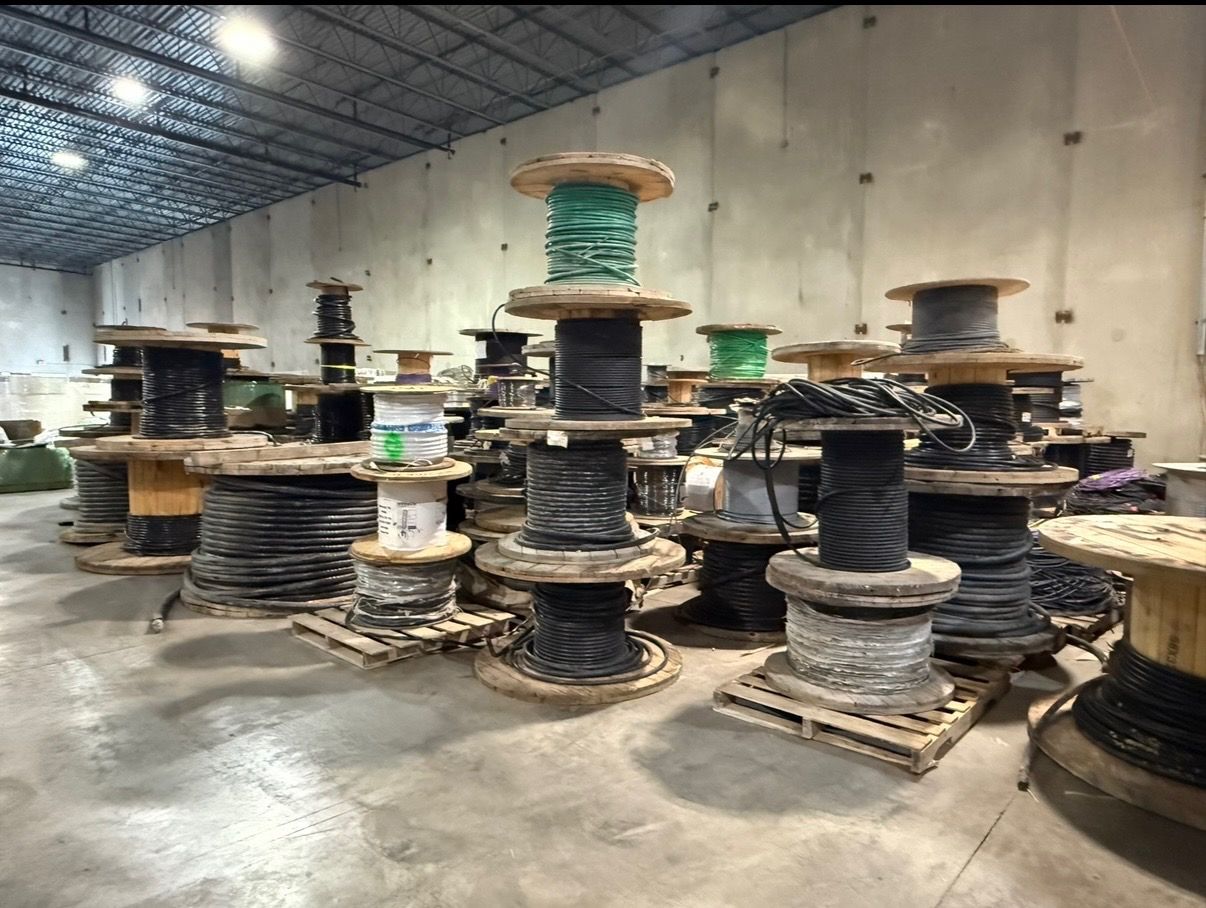
Wire and Cable Buyers for Pennsylvania Warehouses
Lighting retrofits, conveyor changes and dock equipment leave usable wire in Pennsylvania warehouse maintenance rooms.
A distribution center is mostly a roof, a floor and a great deal of power distribution that nobody looks at. High bay lighting, conveyor motors, sortation controls, battery chargers at the dock and levelers at every door. When any of that changes, the electrical contractor leaves material behind, and the maintenance room absorbs it because there is nowhere else to put it. Nobody budgets for removing it, so it stays. The shelf is cheap and the material might be useful.
We review that material from warehouses and distribution centers across Pennsylvania. The lots are usually modest, a few partial reels of THHN and MC beside a box of SOOW, but they are often clean and well stored, which makes them simpler to review than the mixed industrial stock that comes out of a manufacturing plant. That does not make it worthless. A partial reel of 10 AWG with a legible tag is still a partial reel of 10 AWG, and it is reviewed that way.
| Typical stock | THHN, MC, conveyor and portable cord |
|---|---|
| Common sizes | 14 AWG through 350 MCM |
| Voltage | 600 V building wire and cable |
| Condition | Partial reels from retrofit work |
| Pickup | Dock loading around forklift traffic |
What a warehouse electrical system uses
Lighting is the largest single load in most older warehouses, and it is usually the first thing replaced. High bay fixtures, aisle lighting and exterior wall packs are fed from panelboards with THHN in conduit, or with MC cable where the structure allows it. A lighting retrofit touches every circuit in the building.
Below the lights sit the material handling systems. Conveyor and sortation lines run on motors fed by feeder cable, with VFD cable between drive and motor and control cable back to a panel. Dock equipment, battery chargers, fire pumps and air compressors add their own circuits, each with a disconnect and a feeder.
- High bay and aisle lighting circuits
- Conveyor and sortation motor feeders
- Dock levelers, chargers and exterior equipment
- Fire pump and emergency circuits
Why surplus builds up in a distribution center
Lighting retrofits generate the most leftover wire. A contractor buys reels for a full building and finishes with a few hundred feet of each size, plus boxes of MC that were opened for a section that changed. The material goes to the maintenance room because returning it costs more than storing it.
Conveyor reconfigurations add to it. A line that is extended, shortened or moved leaves feeder and control cable cut to the old layout. Tenant turnover in a multi tenant building does the same, and an expansion project usually ends with over-ordered feeder reels that do not match the next phase.
- Lighting retrofit leftovers across many sizes
- Conveyor moves that strand cut lengths
- Tenant turnover in multi tenant buildings
- Expansion over-orders that miss the next phase
Condition in a warehouse environment
Warehouse storage is dry but dusty. A reel kept on a maintenance room shelf for years collects a layer of cardboard dust that wipes off, and the jacket underneath is usually sound. Condensation is the real risk, especially on steel racking in an unheated space, where a reel can sit against a cold upright all winter.
Forklift damage is common and easy to spot. A punctured reel flange, a crushed outer wrap or a jacket scuffed down to the insulation all show immediately. Material stored in a trailer parked outside is judged separately, since a trailer roof leaks and heat builds inside it through the summer.
- Dust on the surface with sound jacket underneath
- Condensation where reels touch cold steel racking
- Forklift punctures and crushed wraps
- Trailer storage with heat and leak exposure
Pickup around racking and forklift traffic
A working warehouse is a busy place, and a pickup has to fit between shifts and inbound trailers. Most sites have a dock and a forklift, which makes loading simple. The complication is getting the material to the dock, since reels stored deep in racking have to be pulled and brought forward before the truck arrives.
We ask for the dock height, the forklift capacity and whether the material can be staged the day before. Narrow aisles and sprinkler clearance limit what a forklift can carry, and a reel that is too tall for the rack opening may have to be moved by hand. That changes the time a pickup takes.
- Dock height and forklift capacity confirmed
- Material staged near the dock before arrival
- Narrow aisle and sprinkler clearance limits
- Pickup window between shifts and trailer traffic
Documentation that is usually already on file
Facility managers tend to have more paperwork than they expect. A lighting retrofit invoice lists fixture counts and the wire specified. A conveyor project has a submittal package with cable sizes. A maintenance log records what was bought for the last repair, even if the reel is still on the shelf.
Photographs close the gap. A reel tag, the jacket print and a wide shot of the storage shelf are usually enough. When the tag is gone, the jacket print identifies the size and insulation, and the cut end confirms whether the conductor is copper or aluminum.
- Retrofit invoices with specified wire sizes
- Conveyor and expansion submittal packages
- Maintenance logs showing purchased material
- Reel tag, jacket print and cut end photographs
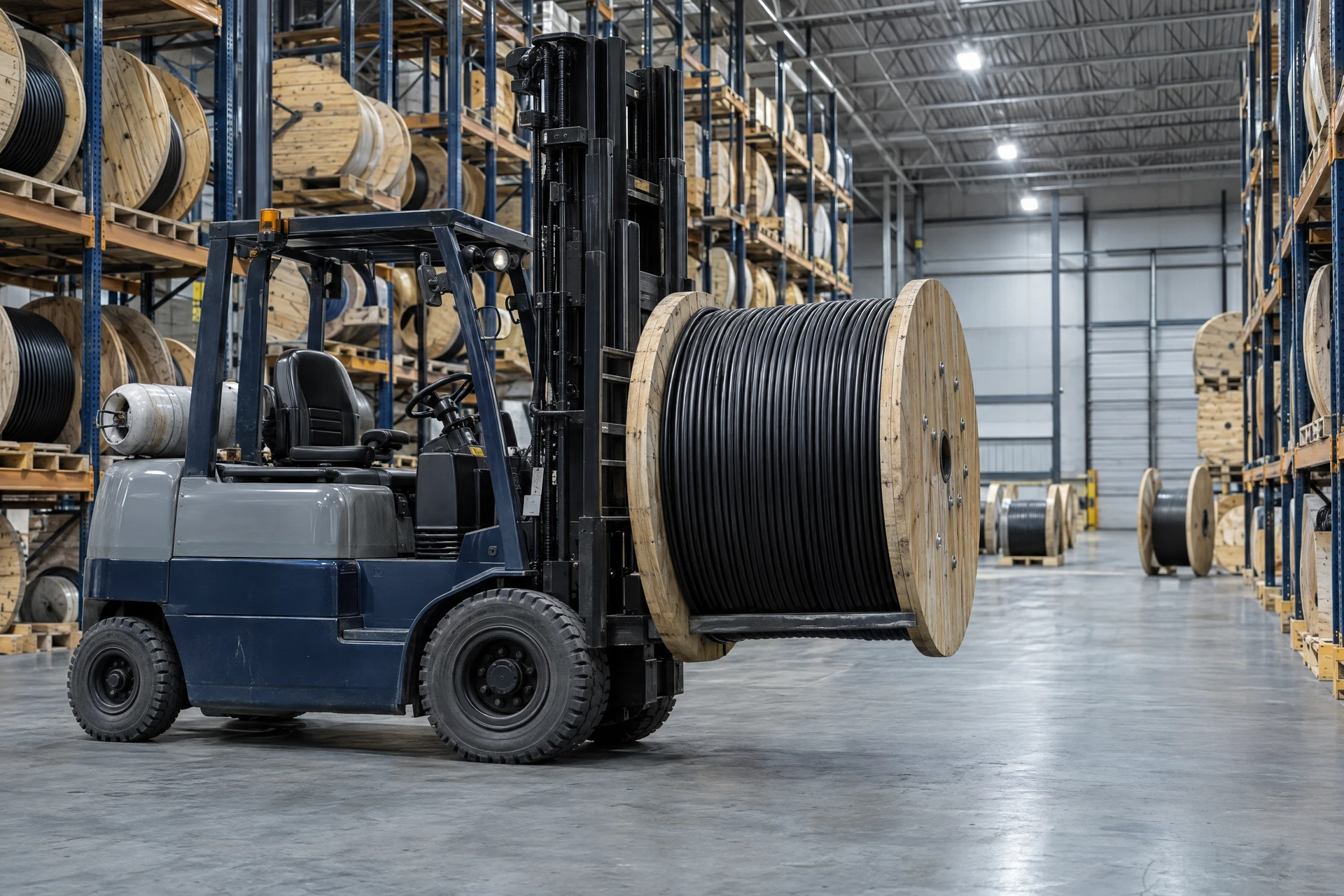
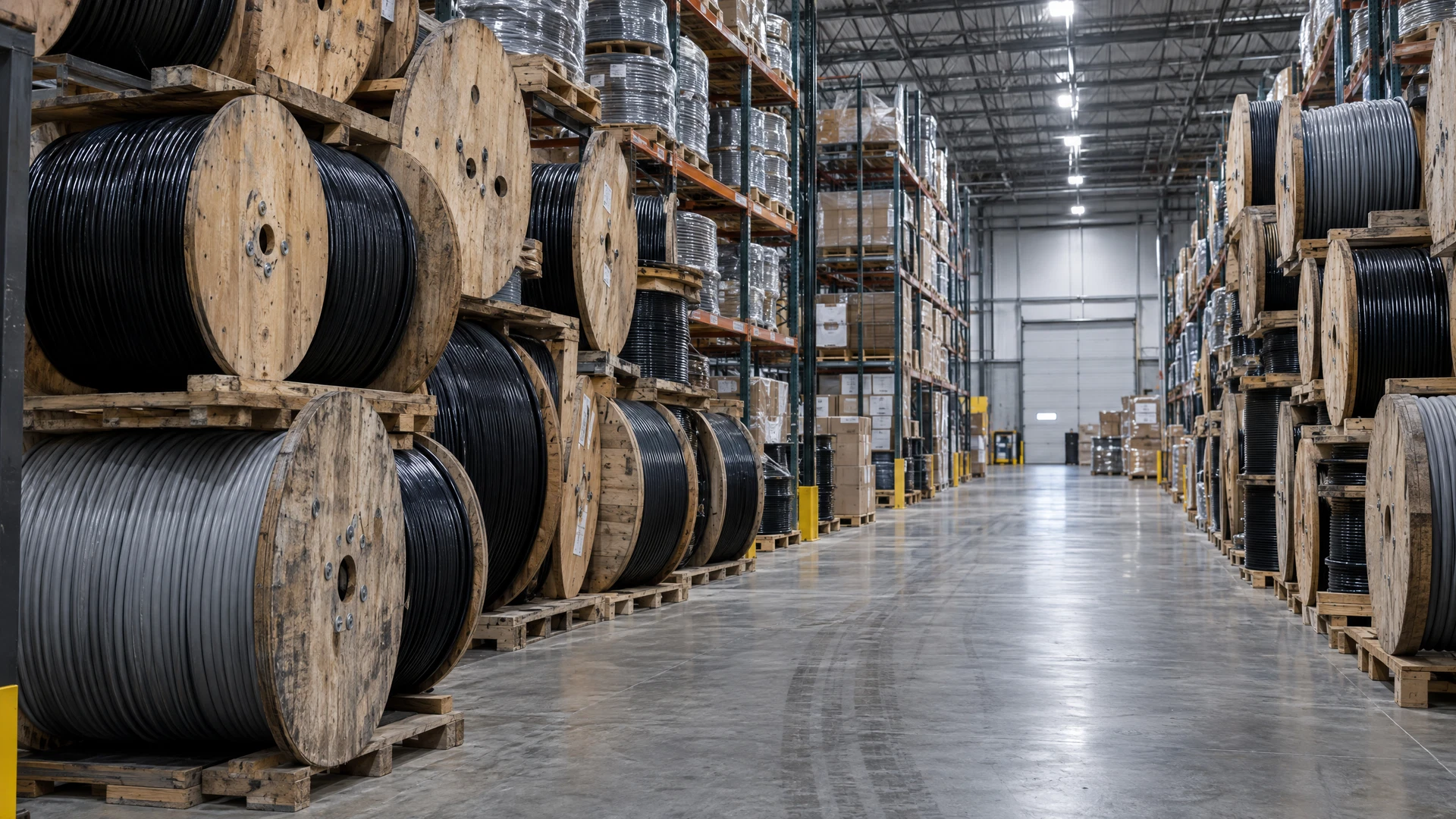
Wire and cable we buy from industrial warehouses
- THHN and THWN-2 partial reels
- MC cable from lighting retrofits
- Conveyor feeder and VFD cable
- SOOW and portable cord
- Tray cable from sortation controls
- Aluminum feeder reels from expansions
- Boxes of mixed cut lengths
Where this inventory comes from in Pennsylvania
Industrial Warehouses questions
Do you buy small lots from a maintenance room?
Yes. A few partial reels and a box of cut lengths is a normal warehouse lot. Small lots are reviewed on the mix of sizes and total conductor content, and a single pickup can cover material that would otherwise sit on the shelf indefinitely.
Can you load with our forklift?
Usually. Most warehouses have a dock and a forklift, which is all a reel pickup needs. We confirm the capacity, the dock height and whether the material can be staged near the dock, since reels stored deep in racking take time to extract.
What if the wire was bought years ago?
Age alone is not a problem. Indoor storage preserves building wire well, and a reel from a 2015 retrofit can still be sound. The review looks at jacket condition, storage location and whether the size is still commonly used.
Do you buy cable from a trailer parked outside?
Yes, with a closer look. Trailers leak and heat up, so jacket condition and moisture at the cut ends are checked carefully. Material that stayed dry and out of direct sun is reviewed much like indoor stock.
Have surplus wire on the floor right now?
Send photographs of the reels, tags and jacket print. We will tell you what the material is worth as wire, not just as metal.