
Hospital Surplus Wire and Cable Buyers in Pennsylvania
Emergency power feeders, isolated power cable and fire alarm wire from hospital projects, reviewed as usable stock.
A hospital never closes for renovation. Work happens in phases, behind temporary barriers, with the emergency system live the entire time. That constraint shapes the electrical material. Feeders are run twice, once temporary and once permanent. Redundancy is built into the design. And when a phase ends, the material bought for it stays in the facilities warehouse because the next phase is already scheduled. That is how a hospital ends up holding more cable than its drawings show. The surplus is a byproduct of the schedule.
We review that surplus from hospitals and health systems in Pennsylvania. The lots are usually clean, well tagged and stored indoors, and they are specific to the setting. Emergency distribution cable, isolated power wiring for procedure rooms, fire alarm cable in red jacket, and the medical equipment feeders that serve imaging and surgical suites. None of it is unusual for the setting, and all of it is reviewed on the same three points: what the cable is, how it was stored, and whether the length is known.
| Typical stock | Emergency feeders, fire alarm and isolated power |
|---|---|
| Voltage | 600 V class, plus 5 kV and 15 kV feeders |
| Systems | Life safety, critical and equipment branches |
| Condition | Project surplus and attic stock |
| Access | Badged escort and infection control rules |
Why hospital projects leave cable behind
Phased construction is the main reason. A renovation that touches a nursing unit, an imaging suite and a corridor may run over three years in six phases, each with its own electrical scope and its own material order. When a phase is re-scoped, the cable for the deleted work stays in stores.
Temporary work adds to it. A temporary feeder to keep a wing live during switchover is pulled, used, and often abandoned rather than recovered, because recovery costs more than the cable is worth to the project. The permanent feeder that replaced it may also leave a partial reel.
- Phased renovation scopes ordered separately
- Re-scoped phases that leave cable in stores
- Temporary feeders pulled and abandoned
- Permanent feeder reels with remaining footage
Emergency power and essential systems
A hospital's emergency system is divided into branches. The life safety branch serves egress lighting, fire alarm and elevators. The critical branch serves patient care areas, including operating rooms and intensive care. The equipment branch serves large motor loads such as chillers and air handling units that support care.
Each branch is fed separately from transfer switches, which means separate feeders from the generator paralleling gear to each distribution point. That separation multiplies the cable. A single generator upgrade can require hundreds of feet of feeder in several sizes, and the leftover from each run is a partial reel.
- Life safety, critical and equipment branch feeders
- Transfer switch to distribution panel runs
- Generator paralleling gear to switchboard cable
- Fire pump feeders with fire rated protection
Isolated power and medical equipment feeders
Operating rooms and some procedure rooms use isolated power systems, where the circuit is separated from ground by an isolation transformer and monitored by a line isolation monitor. The wiring is ungrounded and carefully controlled, and the cable that serves it is specified rather than chosen on site.
Medical equipment feeders serve imaging suites, linear accelerators and surgical booths. These loads are large, sensitive to voltage drop, and often fed with copper conductors sized well above the minimum. When an imaging suite is replaced, the feeder that served the old unit rarely fits the new one, and the copper stays in the warehouse.
- Isolated power circuits for operating rooms
- Line isolation monitors and alarm panels
- Imaging and linear accelerator feeders
- Oversized copper conductors for voltage drop
Fire alarm and low voltage cable
Fire alarm cable is easy to identify and easy to review. It runs in red jacket, marked FPLR for riser applications or FPLP for plenum, and the print states the circuit type. Notification circuits, addressable loops and speaker circuits all use variations of the same family.
Nurse call, security, and building management cable sit alongside it, usually unshielded twisted pairs in plenum or riser ratings. These lots are often boxes rather than reels, opened for a phase and returned with most of the box intact.
- FPLR riser and FPLP plenum fire alarm cable
- Notification, initiation and speaker circuits
- Nurse call and security cable in boxes
- Building management cable in plenum ratings
Access, infection control and pickup
A hospital pickup is scheduled around patient care. Deliveries and removals use service elevators, avoid shift change, and often happen early in the morning. Facilities coordinates the move, and in clinical areas an infection control barrier has to be maintained until the material is out of the space.
Material is usually staged in a loading dock or a vacant suite rather than moved through corridors during operating hours. We confirm the dock, the elevator dimensions, the badge list and the escort before the visit, and the load is completed in the window the facility allows.
- Service elevator dimensions and booking
- Infection control barriers kept in place until removal
- Staging in a dock or vacant suite
- Badge list and escort confirmed before arrival
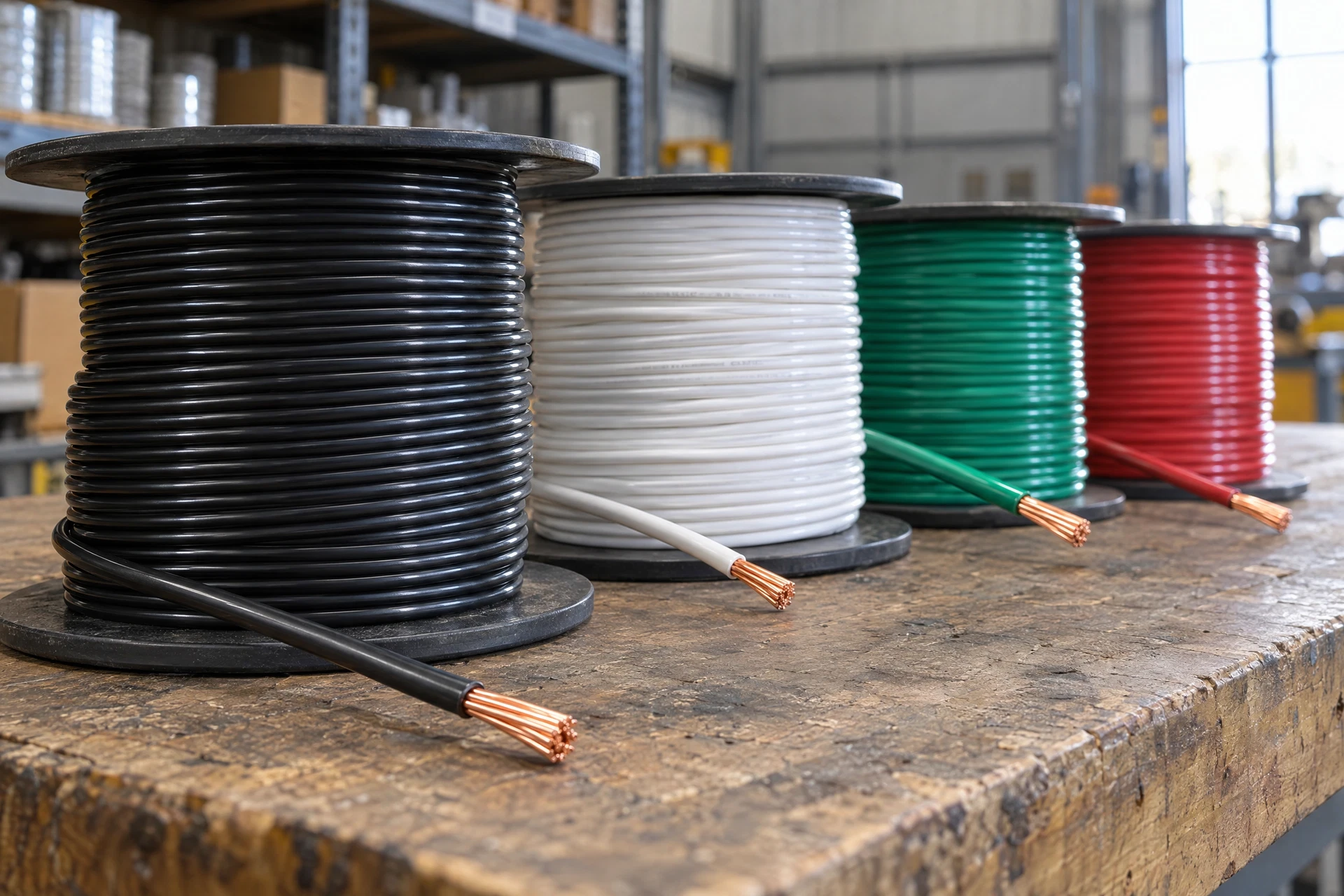

Wire and cable we buy from hospitals and health systems
- Emergency branch feeder reels
- Generator and transfer switch cable
- Fire alarm cable in FPLR and FPLP
- Isolated power circuit wiring
- Imaging and medical equipment feeders
- Nurse call and low voltage cable
- Copper grounding and bonding conductors
Where this inventory comes from in Pennsylvania
Hospitals and Health Systems questions
Do you buy fire alarm cable in partial boxes?
Yes. Fire alarm cable is reviewed on the jacket print, the plenum or riser rating and the remaining length in the box. Partial boxes from a completed phase are common, and the print on the jacket identifies the circuit type even without a label.
Can you review cable from an abandoned temporary feeder?
Yes. Temporary feeder cable is reviewed as removed material. Footage is estimated, jacket condition is inspected, and the cut ends are photographed. Some of it can be resold and some is recovery only, depending on how it was handled.
What access is needed inside a hospital?
A scheduled window, a badge list, an escort and a service elevator booking. Facilities usually wants material staged in a dock or vacant suite rather than moved through clinical corridors, and infection control barriers stay up until the material leaves.
How is isolated power wiring identified?
Isolated power circuits are usually run in identifiable conduit or cable with the isolation transformer and monitor nearby. The jacket print gives the construction, and project documentation ties the circuit to the room it served. Without records, the cable is reviewed as general building wire.
Have surplus wire on the floor right now?
Send photographs of the reels, tags and jacket print. We will tell you what the material is worth as wire, not just as metal.