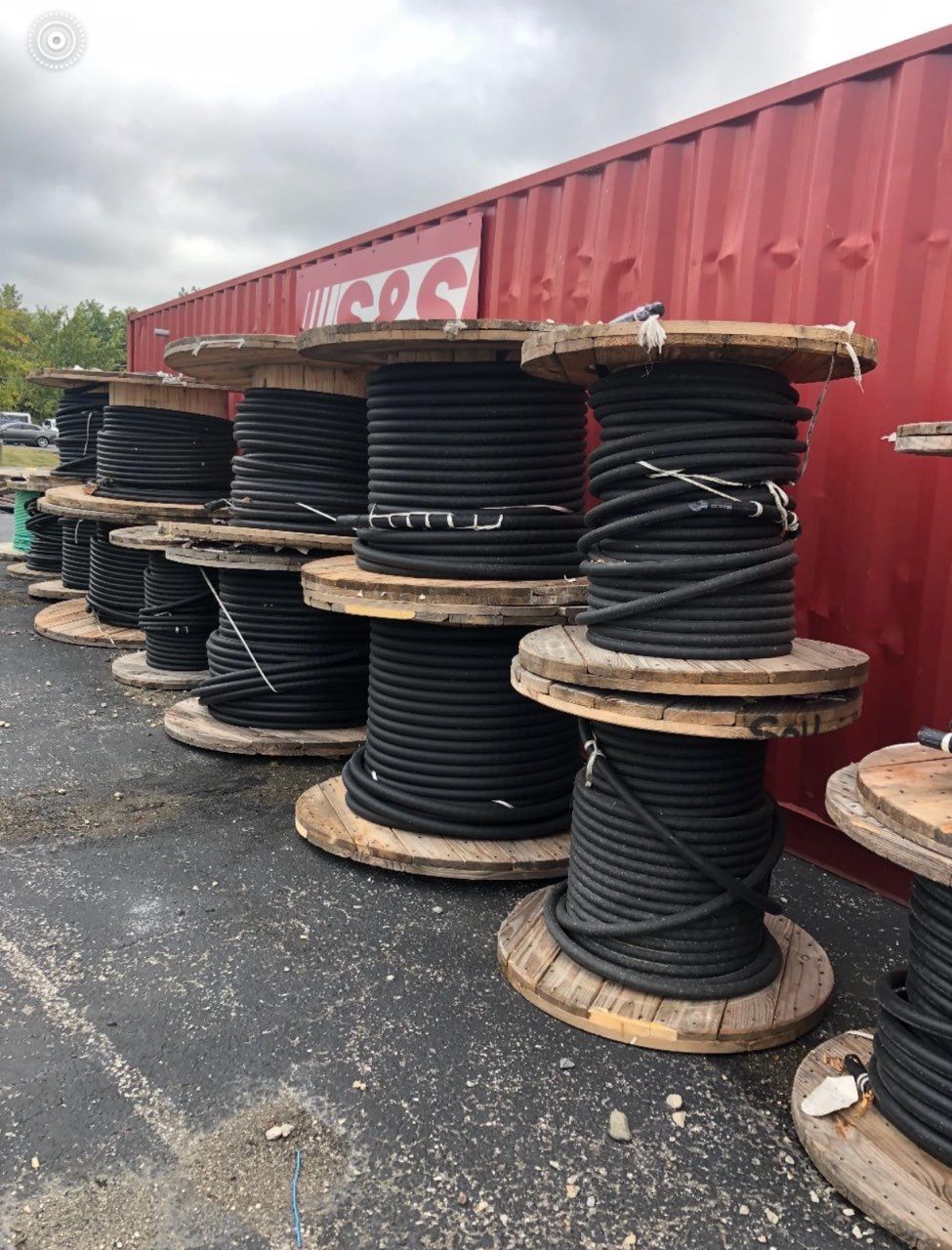
Factory Closure Wire Buyers for Pennsylvania Plants
Crib stock, spare reels and removed cable from closing plants, reviewed in stages as a facility winds down.
A factory closure is not an event. It is a schedule. Production winds down over months, equipment is sold or scrapped in waves, and the building is emptied in an order that the owner, the auctioneer and the demolition contractor all have to agree on. Wire and cable move through that schedule in stages, and the stage determines what the material is worth. Early stages favor the seller, and late stages favor whoever is already on site with a truck and a trailer.
We review wire from closing plants across Pennsylvania while the building is still standing and the material can still be identified. Once the electrical rooms are stripped and the trays are on the floor, the same cable is worth less, because the tags are gone and the footage is a guess. The difference between the two is not the cable. It is whether anyone wrote down what was on the reel before the trays came down. That record costs nothing to make and is worth a good deal.
| Typical stock | Crib reels, spare cable and removed feeders |
|---|---|
| Common sizes | 14 AWG through 750 MCM |
| Voltage | 600 V class, plus plant distribution cable |
| Condition | Stored stock and staged removal cable |
| Access | Coordinated with auctioneer and demolition |
How a closure produces wire in stages
The first stage is the crib. Maintenance stock is the easiest material to sell, because it is already sorted, tagged and indoors. Reels that never left the shelf are reviewed as new stock, and a plant that ran for decades may hold sizes that are no longer common.
The second stage is the electrical rooms and distribution. Switchgear, panels and busway are sold as equipment, and the cable that fed them becomes surplus when the equipment leaves. The third stage is removal, when trays are stripped and feeders are cut into lengths that fit a truck.
- Crib and spare parts stock sold first
- Cable stranded when equipment is sold
- Feeders cut during tray removal
- Mixed debris-stage material at the end
Staged liquidation and what to sell first
Order matters. Selling the crib first captures the best documentation and the highest share of usable lengths. Selling installed cable before removal requires an estimate and an agreement about who does the work, which is why most closures handle the two separately.
Auctioneers usually sell the wire with the equipment or as a separate lot, and the terms decide what a buyer can do. A lot sold as part of a building package may not be removable until the building changes hands. We work with whatever sequence the owner and the auctioneer have set, and we say plainly what can be reviewed at each stage.
- Crib stock sold before equipment leaves
- Installed cable reviewed on estimate before removal
- Auction lots with removal terms attached
- Building package sales that delay removal
Removal realities in an empty plant
An empty plant is not a safe plant. Utilities may be partially disconnected, lighting is temporary, and the floor is full of trip hazards that were never there when the line was running. Removal crews work to a demolition schedule, and cable is cut to whatever length moves fastest.
That pressure is why removed cable is reviewed conservatively. A feeder pulled in three sections with unknown footage is not the same material as the same feeder on its original reel. Where the removal can be planned, keeping reels intact and labeling sizes preserves value for everyone involved.
- Partial utility disconnection and temporary lighting
- Cable cut to whatever length moves fastest
- Reels discarded in favor of loose coils
- Labeled sizes preserving value after removal
Condition, title and documentation
Condition questions in a closing plant are mostly about storage. Crib material is usually sound. Cable in an unheated building through several winters may have condensation damage, and cable in a yard has ultraviolet exposure. Both are visible and both are reviewed on the evidence.
Title questions matter as much. A lender, a receiver or an auctioneer may control the material, and the party who can authorize a sale is not always the party on site. We confirm who owns the cable and who can release it before a truck is scheduled.
- Unheated building condensation damage
- Yard stored cable with ultraviolet exposure
- Ownership held by lender, receiver or auctioneer
- Written release before material leaves the property
Pickup during a wind-down
Access changes week to week during a closure. Security may be reduced, gates may be chained, and the loading dock may already be full of equipment waiting for riggers. A pickup has to be scheduled around those movements rather than in spite of them.
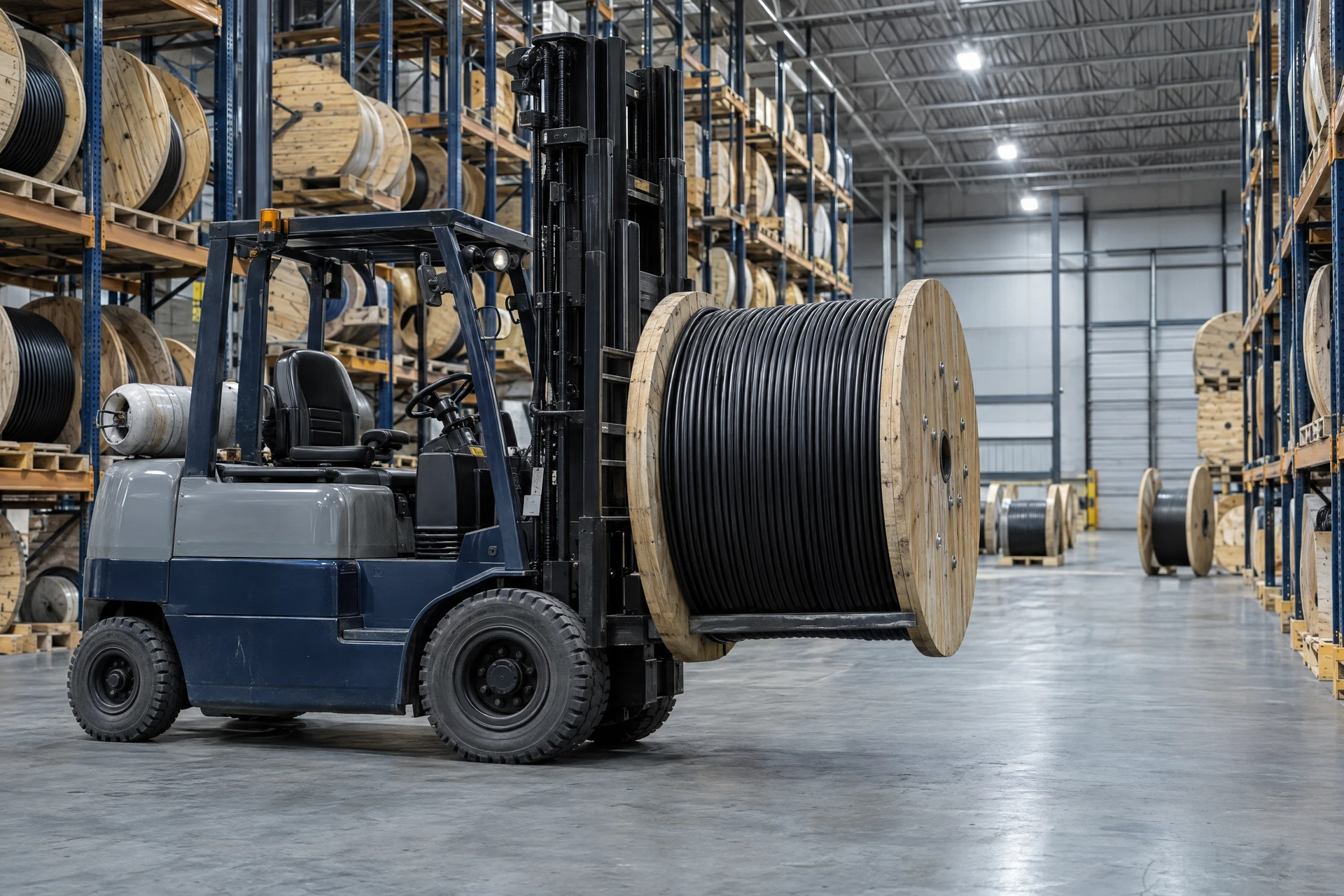
We ask for the current site contact, the gate procedure, the dock condition and whether a forklift remains on site. Where the plant has already been emptied of equipment, a boom truck may be needed to lift reels that can no longer be rolled to the dock.
- Current site contact and gate procedure
- Dock space shared with riggers and equipment
- Forklift availability late in the wind-down
- Boom truck for reels that cannot be rolled
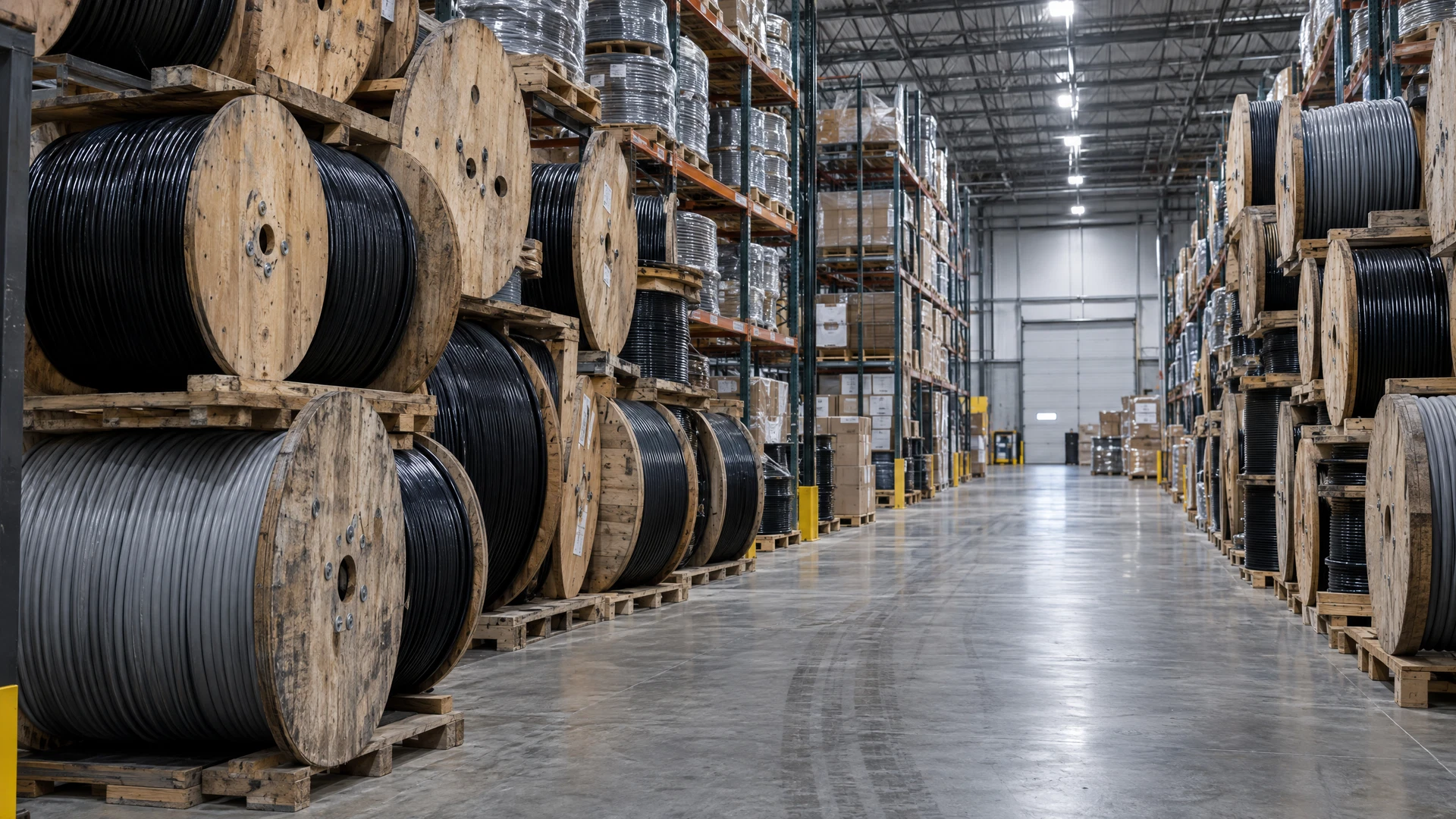
Wire and cable we buy from factory closures
- Crib stock reels with tags intact
- THHN and XHHW-2 spare reels
- Tray cable and control cable
- Medium voltage feeder cable
- Bus drop and motor lead cable
- Bare copper grounding conductor
- Removed feeder cable from tray stripping
Where this inventory comes from in Pennsylvania
Factory Closures questions
Can you review material before the plant is emptied?
Yes, and that is the better time. Crib stock and spare reels can be reviewed with tags and footage intact while the building is still organized. Once removal begins, the same material is harder to identify and is valued accordingly.
Who authorizes a sale during a closure?
It depends on the closure. The owner may still control the material, or a receiver, lender or auctioneer may hold it. We confirm who can release the cable before scheduling, since a truck that arrives without authority cannot load.
Do you buy cable that is still installed?
Installed cable is reviewed on an estimate and a removal plan rather than as stock on a reel. Footage is approximate, condition is unknown until the cable is out, and the review reflects that uncertainty instead of assuming a favorable outcome.
How is pickup handled late in a wind-down?
With the current site contact, the gate procedure and the dock condition confirmed in advance. Late in a closure a forklift may be gone, so a boom truck may be needed. Loading is scheduled around riggers and equipment still waiting to leave.
Have surplus wire on the floor right now?
Send photographs of the reels, tags and jacket print. We will tell you what the material is worth as wire, not just as metal.