
Electrical Contractor Surplus Wire Buyers in Pennsylvania
Wire left over from service upgrades, tenant fit-outs and plant work, reviewed as material rather than scrap.
An electrical contractor's wire inventory is a byproduct of winning work. A service upgrade ordered 4/0 aluminum and 500 MCM copper by the reel, the job used most of it, and the remainder went on a shelf because the next job might need it. Tenant fit-outs leave part reels of MC and SER. Generator and switchgear installations leave control cable and grounding conductors. None of it is waste, and most of it is still identifiable by jacket print and reel tag.
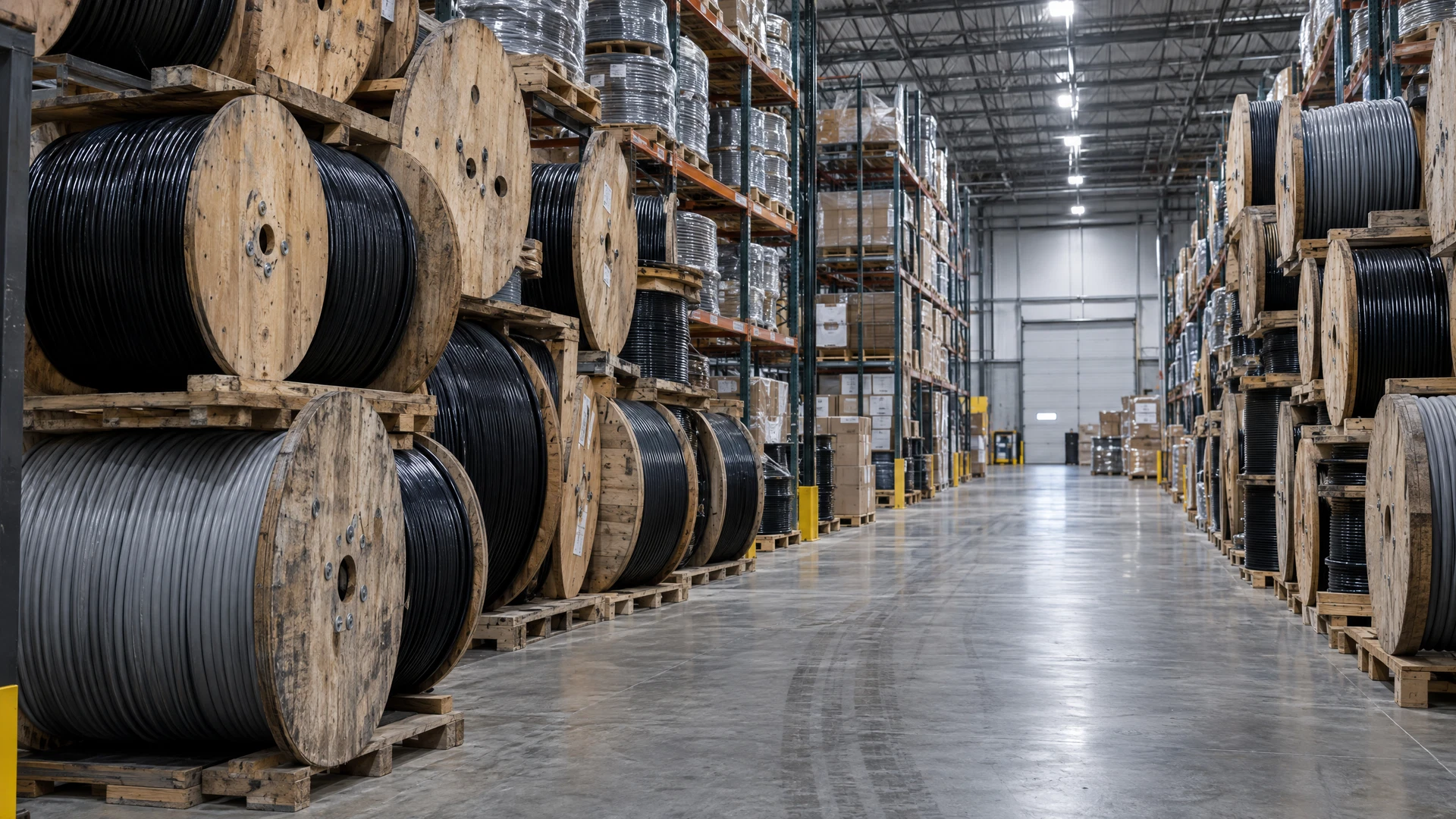
We review those leftovers from contractors across Pennsylvania, from a single partial spool in a service van to a shop mezzanine stacked with reels that have not moved in years. Condition decides the outcome. A factory-sealed reel with a legible tag is a different item from an opened reel stored outdoors for two winters. Whether the lot is one reel or a full shelf, the same questions apply: what is it, how was it kept, and how much is left. Send photographs and approximate footage and the review follows.
| Typical stock | THHN, XHHW-2, MC, SER and URD |
|---|---|
| Common sizes | 12 AWG through 500 MCM |
| Voltage | 600 V building wire and cable |
| Condition | Sealed, partial and job-site reels |
| Pickup | Shop, trailer or active job site |
Where contractor surplus comes from
Over-ordering is the usual cause. Wire is sold by the reel, and a reel that covers a feeder run plus ten percent waste often leaves 200 to 400 feet behind. Change orders shrink runs after the material is on site. A panel relocation, a deleted chiller or a value-engineered lighting package can strand reels that were bought for a scope that no longer exists.
Maintenance stock is the second source. Contractors who hold service contracts keep THHN, SOOW and welding cable on hand for repairs, and that stock turns over slowly. When a shop consolidates or a truck is retired, the shelf gets cleared.
- Partial reels from completed service upgrades and panel changes
- MC and SER cut lengths from tenant fit-outs
- Obsolete colors and sizes kept for jobs that never returned
- Sealed reels from cancelled or re-scoped projects
Wire and cable contractors typically hold
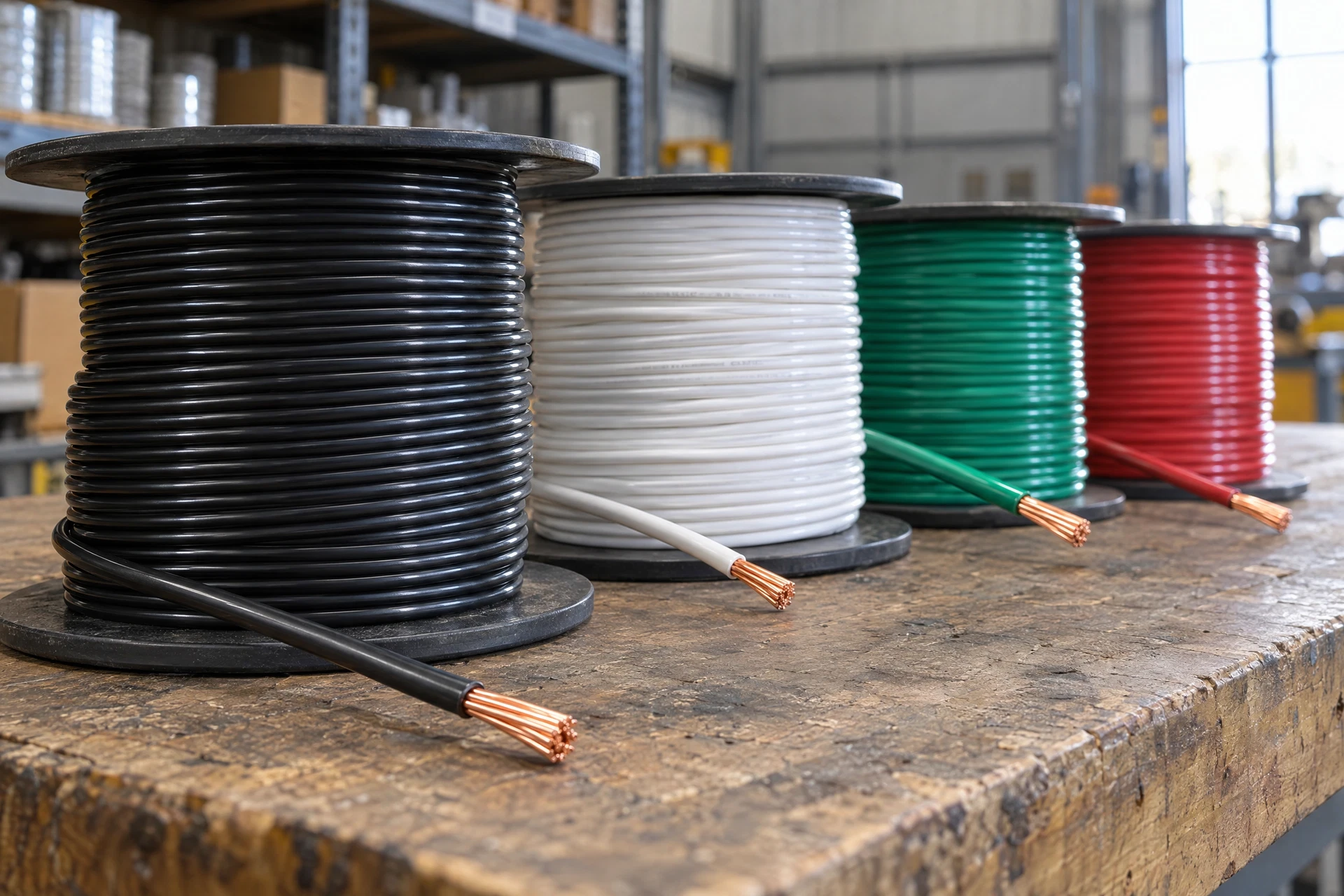
The bulk is 600 V building wire. THHN and THWN-2 in 12 and 10 AWG for branch circuits, 8 through 2 AWG for feeders, and 1/0 through 500 MCM copper for service and distribution work. Aluminum XHHW-2 and SER are common on larger residential and light commercial service replacements.
Above that sit MC cable, AC cable, tray cable for industrial work, and URD or USE-2 for underground services. Contractors who do generator and transfer switch work also carry control cable, and steel erectors leave SOOW and welding cable in short coils.
- THHN and THWN-2 in 12 AWG through 500 MCM
- MC, AC, SER and SEU cable in common trade sizes
- URD and USE-2 direct burial for service laterals
- Control cable, SOOW and welding cable in short lengths
How condition is judged on a contractor reel
A reel that never left the shop is straightforward. Factory wrap intact, tag legible, conductor ends sealed, and the footage printed on the tag can be trusted. An opened reel needs more work. We look at how much jacket has been paid out, whether the outer end was taped and capped, and whether the reel sat indoors or on a rack in the weather.
Sun exposure matters most on the jacket. THHN and XHHW-2 hold up better than a soft rubber portable cord, and direct burial cable stored in ultraviolet light for years will show color fade and surface cracking. Removed cable from a demolition job is judged separately, because footage and jacket damage are both unknown.
- Jacket print, tag and manufacturer label checked against size
- Conductor ends inspected for corrosion and moisture wicking
- Storage history: indoor rack, trailer or open yard
- Removed cable reviewed for jacket damage and true footage
Pickup from shops, trailers and job sites
Contractor pickups vary more than any other category. A shop with a loading dock and a forklift takes twenty minutes. A job site in Center City Philadelphia may mean a freight elevator, a loading zone permit and a narrow window before the concrete pour. We ask about access before scheduling, not on the morning of the pickup.
Reels move best on a flatbed with a boom or a lift gate, and a 48 inch reel of 500 MCM copper is heavier than most people estimate. Tell us the reel diameters, the weights if they are known, and whether a forklift or pallet jack is available on site.
- Dock height, forklift capacity and pallet jack availability
- Freight elevator dimensions and building loading rules
- Gate check-in, escort and insurance requirements
- Site superintendent notified before the truck arrives
Paperwork that shortens the review
Reel tags are the single most useful document. They carry the manufacturer, the size, the voltage rating, the conductor material and the original footage. Photographs of the tag and of the jacket print at both ends answer most of the questions we would otherwise ask.
Purchase invoices and submittal sheets help when tags are gone. A footage counter reading is useful on long lengths, and a photograph of the cut end shows stranding, insulation thickness and whether the conductor is copper or aluminum. None of this is mandatory, but a lot with documents is reviewed faster than one without.
- Photographs of reel tags and jacket print
- Original invoice or submittal sheet if available
- Footage counter reading on long lengths
- Close-up of the cut end showing conductor and insulation
Wire and cable we buy from electrical contractors
- Full and partial THHN and THWN-2 reels
- XHHW-2 and aluminum feeder reels
- MC, AC and SER cable cut lengths
- URD and USE-2 service cable
- Tray cable and control cable from industrial jobs
- SOOW and welding cable coils
- Mixed pallets of short cut lengths
Where this inventory comes from in Pennsylvania
Electrical Contractors questions
Do you buy wire from a contractor's service van?
Yes. Short coils and partial spools from vans and job trailers are reviewed like any other lot. Material under about 25 feet usually has recovery value only, so it is quoted on conductor content rather than as resalable wire.
What if the reel tag is missing?
Jacket print usually identifies the size, insulation type and voltage rating, and a photograph of the cut end confirms the conductor. Without either, we may need to measure the conductor and treat the lot as unidentified stock rather than tagged material.
Can you pick up from an active job site in Philadelphia?
Yes, with coordination. We need the loading zone rules, the delivery window, and confirmation that the general contractor has released the material. Reels stored in a locked trailer can be moved once access is arranged.
How is a partial reel reviewed against a full one?
A full, sealed reel of a standard size is the easiest item to place and is reviewed on that basis. A partial reel is reviewed on remaining footage, jacket condition and demand for that size. No outcome is promised before inspection.
Have surplus wire on the floor right now?
Send photographs of the reels, tags and jacket print. We will tell you what the material is worth as wire, not just as metal.