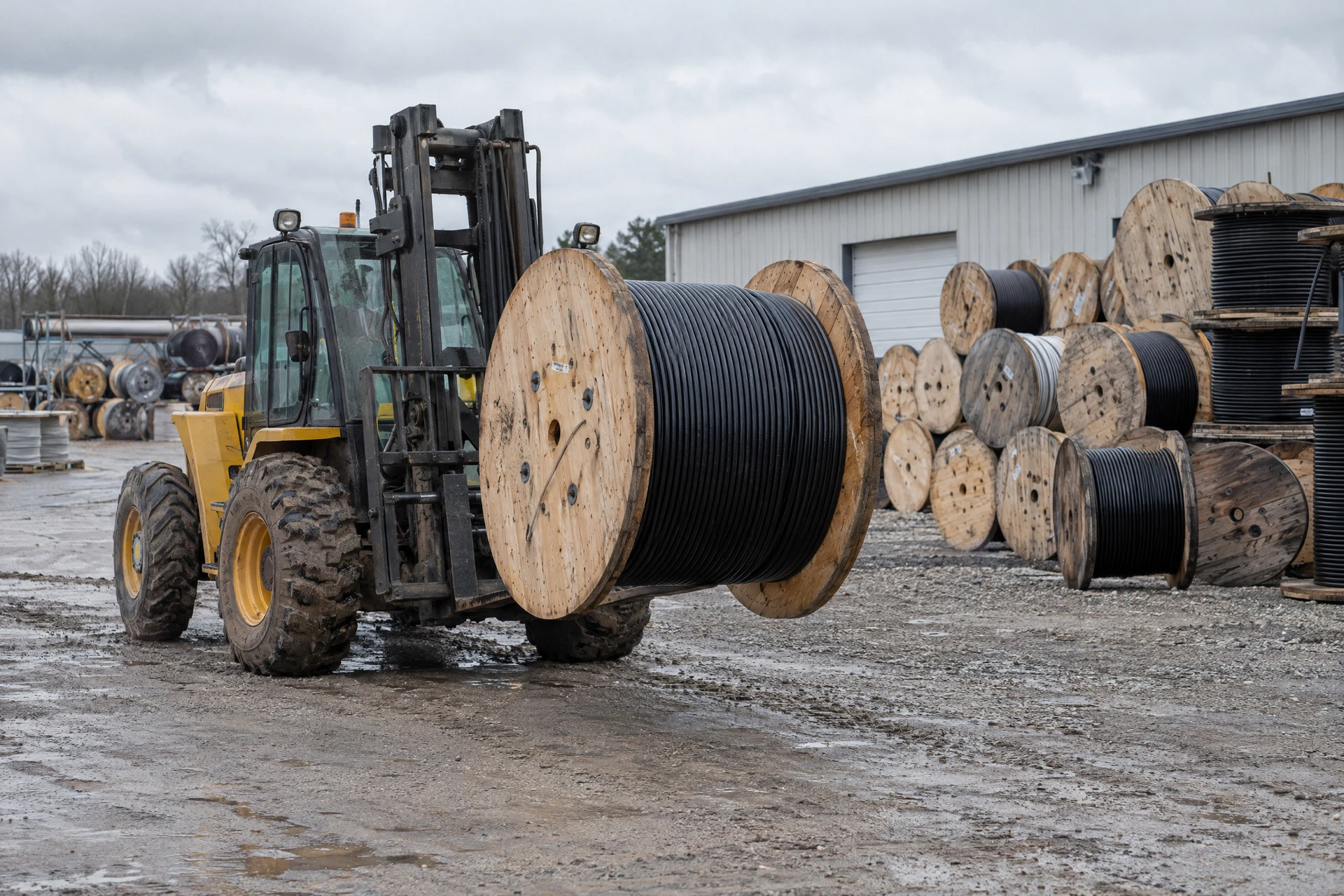
Demolition Contractor Wire Buyers Across Pennsylvania
Removed cable from teardowns and gut renovations, reviewed honestly on footage, jacket condition and what is recoverable.
Demolition cable is the least predictable material we review. A plant teardown can produce a thousand feet of 500 MCM copper feeder that was cut into twenty foot sections, and a strip center gut can produce a pile of armored cable with no tags and no record of length. The metal is real in both cases. Whether it is worth more than its copper content depends on things that are not visible from the pile. A pile is not an inventory, and it should not be treated as one.
We review removed cable from demolition contractors across Pennsylvania without pretending the answer is always favorable. Some lots are resalable as wire. Many are recovery only. The review separates the two, and it starts with how the cable was removed, how it was kept afterward, and whether anyone on site kept the reels intact. Where a contractor has separated copper from aluminum and kept reels whole, the same building yields a better lot. That work is done on site or not at all.
| Typical material | Removed feeder, armored and tray cable |
|---|---|
| Conductor | Copper and aluminum, mixed sizes |
| Condition | Pulled, cut and coiled cable |
| Footage | Estimated, rarely documented |
| Access | Active demolition sites with clearance |
What demolition cable actually is
Most of it comes out of three places. Conduit runs, where THHN or XHHW is pulled out in whatever lengths the pull allows. Cable trays, where tray cable and feeder cable are cut free and coiled. And walls and ceilings, where armored cable and MC come down with the partition and arrive tangled with framing and conduit.
Service entrance cable, URD dug up from a parking lot, and welding cable from a shop add to the mix. Each behaves differently. Conduit wire usually comes out in long, clean lengths. Armored cable comes out short and bent. Underground cable comes out dirty, wet and often nicked by the excavator.
- THHN and XHHW pulled from conduit runs
- Tray cable and feeders cut out of cable trays
- Armored cable and MC removed with partitions
- URD and service cable dug up from exterior runs
Why footage is the hard question
Reel tags do not survive demolition. Cable arrives cut into sections, coiled in a pile, or packed into a roll-off with other debris. Nobody measured it on the way out, and the building drawings show circuit lengths rather than actual installed footage.
That leaves estimation. Conductor size can be read from the jacket print or measured at the cut end, and total weight gives a rough check against a known weight per foot. The estimate is honest about its limits. A lot described as roughly 600 feet may be 500 or 750, and the review treats it that way.
- No reel tags after removal
- Lengths cut to suit the removal, not the material
- Size read from jacket print or measured conductor
- Weight used as a cross check on footage
How removed cable is evaluated
Visual condition carries most of the decision. Jacket abrasion, crushed sections, exposed conductor and moisture inside the jacket all reduce what the cable is worth. Copper that has been wet shows green corrosion at the cut ends, and that corrosion travels under the jacket further than people expect.
Testing is rarely practical on demolition material. A insulation resistance test on a coiled length with unknown history tells you little about the rest of the lot. So the review stays with what can be seen and documented, and it says plainly when a lot is recovery only.
- Jacket abrasion and crushed sections from removal
- Green corrosion at cut ends and under the jacket
- Aluminum cable with kinks or stretched conductor
- Recovery only when condition or identity is uncertain
Separation on site that raises value
The single most useful thing a demolition contractor can do is keep copper and aluminum apart. Mixed lots are reviewed at the value of the lower grade, because separating them later costs labor that the material cannot support. Keeping reels intact rather than cutting them for the truck also preserves footage and tag information.
Coiling rather than bundling helps as well. Cable crushed into a roll-off with masonry loses jacket integrity and becomes recovery material. A pallet of coiled lengths, banded and labeled by size, is reviewed as a different lot entirely, even when the cable came from the same building.
- Copper separated from aluminum before loading
- Reels kept intact rather than cut for the truck
- Cable coiled and banded instead of crushed
- Sizes labeled on pallets where they are known
Pickup timing and site conditions
Timing matters more than access. Cable that is still in the building when the excavator arrives becomes debris. Material pulled early and stacked outdoors is easier to review, but it also sits through weather. The best window is after the electrical removal and before the structural demolition begins.
Sites also have clearance requirements. Abatement has to be complete before anyone handles material from a wall cavity, and dust suppression changes what can be loaded. We ask about clearance, surface conditions and whether a truck can reach the pile without crossing an active demolition zone.
- Pickup after electrical removal, before structural demolition
- Abatement clearance confirmed before handling
- Truck access that avoids active demolition zones
- Material staged on pallets rather than left in debris
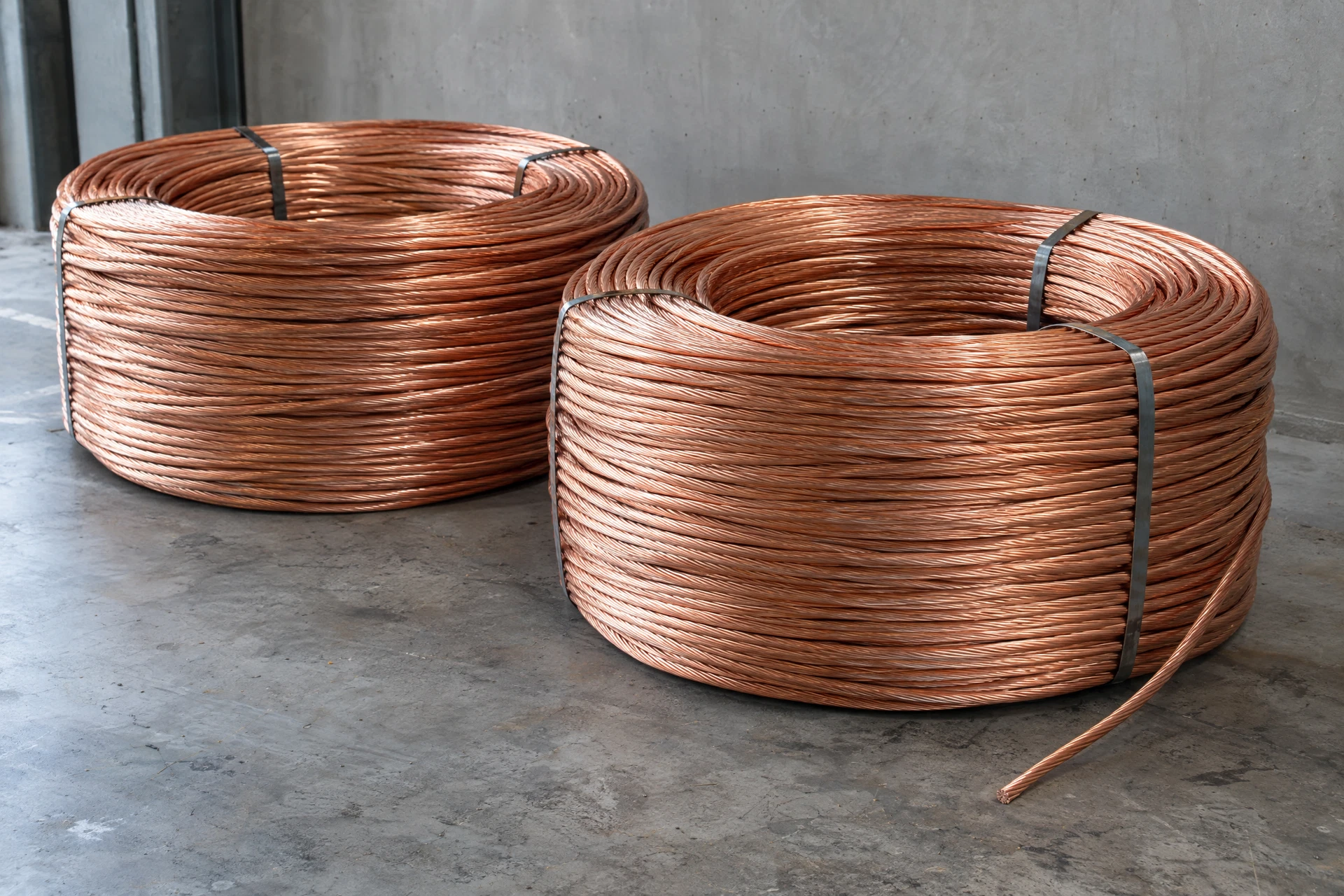
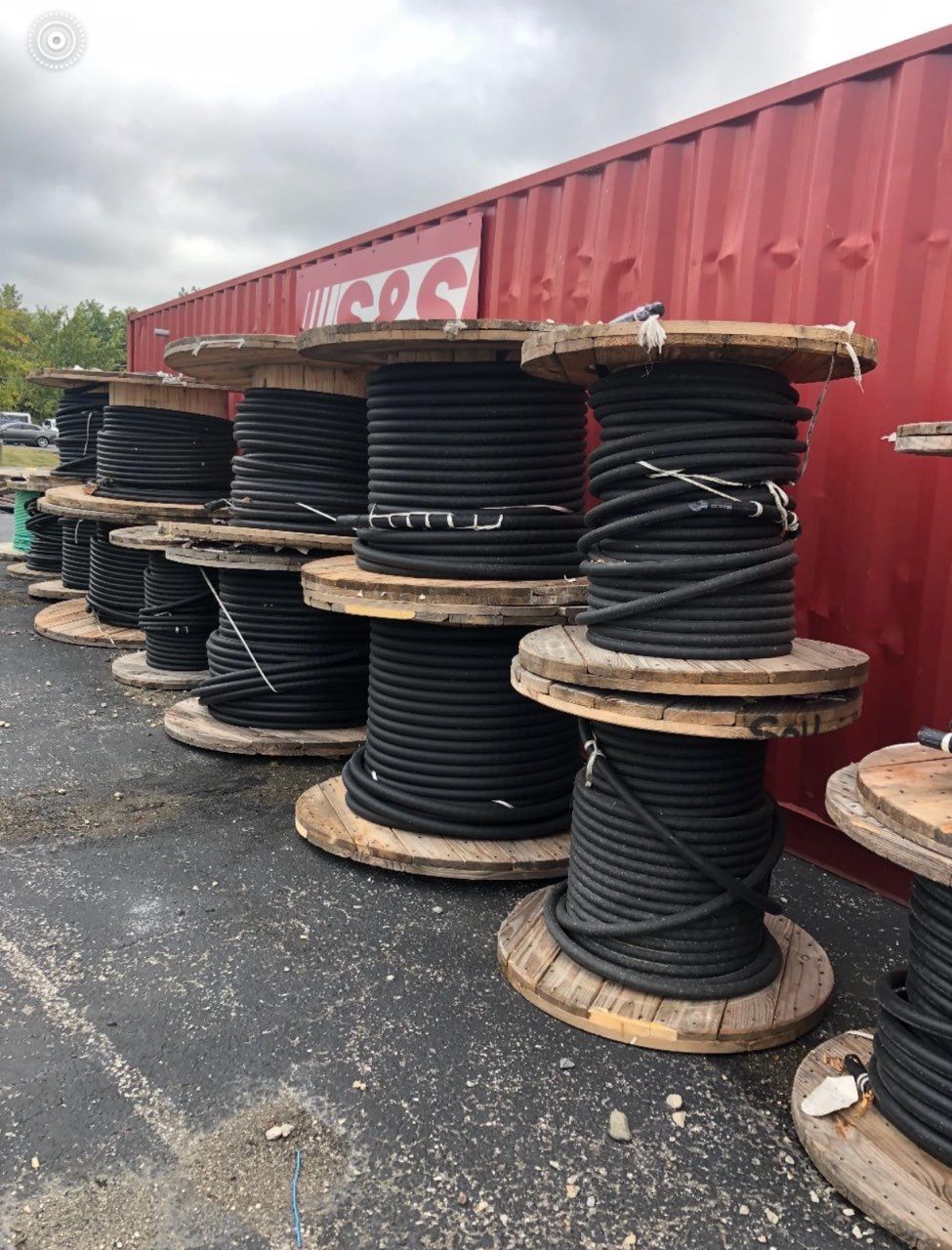
Wire and cable we buy from demolition contractors
- Copper feeder cable removed from conduit
- MC and armored cable from partition demolition
- Tray cable from demolished cable trays
- URD cable pulled from underground runs
- Service entrance cable
- Welding cable and portable cord
- Mixed copper and aluminum lots
Where this inventory comes from in Pennsylvania
Demolition Contractors questions
Do you buy cable with no footage record?
Yes. Footage is estimated from conductor size, coil dimensions and weight, and the estimate is stated as an estimate. Cable with no tag and no measurement is reviewed more conservatively than cable that was measured during removal.
What makes removed cable worth more?
Long, clean lengths with intact jackets and legible print. Copper separated from aluminum. Cable coiled and banded rather than crushed into a container. Reels kept whole instead of cut apart to fit a truck all preserve value.
Can you pick up during an active demolition?
Yes, if the area is clear and the truck can reach the material without entering the demolition zone. Abatement has to be finished first. We confirm clearance and access before scheduling, since a truck that cannot reach the pile is a wasted trip.
Is all demolition cable resalable?
No. Some lots are resalable as wire, especially long feeder lengths with good jackets. Short, damaged or unidentified material is valued on conductor content. The review says which category applies before any quote is given.
Have surplus wire on the floor right now?
Send photographs of the reels, tags and jacket print. We will tell you what the material is worth as wire, not just as metal.