
Data Center Surplus Wire and Cable Buyers in Pennsylvania
Commissioning leftovers, feeder cutoffs and redundant runs from data center fit-outs, reviewed as resalable cable.
A data hall is built twice. Once as designed, and once as commissioned. Between those two states sit the leftovers. Feeders pulled from switchgear to remote power panels, busway whips cut to length, grounding conductors, and boxes of CAT6A that were opened for testing and never closed. Redundancy means two paths where one would do, so the second path doubles the material count before any spare is added. Nobody orders the second path as surplus, but that is what it becomes.
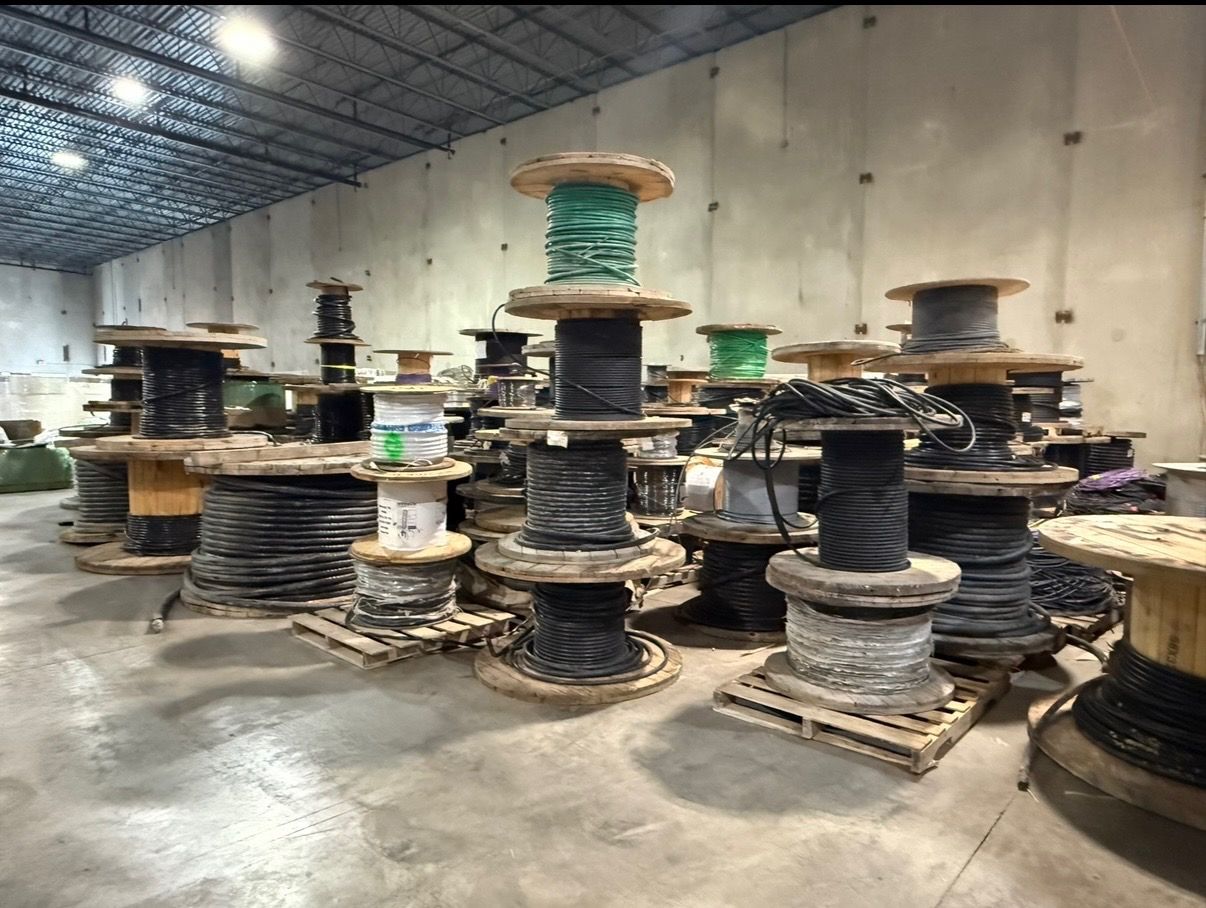
We review that material from data center projects and operators in Pennsylvania. The lots tend to be clean, well labeled and stored indoors, which makes them easier to assess than most industrial surplus. They also tend to be mixed, with a few hundred feet of 500 MCM beside twenty boxes of patch cable, so the review works best when the inventory is listed rather than guessed. A written list, a reel tag photograph and a count per item turn a mixed lot into something that can be quoted in a day.
| Typical cable | Feeders, busway whips, CAT6 and fiber |
|---|---|
| Feeders | 1/0 through 750 MCM copper |
| Low voltage | CAT6, CAT6A and fiber backbone |
| Condition | Commissioning spares and cutoffs |
| Access | Badged and escorted secure sites |
What a data hall consumes in wire and cable
The heavy material is feeder cable from utility transformers and switchgear to UPS systems and remote power panels, commonly 1/0 through 750 MCM copper in single conductor or paralleled sets. Above the racks, busway carries power to the row, and busway whips or flexible connections drop from the busway to each cabinet.
Below that sit branch circuits, equipment grounding conductors, and the low voltage side. CAT6 and CAT6A run from panel to cabinet, fiber runs the backbone between rows and meet-me rooms, and monitoring cable connects power distribution units and environmental sensors.
- Copper feeder sets from switchgear to UPS and RPP
- Busway whips and flexible connections to cabinets
- CAT6 and CAT6A in boxes and partial spools
- Fiber backbone on spools, including single mode and multimode
Why commissioning leaves cable behind
A/B redundancy is the main reason. Two power paths, two cooling paths and two network paths are specified, and each path is pulled with its own material. When a path is rerouted during commissioning, the original pull is often abandoned in place and a fresh length is pulled alongside it.
Phased build-outs add more. A hall designed for twenty rows may open with eight, and the cable bought for the remaining twelve stays in a staging cage. Tenant changes during fit-out, failed certification tests and last-minute cabinet relocations all leave short lengths that are too long to discard and too specific to reuse.
- Second-path material from A/B redundancy
- Rerouted pulls abandoned during commissioning
- Staged cable for unbuilt rows and phases
- Short lengths from cabinet relocations and failed tests
Condition and storage in a conditioned space
Most of this material is stored well. Staging areas are conditioned, reels sit on racks, and boxes stay sealed until a technician opens them. A sealed box of CAT6A with the factory tape intact is close to new stock, and a feeder reel with its tag and factory wrap is reviewed the same way.
The failures are specific. Fiber has a bend radius that is easy to violate, and a spool that was dropped or tightly coiled may have a broken strand that only shows on a test. Copper data cable suffers at the connector end rather than the jacket, and a box that sat open in a dusty staging area needs its remaining length verified.
- Sealed boxes and factory-wrapped feeder reels
- Fiber spools checked for bend radius and crush damage
- Open boxes with remaining length verified
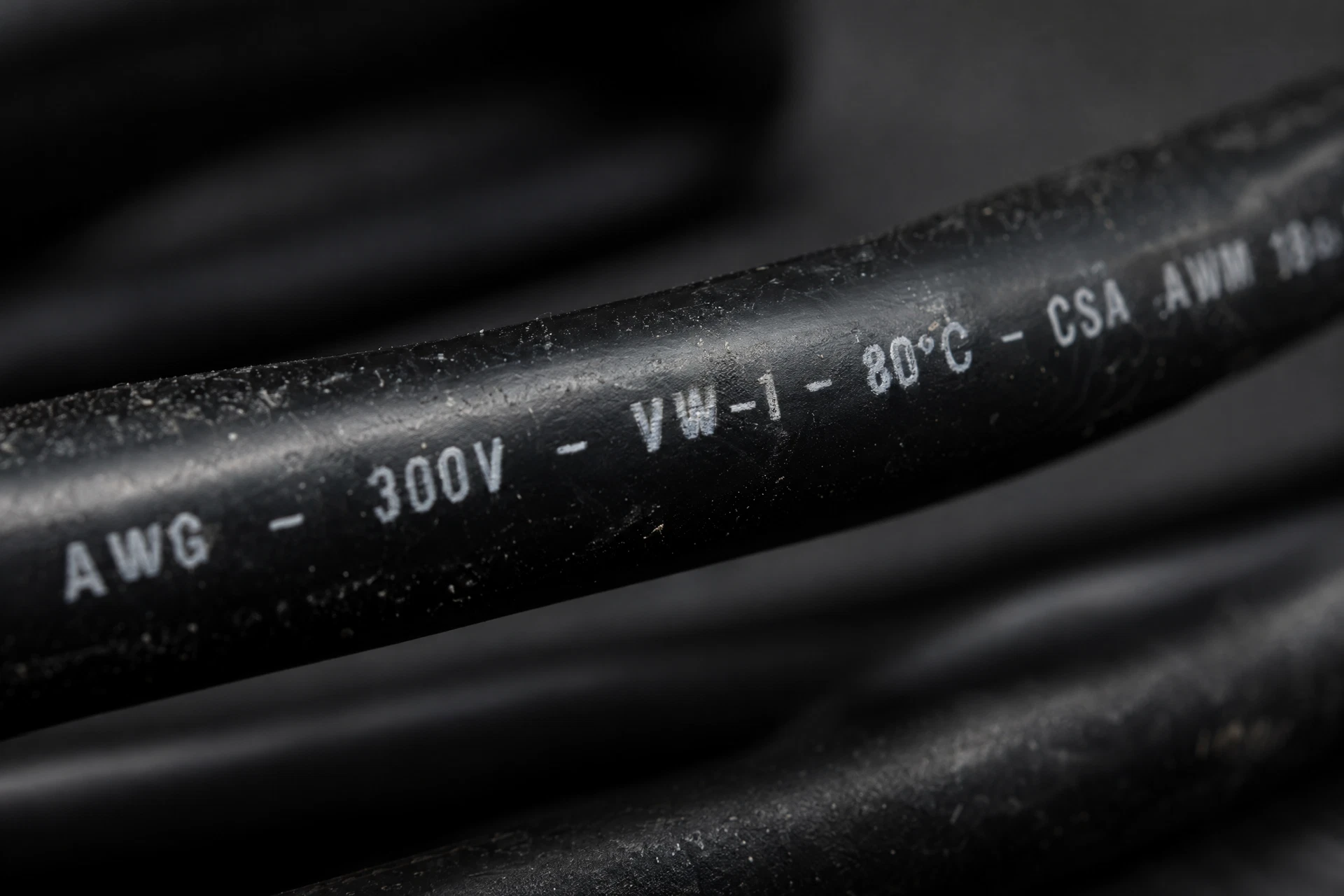
- Jacket print and reel tag matched to the specification
Secure access and pickup logistics
Data centers are among the hardest sites to move material out of. Badge access, an escort for the entire visit, a mantrap at the loading dock, and in many cases a prohibition on photography inside the white space. Material often has to be staged in a receiving area before it can be loaded, and that staging takes a scheduled slot.
Loading docks are built for server cabinets and CRAC units, not for 60 inch reels, so the truck has to match the dock. We ask about the dock height, the ramp, the freight elevator if the material is above grade, and whether a pallet jack or forklift is available on the dock side.
- Badge, escort and mantrap procedures at the dock
- Material staged in receiving before the truck arrives
- Dock height and ramp limits for large reels
- Freight elevator capacity when staging is above grade
Documentation that supports a data center lot
Reel tags and box labels do most of the work, because data center material is usually specified by part number. A bill of materials from the fit-out shows what was ordered, and a commissioning spare list shows what was deliberately held back. The difference between the two explains most of the surplus.
Test reports help on the low voltage side. A certification report confirms that a box or spool passed testing, and a failed report flags the material that should not be resold as data cable. For feeders, the tag and the cut end are usually enough.
- Reel tags and manufacturer part numbers
- Fit-out bill of materials and spare lists
- Cable certification reports for copper data cable
- Cut end photographs for feeder cable
Wire and cable we buy from data centers
- Copper feeder reels from switchgear and UPS work
- Busway whip cable and flexible connections
- CAT6 and CAT6A in sealed and opened boxes
- Fiber optic cable on spools
- Grounding electrode and bonding conductors
- Control cable for monitoring and transfer switches
- Plenum-rated cable left from abandoned pulls
Where this inventory comes from in Pennsylvania
Data Centers questions
Do you buy opened boxes of CAT6A?
Yes, with the remaining length estimated. Opened boxes are reviewed on what is left on the spool, the jacket print and whether the cable was stored clean and dry. Boxes that sat in a dusty staging area are checked more carefully.
Can you review a commissioning spare list?
A spare list is a good starting point. It shows what was held back and in what quantity. We match it against reel tags and photographs, then flag the items where the listed footage and the actual reel do not agree.
How is fiber cable assessed?
Fiber is reviewed on spool condition, jacket print, fiber type and whether the spool was stored upright. Crushed or tightly coiled spools are treated cautiously because a broken strand may only appear under test. Test results help when they exist.
Can pickup be scheduled outside business hours?
Often, yes. Secure sites frequently prefer evening or weekend windows when the dock is quiet. We confirm the escort, the badge list and the staging location in advance, then load within the window the facility allows.
Have surplus wire on the floor right now?
Send photographs of the reels, tags and jacket print. We will tell you what the material is worth as wire, not just as metal.