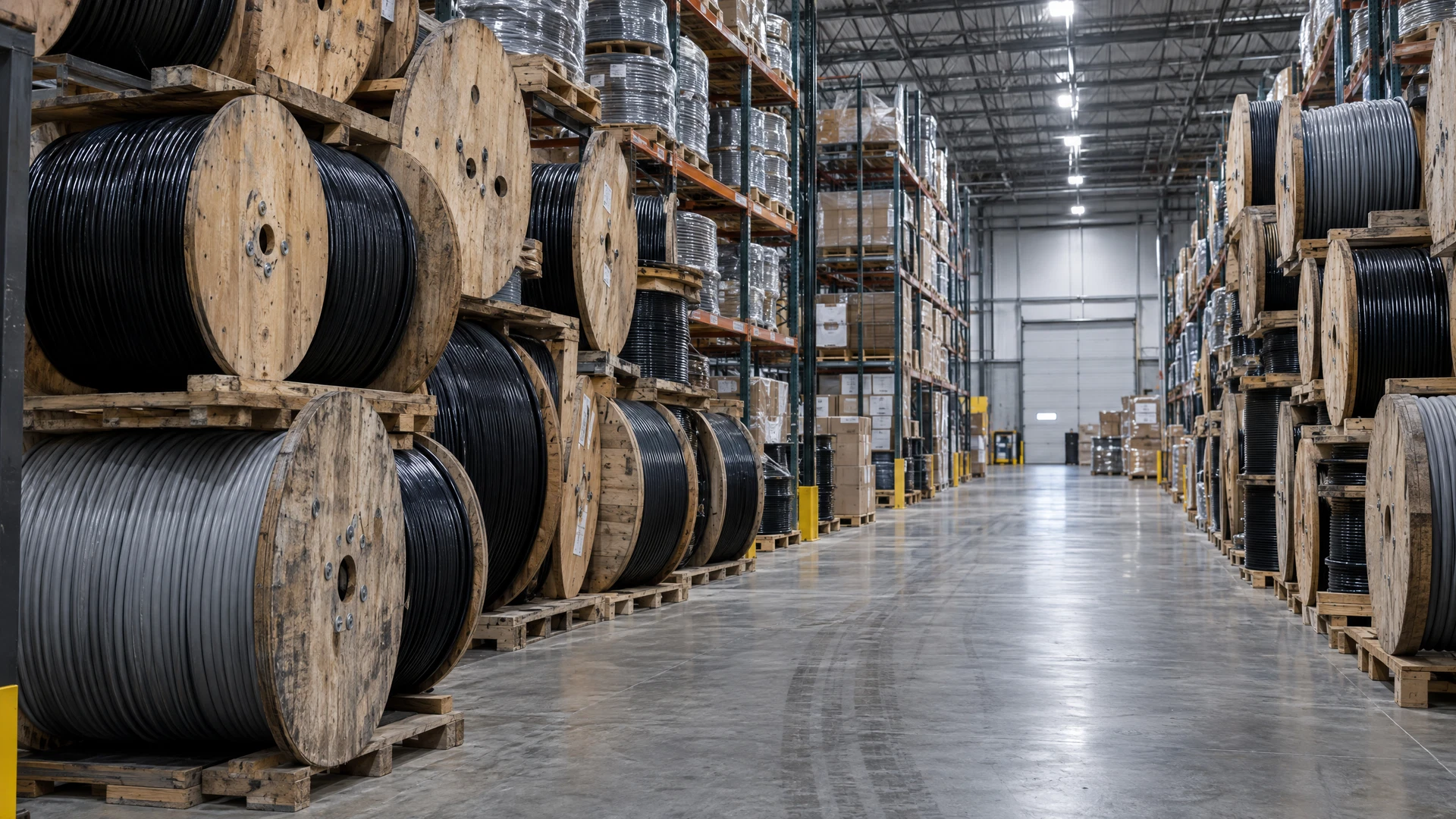
Commercial Renovation Surplus Wire Buyers in Pennsylvania
Riser cable, tenant improvement leftovers and feeder cutoffs from office and retail renovations across Pennsylvania.
A commercial renovation is a negotiation between a new tenant's plan and a building's existing electrical capacity. The riser may need a new feeder. The floor may need a new panel. The ceiling may need new MC whips for lighting that did not exist in 1985. All of that work is ordered to a drawing, and the drawing changes at least once. The surplus follows the changes, and it is usually left behind for the building to absorb or the next tenant to find.
We review surplus from commercial renovations across Pennsylvania, from a single partial reel left in a vacant suite to a riser upgrade that left several hundred feet of 4/0 copper. The material is usually clean and indoors, and the review depends on whether the reel tags survived the project. Most of them do, which makes office and retail work easier to assess than plant surplus. Stalled projects are the exception, and those are reviewed with more caution and more estimate.
| Typical stock | Riser, tenant improvement and lighting cable |
|---|---|
| Common sizes | 12 AWG through 500 MCM |
| Voltage | 600 V class building distribution |
| Condition | Indoor project surplus |
| Pickup | Freight elevator or loading dock |
Riser work and building distribution
Older office buildings distribute power vertically through a riser, with feeders running from a main switchboard in the basement to panels on each floor. A renovation that adds load on three floors may require a new riser feeder, and that feeder is ordered in a length that includes slack at both ends.
Riser cable is usually large copper, commonly 4/0 through 500 MCM, and it is ordered as a single length rather than a reel quantity. What remains after the pull is a partial reel that is still worth reviewing, because the size is standard and the footage is often recorded by the contractor.
- Riser feeders in 4/0 through 500 MCM copper
- Switchboard to floor panel runs
- Service upgrades with new main feeders
- Slack lengths left after a pull
What a tenant improvement leaves behind
A tenant fit-out is repetitive work at small scale. Lighting whips in MC, branch circuits in 12 and 10 AWG THHN, device wiring, and data cable pulled to every workstation. The quantities are modest, but the variety is wide, and a contractor finishes with a partial reel of each size.
Demolition within the suite adds removed material. Old MC comes out of the ceiling with the lighting, and old THHN comes out of conduit that is being reused. That material is reviewed as removed cable, separately from the new stock that was never installed.
- MC whips and lighting branch cable
- 12 and 10 AWG THHN in partial reels
- Data cable in partial boxes
- Removed MC and conduit wire from the suite
Feeder cutoffs from mechanical and service work
Mechanical replacements drive feeder work. A new rooftop unit, a chiller swap or a generator addition each requires a feeder sized to the equipment, and the feeder is ordered with more length than the run requires because nobody wants to come up short on a hoist.
Generator and transfer switch work is the largest version of this. A building that adds standby power needs a feeder from the generator to the transfer switch and from the switch to the distribution, often in aluminum for cost and sometimes in copper for capacity. Leftovers from both runs are common.
- Rooftop unit and chiller feeders
- Generator to transfer switch cable
- Aluminum feeder for cost driven projects
- Copper feeder for capacity constrained risers
Condition in an occupied building
Material from a commercial renovation is usually stored well. A vacant suite, a locked storage room or a contractor's cage keeps cable dry and out of sunlight, and tags survive because the reels are not moved often. This is some of the cleanest surplus we review.
The risks are handling and time. Reels dragged through a corridor lose their tags and pick up scuffing. Cable stored in a suite that later became a construction dumpster area gets crushed. And a reel left in a building for two years while the project stalled may have been moved three times without anyone recording the footage.
- Vacant suite and cage storage with tags intact
- Scuffing and tag loss from corridor moves
- Crushed reels in construction staging areas
- Footage records lost during project delays
Pickup in Center City and the suburbs
Urban pickups are about the building, not the cable. A Center City office tower has a loading dock with a reserved window, a freight elevator that must be booked, and a management office that wants a certificate of insurance before a vendor arrives. Suburban office parks are easier but often have restricted truck routes.
We confirm the dock reservation, the elevator dimensions, the insurance requirement and the building's move rules before scheduling. Where a reel is too large for the elevator, the load may need to be broken down or moved by a different route, and that is decided in advance rather than at the door.
- Dock reservation and building move rules
- Freight elevator booking and dimensions
- Certificate of insurance for vendor access
- Oversized reels that will not fit an elevator
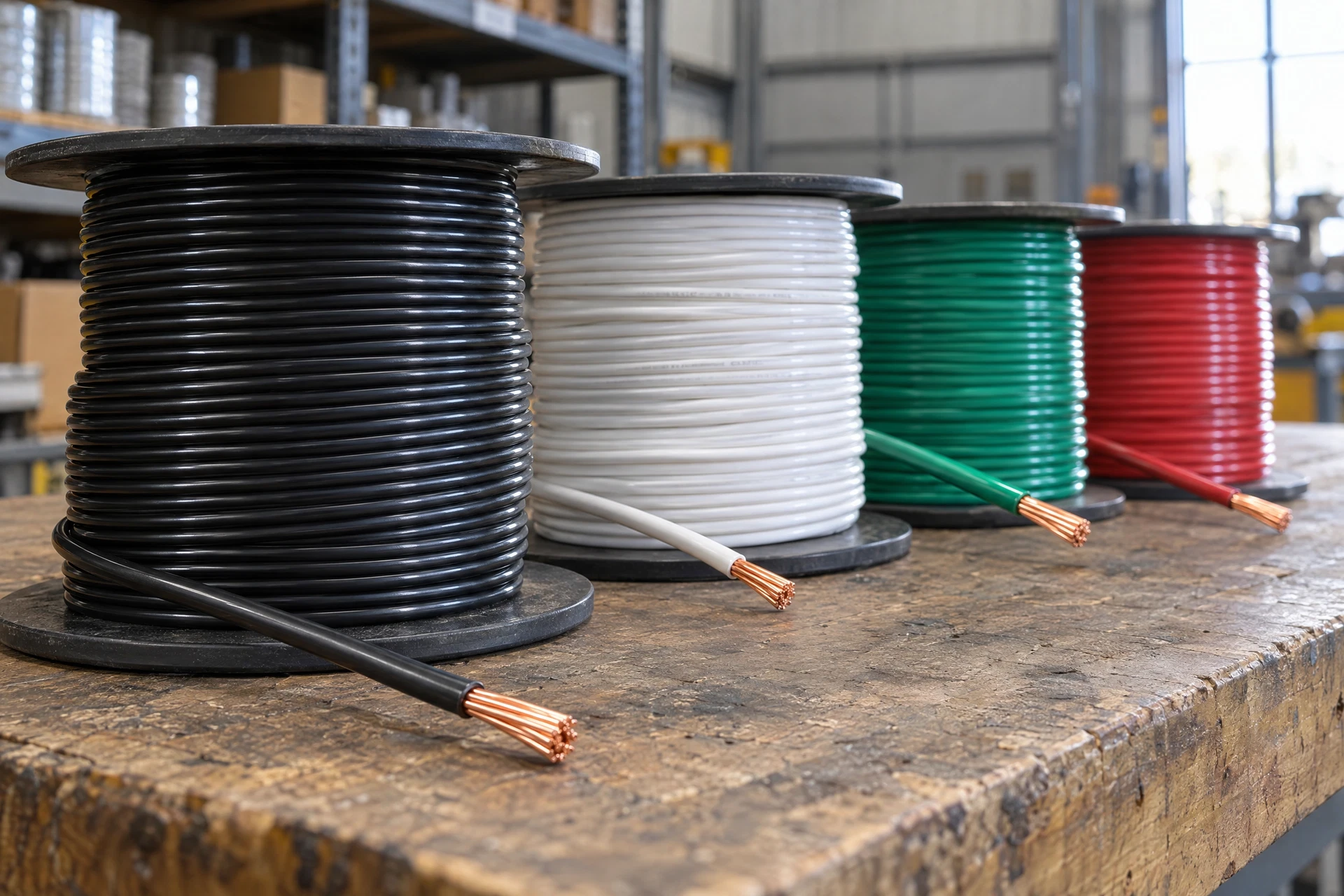

Wire and cable we buy from commercial renovations
- Riser feeder reels in 4/0 through 500 MCM
- THHN and THWN-2 partial reels
- MC cable and lighting whips
- Generator and transfer switch cable
- Aluminum feeder cable
- Data cable in partial boxes
- Removed MC from suite demolition
Where this inventory comes from in Pennsylvania
Commercial Renovations questions
Do you buy leftover riser cable?
Yes. Riser feeders are usually large copper in standard sizes, which makes them straightforward to review. The reel tag and the contractor's footage record are the most useful documents, since the cable itself rarely carries a length marking.
Can you pick up from an occupied office building?
Yes, with building coordination. That means a dock reservation, a freight elevator booking, a certificate of insurance and a move window that the property manager approves. We collect those details before scheduling so the truck is not turned away.
What about old cable removed during the renovation?
Removed cable is reviewed separately from new stock. Old MC and conduit wire are assessed on jacket condition and estimated footage, and much of it is recovery material. Keeping it apart from unused reels makes the review clearer for both sides.
Do you buy partial reels from a stalled project?
Yes. Projects that stop and restart often leave reels that were moved several times, and footage records may be lost. The review relies on the tag, the jacket print and the visible remaining wrap, and it states clearly when footage is an estimate.
Have surplus wire on the floor right now?
Send photographs of the reels, tags and jacket print. We will tell you what the material is worth as wire, not just as metal.