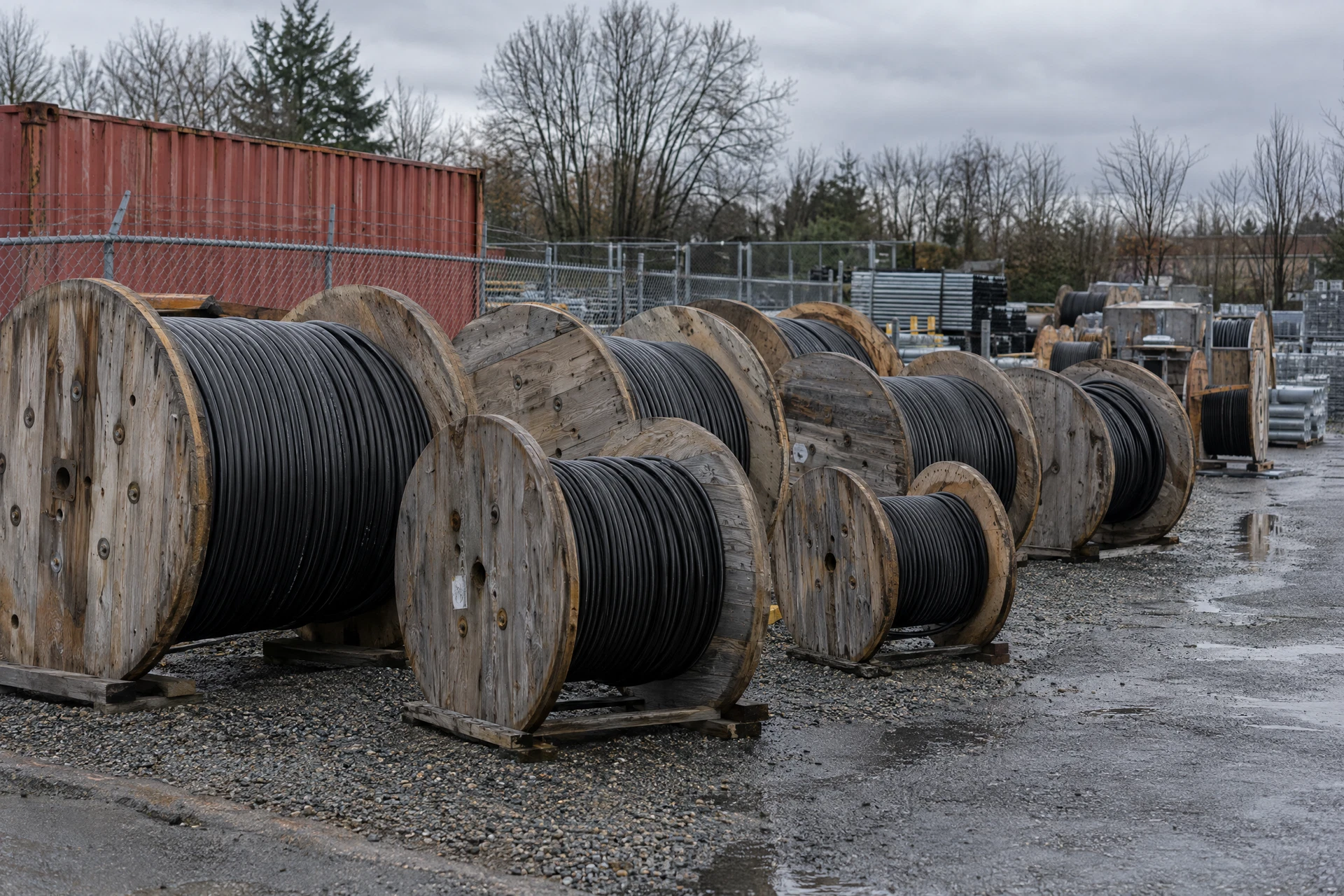
Chemical Plant Wire and Cable Buyers in Pennsylvania
Process-area tray cable, heat trace and instrumentation from chemical plants, reviewed for corrosion before anything is quoted.
A chemical plant is a harder environment for cable than a factory floor. Acid mist, solvent vapor, caustic washdown and summer heat all act on a jacket at once, and a cable that would last thirty years in a warehouse may last ten in a process unit. That reality shapes both what plants buy and what they keep. Material bought for one unit does not always suit another, and a plant standard can change between projects. That is where surplus starts.
We review surplus from chemical plants across Pennsylvania, and the first question is always exposure. A reel that stayed in a climate controlled warehouse is one thing. A reel that sat in an open sided shed next to a cooling tower for six years is another, even if the tag says the same part number. The review is about exposure as much as about footage. A tag tells you what the cable was, not what it has been through. Both matter, and only one of them is printed on the jacket.
| Typical stock | Tray, heat trace and instrumentation cable |
|---|---|
| Common sizes | 16 AWG through 500 MCM |
| Voltage | 600 V class, plus 5 kV feeders |
| Condition | Warehouse stock and process-area storage |
| Access | Permitted entry with unit escort |
Why chemical plants hold cable differently
Turnarounds drive the cycle. A unit shuts down on a schedule measured in years, work is scoped in advance, and material is ordered to that scope with a contingency. When the turnaround finishes early or a scope item is deferred to the next cycle, the cable stays in stores because the next window is already planned.
Specification also plays a part. Cable in a process area is often bought to a plant standard that names the jacket compound, the armor and the shield. Material that meets the standard is worth keeping even when the project that ordered it is closed, and material that does not meet it is difficult to use anywhere else on site.
- Turnaround scopes ordered with contingency
- Deferred work that leaves material in stores
- Plant standards naming jacket, armor and shield
- Material that cannot be substituted between units
Corrosive atmospheres and jacket life
Jacket compounds age differently depending on what they meet. Chlorinated solvents soften some compounds, caustic solutions attack others, and acid mist leaves a chalky surface that looks worse than it is. Ultraviolet exposure from an outdoor pipe rack adds to the effect, and heat accelerates all of it.
Inspection looks for hardness, swelling and cracking. A jacket that has gone hard at the bend radius will crack when the cable is unrolled, and a jacket that has swollen may have absorbed solvent that never leaves. Both are visible on a photograph, and both are reasons to treat a lot as recovery material.
- Hardened jackets that crack at the bend radius
- Swelling and discoloration from solvent contact
- Chalky surfaces from acid mist exposure
- Ultraviolet and heat damage on outdoor racks
Tray cable and instrumentation in process areas
Tray cable is the backbone of a process unit. It runs in trays above the equipment, carrying power to small motors and control signals to junction boxes, and it is usually specified with a jacket that resists the local chemistry. TC-ER allows exposed runs without conduit, which is why so much of it is installed in open trays.
Instrumentation cable runs alongside it, usually as shielded pairs for transmitters and thermocouple extension for temperature. In classified areas the construction changes to an armored or sheathed version, and the fittings that go with it are specific to the location.
- Tray cable and TC-ER in open trays
- Shielded pairs for transmitters and analyzers
- Thermocouple extension for temperature loops
- Armored constructions for classified areas
Heat trace and winter protection stock
Freeze protection is a year round concern in a Pennsylvania chemical plant, and heat trace stock reflects it. Plants keep self regulating cable on hand for repairs to lines that fail in January, and the stock is replenished before winter rather than after a failure.
The surplus is usually partial spools from a repair that used less than expected, plus controllers and connection kits that were bought as spares. Heat trace is reviewed on the jacket print, the wattage per foot and the voltage, and the spool has to be checked for damage where it was coiled.
- Self regulating heat trace on partial spools
- Repair spares bought ahead of winter
- Controllers, thermostats and connection kits
- Wattage per foot and voltage from the jacket print
Pickup inside a process unit
Access to a chemical plant is controlled for good reason. Visitors complete safety orientation, receive a badge, and are escorted at all times. Some areas require gas testing before entry, and some require a permit even to move material through a gate. PPE requirements are site specific and are confirmed before the visit.
Loading usually happens at a warehouse or a laydown area rather than inside the unit. Material has to be moved out of the process area first, which the plant schedules around operations. We ask for the staging location, the permit requirements and the dock window, then plan the load around what the site will allow.
- Safety orientation, badge and continuous escort
- Gas testing and permits for some areas
- Site specific PPE confirmed in advance
- Loading at a warehouse or laydown area

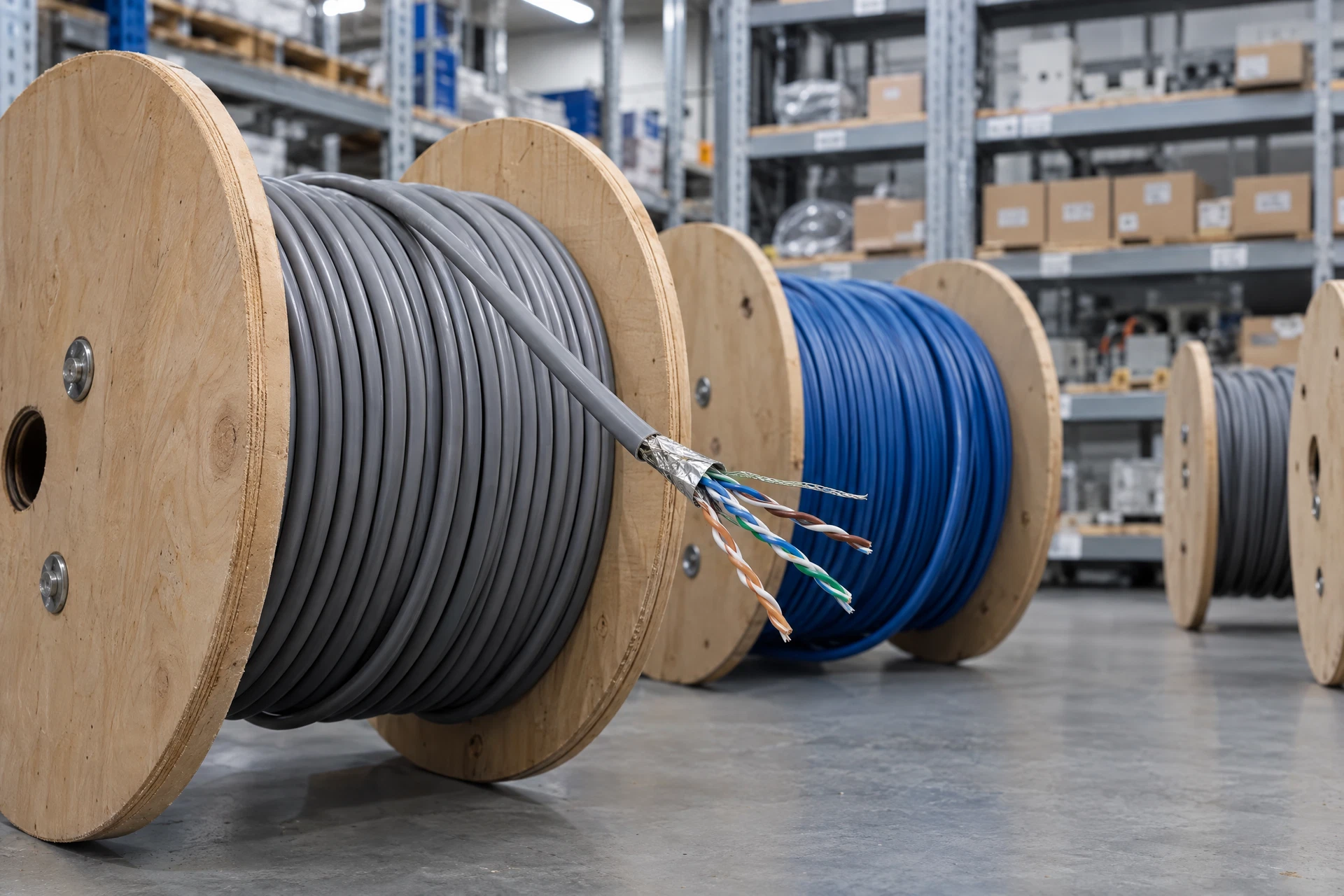
Wire and cable we buy from chemical plants
- Tray cable and TC-ER from process areas
- Shielded instrumentation cable
- Thermocouple extension cable
- Self regulating heat trace spools
- Armored cable for classified locations
- 5 kV shielded feeder cable
- Control cable from turnaround projects
Where this inventory comes from in Pennsylvania
Chemical Plants questions
Do you buy cable stored in a process area?
Yes, with a closer review. Jacket hardness, swelling and cracking are checked first, because a process area exposes cable to chemistry that a warehouse does not. Cable stored indoors and away from the unit is reviewed more favorably than cable that sat on an outdoor rack.
How is heat trace reviewed?
The jacket print gives the wattage per foot and the voltage, and the spool gives the remaining length. The review also checks for damage where the cable was coiled and for missing connection kits, since those affect what the material is worth.
What about cable from a turnaround that was deferred?
Deferred scope often leaves material in original packaging with tags intact. That is some of the better stock a plant holds. It is reviewed on the tag, the storage location and whether the plant standard that ordered it is still current.
What permits are needed for a pickup?
Requirements vary by site. Expect safety orientation, a visitor badge, an escort, and in some areas gas testing or a work permit before material can move. We collect those requirements before scheduling so the load is not turned away at the gate.
Have surplus wire on the floor right now?
Send photographs of the reels, tags and jacket print. We will tell you what the material is worth as wire, not just as metal.